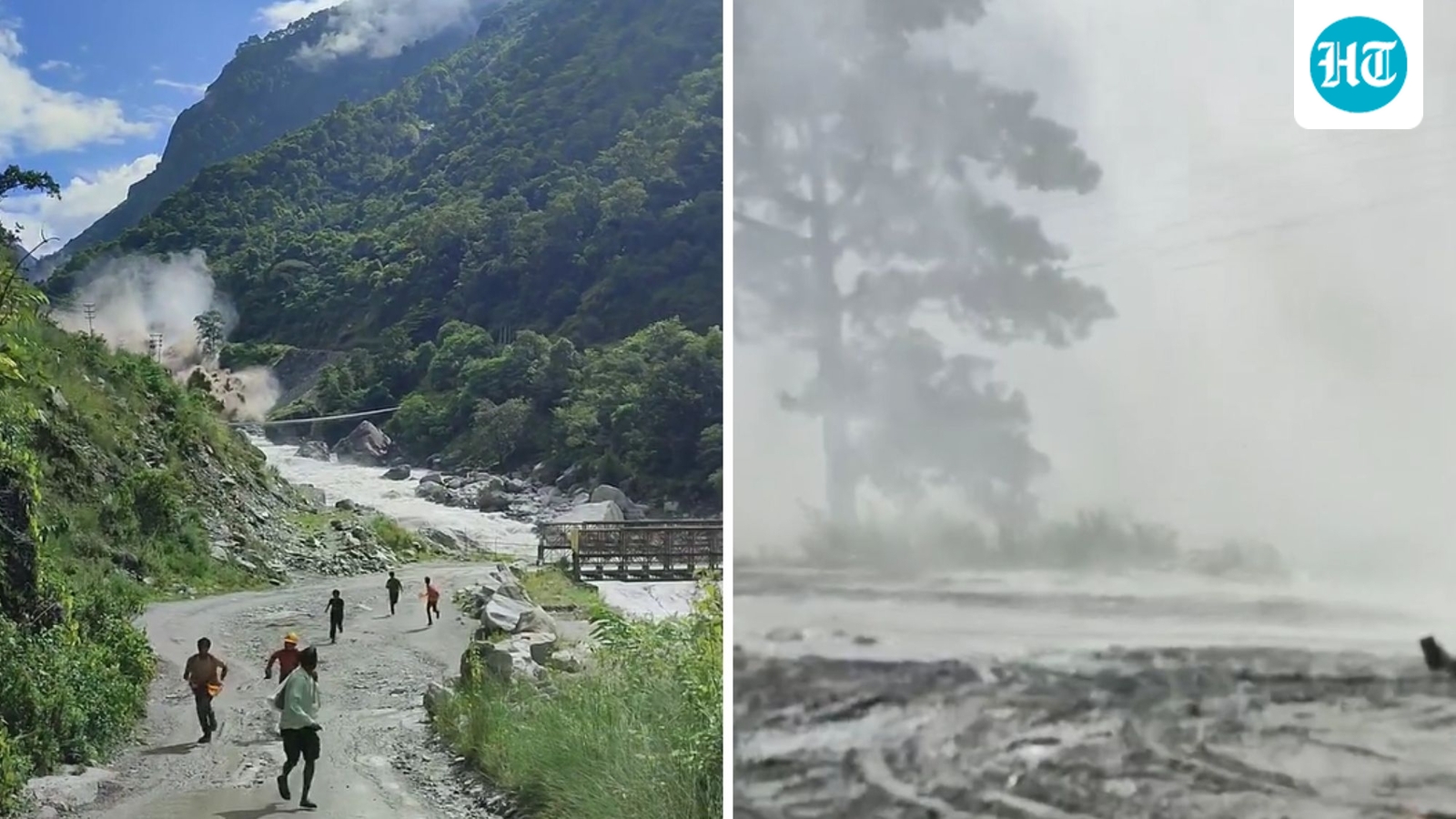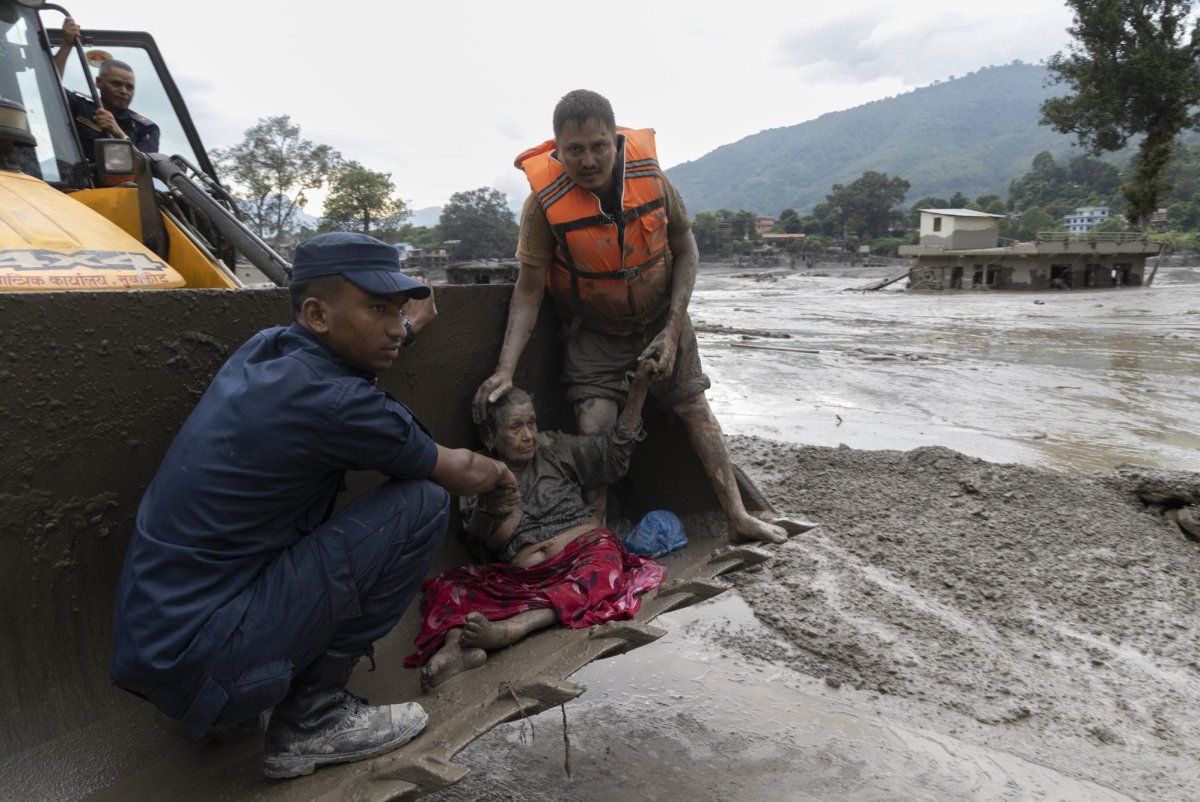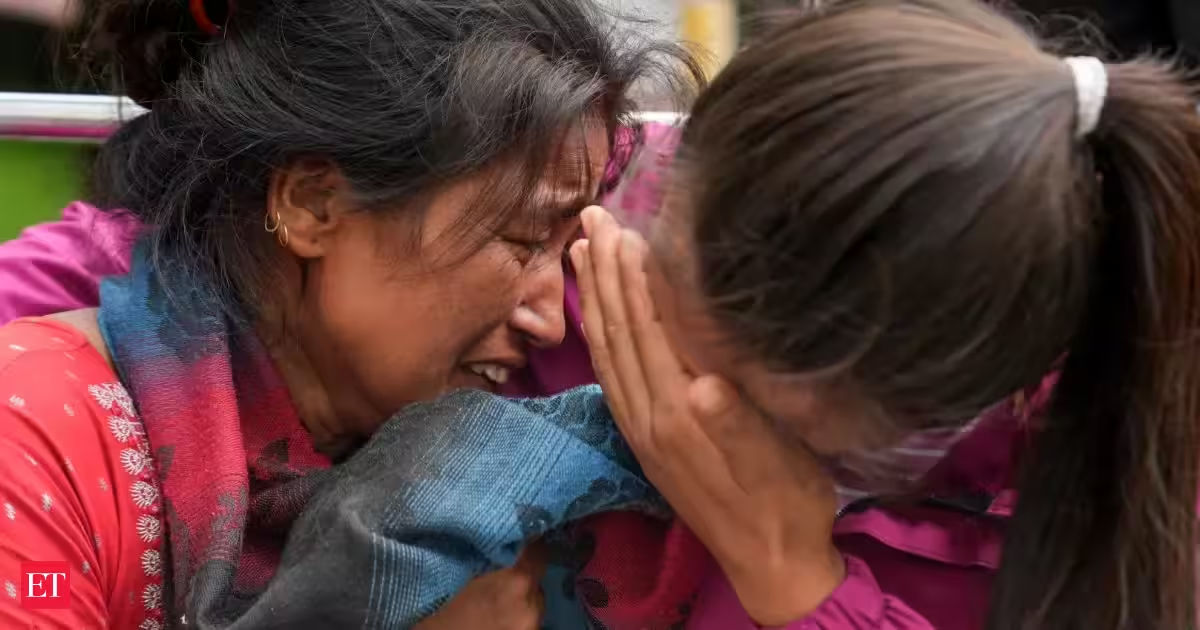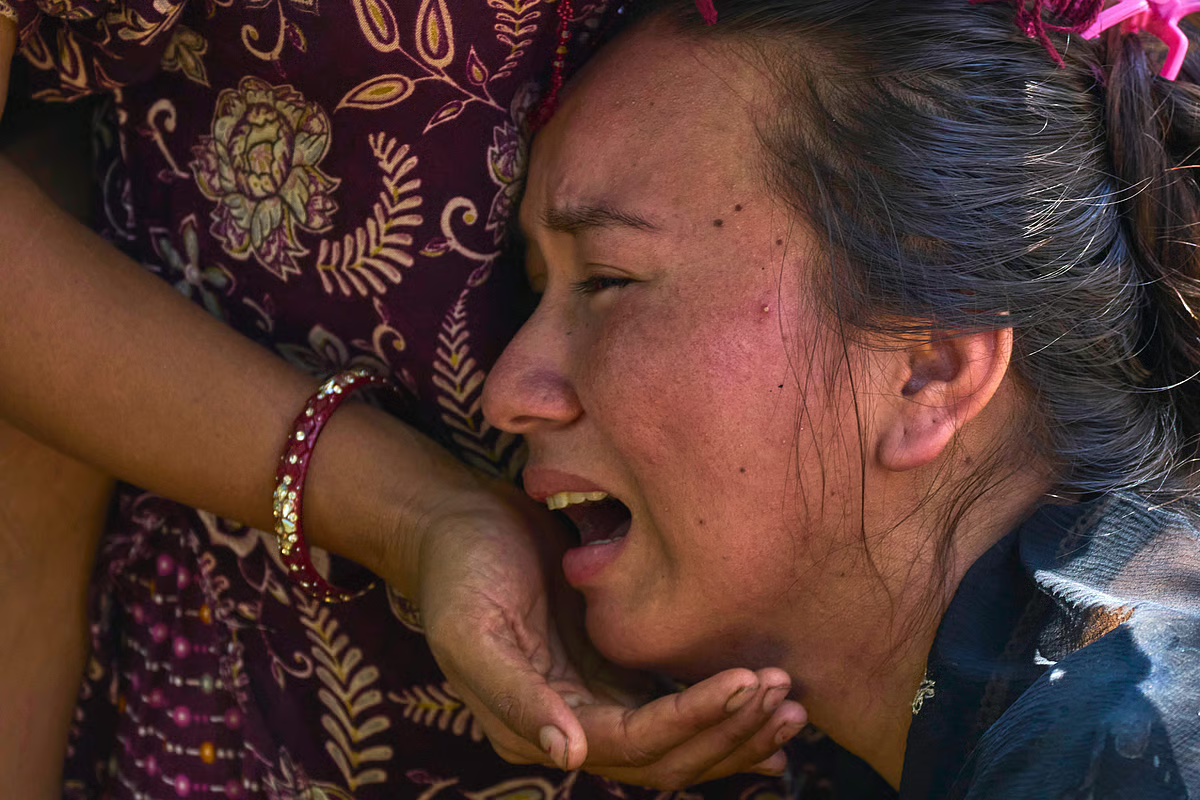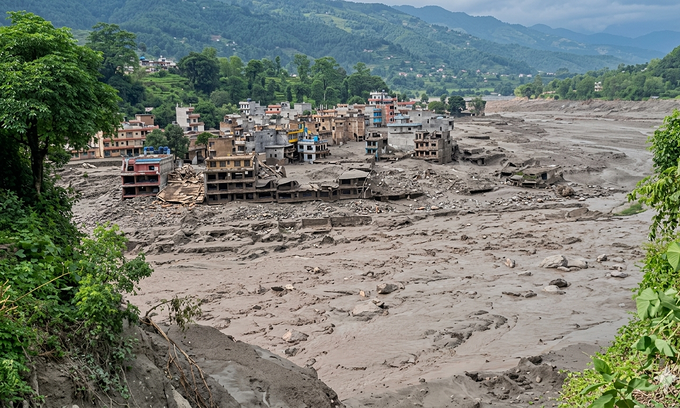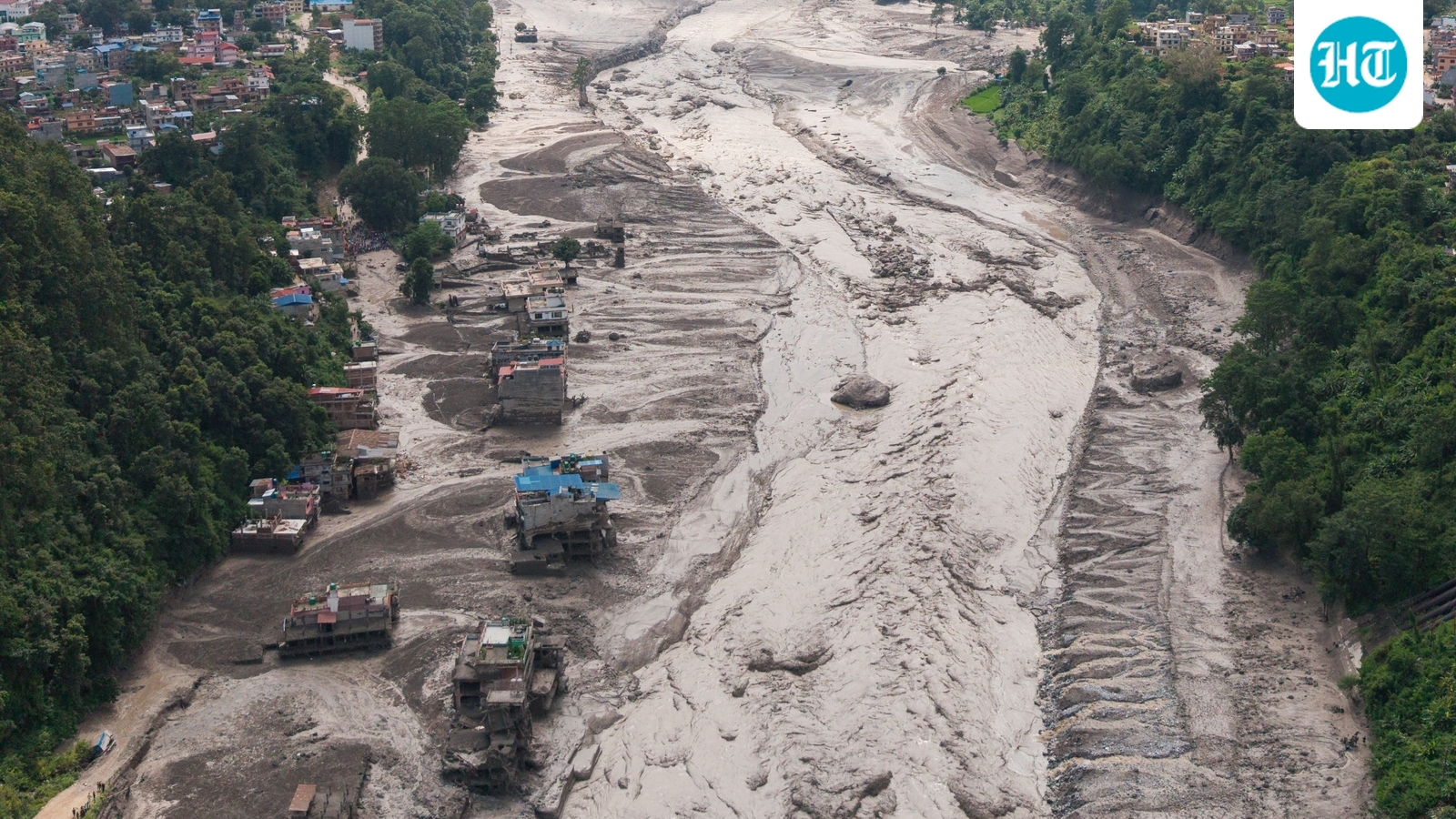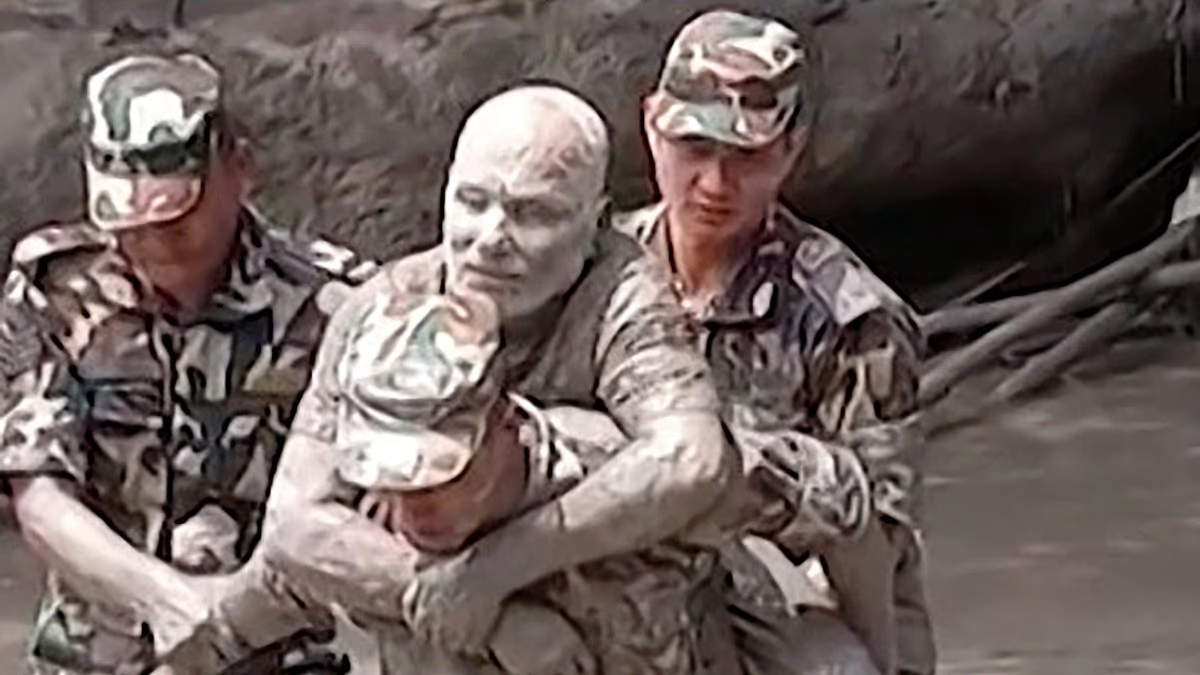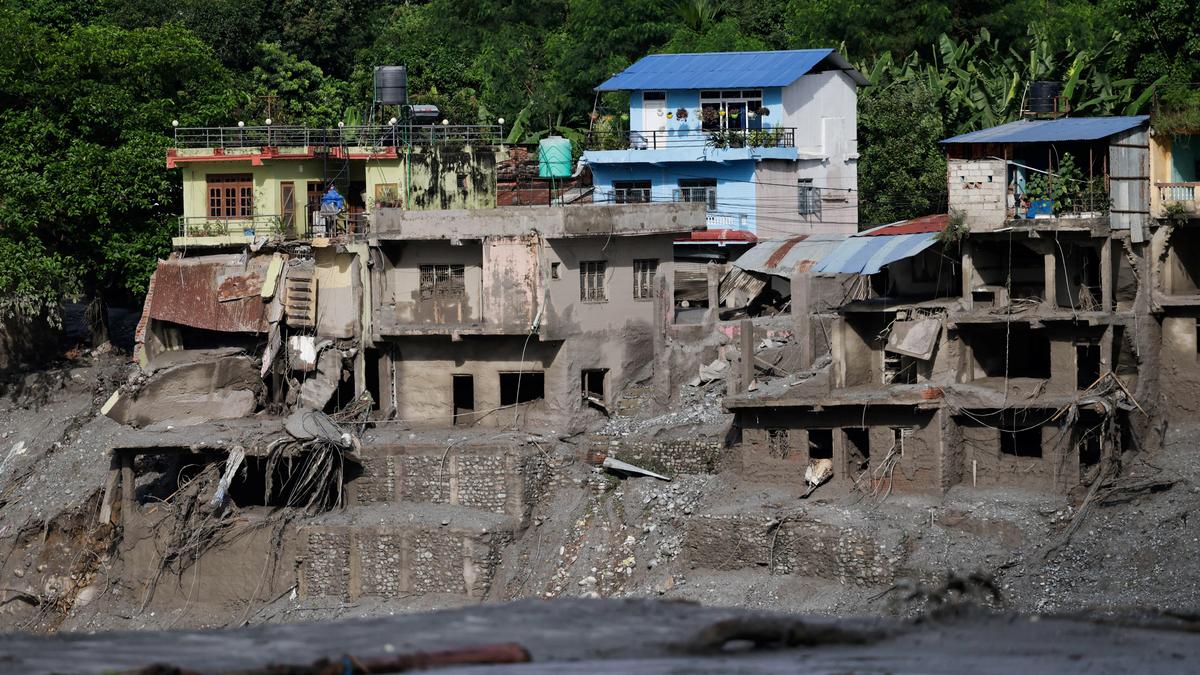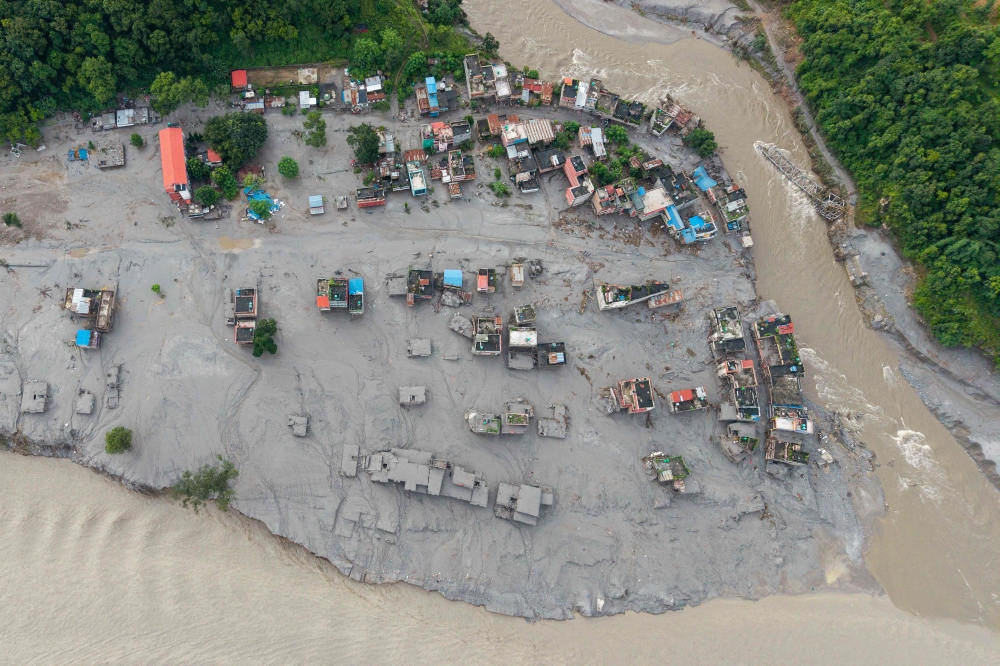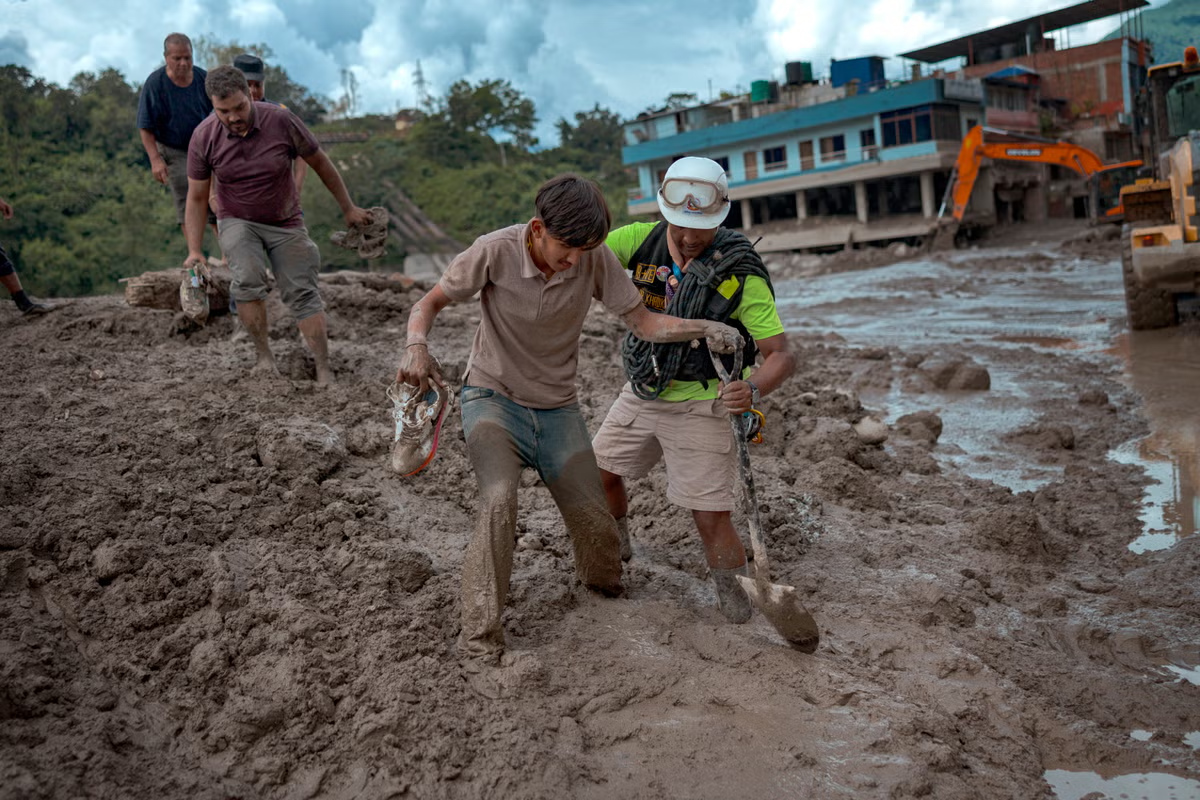
Bhupen Thapa was walking home in Nepal’s Rasuwa on Wednesday morning when he heard a roaring sound and then saw a torrent of brown water, sand, and debris tearing down through everything in its path.Thapa, 56, wept as he recalled watching his home, family and neighbours getting washed away in a matter of seconds.“You wouldn’t believe what I saw. I don't know how I survived," he tells The Independent over the phone from a military base in Dhunche, where dozens of survivors were airlifted from their destroyed villages near the Tibet border. “My father and wife were at home and I was a couple of metres away when I saw the sludge approaching at a record speed. I ran in the other direction.” “Everyone is dead,” Thapa says. “No one can survive such a disaster. I’ve lost everything and I feel so guilty that I couldn't save anyone.”Army, police and civilian rescue teams deployed heavy machinery on Friday to dig through mud and debris in the border towns devastated by the flash flood as hopes of finding survivors faded.Authorities say 489 people had been confirmed dead by early Friday in Nepal, while about 1,000 remained missing in the South Asian nation and in neighbouring Tibet, China, near where a glacier collapse sent a torrent of rock, ice, mud, and debris cascading down Himalayan mountain river systems. At least 540 of the missing people are foreigners, including 33 Britons.Firefighters during a search and rescue operation along a damaged road leading to the Gyirong port in the Shigatse area of Tibet, China (Reuters)Hundreds of survivors waited to be airlifted to safety by the army even as they mourned the losses of their loved ones, their homes, and livelihoods in the catastrophic floods that wiped out roads, houses, and public infrastructure across a vast swathe of the country.In Bidur, a small town in Nuwakot district, residents claim around 90 per cent of the population was killed.“It seemed like a tsunami was approaching us," says a man who gave his last name as Karki. “Everything up to the first floor is covered in mud. We’ll never recover from the loss.”Another Bidur resident Dawa Lama, 45, told the AFP news agency that the town he fled had vanished beneath a torrent of water, mud and debris. He claimed that 90 per cent of its people were dead after being swallowed by silt.At hospitals in the capital Kathmandu, people anxiously searched for their missing relatives. Ayush Tamang says he had been at the Tribhuvan University teaching hospital since Thursday morning after learning that the survivors would be brought there. “My brother was working at a project near the Tibet border. I have not heard from him since Wednesday morning. We are very scared. He’s only a 19-year-old who is just starting his life.”“It is unfair that he has to die this way.”Tamang says his brother's phone was switched off and his employer was out of reach as well.Aftermath of the flash floods in Trishuli, Nuwakot district, Nepal, on 28 August 2026 (Reuters)Nepal’s disaster management authority warned that a lake formed by debris blocking the Bhotekoshi river was rising and at risk of bursting. On the other side of the border, China said that some three million cubic metres of water, the equivalent of about 1,200 Olympic-sized swimming pools, was expected to flow into an already dammed lake over the next three days. There was a risk the lake could breach, with peak flow expected around 1 September, Chinese state media said, citing the water resources ministry.Chinese rescuers were still to reach the worst-hit area on their side of the Gyirong border crossing by Thursday evening, state media indicated.Shocking footage showed an enormous torrent of muddy water and debris tearing through structures at the border crossing within seconds and swallowing people trying to flee. At least 558 people, including 260 foreigners, were missing in Tibet’s Gyirong County, CCTV reported. But only three people had been confirmed killed so far.Aid agencies and charity groups say they were facing challenges in reaching the worst-affected areas due to geographical constraints.Suraj Sigdel from Mercy Corps says in some places, whole settlements had vanished while many surviving communities were cut off by kilometres of missing roads and collapsed bridges.Nepal’s roads department says 19 motorable bridges and around a 40km length of roads had been damaged or washed away."About 45 per cent of Nepal is in hilly districts and under 30 per cent is mountainous, so every terrain is not that easy here," Sigdel explains. Due to the destruction of infrastructure, he says, "reaching the epicentre or the ground zero is quite difficult, actually impossible at this moment because there is no road".He says the immediate priority was providing urgent medical care, safe shelter, food and clean water to survivors. “Some survivors have lost their belongings, some don't know whether their families are still alive so they are in deep shock," he says, adding the lack of electricity had disconnected communities. Sigdel says the actual number of people who were still missing could be way higher as several residents and pilgrims were never accounted for or registered anywhere.Survivors react as they meet family members at an army camp in Battar Bazar town of Nepal's Nuwakot district on 28 August 2026 (AFP/Getty)Reaching remote communities in northern Nepal was already difficult under normal circumstances because of the challenging geography. The floods have made accessing those parts even harder, washing out roads and bridges and disrupting power and communications, says Dan Hovey, vice president of emergency response at Direct Relief.The damage had complicated almost every aspect of the response, including assessing urgent needs, providing medical supplies and transporting the injured to health facilities that were still functioning.“In the immediate aftermath of a disaster like this, time and access are critical. People may be dealing with traumatic injuries, interrupted access to essential medicines and health services, unsafe water and displacement, while some communities remain difficult to reach,” Hovey says.“Direct Relief is working with partners in Nepal to move emergency medical supplies and other essential items where they are needed, but the scale of the infrastructure damage means the response will require flexibility, including the use of air transport and staging supplies as close as possible to affected communities.”Nepal's prime minister Balendra Shah, who visited flood-hit Nuwakot on Thursday, says the situation is still difficult."All state agencies are operating at full capacity,” he says. “Our first priority now is to save lives, search for and rescue the missing, treat the injured, and provide immediate relief to the affected families.”The disaster has become a major challenge for Shah's five-month-old government but officials say the country has systems and officials who have experience in handling such tragedies, including the 2015 earthquake that killed nearly 9,000 people.
Survivors of Nepal’s flash floods come to grips with the death and destruction
Aid agencies say the rough terrain is making it difficult to reach the worst-affected areas, as 489 people are confirmed dead in catatrophic floods in Nepal after a glacial landslide, Alisha Rahaman Sarkar reports
1,126 words~5 min read