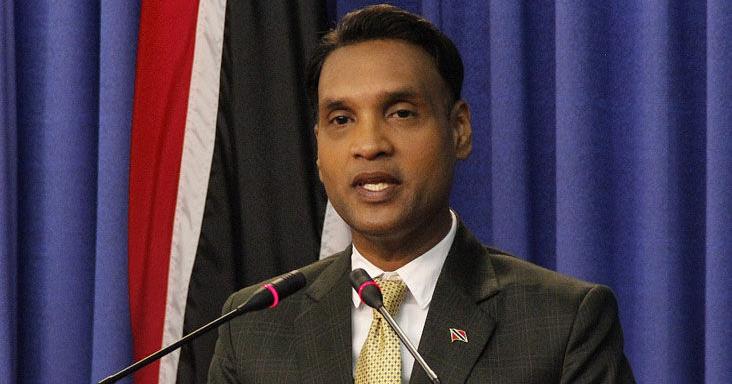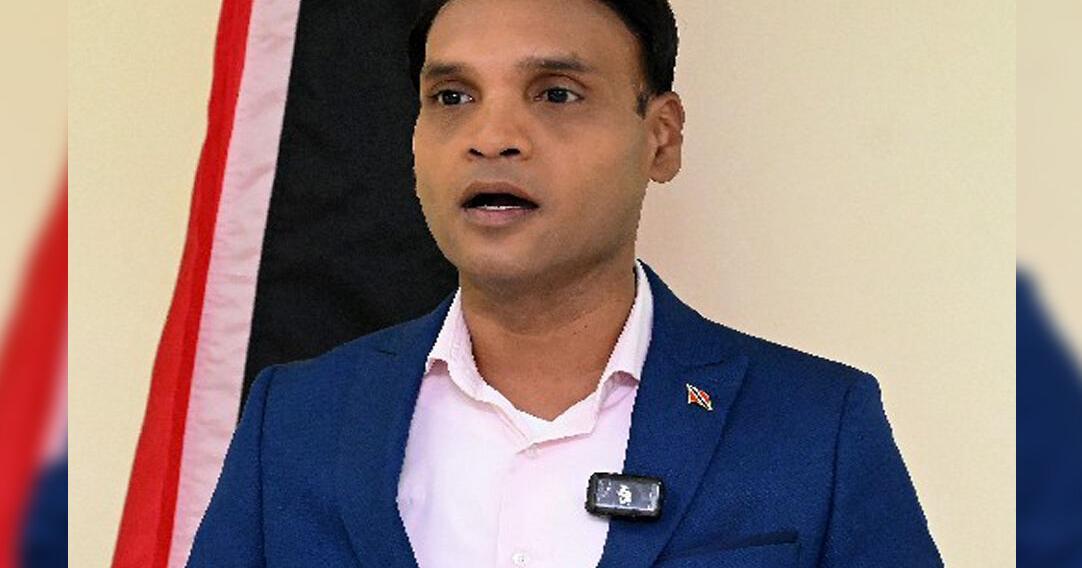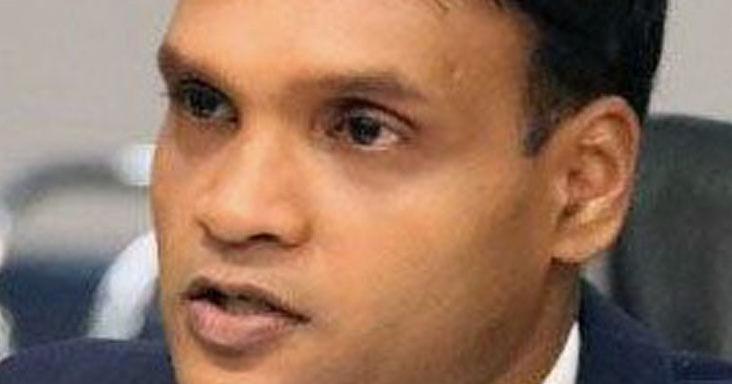
PUBLIC Utilities Minister Barry Padarath has confirmed that fees associated with services provided by the Water and Sewerage Authority’s (WASA) Infrastructure and Compliance Department have increased.However, Padarath said there was no “secrecy” surrounding the move, stressing that the revised charges are a “one-time payment” following a review of what he described as “archaic” rates.
Govt acted ‘in dark of night’: Opposition MP and former public utilities minister Marvin Gonzales holds up a document showing WASA fees during an Opposition news conference yesterday at the Office of the Opposition Leader, in Port of Spain. —Photo: ISHMAEL SALANDY
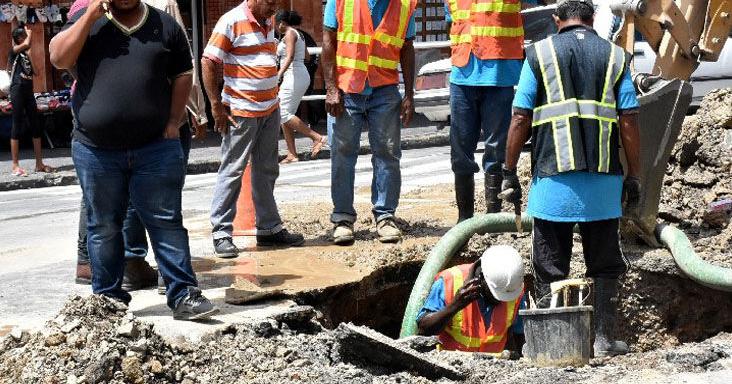
At an Opposition news conference yesterday, former public utilities minister and Opposition MP Marvin Gonzales said WASA had increased its fees for inspections and approvals by between 100% and 700%, effective July 1.The fees, he said, relate to services provided by WASA’s Infrastructure and Compliance Department, which is responsible for reviewing and inspecting water and wastewater infrastructure connected to new homes, developments and other buildings.Responding to questions from the Express yesterday, Padarath said WASA took the decision as part of efforts to modernise its fee structure and operations.“There is no secrecy in handling this matter, WASA has advised me that the fee structure appears on the forms as of July 2026. These fees are one-time fees, they deal with new conditions regarding both domestic connections, connections for swimming pools et cetera that have not been revised since the 1980s,” he said.Customers not informedGonzales, at yesterday’s news conference, called for the resignation of Padarath and the removal of the WASA board and the executive management over the increase.He pointed out that among the responsibilities of WASA’s Infrastructure and Compliance Department were the regulation and inspection of plumbing, water and wastewater infrastructure associated with new buildings, developments and homes.He explained that they ensure these systems are properly designed, constructed, tested and completed in accordance with WASA’s technical, safety, environmental and public health requirements before they are approved.The former public utilities minister said the fees on WASA’s website are outlined; however, when customers head to the offices to pay, they are met with a notice of plumbing inspectorate items and the new fees which came into effect on July 1. He said it shows increases of 100% to 700%, of which Gonzales said customers and other stakeholders were not previously informed.The fees include a service which increased by 700% from $150 to $1,200 under the multi-family residential (per unit). The fee under the commercial unit moved from $200 to $1,500—a 650% increase; and the industrial fee moved from $450 to $1,800—a 300% increase. The swimming pool residential fee increased from $500 to $1,800—a 260% increase; while the commercial/institutional swimming pool fee increased from $1,000 to $2,000—a 100% increase.“All of that happened quietly, effective July 1, 2026. No announcement by the Government of Trinidad and Tobago,” he said.He accused the Government of “acting in the dark of the night” and increasing these fees and also traffic fines and fees for Government services.“The Opposition is calling for the resignation of the Minister of Public Utilities, the removal of the board of WASA and the executive management of WASA for what they have done to the people of Trinidad and Tobago to increase those fees by this amount without consulting the people of Trinidad and Tobago, who are already burdened by difficult measures being implemented on them by this Government,” he said.He’s a bacchanalistYesterday Padarath also took aim at Gonzales, linking his criticism to ongoing internal issues within the People’s National Movement (PNM).“The former minister of public utilities must stop behaving like a bacchanalist when he’s not fighting his own member for San Fernando East; they are plagued with their own problems at Balisier House,” he said.The minister said WASA was seeking to modernise its systems and that the “powers that be” within the State entity had taken the necessary steps to bring the “archaic” rates in line with present-day standards.He said the revised fee structure would help improve efficiency while also reducing WASA’s expenditure in the areas covered by the Infrastructure and Compliance Department.