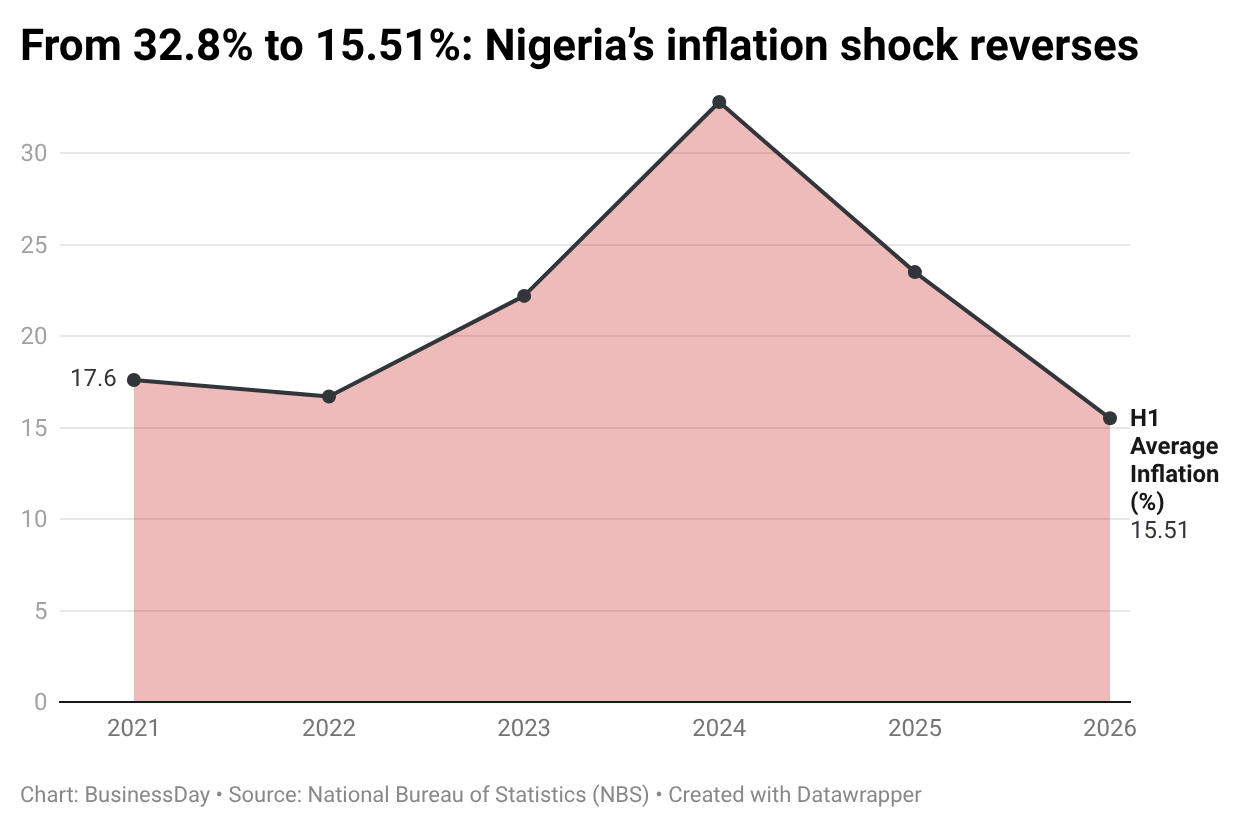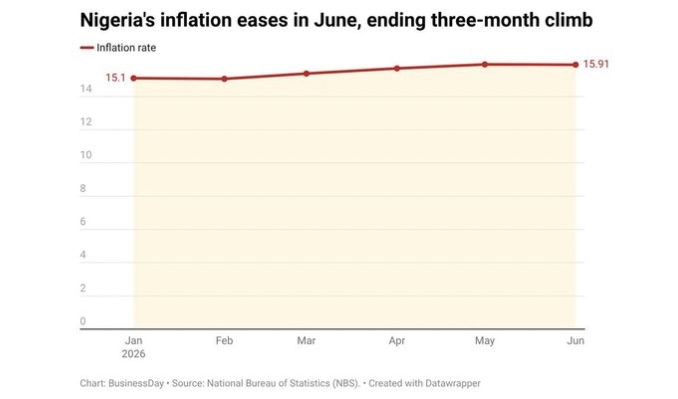
Nigeria’s inflation rate is falling, but the cost-of-living crisis is proving harder to defeat. Headline inflation declined to 15.43 percent in July 2026 from 15.91 percent in June and 24.94 percent a year earlier. Food inflation, which matters most to household budgets, accelerated sharply. It rose to 20.31 percent year-on-year in July from 17.52 percent in June, while monthly food inflation jumped from 3.75 percent to 5.56 percent.
Prices of staples, including rice, onions, tomatoes, pepper, garri, plantain, beef and eggs, increased. For households already struggling with diminished purchasing power, the improvement in the headline figure offers limited relief.
This does not mean Nigeria’s disinflation has failed. It shows that improving macroeconomic conditions have yet to translate consistently into cheaper essentials and stronger household purchasing power. Monthly headline inflation slowed to 1.57 percent in July from 1.66 percent in June, while core inflation fell to 14.97 percent year-on-year and 0.15 percent month-on-month. Greater exchange-rate stability and the fading effects of fuel-subsidy removal and foreign-exchange reforms have reduced some of the shocks that previously pushed prices higher. Average food inflation over the 12 months to July also fell from 30.85 percent a year earlier to 16.06 percent.