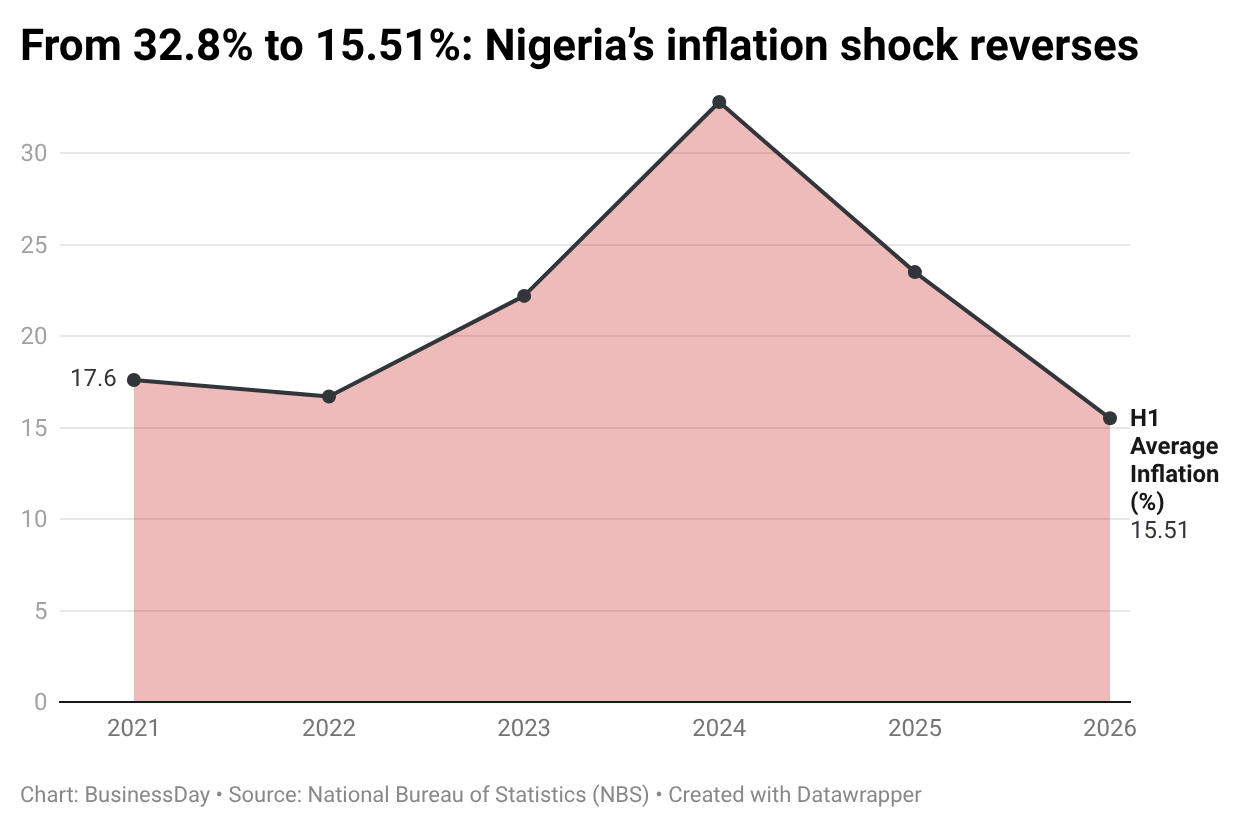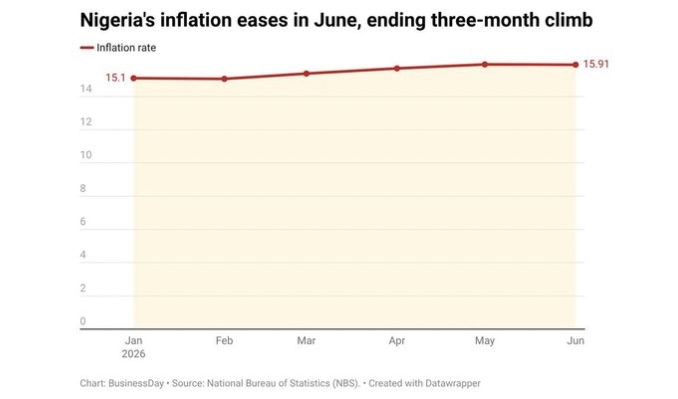
Nigeria’s inflation story is no longer about whether prices are rising or falling. It is increasingly about persistence. Headline inflation eased marginally to 15.91 percent in June from 15.93 percent in May, according to the National Bureau of Statistics (NBS), almost exactly matching BusinessDay’s 15.9 percent Inflation Nowcast published ahead of the official release. The difference was statistically negligible. The implication is not.
The latest reading suggests Nigeria may have entered a new phase of its inflation cycle. The rapid disinflation that followed last year’s rebasing exercise appears to have stalled, but neither has inflation resumed a meaningful upward march despite renewed geopolitical tensions and higher global oil prices.
That leaves policymakers confronting a far more difficult problem than the one they faced a year ago. After reaching a low of 15.06 percent in February, inflation rose steadily for three consecutive months before flattening in June. That pattern matters.
For most of the past year, economists debated whether inflation would continue falling. The June data suggests the debate has changed. Inflation is no longer falling meaningfully. It is settling around 16 percent. For the Central Bank of Nigeria, that is both reassuring and uncomfortable.