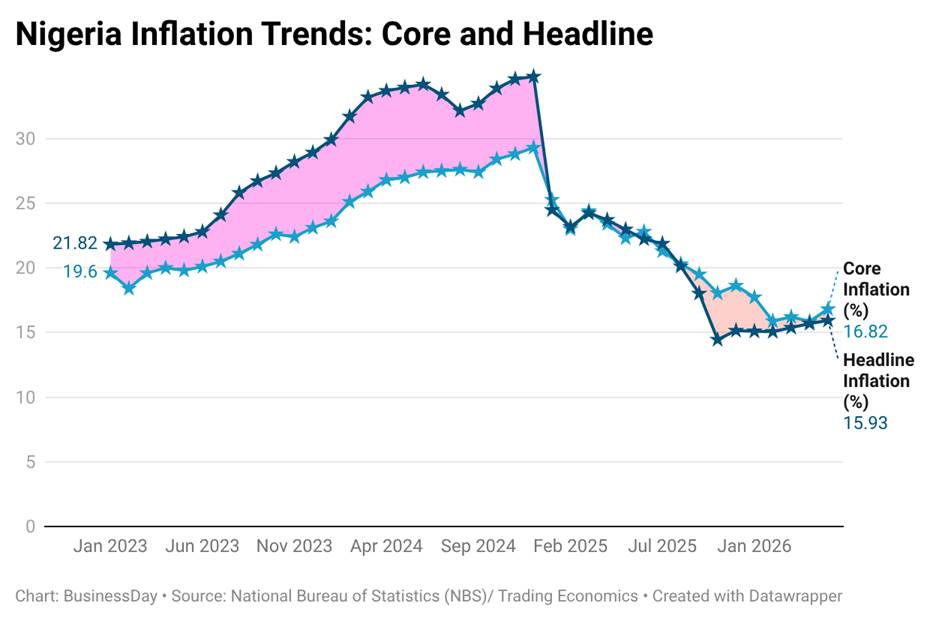
Nigeria’s inflation rate rose for the third consecutive month in May, but the bigger concern for policymakers was not the headline figure. It was the acceleration in core inflation, a measure that shows whether price pressures are becoming entrenched across the economy.
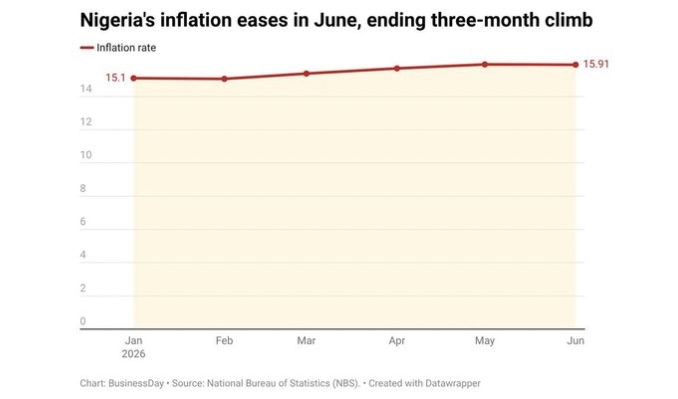
Data from the National Bureau of Statistics (NBS) showed that headline inflation increased to 15.93 percent in May 2026 from 15.69 percent in April and 15.38 percent in March, interrupting an eleven-month period of declining inflation that had raised hopes that Nigeria’s inflation crisis was gradually easing.
While the increase in headline inflation was modest, core inflation delivered a more cautious signal. It stood at 16.82 percent year-on-year in May, while monthly core inflation accelerated sharply to 1.94 percent from 1.03 percent in April. The divergence between headline and core inflation is the most important message from the latest inflation report.
For the Central Bank of Nigeria (CBN), the distinction matters. Headline inflation reflects the pressure households experience through daily expenses, but core inflation provides a clearer indication of whether those pressures are spreading across the wider economy and becoming more persistent. That could determine how quickly the CBN can reduce interest rates.