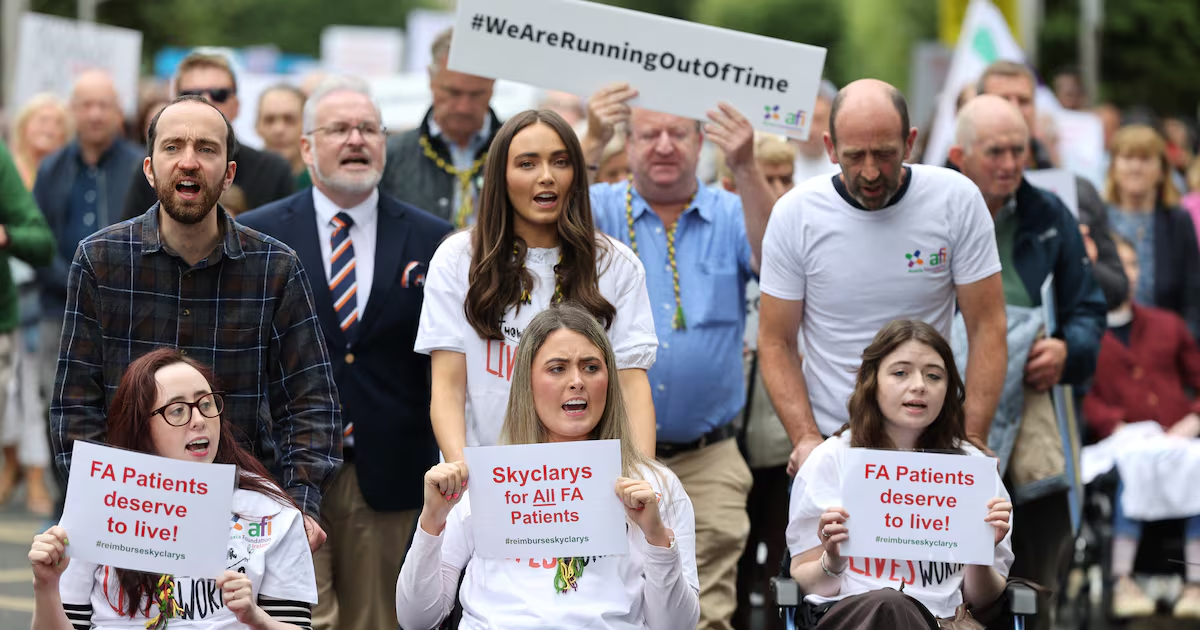
Sir, – The HSE’s decision to reimburse Skyclarys (omaveloxolone) for people with Friedreich’s ataxia is welcome news. It matters far beyond the 200 or so people in Ireland who will now be able to access the first licensed treatment for their condition.Rare Diseases Ireland does not normally advocate for individual medicines. We did so in this case because the road to this decision exposed real challenges with how Ireland’s reimbursement system transparently incorporates unmet medical need and manages uncertainty when assessing and reimbursing rare disease medicines – weaknesses that will recur unless these are addressed.Patients and families campaigned publicly for more than two years for access to this medicine. One person took the extraordinary step of seeking a judicial review of the HSE’s handling of the process. The fact that patients felt they had no choice but to protest and litigate to access a licensed medicine that is available in other European countries should give us pause.Ireland remains among the slowest countries in western Europe to provide access to rare disease medicines and still has no formal early access scheme for them. Were such a scheme to exist for Skyclarys, these patients might not have watched the long, drawn-out process from the sidelines while their health continued to deteriorate.The programme for government and Ireland’s National Rare Disease Strategy 2025–2030 commit to earlier reimbursement and early-access schemes for rare disease medicines. Urgent reform incorporating learnings from this Skyclarys experience must now be the priority. We need a predictable pathway that does not require patients to fight this hard, for this long, every time.We thank the HSE and the Minister for Health for reaching this conclusion and we thank especially the patients and families whose advocacy made this outcome possible. – Yours, etc,VICKY MCGRATH,Rare Diseases Ireland,Dublin 7.Sir, – As a health economist, I take a different view from The Irish Times editorial on Skyclarys. I fear many fail to recognise the damage of high-cost drugs to our health system.Recipients of Skyclarys will, sadly, likely benefit little from treatment, if at all; the National Centre for Pharmacoeconomics (NCPE) expert review reports very small gains based on highly questionable evidence. Even with a substantial price reduction, very large costs mean that other, far more effective treatments will be denied to other patients elsewhere. Beyond the damage caused by this particular decision, I see a dangerous weakening of Ireland’s system for prioritising good-value care. The NCPE’s expert advice was against funding: while huge costs were noted, the apparent primary concern was the lack of meaningful health benefits.Despite this, the HSE has chosen to spend many millions of euro on Skyclarys. The only plausible explanation is the impressive patient lobby effort and politicians quickly folding. This sets a terrible precedent that shouting loud works but evidence doesn’t count. It also suggests the HSE isn’t serious about value for money. I feel the media is part of our policy problem: it has insufficient patience for calm consideration of efficiency and offers little examination of advocates’ claims. Journalistic attention understandably focuses on the patients seeking new therapies, but typically neglects patients elsewhere who lose out. Well-meaning but one-sided empathy skews public attention away from true priorities.Everyone knows our health system should be better. Funding based on emotive pleas rather than rational assessment harms us. Everyone involved in subverting expert appraisal should reflect carefully. – Yours, etc,JAMES O’MAHONY,School of Economics,University College Dublin,Dublin 4.
Why families had to protest and even litigate to get Skyclarys for Friedreich’s ataxia
But high-cost drugs can damage our health system by denying treatments to other patients
564 words~3 min read