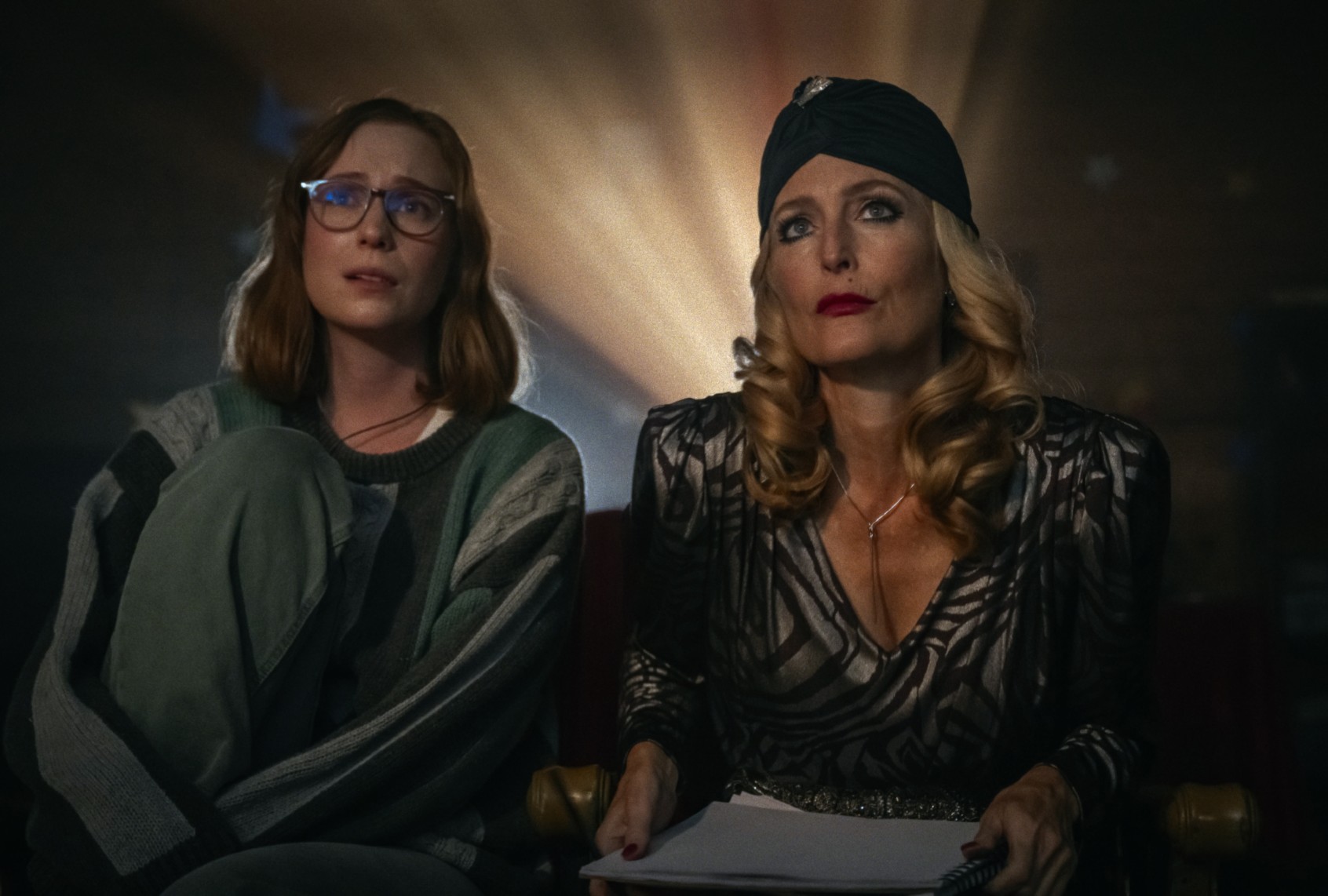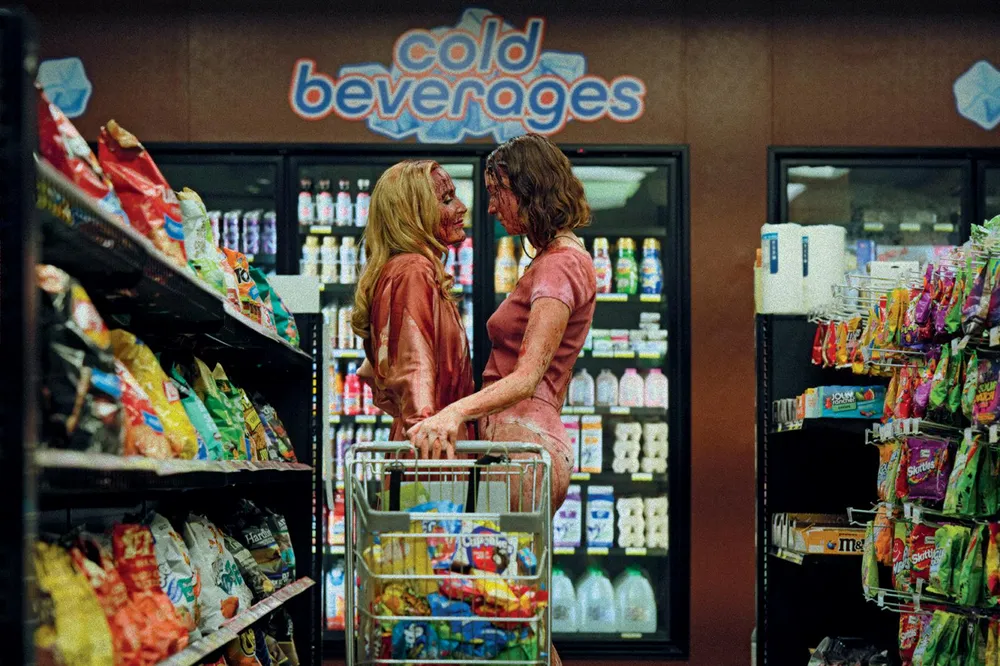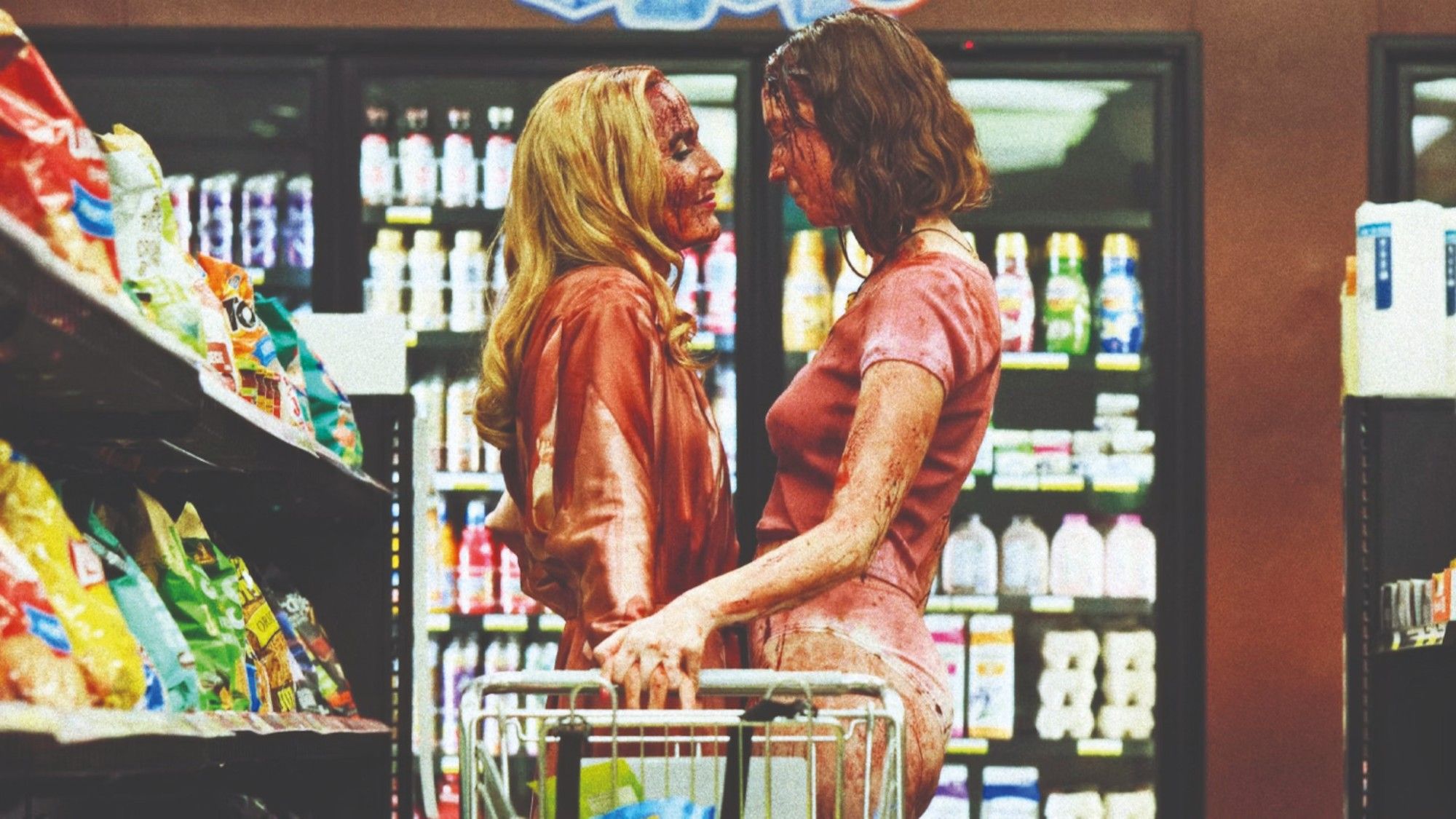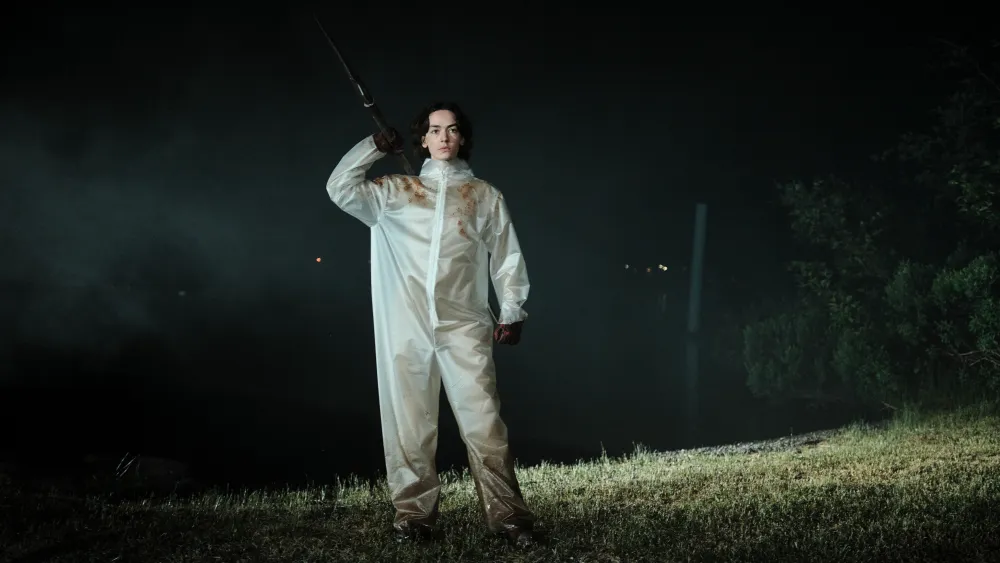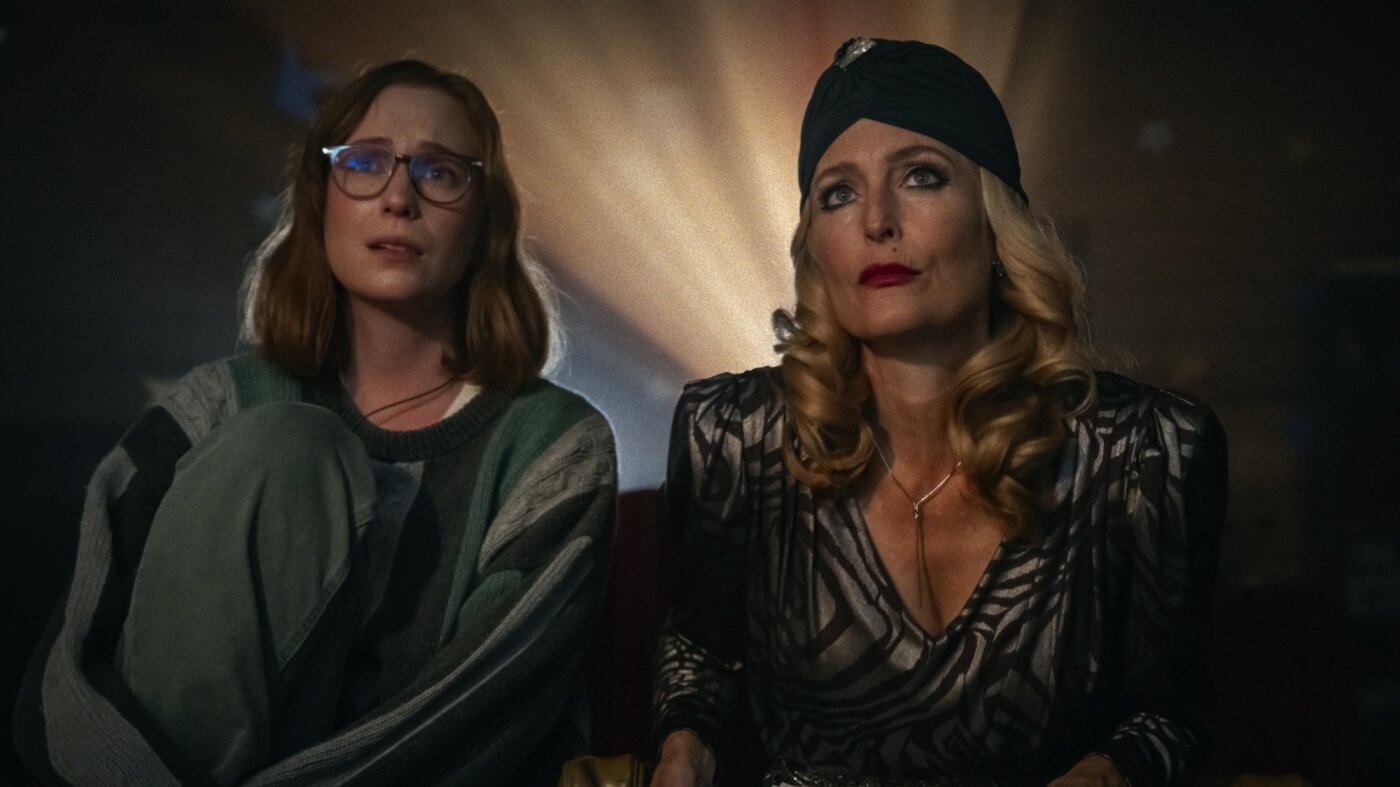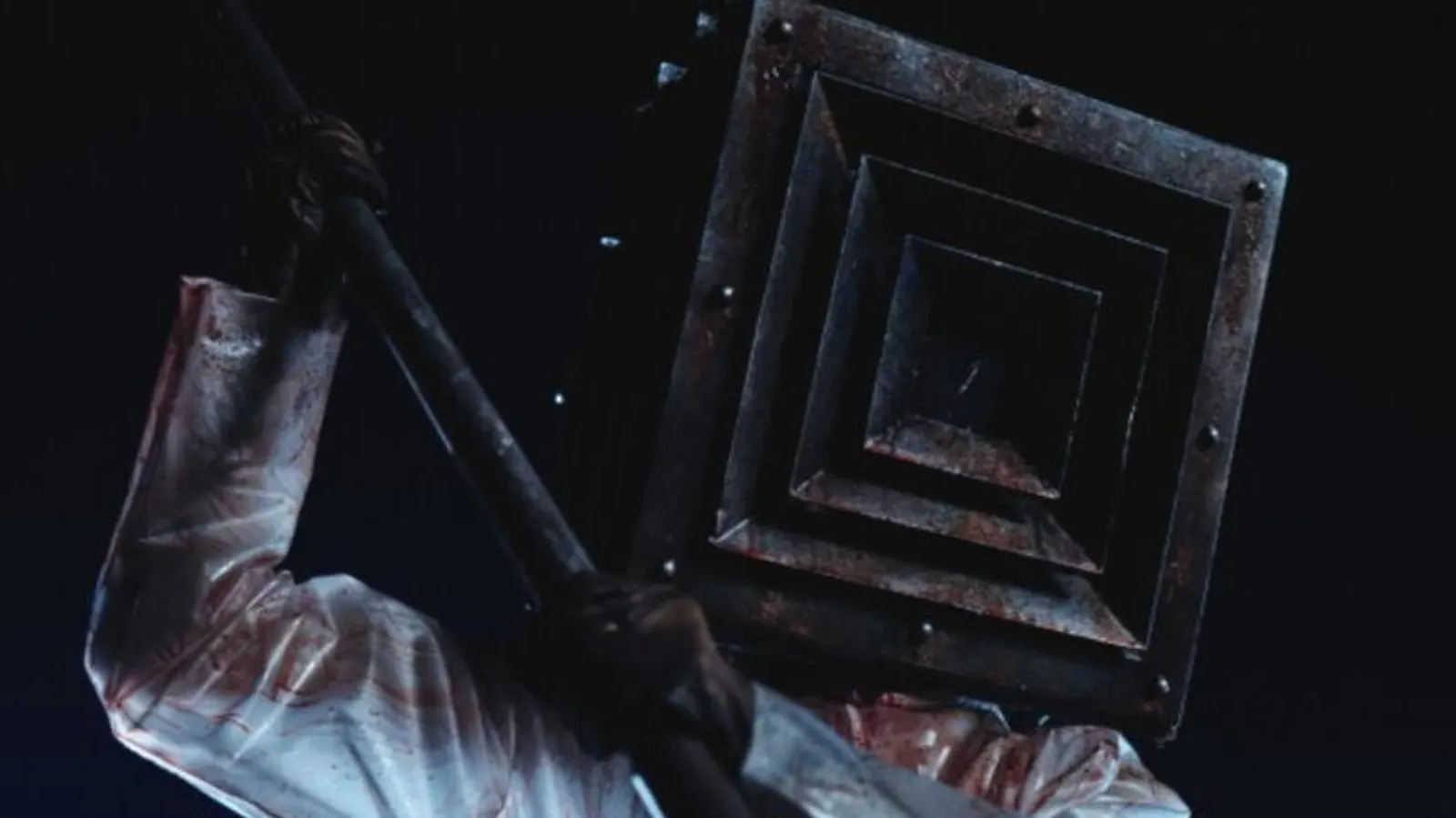
Little Death (played by Jack Haven) in 'Teenage Sex and Death at Camp Miasma'MubiJane Schoenbrun’s surreal slasher homage, Teenage Sex and Death at Camp Miasma, stars a masked killer known as “Little Death.”Masked might be the wrong word—Little Death wears an amusingly impractical helmet shaped like a CRT television.Little Death also wears a transparent, plastic raincoat (resembling an infamous scene from American Psycho), armed with a double-sided spear that he wields playfully, spouting cartoonish jets of blood.He’s not really threatening, but he already feels like an icon—he would make a great Halloween costume. But what is he, exactly? Let’s start with his face covering.What Inspired Little Death’s Helmet?Little Death’s distinctive helmet was inspired by an air vent installed above a bed, according to Jane Schoenbrun.At a Camp Miasma Q&A, the writer/director explained that it took some time to find the right visual, as the masked killer trope has been done to death. “I knew the list of the 50 things that need to be awesome if the movie is going to rule, and top of the list is the killer’s face thing, because it’s such a huge part of the ritual—of Jason, Mike Myers, Leatherface, and Freddy Krueger,” Schoenbrun explained. “I also knew that we have eight bad impressions, or pastiches, or parodies a year now. It’s always like the store brand hockey mask. Like make it look like Jason enough so that you think of Jason, but not so much that we get sued. I didn’t wanna do that.”Schoenbrun went on to explain that the “simple, but really striking” design needed to invoke an alternate universe that had been frozen in time, around 1984.While the inspiration came from a simple air vent, the shape of the design resembles a TV screen, echoing his role as a slasher villain, horror icon and observer.Slasher villains are best left ambiguous—they are forces of nature, motivated by simple revenge. Teenage Sex and Death at Camp Miasma playfully mocks the idea of origin stories for slasher villains, but Little Death is implied to be more than a dead, vengeful camper.Who (Or What) Is ‘Little Death’?Little Death has a tragic backstory, drowned at summer camp for not conforming to gender norms.Teenage Sex and Death at Camp Miasma references transphobic tropes of classic horror films, describing Little Death flipping genders at whim.Little Death, played by Jack Haven, appears as a tormented young man who carves the number of his victims on his wall in tally marks, almost like sexual conquests.Schoenbrun, who is trans, has described their own gender identity and transition as a source of inspiration in interviews, their films “speaking to the joy and horror of coming into your own body and self.”Little Death is also the vessel that allows the film’s protagonist, Kris (Hannah Einbinder), to discover her true self. Kris, a cis woman, experiences a sexual awakening with Billy (Gillian Anderson), the “final girl” of the first Camp Miasma film.Kris is a director whose personality has been defined by the slasher movies she watched as a child. She’s also a neurotic overthinker with a very analytical view of filmmaking—she’s out of sync with her own body, unable to orgasm.Both Billy and Kris use Little Death as a key to unlock their repressed urges. Kris identifies with both slasher victim and villain—she sees herself through the eyes of Little Death, and loves it.Little Death seems to act as the Jungian shadow, the Freudian Id, a being that acts on his twisted, violent urges, inspiring Kris and Billy to embrace their true selves.Little Death’s name is a reference to “la petite mort,” a French term for orgasm—he embodies sex, death, and something in-between.At one point, Little Death is described as an immortal, almost godlike entity that lives in a “hole in the lake where the movies come from.” One scene even shows Little Death creating the Camp Miasma movies by emerging from the lake to go on killing sprees.His efforts result in VHS tapes, endless Camp Miasma sequels that he relies on for entertainment. What else is there to do, in his (literal) flesh prison beneath the lake?Little Death’s identity is not meant to be clearly defined—he’s very much open to interpretation. However, he appears to be a source of creative and destructive energy, something strange and unpleasant that is clumsily concealed, before bursting to the surface and spilling guts on the floor.He is masked, but sometimes his face shows through the facade. His mannerisms are playful but his expression is sad. He seems self-indulgent, but at odds with himself, and he offers an unconventional path to salvation.Notably, Teenage Sex and Death at Camp Miasma ends with Kris and Billy covered in blood and eating far too much candy. They are indulging in vices, but they are happy.Little Death, they confidently state, will return. He always does—whatever he is, you can’t repress him forever.MORE FROM FORBESForbesThe Surreal Ending Of ‘Teenage Sex And Death At Camp Miasma,’ ExplainedBy Dani Di PlacidoForbesIs ‘Backrooms’ Really A Critique Of Generative AI?By Dani Di PlacidoForbesWhat Do The Backrooms Really Represent?By Dani Di PlacidoForbes‘Amazing Digital Circus: The Last Act’—The Jax Twist, ExplainedBy Dani Di Placido
‘Camp Miasma’—Who (Or What) Is ‘Little Death’?
Jane Schoenbrun’s ‘Teenage Sex and Death at Camp Miasma’ features a mysterious killer, ‘Little Death’ (Jack Haven)—here’s everything to know.
854 words~4 min read