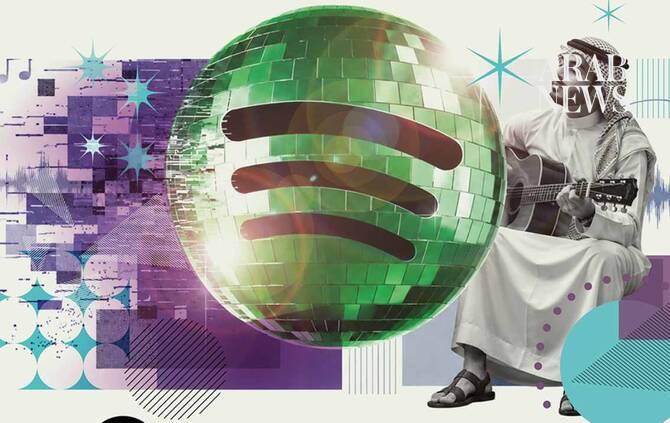
RIYADH: Artificial intelligence is already making its way into the music studio. The harder question is how far artists are willing to let it go.
That debate is gaining urgency worldwide after Spotify removed more than 75 million AI-generated “spam” tracks from its platform over the past year, exposing the scale of a problem that is forcing the music industry to confront the boundaries between technological assistance, artistic creation and outright replacement.
Spotify is not banning AI-generated music. Its crackdown is aimed at mass-produced content created to manipulate the platform through fake streams, misleading metadata and automated uploads, according to the Los Angeles Times and Rolling Stone.
The platform continues to permit AI-assisted music when creators have the necessary commercial rights and use the technology as part of a legitimate creative process. It has also introduced measures to address abuse, including restrictions on unauthorized AI voice cloning of recognizable artists, systems to detect streaming manipulation and improved metadata standards for AI-generated content.
For Saudi Arabia, where a rapidly expanding music industry is becoming an increasingly important part of the Kingdom’s creative economy, the debate is no longer theoretical.