view more
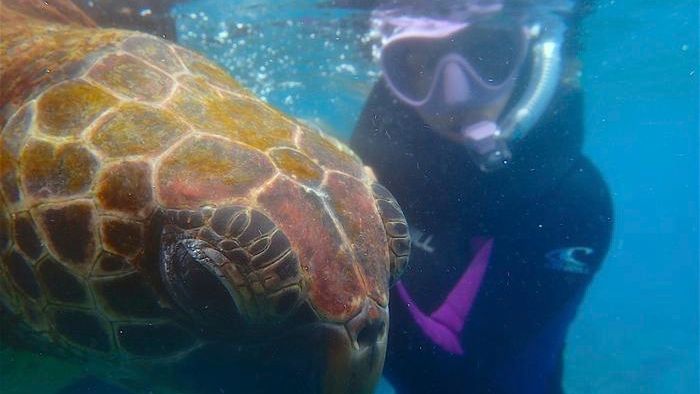
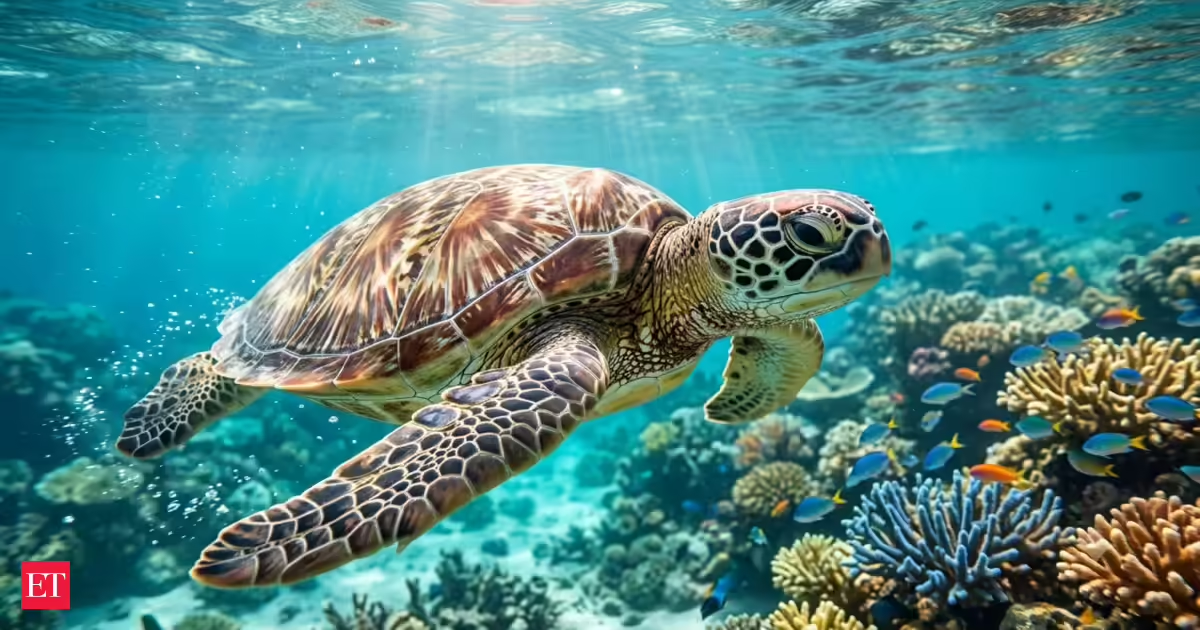
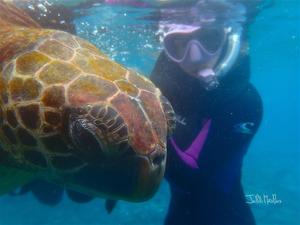
Sea turtles are famous for being prodigious wanderers. Guided by the Earth’s magnetic field, oceanic currents, and the sun, they tend to crisscross the seas in search of food, returning to the region of their birth every few years to breed. So when scientists discovered a population of sea turtles who appear to be very much homebodies, they were taken aback.
“Here we show that ‘yellow-morph’ green sea turtles – one of two genetically distinct forms – occupy individual foraging areas which span one or more islands in the Galápagos. We expected them to migrate to distant beaches in the western Pacific to reproduce, yet interestingly, none of our satellite-tagged turtles even left the Galápagos Marine Reserve over the three years of our study,” said Dr John W Rowe, a professor at Alma College in the United States and the corresponding author of a new study in Frontiers in Amphibian and Reptile Science.
Black and yellow
Green sea turtles are unique among the seven living species in being mainly vegetarian. Hatchlings start life as omnivores, but once fully grown, their diet consists of seagrasses and algae. Yellow-morph green sea turtles roam the western Pacific Ocean’s tropical and subtropical latitudes, while black-morphs live in the eastern Pacific west of the Americas below southern California. The only known waters in the world where these two coexist is around the Galápagos, where they intermingle and happily feed on the same species of marine plants. However, yellow morphs tend to grow faster than black morphs when young, which suggests that uncharacterized physiological differences do exist.