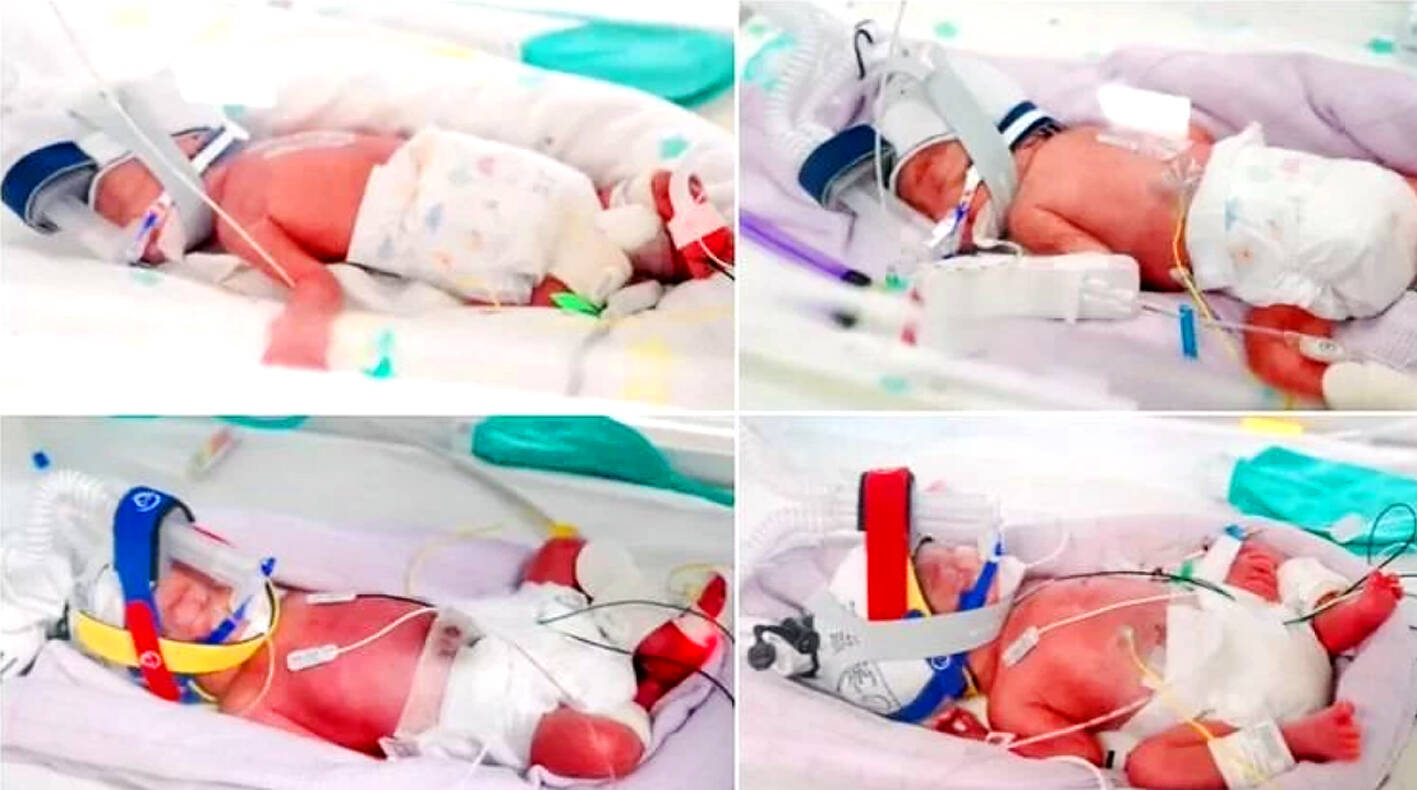
A 27-year-old Queensland surrogate conceived naturally with her husband shortly after another couple’s embryo was implanted; the babies were delivered together by C-section, forcing a court to untangle an unprecedented parentage caseynet|An extraordinarily rare surrogacy case in Australia has left two babies born from the same pregnancy with entirely different biological parents, forcing a court to decide how laws written for conventional twin births should apply.The case, reported by Australia’s ABC and Britain’s Guardian, involved a 27-year-old surrogate in Queensland who became naturally pregnant shortly after an embryo belonging to another couple was implanted in her uterus. About two weeks after the embryo transfer, an ultrasound revealed that she was carrying two fetuses even though only one embryo had been transferred.(Photo: Shutterstock)Genetic testing later established what had happened. One fetus was the biological child of the intended parents, while the second had been conceived naturally by the surrogate and her husband around the same time. Roughly seven months later, in November 2025, both babies were delivered during the same cesarean section, one girl belonging biologically to the intended parents and one boy to the surrogate and her husband.The two couples had entered an altruistic surrogacy arrangement, the only form permitted under Australian law because commercial surrogacy is prohibited. The intended mother had been born without a uterus and was unable to carry a pregnancy. The surrogate, identified in court documents as DZ, already had five children with her husband, FZ. The intended parents were identified only as BNJ and DRJ.Since the birth, each couple has raised its own biological child, and there has been no dispute between them over parentage. The difficulty came from Queensland’s surrogacy legislation.Under Queensland law, a court cannot issue a parentage order for only one child when so-called “birth siblings” are born from the same pregnancy. The provision was designed to prevent twins or other multiples born to a surrogate from being legally separated, requiring parentage orders to apply to all the children together and to the same intended parents.But the law never contemplated two fetuses conceived separately, with different biological parents, developing in the same womb at the same time.Judge Jodie Wooldridge was therefore required to decide whether the two babies fell within the legal meaning of “birth siblings.” She concluded that, given the exceptional circumstances, they should not be treated that way for the purposes of the law, even though she described them as “gestational twins.”The decision cleared the way for separate parentage orders, allowing each couple to be recognized legally as the parents of its own biological child.Before the hearing, both couples consulted an independent professional who prepared a psychological assessment for the court about the implications of raising the children separately.The assessment concluded that their development would depend primarily on the quality of parenting they received and on openness about the circumstances of their birth, rather than simply on the fact that they were born together but raised in different households. Both families said they intended to ensure the children knew about one another and to maintain an ongoing relationship between the families as they grew older.The case illustrates how advances in fertility medicine are creating situations that lawmakers may never have imagined when surrogacy legislation was drafted.Under Australian surrogacy law, the woman who gives birth is initially regarded as the child’s legal parent, even when she has no genetic connection to the baby. The intended parents must then obtain a formal court order transferring legal parentage.That process is relatively straightforward when a surrogate carries a single embryo or conventional twins belonging to the same intended parents. Here, however, the simultaneous natural conception created two pregnancies within one uterus involving two completely different sets of biological parents.The phenomenon is extremely rare and had not previously been documented in Australia, according to the reports.The case ultimately required the court to interpret the legislation according to its purpose rather than its most literal wording. The judge found that rules intended to keep biological or conventional surrogate twins together should not force two unrelated babies to be legally assigned to the same parents simply because they happened to share a pregnancy and birth.The ruling allowed the unusual arrangement already operating in practice to receive legal recognition: two babies born together, two separate biological families and two different sets of legal parents.
Australia woman gives birth to ‘twins’ with different biological parents in rare case
A 27-year-old Queensland surrogate conceived naturally with her husband shortly after another couple’s embryo was implanted; the babies were delivered together by C-section, forcing a court to untangle an unprecedented parentage case
716 words~3 min read