A faint background of extremely low frequency gravitational waves detected through networks of pulsars could contain clues to events that unfolded more than 13 billion years ago, including the emergence of some of the Universe's earliest supermassive black holes.
In a study published as a Letter in Physical Review D, Colgate University researchers Sohan Ghodla and Cosmin Ilie examined whether supermassive black holes that originated in the early Universe could eventually produce a significant share of the gravitational wave background now being measured by Pulsar Timing Arrays, or PTAs.
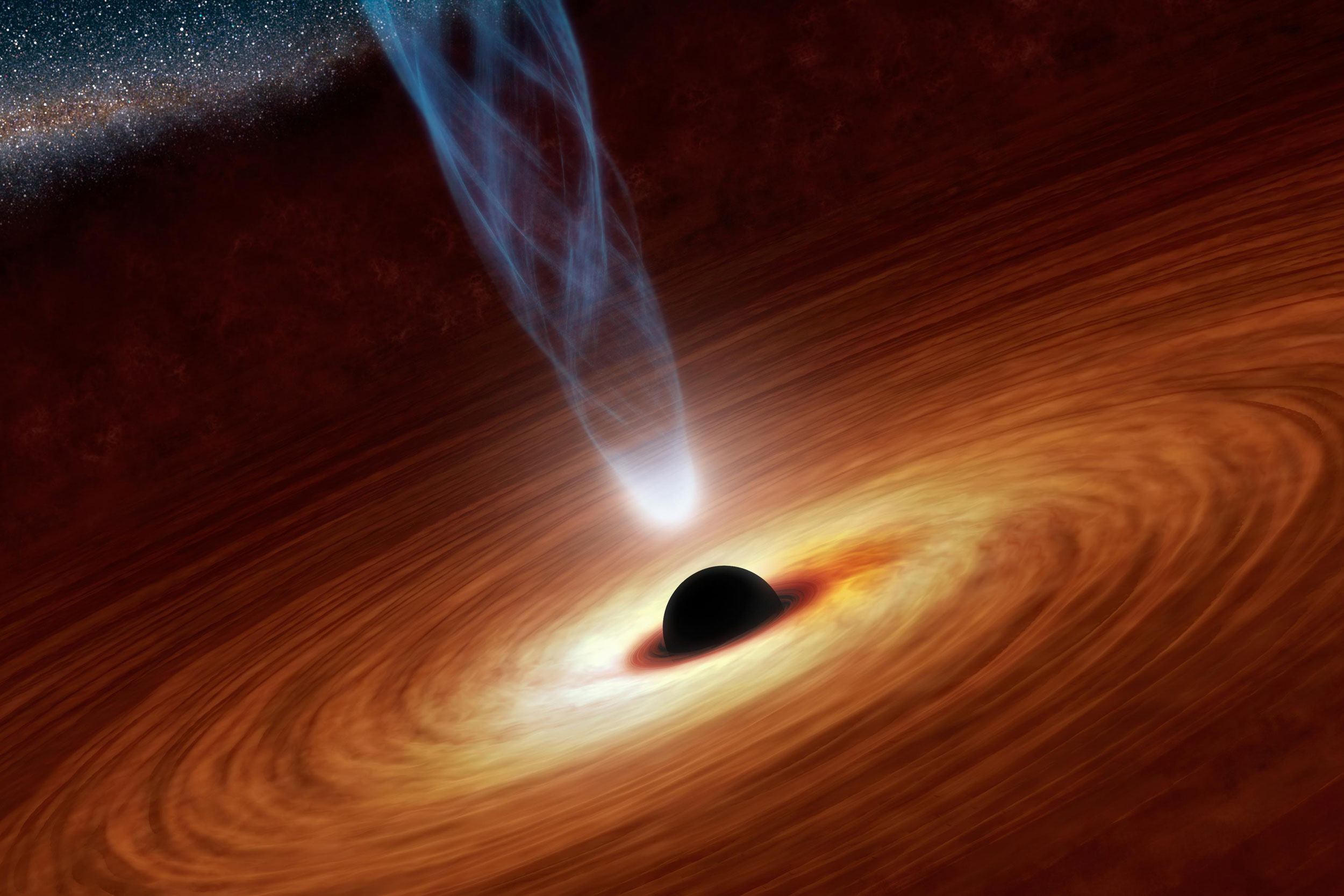
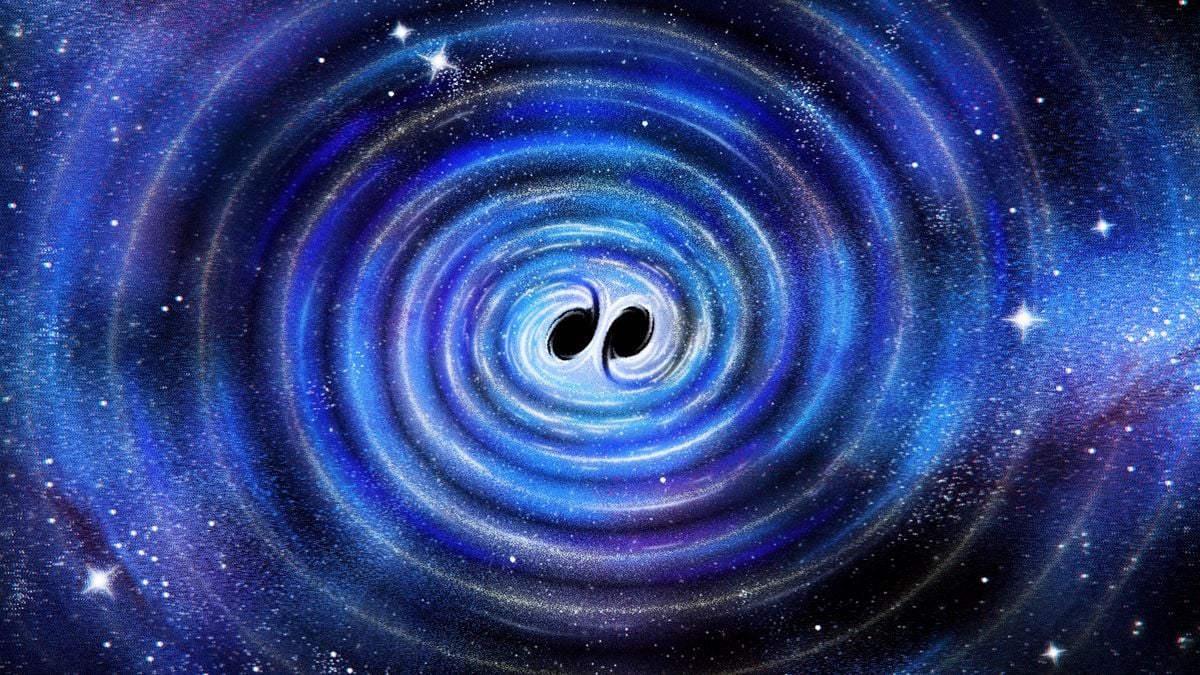
The findings connect two areas of astronomy that may at first seem far apart. One involves observations of surprisingly massive black holes that already existed when the Universe was young. The other involves gravitational waves generated billions of years later by pairs of supermassive black holes spiraling toward one another.
The researchers found that one possible class of early black hole seeds, remnants left behind by supermassive Dark Stars, could potentially provide a dominant contribution to the PTA signal.
"Pulsar timing arrays are usually thought of as probes of supermassive black-hole binaries in the relatively recent Universe," said Ilie. "What our work shows is that the signal may also contain information about how the ancestors of those black holes formed at cosmic dawn. In that sense, gravitational waves observed today could provide a new window onto the birth of the first supermassive black holes."