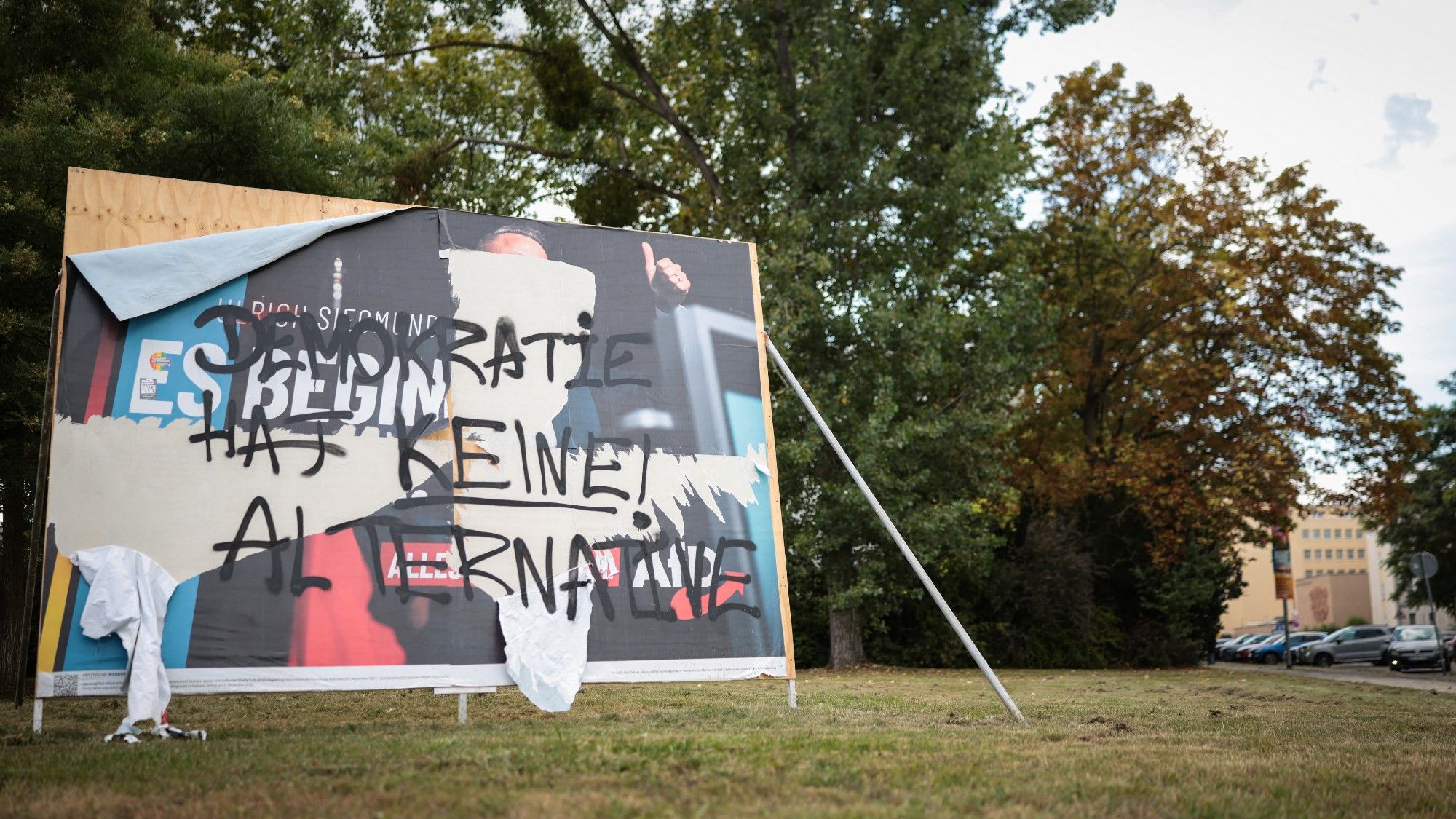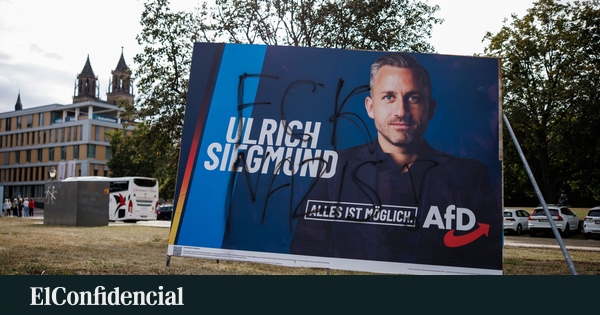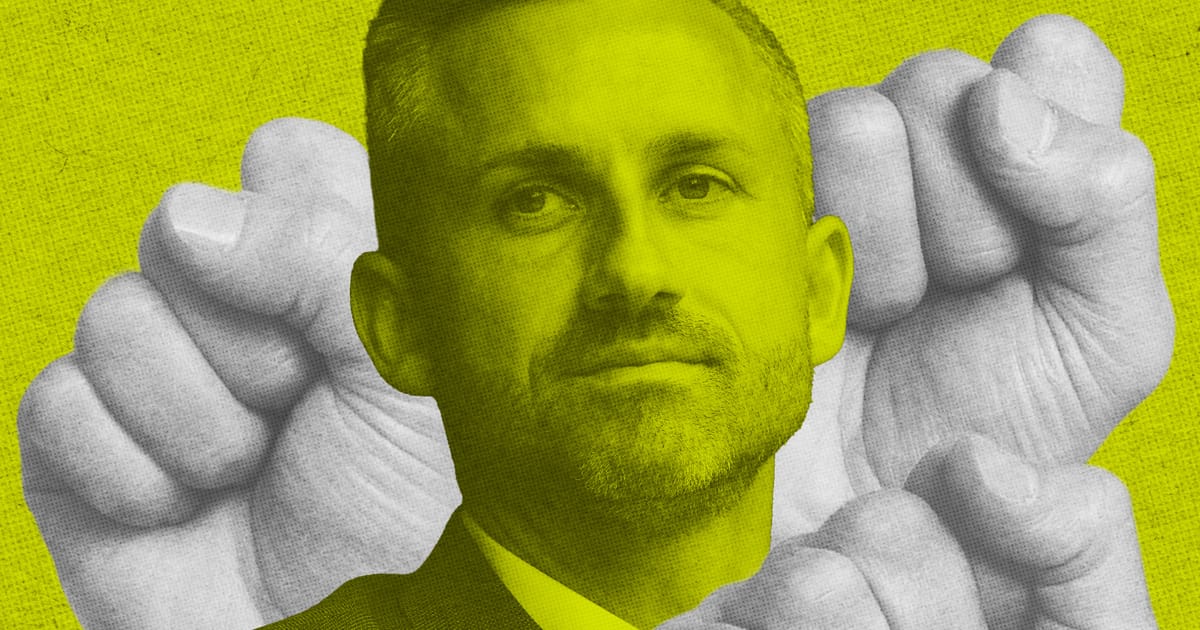
A generation after Germany banned a neo-Nazi youth organization for seeking to cultivate a new extremist elite, four of its former members now hold influential roles around the politician who is on track to become the country’s first far-right state premier since the Federal Republic of Germany was founded in 1949.
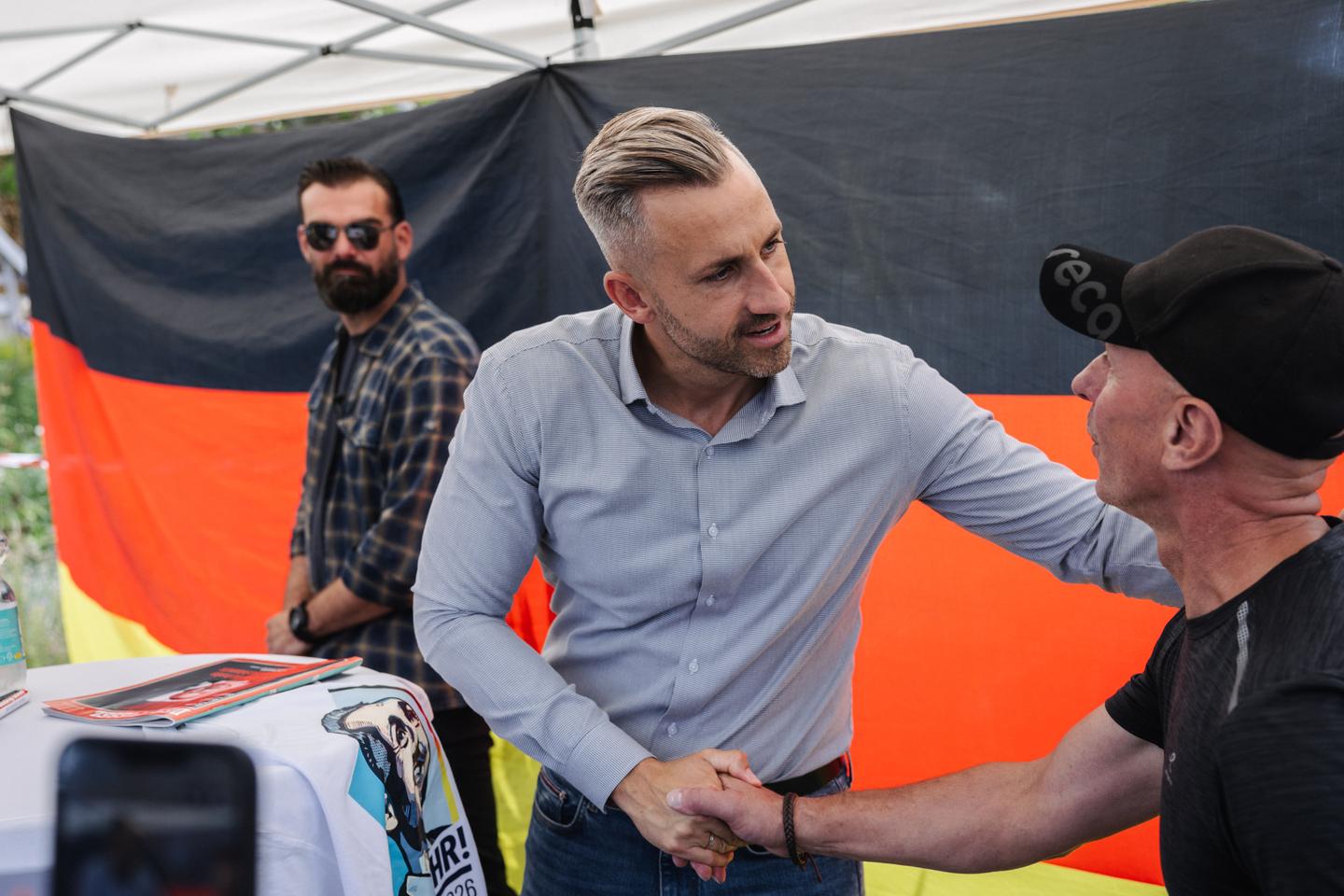
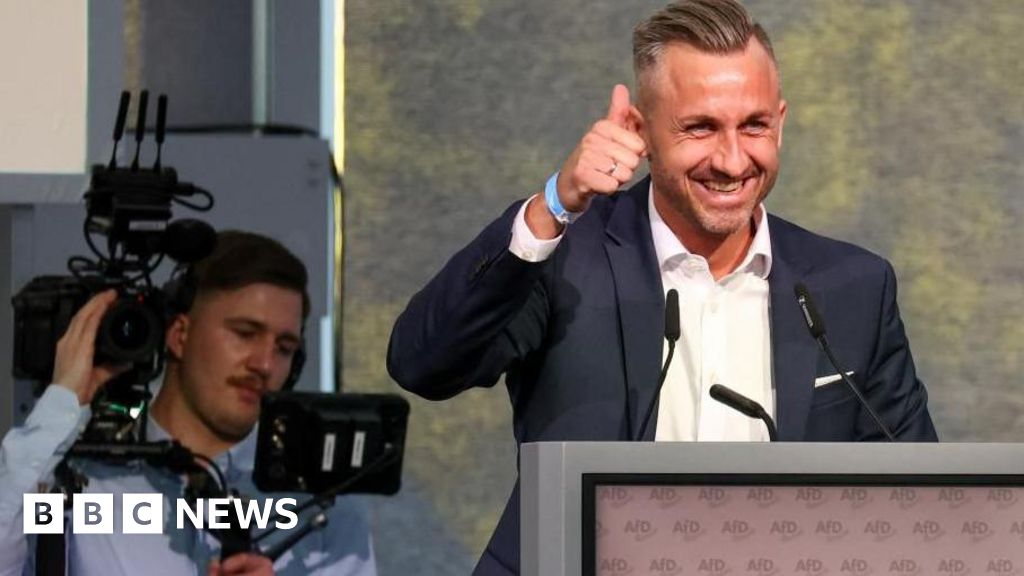
The four men are staffers close to Ulrich Siegmund, the far-right Alternative for Germany (AfD) party’s candidate for premier in Saxony-Anhalt, where voters go to the polls on Sept. 6. Two of them are among his closest advisers and two of them helped draft the party’s election manifesto.
All four were involved with the Heimattreue Deutsche Jugend, or HDJ, a group modeled in part on the Hitler Youth and banned by the German government in 2009, according to an investigation by WELT, which, like POLITICO, is part of the Axel Springer Global Network. The ban order said the group’s aim was to train a “neo-Nazi elite” steeped in National Socialist ideology.
The AfD’s rules list the HDJ — the name roughly translates to Homeland-Loyal German Youth — among organizations whose former members are barred from joining the party.
The federal government’s ban order, obtained by WELT, cited the group’s “affinity with National Socialism” and concluded: “The actual objective of the association is the training of a neo-Nazi elite.” The group, it said, saw itself as standing “in the tradition of the Hitler Youth.”