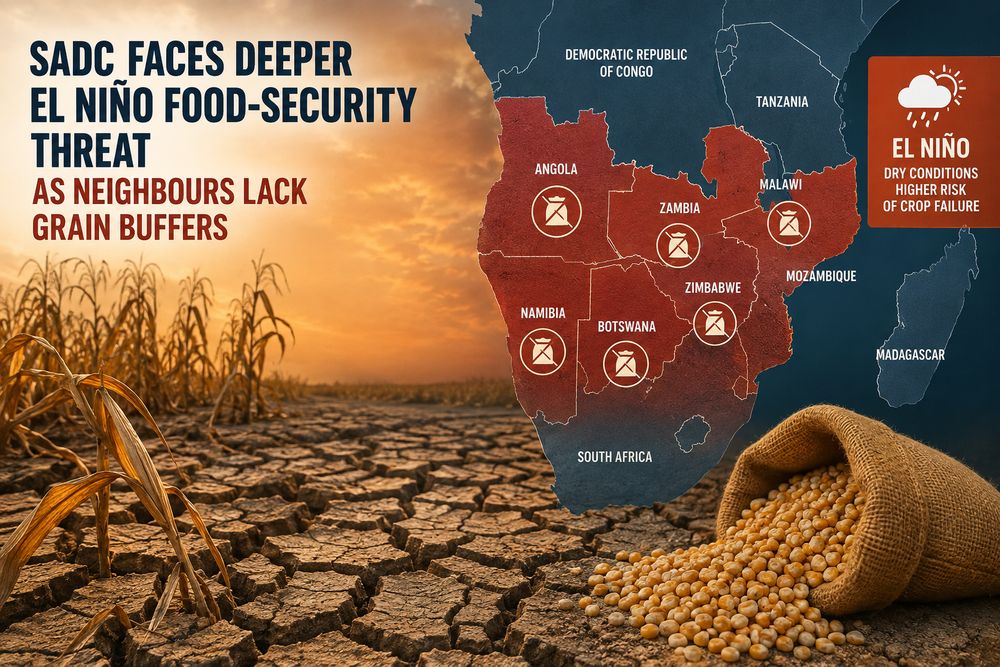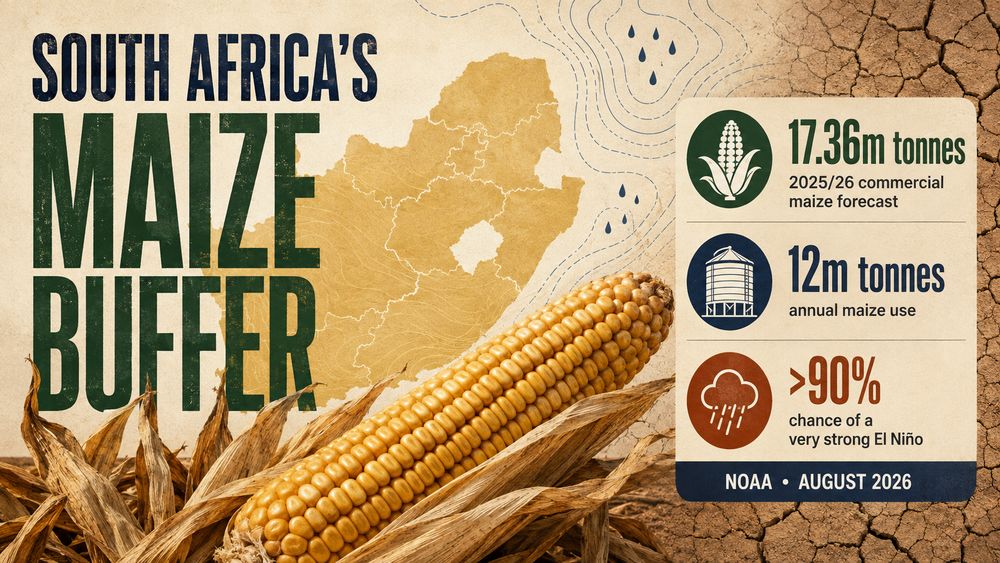
South Africa's record maize harvest provides a crucial buffer against immediate food shortages, but the looming threat of a strengthening El Niño raises concerns over agricultural output and food affordability for low-income households in 2027.
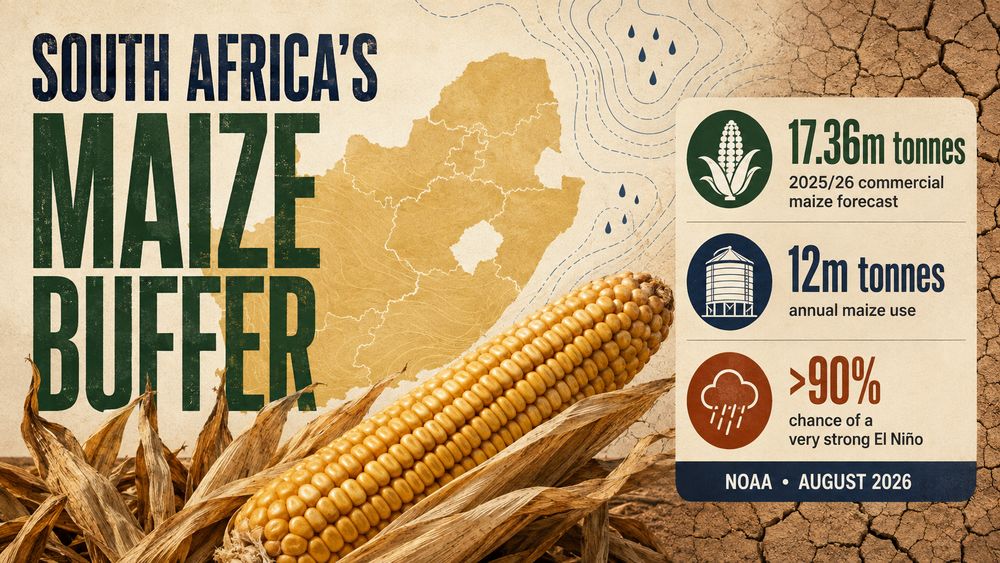
South Africa’s record maize harvest and improved water reserves should protect against immediate food shortages, but a strengthening El Niño could reduce agricultural output and push food prices higher next year.
El Niño is a climate pattern characterised by unusually warm surface waters in the central and eastern tropical Pacific Ocean, which can disrupt global weather patterns and is often associated with hotter, drier conditions in southern Africa.
The country last experienced the phenomenon during the 2023/24 summer season, when drought and extreme heat cut maize production, while the severe 2015/16 El Niño provided an earlier warning of the potential consequences of a prolonged drought, when poor harvests forced the country to rely more heavily on grain imports.
The concern for households is not that maize will vanish from shop shelves, but that a poor 2026/27 harvest could make staple foods less affordable for low-income households