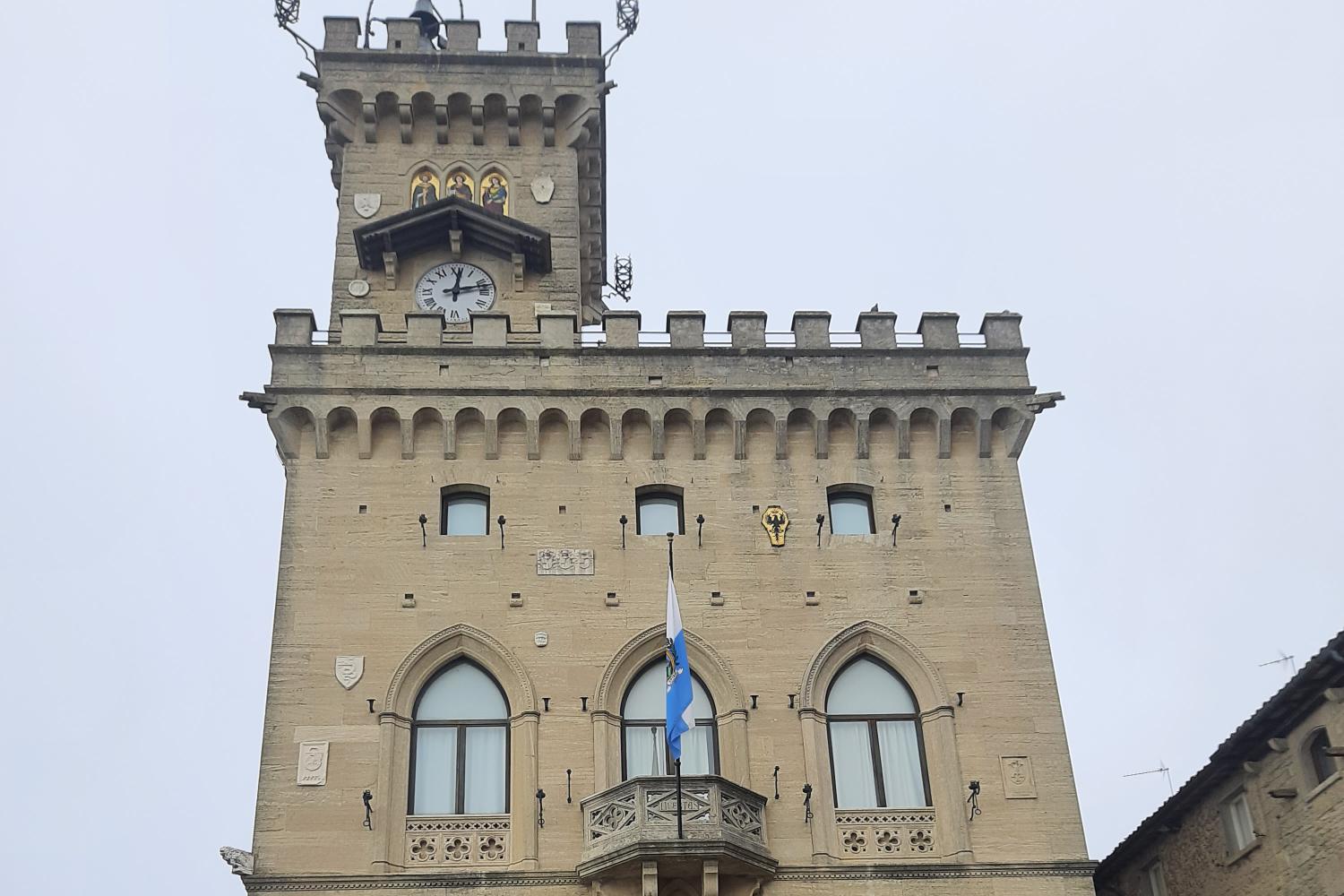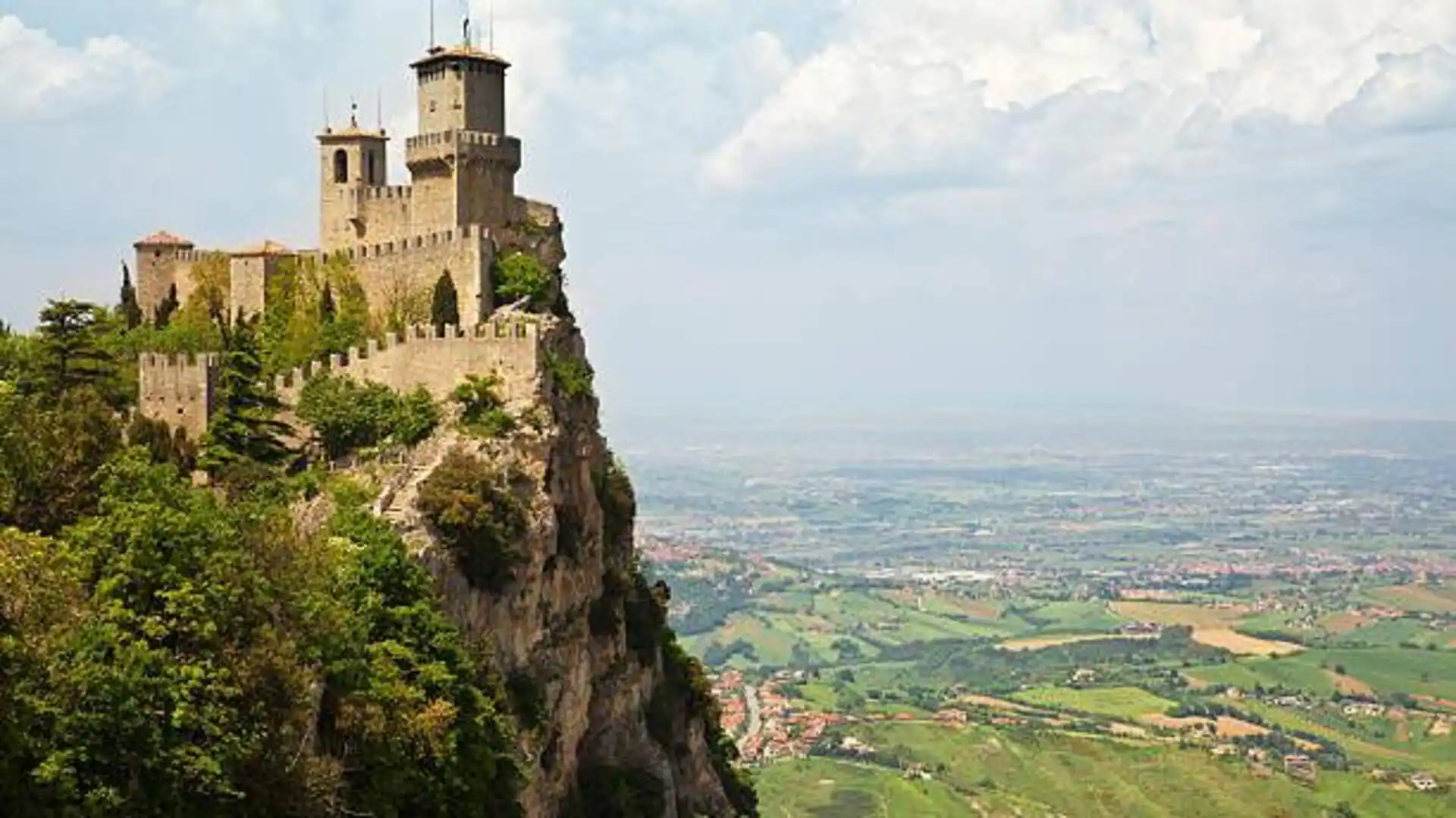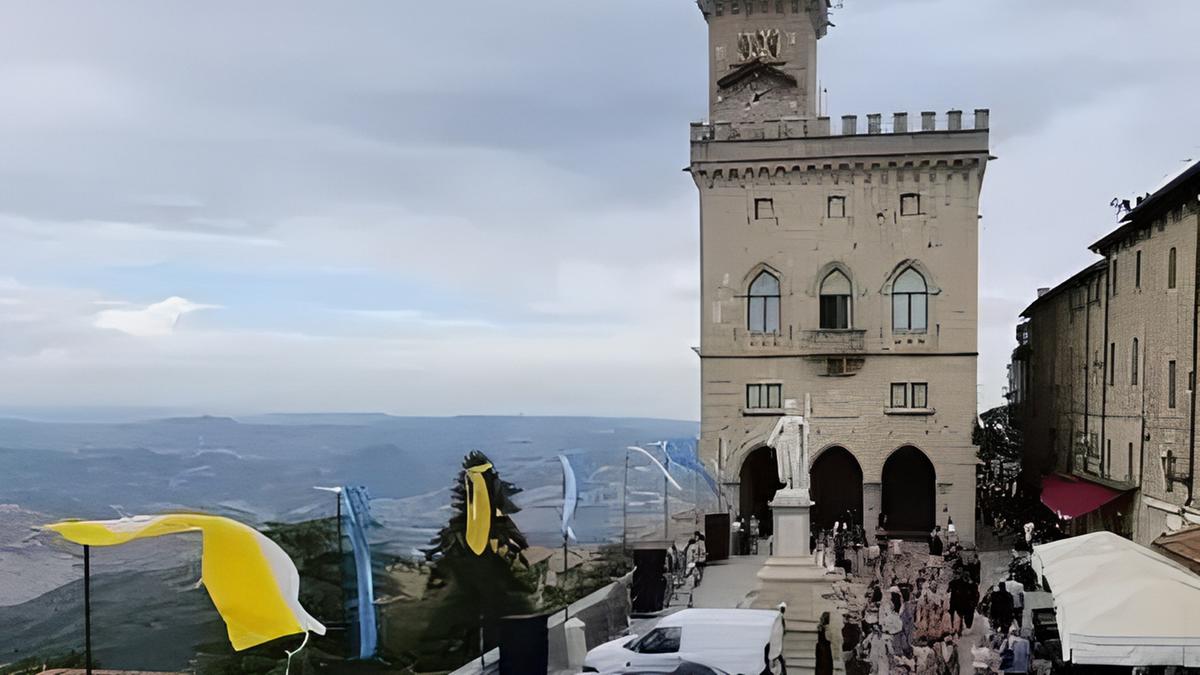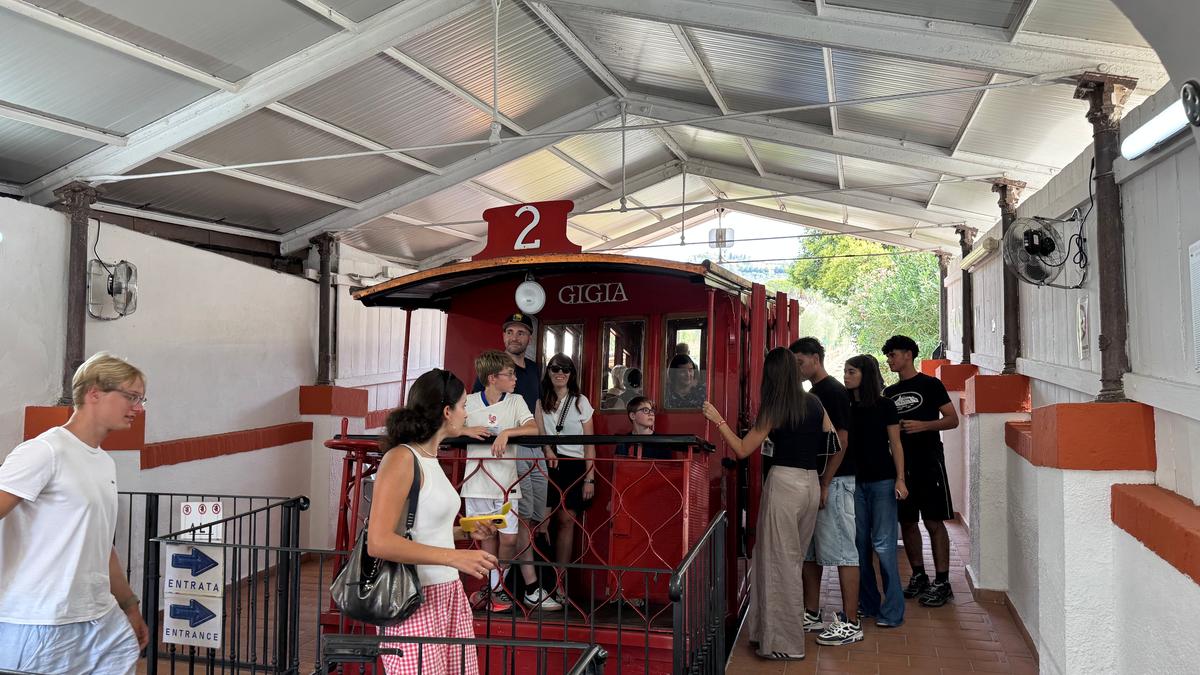
The cable car rose gently above Borgo Maggiore, towards the crenelated peak of Monte Titano, and I was grateful for the ride back to my starting point. I had just descended 200 metres along the Costa dell’Arnella trail and through the Porta San Francesco, the original entrance to the city, and my legs were already registering their opinion.
Gliding upward, I could see all the way to the Adriatic, across the vast swath of Italian landscape wedged between here and the sea. That’s the thing about San Marino – it’s entirely surrounded by Italy, a country more than 1,500 years its junior. It has stood here for centuries, yet has never been part of the nation that eventually formed around it.
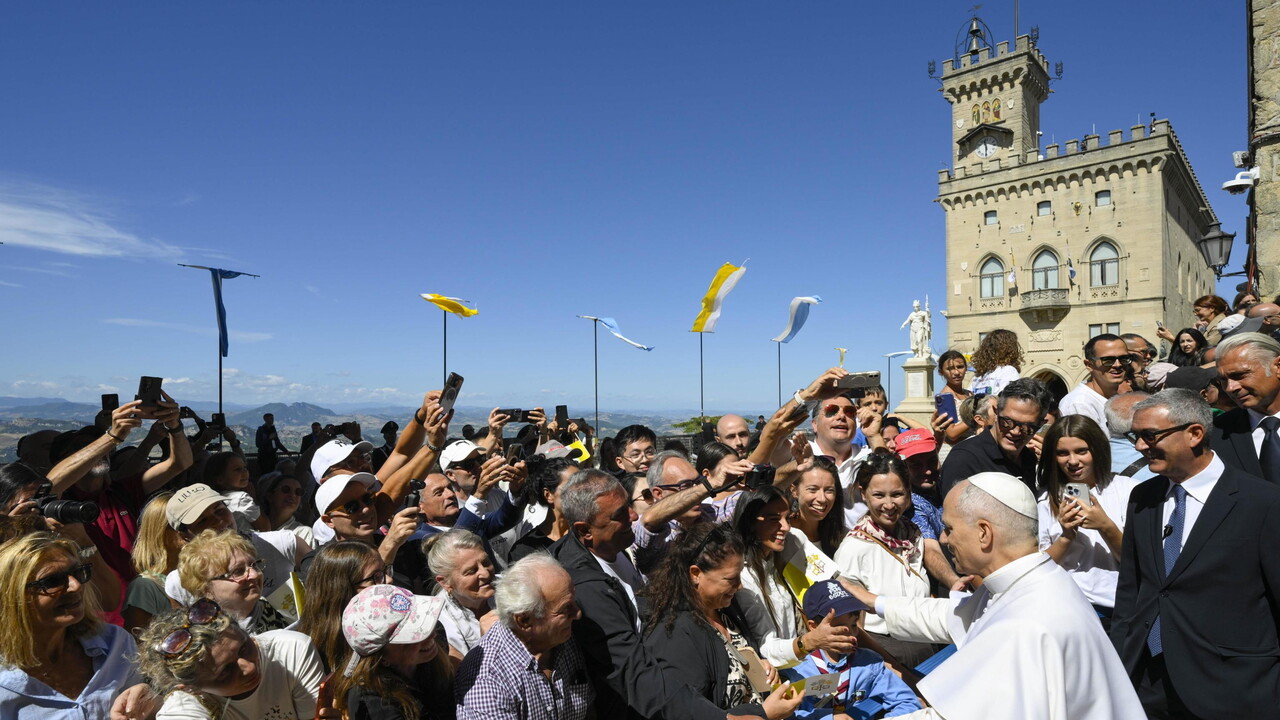
All but encircled by Italy’s Emilia-Romagna region, with a small section bordering Le Marche and Tuscany less than 50km away, the world’s oldest republic feels different from neighbouring areas. San Marino is quieter, less performed, more purposeful than an Italian hill town dressed up for tourism.
The cable car over Borgo Maggiore (Photo: FotoGablitz/Getty Images/iStock Editorial/lugmayer.com)
Its origin story has the quality of legend. Founded in 301 AD by a Dalmatian stonemason named Marinus, who fled persecution for his Christian beliefs and found refuge on Monte Titano after curing a local landowner of paralysis, it has since watched empires, wars and republics rise and fall. The Roman Empire crumbled around it. The Italian Peninsula’s warring city states tore each other apart before unification in 1861. It watched two world wars. Through everything, the principle of hospitality and sanctuary held.