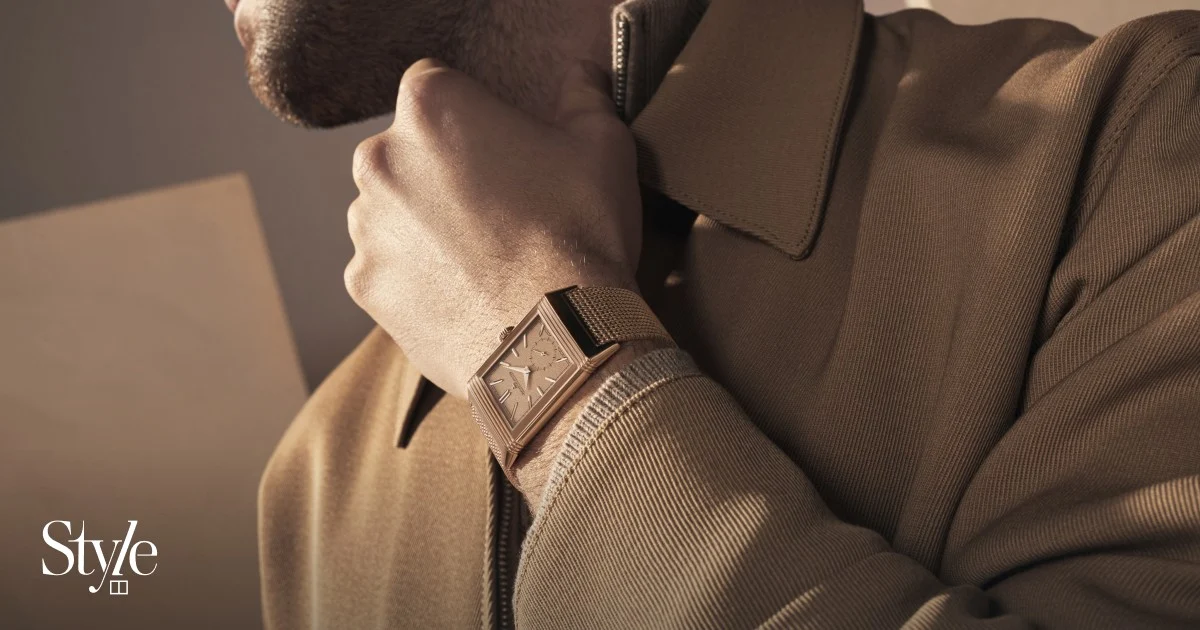
Rectangular watches have long occupied a unique spot in horology. Less ubiquitous than round exemplars, these cases are home to some of the industry’s most enduring designs.Now, as dressier watches continue to outperform sports models, the shape is moving further into focus. According to a new report from Chrono24, an online marketplace for luxury timepieces, demand for rectangular cases rose 9.3 per cent year on year in 2025, suggesting buyers are increasingly looking beyond their rounded brethren.“The growing demand for rectangular cases is driven by a broader market shift towards classic elegance and understated luxury,” says Kana Mackie, who is responsible for Chrono24’s Asia-Pacific business. “Buyers are increasingly looking for distinctive silhouettes that stand out from the standard round sports watch.”Former NBA star Dwyane Wade wears a Cartier Tank at the 2024 Netflix is a Joke Festival. Photo: Getty ImagesThe origins of the rectangular case shape can be traced back to the early 20th century, as wristwatches began replacing the pocket variety. World War I accelerated that shift, as soldiers and officers needed practical timepieces they could check at a glance. As production increased, so did experimentation with different case shapes.A round wristwatch, of course, made total sense as it not only followed the silhouette of the pocket watch, but also proved easy to seal against water and dust. A rectangular case, on the other hand (pun intended), benefits from a streamlined look that is more closely aligned with the shape of the wrist.Jacob & Co The Godfather II. Photo: HandoutThe most famous rectangular timepiece is no doubt the Cartier Tank. Designed by Louis Cartier in 1917 and first released in 1919, it took its name from the military tanks then appearing on the Western front. Seen from above, the tank’s rectangular body and parallel tracks were translated into the watch’s case and brancards, resulting in a design unlike that of any of the round watches that had come before.The shape also found its natural home in the art deco period of the 1920s and 30s, when symmetry and geometric lines transformed everything from architecture to jewellery design. In 1931, Swiss watchmaker Jaeger-LeCoultre added another icon to the rectangular line-up with the Reverso. Originally designed for polo players, its swivelling case enabled the dial to be flipped, protecting the crystal from mallet and ball impacts.Tank Louis Cartier in yellow gold. Photo: HandoutRectangular cases also posed a new challenge inside the watch. Early wristwatches often used rounded movements, which fitted neatly into round cases but left unused space inside rectangular ones. Watchmakers responded by developing rectangular movements that fitted the case properly, rather than placing a round calibre inside and leaving empty space at the corners.
Why collectors are buying rectangular watches again
Driven by a revival in classic elegance, rectangular cases are capturing a new generation of collectors looking beyond standard round sports watches.
445 words~2 min read