Real-world humanoid skills tested freestyle fighting at 2nd WHRG
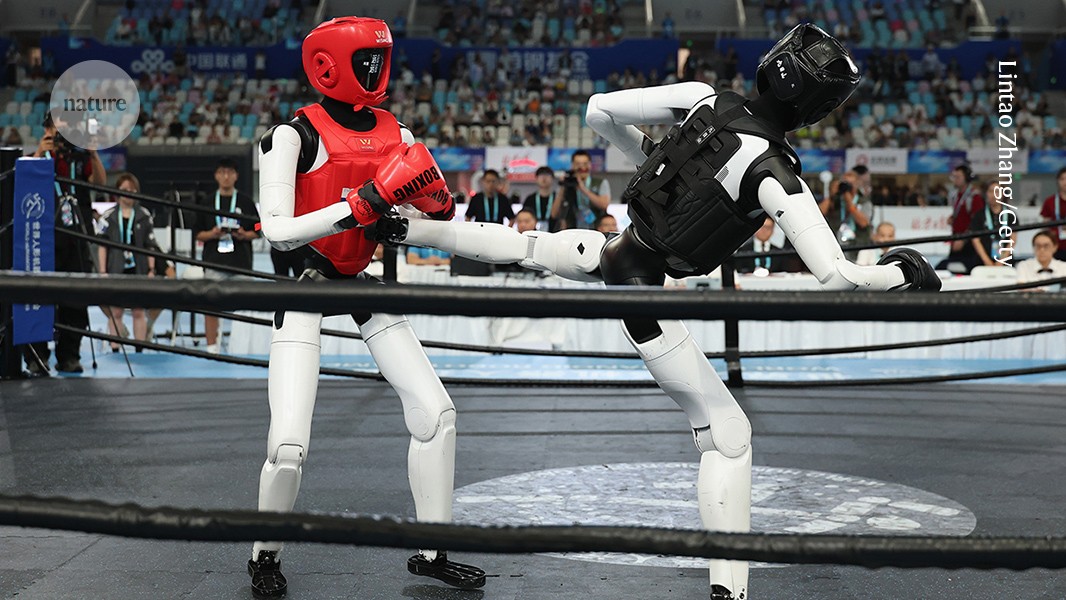
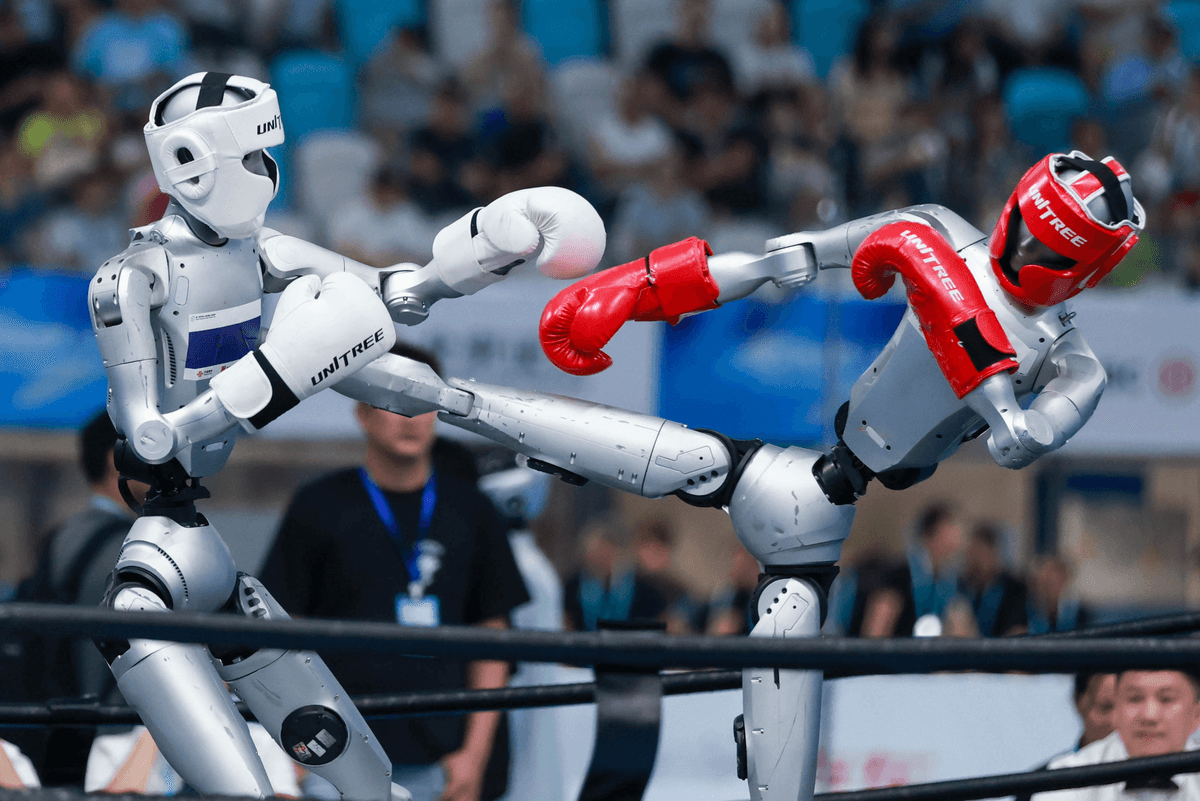
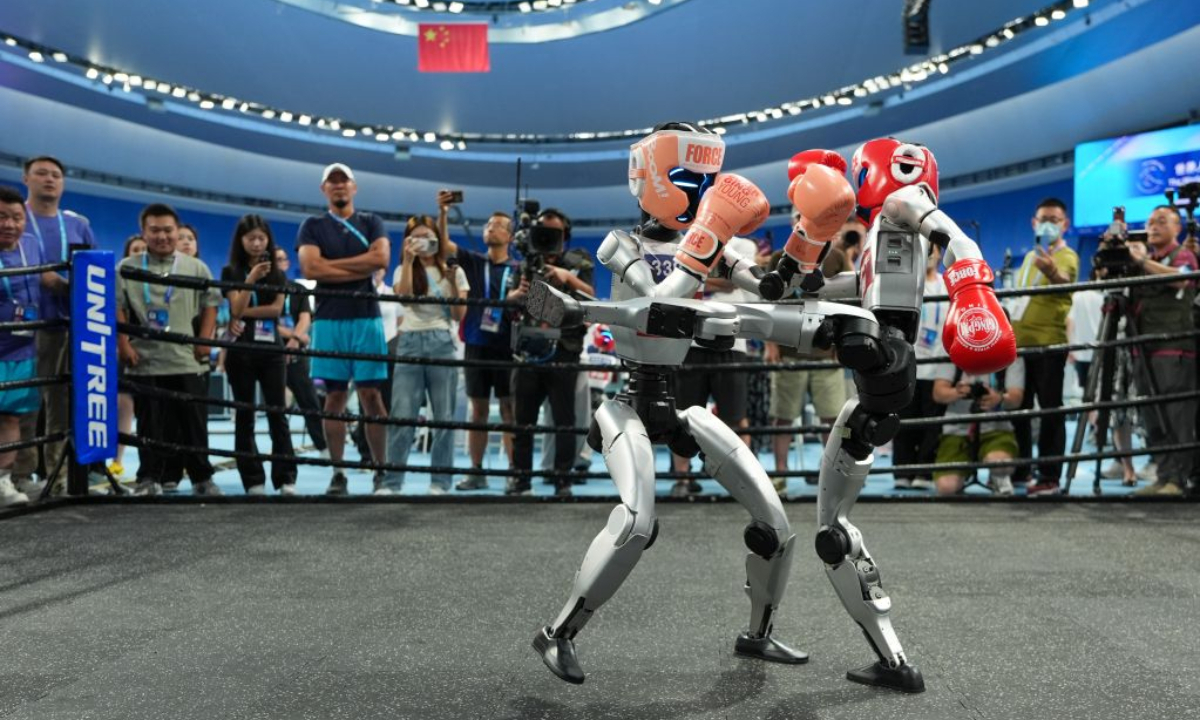
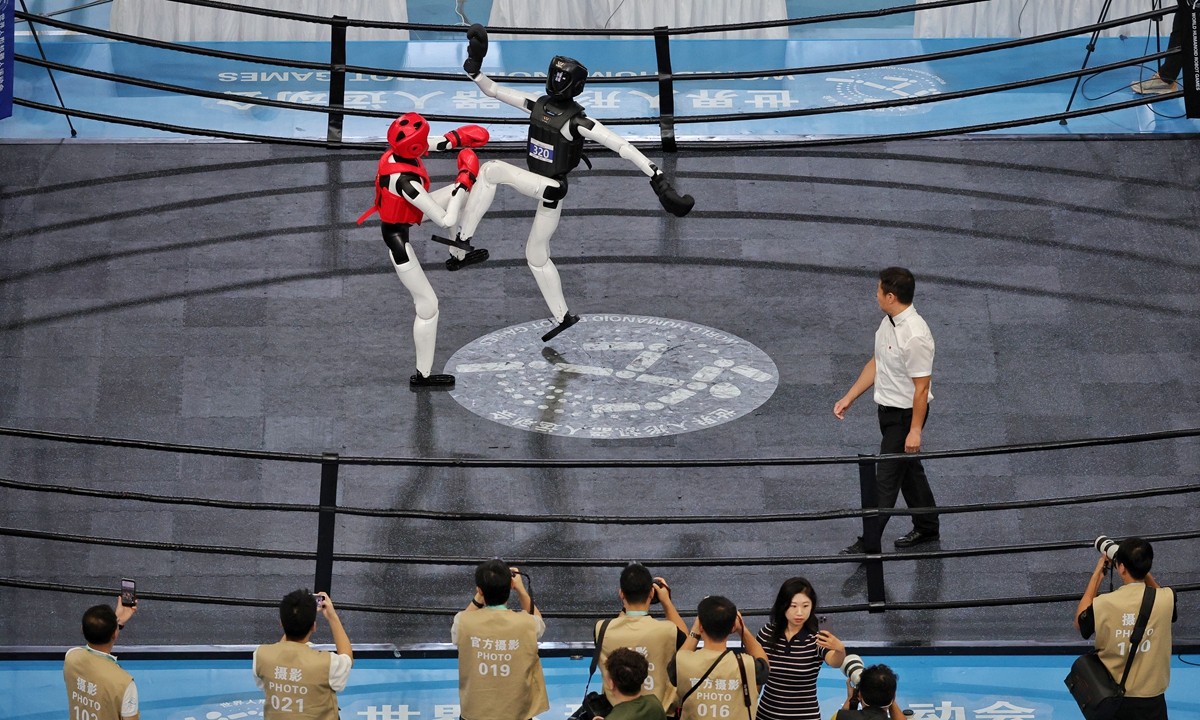
Humanoid robots compete in a freestyle fighting match at the 2nd World Humanoid Robot Games in Beijing on August 26, 2026. Photo: Li Hao/GTA straight punch lands, sending two humanoid robots into a close-range clash. Nearby, another loses its balance mid-turn, falls to the mat, then gets back on its feet. At the 2nd World Humanoid Robot Games, punches, kicks, collisions and falls in the freestyle fighting ring drew bursts of cheers from the crowd.It may look like a real-life version of Street Fighter, but the ring tests far more than whether robots can throw a punch. It tests whether they can stay balanced, adapt and keep moving in an unpredictable physical environment.This year, freestyle fighting was elevated from a demonstration event to an official competition, featuring three two-minute rounds across the 40kg, 58kg and 80kg weight classes. The scoring system closely mirrors that of human combat sports: effective strikes earn one point, sweeping techniques or high-difficulty kicks score three, and a knockdown is worth six points if the opponent gets back up within 10 seconds - failure to do so means in the loss of the round.A volunteer told the Global Times that bouts typically saw each team scoring around 10 points per round, meaning robots had to land multiple effective strikes and usually execute at least one higher-scoring maneuver, such as a sweeping kick.In the 58kg category, the GoGo team, jointly formed by the Shanghai Theatre Academy and AgiBot, claimed the title."It's completely different from a game like Street Fighter," team member Mao Jingwen told the Global Times. The robot learned punches, movement and turns through extensive motion-capture data and training, but in the ring, its condition, distance from the opponent and even the environment could affect how each move played out.Rather than chasing flashy moves, team GoGo focused on the basics. "Facing the opponent accurately and landing a clean hit are what really matter," Mao said.The Peking University team brought real-world boxing experience into the robot ring. Operator Wanxuan Lin, himself a boxer, told the Global Times that while controlling a robot still requires practice, but judging distance, timing and an opponent's positioning shares much in common with human boxing. The team's technical lead summed up their advantage as "a combination of real-world fighting experience and an understanding of robotics algorithms."