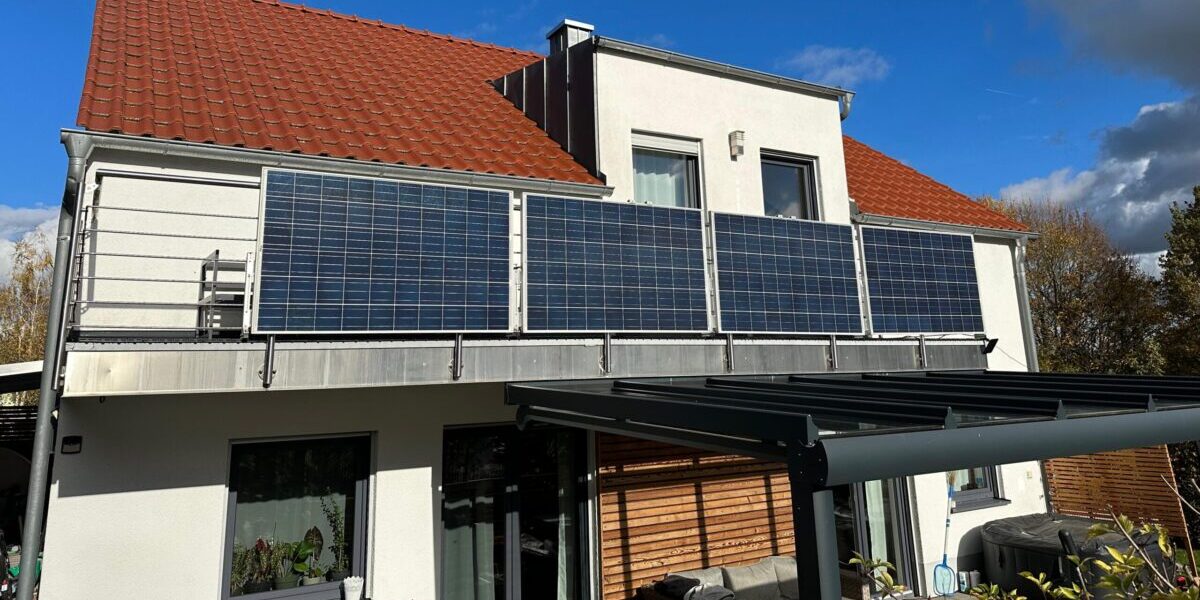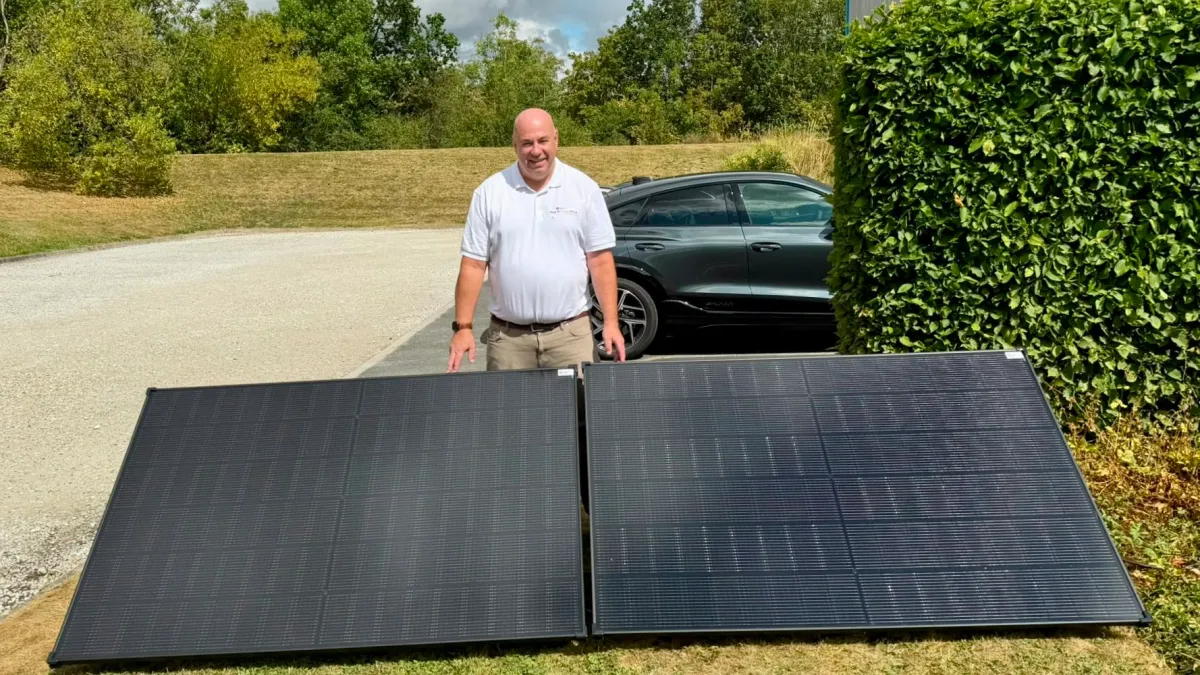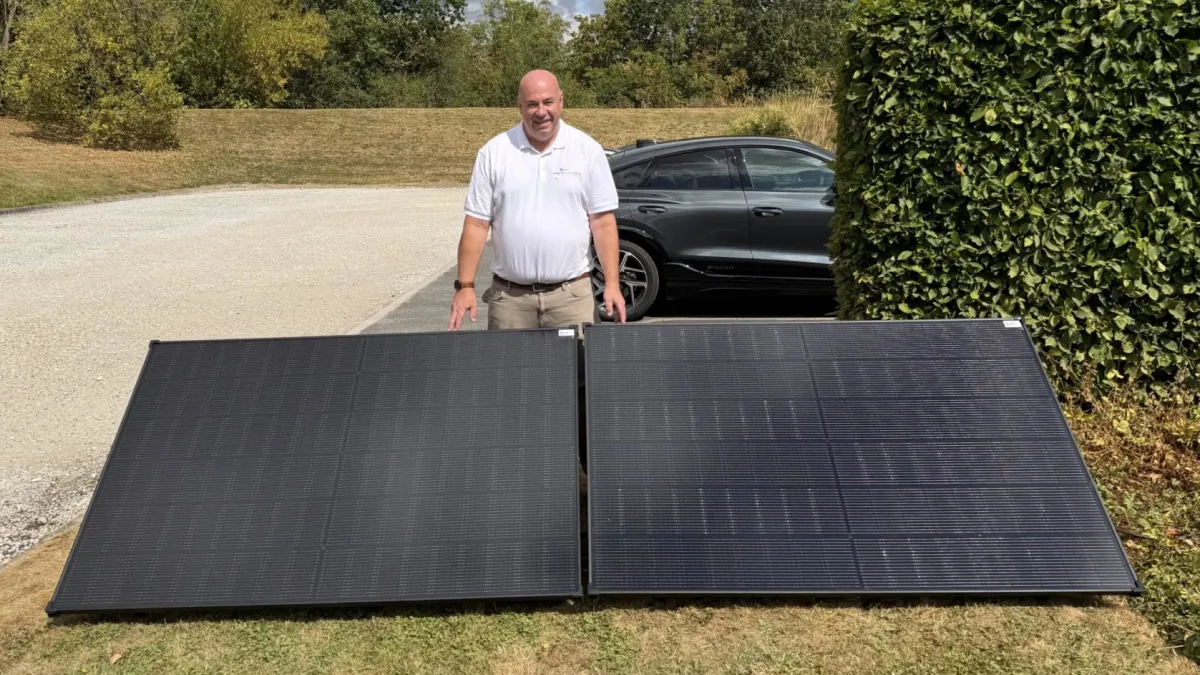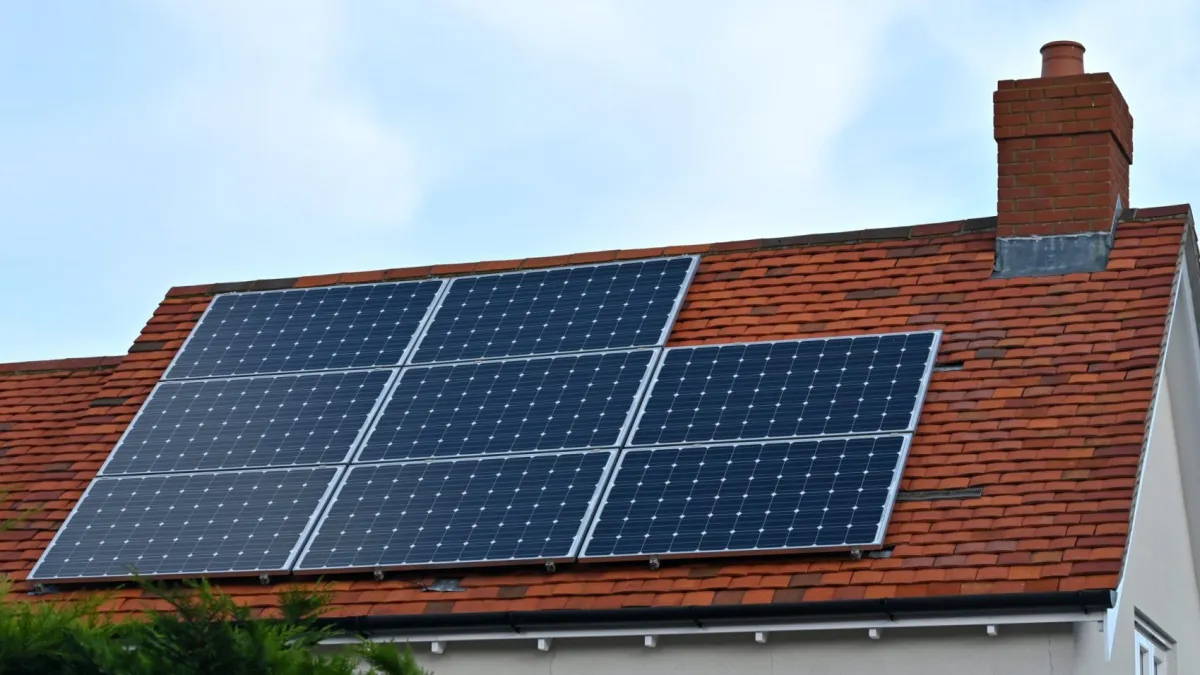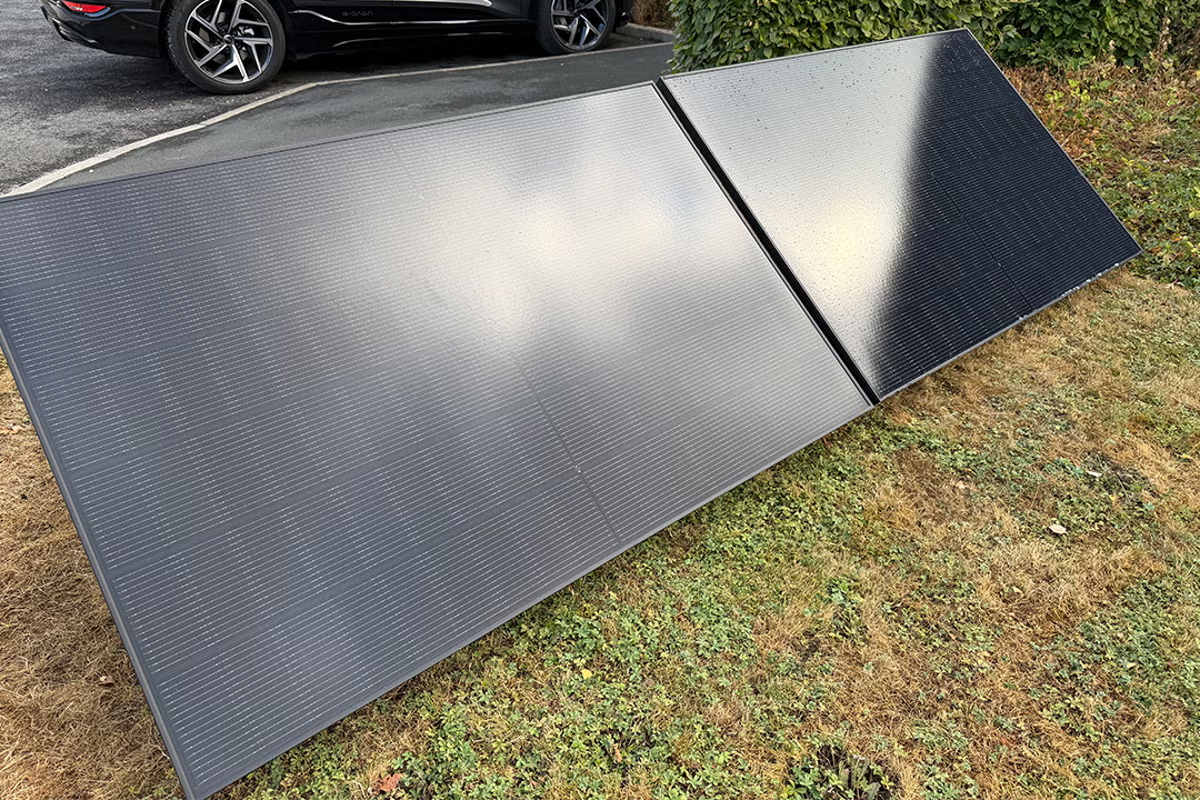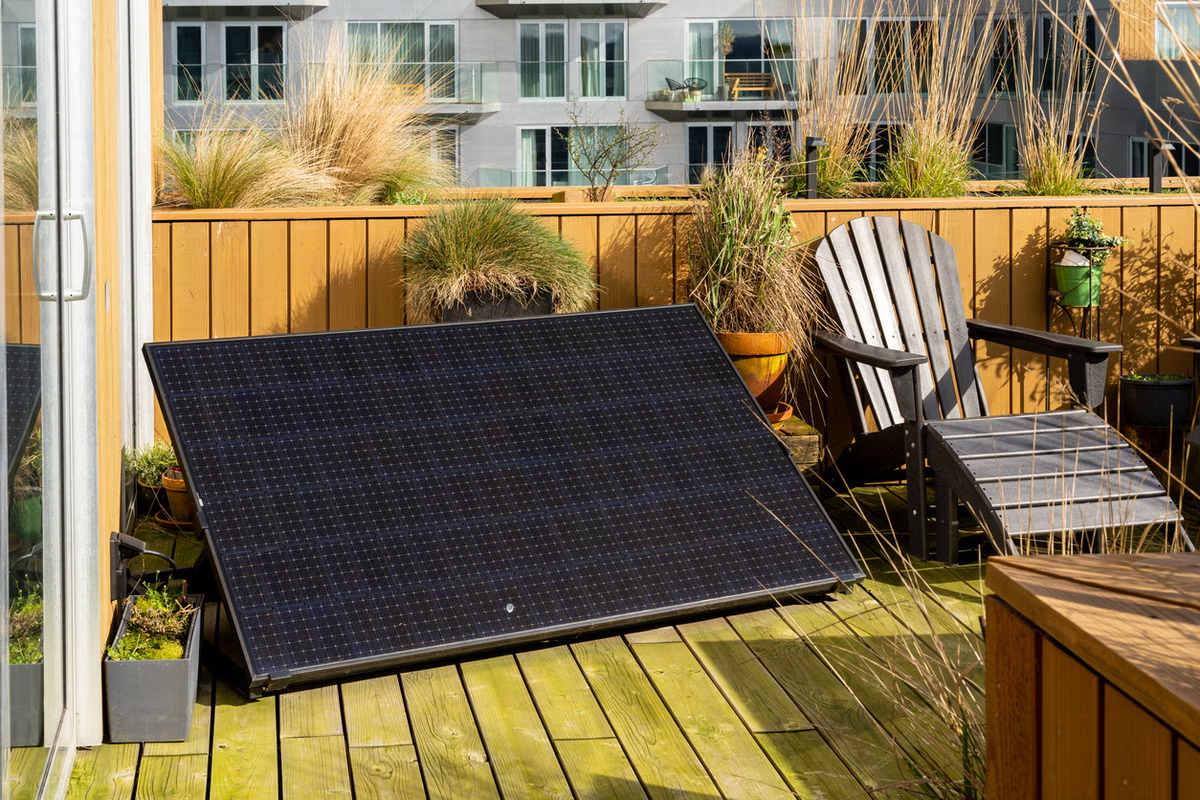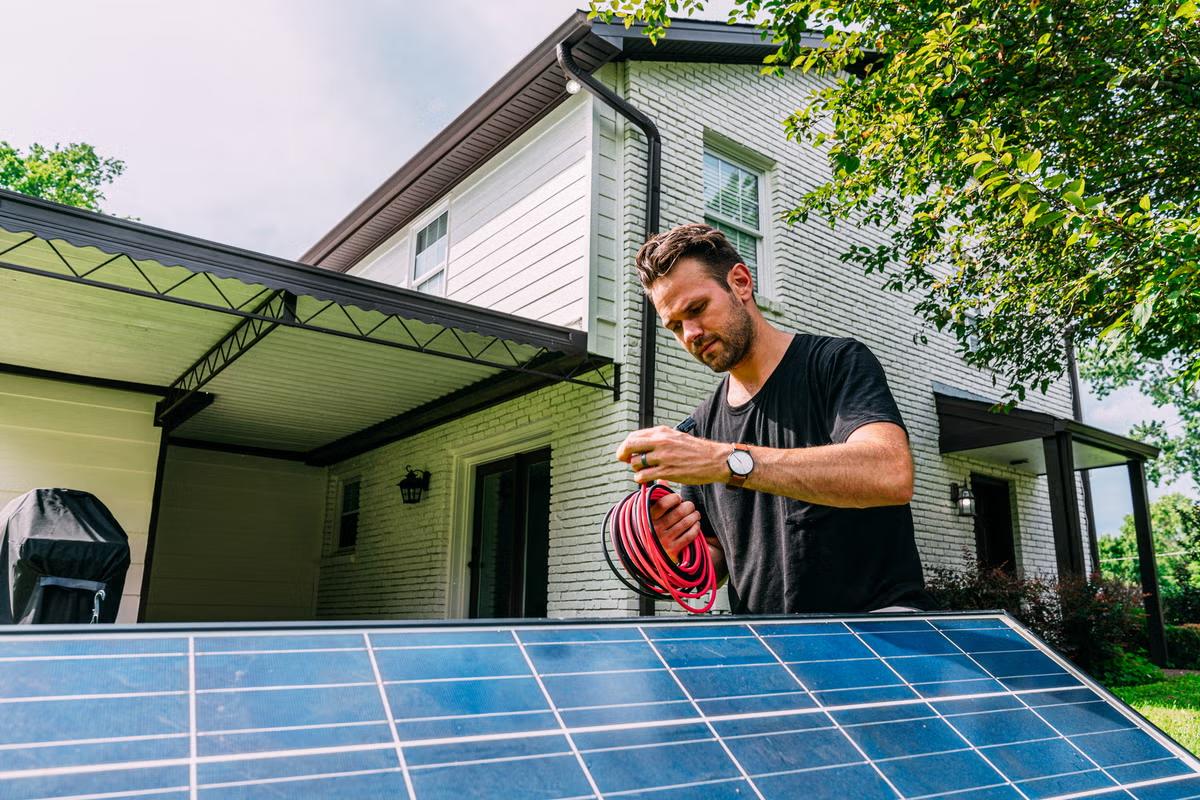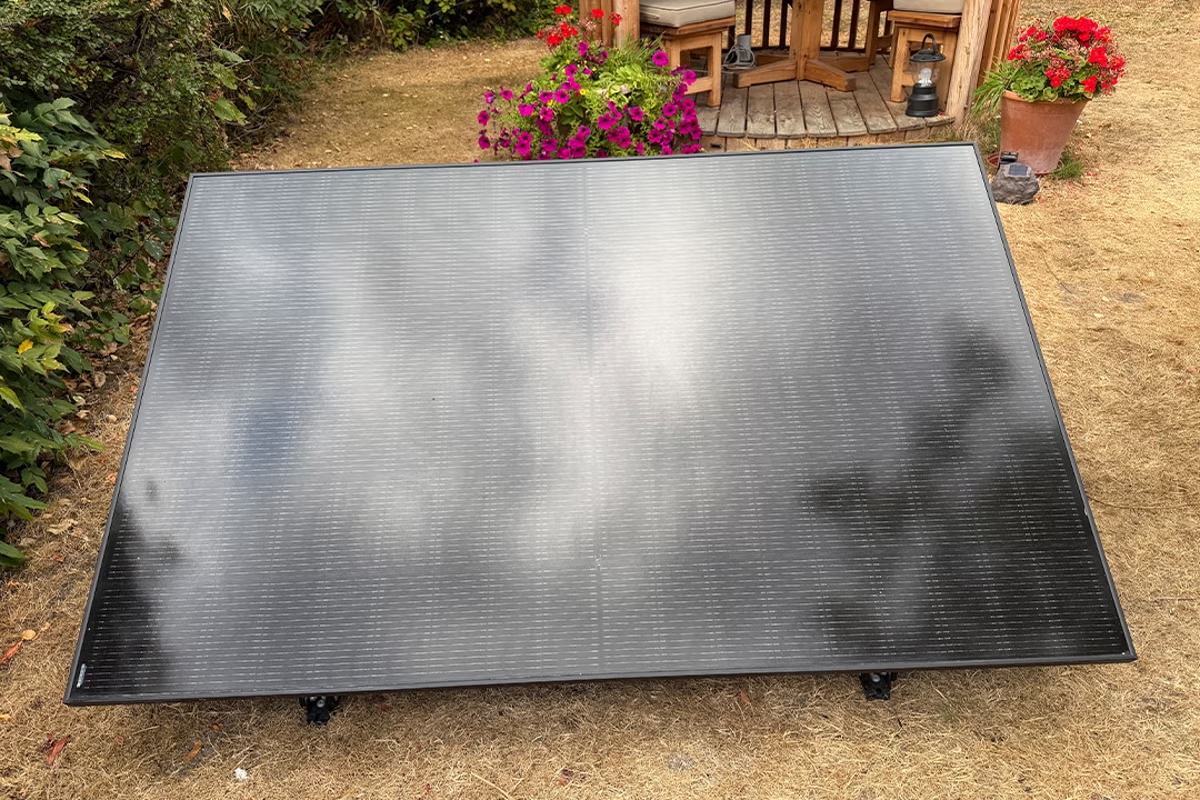
There’s been plenty of hype around plug-in solar kits since the government announced plans to make the technology easier to use in British homes – and they become legal to buy and fit on 27 August. The new compliant plug-in solar kits enable you to harness the power of the sun, turn it into electricity and feed that power into your house through a standard wall socket, without the need for any additional wiring. They are simple plug-and-play units, and they’re complete. You unpack, mount the solar panel (up to 2000W) on a ground-mounting system or other fixing, place a small box, known as a microinverter, near an AC wall socket, and plug in. While solar systems already exist, they require professional installers, changes to your home’s wiring, and permissions. You also need a house with a roof, so if you rent or live in an apartment or flat, fixing a permanent array of panels to the roof likely isn’t an option. So these inexpensive plug-in solar kits seem like a great way to save money as bills continue to rise. And the government is keen to promote them, highlighting the success Germany has seen in the last year, with more than half a million of these devices plugged into homes and saving the population money on their electricity. Energy secretary Miatta Fahnbulleh has said, “Plug-in solar is a simple, affordable way for households to take control of their energy bills and start saving straight away.” And “From this summer, we're giving more families the ability to power their homes with clean homegrown energy.”But where to start? For this guide, I’ve looked at what’s been labelled as compliant, what’s coming up and some more traditional options to find the best plug-in solar kit at present. I’ll be updating information and reviewing the kits as they become available. Read more: Best solar panels, compared How much energy do plug-in solar kits actually generate? The energy a plug-in solar kit generates depends on the size of the panels you buy. The new system is designed to produce up to 800W of power, which the Department for Energy Security and Net Zero (DESNZ) has said can save you up to £110 a year. Essentially, it will run all the basics in the house throughout the day, such as the fridge, wifi router, phone chargers and TV.According to Joanna O’Loan, knowledge manager for the Energy Saving Trust, “the savings will vary from home to home”, but “plug-in solar panels will give more people greater control over their energy use and costs. As these products become more widely available, access to clear and reliable information is essential to help people make informed choices”.Read more: Plug-in solar vs installed arrays How do plug-in solar panels work? Plug-in solar panels don’t require any modifications to your house's wiring.The electricity generated by the solar panels is fed into the microinverter and into your mains electricity at a maximum of 800W, helping power your household devices and reducing your draw from the national grid. Less dependence on drawing power from the grid and more use of self-generated power means that you save money. Although this is a new system, prices are expected to be less than £1,000 and likely much cheaper, meaning you’ll start saving money instantly.While Europe has been using these systems for several years, England, Wales, and Scotland are only just passing legislation to allow the use, and there are tight criteria for the models to be ENA-compliant. However, there is a caveat: when I asked an ENA representative directly, they answered, “ENA does not ‘approve’ products in general terms; instead we assess them for compliance with network requirements.” Alongside the plug-in kit, you’ll also need to fill in a G98B form; more on that below. However, David Boyer, director of electricity systems at Energy Networks Association, has been quoted as saying, “This is a major step forward for incorporating microgeneration safely and efficiently onto the UK's energy grid. Network operators will continue to work closely with Government, Ofgem and manufacturers to ensure the registration process for micro-generation evolves to meet consumer demands.”If you are in rented accommodation, check with your landlord, building owner, or freeholder to confirm you have permission to use these; you may also need to check with planning or obtain a building consent. You also need to inform your local Distribution Network Operator. Read more: How plug-in solar panels work, from setup to saving on energy billsWhere can I buy plug-in solar panels? The government has been working closely with retailers including Currys, B&Q, Screwfix, Argos, Wickes and Amazon, who have committed to stocking these systems after 27 August, with many other retailers expressing interest. Argos will be the first UK retailer to sell plug-in panels this week, with prices expected to be between £400 and £500. At present, only two models meet the full requirements for the new plug-in solar compliance, both from UKSOL. These kits come complete with everything you need to get started; you just need to set them up and plug them into a standard AC socket. At present, the two available models use a ground mounting system.UKSOL plug-in solar pro compact 460WThe UKSOL plug-in solar pro compact 460W is one of only two systems presently awarded compliance status in the UK. It offers a 460W single solar panel system that can be secured with a ground stand and ballast, essentially something to weigh it down. At present, this system is only offered as a ground-mounted system. However, other mounting options will be available soon, but it’s not suitable for balcony mounting.The panel then plugs into the 800W microinverter, which can connect via wifi or Bluetooth to the monitoring app on a mobile device. Then all you need is to insert the standard AC plug into a spare wall socket.The small microinverter is IP67-rated, so you can leave it outside and run the supplied 4m cable into the house or apartment to plug in. Ballast is not included, and it’s not suitable for balconies. It also requires an outdoor socket to be installed and certified by a qualified electrician.Once everything is connected, you can refer to the app to see how much electricity the panels are generating and feeding into the electrical system. I’ll bring you my full review soon.Key specificationsType: Plug-in solar kit; single-panel ground-mount system Dimensions: 1762 x 1134 x 30mm Weight: 25.5kg Power: 460W DC panel; 799VA maximum Connectivity: Built-in wifi and Bluetooth; smartphone monitoring app Warranty: 10-year British warranty Price: £849 direct from UKSOLUKSOL plug-in solar pro duo 890WThe UKSOL plug-in solar pro duo 890W is the larger of the two plug-in solar options that currently meet the compliance standards. It offers two 445W panels and again utilises a ground-mounted system rather than a balcony. You can secure this mount to the ground using a ballast of your choice.Again, an 800W microinverter with full wifi and Bluetooth connectivity lets you monitor energy generation live. As this system essentially follows the same, the panel and microinverter are both IP67-certified, meaning they can be left outdoors in the rain. Ballast is not included, and the two 25.5kg panels require careful handling. They are also not suitable for balconiesI suggest plugging it into a professionally installed exterior plug. Once done, you can monitor its use through the app. I’ll bring you my full review soon.Key specificationsType: Plug-in solar kit; twin-panel ground-mount system Dimensions: 1724mm x 1134mm x 30mm Weight: 25.5kg per panel / 51kg total panel weight Power: 890W DC total (2 x 445W panels); 799VA maximum continuous AC inverter output Connectivity: Built-in wifi and Bluetooth; smartphone monitoring app Warranty: 10-year British warranty Price: £1,199 direct from UKSOLFuture models of interestThe market is moving quickly, and both Anker and EcoFlow have models being announced or developed. At the same time, these are not yet compliant, but that should all change soon. Anker Solix solarbank 4 E5000 ProAnker Solix’s solarbank 4 E5000 pro looks like an interesting option, but full details of a UK-compliant version haven't been released yet. The main sticking point here is that it has expansion potential, and anything sold in this sector at present must be a complete kit out of the box.Anker is one of the big players in the solar battery storage market, so it would be a surprise if they didn’t adapt this for the UK market, especially with the marketing and website hints that something will be launched soon. Again, with little additional detail at present, I’ll bring you an update and review soon.EcoFlow stream roof kit 900Wp for flat roofsEcoFlow is another big name in the battery storage market and has been working with the UK Government on the latest innovations for plug-in solar. Their system is nearly complete and will be available soon in multiple kits.EcoFlow is one of the few companies to list full kits for a variety of scenarios, meeting the requirement that these kits be sold complete. One example is the EcoFlow stream roof kit, designed for flat roofs.This includes two 450W rigid panels and flat roof brackets. The 900W of panels connect to an 800 VA microinverter that then plugs directly into the mains. Again, as with the other units, a featured app lets you monitor energy generation. However, roof installation is more involved than a ground-mounted kit. Complete details are yet to be announced.Key specificationsType: Twin-panel flat-roof solar kit with microinverter Dimensions: 1,908mm x 1,134mm x 30mm per panel; stream microinverter 252mm x 180mm x 35mmWeight: 22.4kg per panel; 3.2kg microinverter; approximately 48kg for panels plus inverter before brackets and cabling Power: 900Wp DC total from 2 x 450W panels; 800VA rated grid output; two MPPT channels rated up to 600W each Connectivity: 2.4GHz Wi-Fi and EcoFlow app Warranty: Stream microinverter 10 years; 450W rigid panels 12 years; flat-roof mounting bracket 1 yearTraditional solar storage solutionsWhile the new plug-in solar kits are hitting the headlines, when you actually look at what's already available, there’s a really good selection. My top picks are the Zendure solarflow 2400 pro and the Marstek Venus E 3.0, both available in the UK from Certus Energy. The first is a future-proofed system and should soon join the ranks of compliant plug-in solar systems, while the latter is a better option to connect to an existing set of solar panels. Both need a professional fitter; costs vary but are lower than you think. Zendure solarflow 2400 proThe Zendure solarflow 2400 pro is one of two more traditional plug-in solar systems that I’ve looked at in the run-up to the release of the true plug-and-play solar kit options. These are more substantial and do require professional fitting and permissions; however, the base premise is similar, and they’re the halfway between a full roof system and the lighter-weight plug-in solar kits that have just been made legal. This model offers four MPPT inputs for solar power, meaning that you can hook up to 3000w of solar input; this is 1000W over the new compliance guidelines.The solarflow 2400 pro also features a 2.4kW battery, so you can store the power you gather during the day and use it at night. These units are also substantially larger and heavier than the new Plug-in solar kits, but expect a lighter-weight Zendure version in the near future.Full 2,400W grid output is subject to the applicable UK connection/installation requirements.Key specificationsType: All-in-one plug-in solar energy storage system with integrated inverter and LFP battery Dimensions: 326 x 294 x 251mm Weight: 27.8kg Power: 2.4kWh battery; 2,400W maximum charge/discharge power; 800W default / up to 2,400W grid AC output; four MPPT inputs providing up to 3,000W DC solar input; up to 4,800W combined solar input using AC coupling Connectivity: Wifi 4, Bluetooth 5.0 and Zendure app; supports smart-meter/HEMS integrations Warranty: 10 years; Zendure quotes up to a 15-year lifespanMarstek Venus E 3.0The Marstek Venus E 3.0 is the second of the more traditional systems that I’ve looked at in this initial test. This unit is far larger, yet at the price, it offers a substantial solution to solar energy capture and storage. Again, you will need permissions and professional installation, but this is the step up from the new plug-in solar kits and full-blown rooftop solar systems. Backed by a fully featured app, you can monitor the energy captured and the amount stored in the large 5.12kWh LiFeP04 battery. Considering that your average 3-bed household uses around 10kWh a day ,this could potentially,during the sunny summer months, harness all the power you need for your home's electrical needs While this unit might not meet the requirements for the new compliance, it’s well worth a look if you want something that doesn’t cost much more for the hardware but will let you make the most of the sunny summer months. Key specificationsType: Plug-in home energy storage battery with integrated inverter Dimensions: 620 x 480 x 160mm Weight: Certus states 63kg Power: 5.12kWh LiFePO4 battery; Certus describes four MPPT inputs and expandable storage up to 15.36kWh, with larger multi-unit configurations possible Connectivity: Marstek app with smart-meter integration; official technical material lists Wi-Fi and RS-485, with some current retailer documentation additionally listing Bluetooth and Ethernet Warranty: 10 years; 6,000+ charge cycles; quoted 15-year design lifespanAt present, the field is a little sparse, with only the two UKSOL plug-in solar kits meeting the requirements. The other slight issue is that both are ground kits, meaning you’ll need to install them on a flat surface such as the lawn and weigh them down with your choice of ballast. This also means that if you do have a balcony, you’ll be able to position these on the balcony floor, but not currently over the balcony itself. However, these are early days, and that will all change very soon. While both kits are available now, it won’t be long before other players enter the market. Several companies are close to gaining compliance, and then we should see prices fall and options increase. I’ll bring you an update on each as and when they arrive.What am I buying?The legislation is strict: when you buy a balcony solar system, it needs to be a complete kit. You buy it, get it home, unpack it, mount the solar panel, and plug it in; no professional installation needed, and everything you need is in the box.What makes a plug-in solar system compliant?In total, five things make a plug-in solar system compliant: the inverter's continuous output does not exceed 800VA and 3.5A. The solar panel capacity is less than 2,000W, and the system has no battery. The plug on the inverter that plugs into the mains is factory-fitted British Standard BS 1363 type with a 5A fuse. Finally, the complete kit must appear on the ENA Type Test Register marked compliant.How do I check a kit is actually certified?There’s a full list of plug-in solar panels that meet the requirements on the ENA Type Register. Once you’re on the page, click the type drop-down and select plug-in solar.Is plug-in solar legal across the whole UK?Not at the moment; the new legislation only covers England, Wales, and Scotland from 27 August 2026. Northern Ireland is under separate legislation. The legislation updates BS 7671 wiring regulations.Do I need permission to install one?Unlike traditional solar panels that connect directly into your mains junction box and require a professional to fit, these balcony systems don’t need approval. However, you do need to notify your local Distribution Network Operator (LDNO) (G98B notification) that you intend to use one of these devices; you can find out how to register online. At the time of writing, and based on my LDNO (SSE), the G98B form is a downloadable Word document that has to be filled in and sent back to them.What is the G98B form?This is a form you need to fill in and send back to the LDNO to tell them that you have a plug-in solar kit. They then issue you with a commission document. If you go for one of the professionally wired-in kits, then as long as the battery is under 3.68kW then you still only need the G98B form. Anything above and the full G98 application needs to be made. What's the maximum panel wattage I can use?You can connect up to 2000W of panels across a maximum of four panels. However, the microinverter is capped at 800VA, which applies to the amount of power you're actually feeding into your electrical system.Can I add more panels or a battery later?No, for now the kit must be used as purchased, and you cannot add additional panels yourself. Likewise, you cannot add a battery to store energy during the day for use at night, although this is likely to change. However, there are kits with a battery – as long as these are fitted by a professional and the capacity is less than 3.68kW, you only need to fill in the G98B form.Do I get paid for the electricity I don't use?Unlike larger wired systems, where you get paid for the surplus, any additional energy you generate will feed into the grid for free, as there’s currently no facility for smart export.Do I need MCS certification or an electrician?No, the idea here is that they are DIY; you simply install and plug in. You will need to inform your LDNO; this is not your supplier, and you can do this for free online. The tools for this are presently being put in place.Read more: Best solar panel installers, explained
Plug-in solar panels are available to buy for the first time as UK rules change
Britain’s new rules make it possible to generate power for your home with a simple DIY plug-in solar panel kit
2,913 words~13 min read