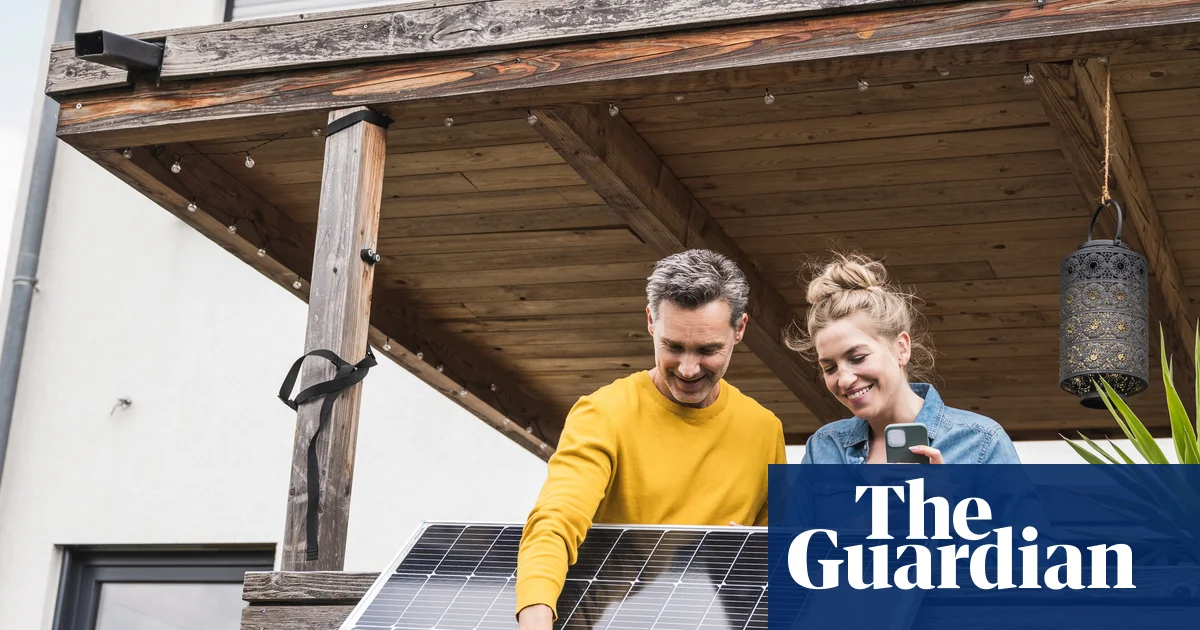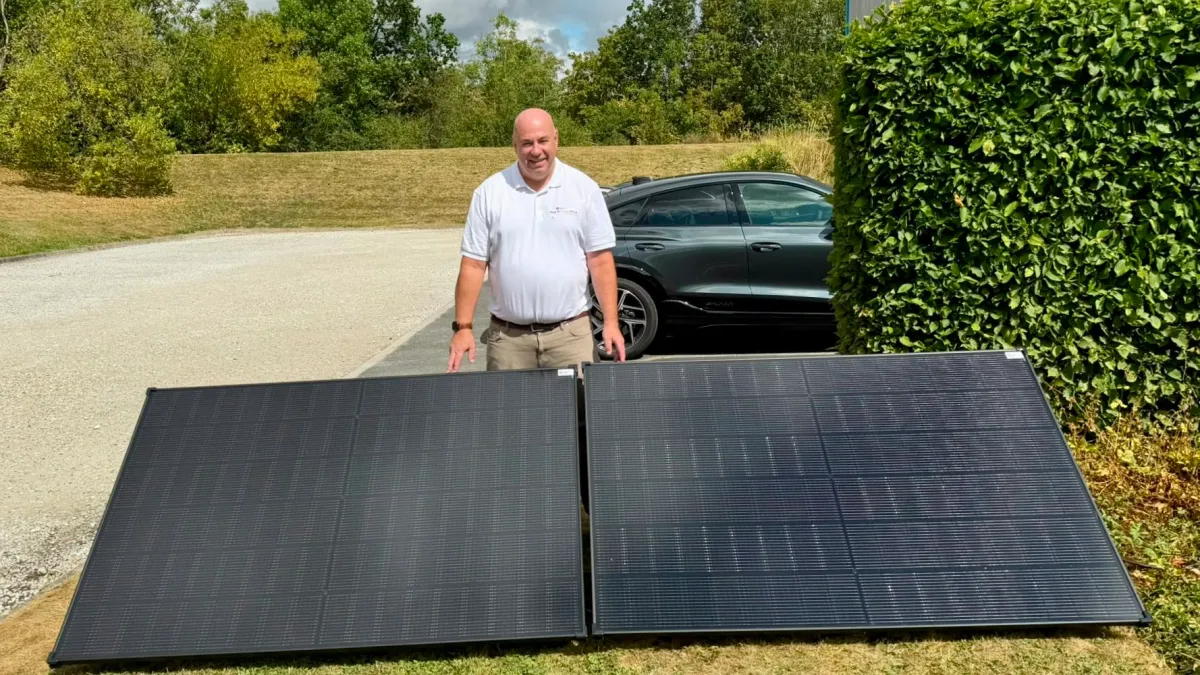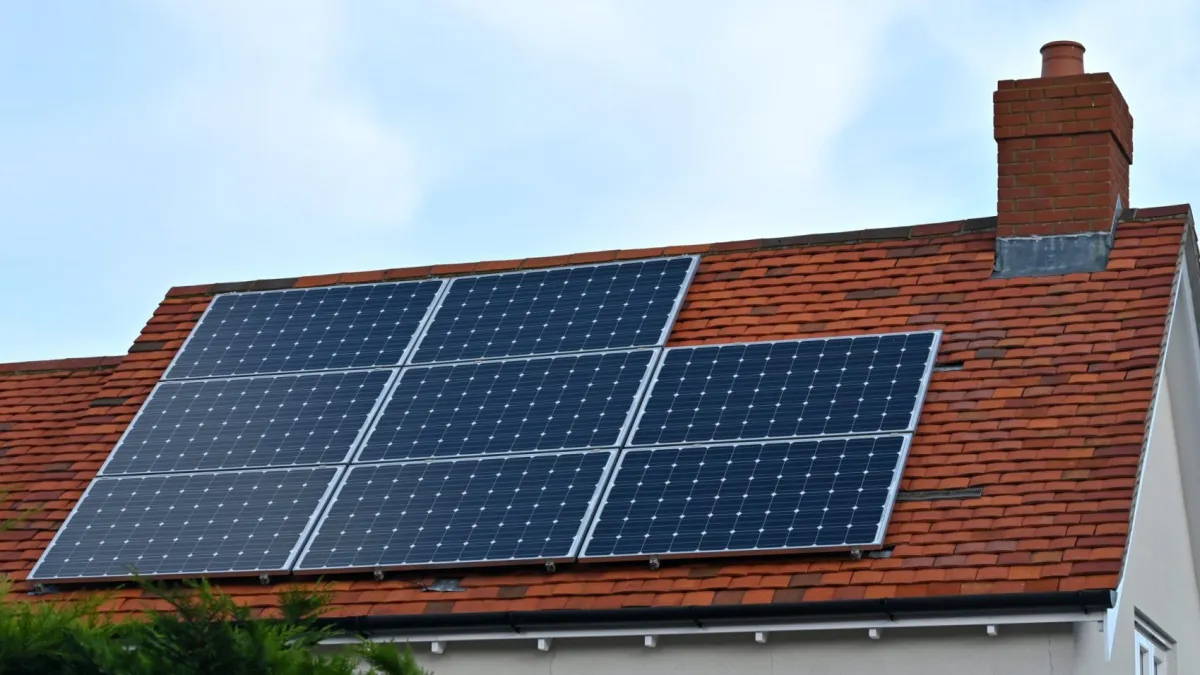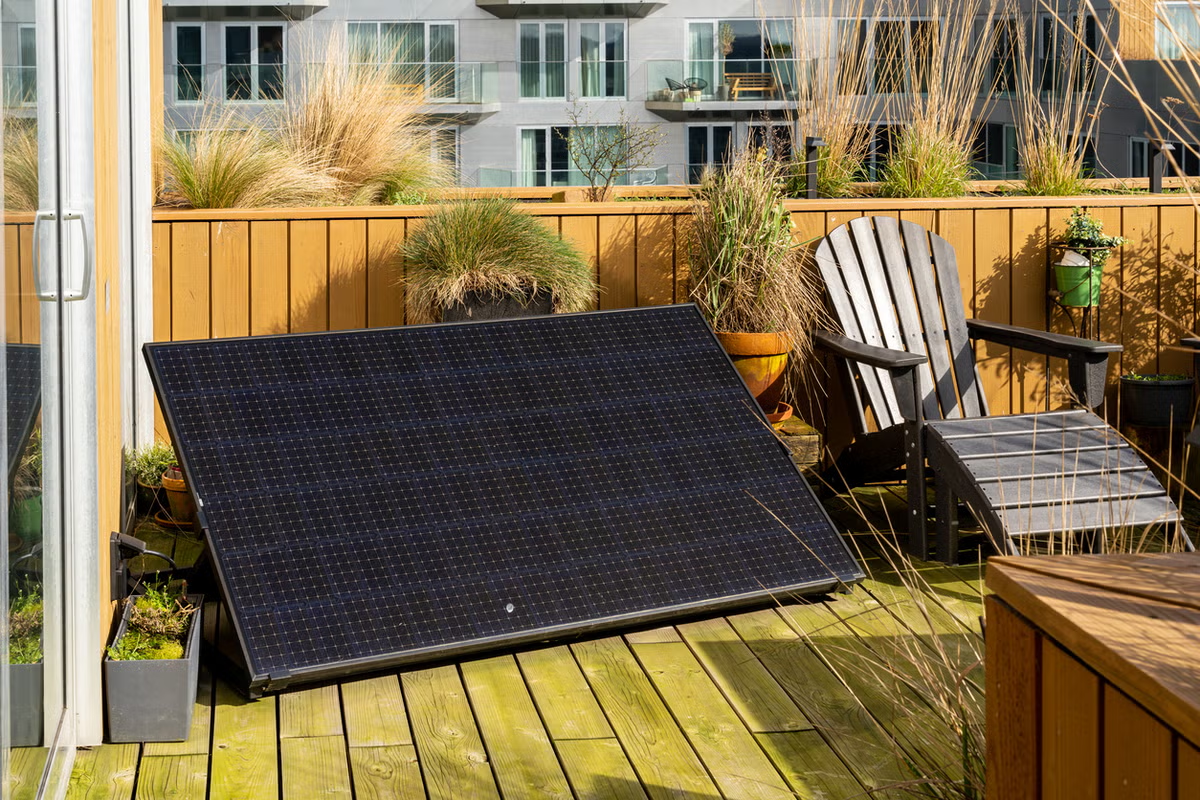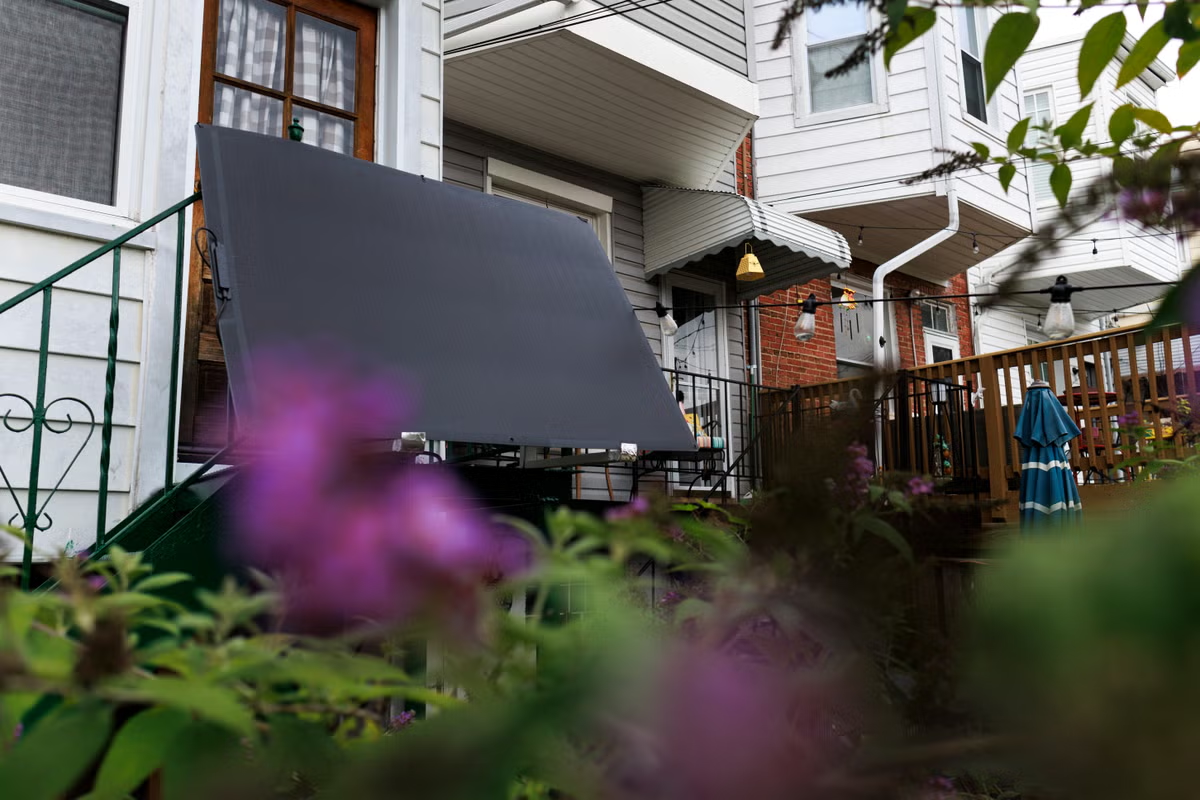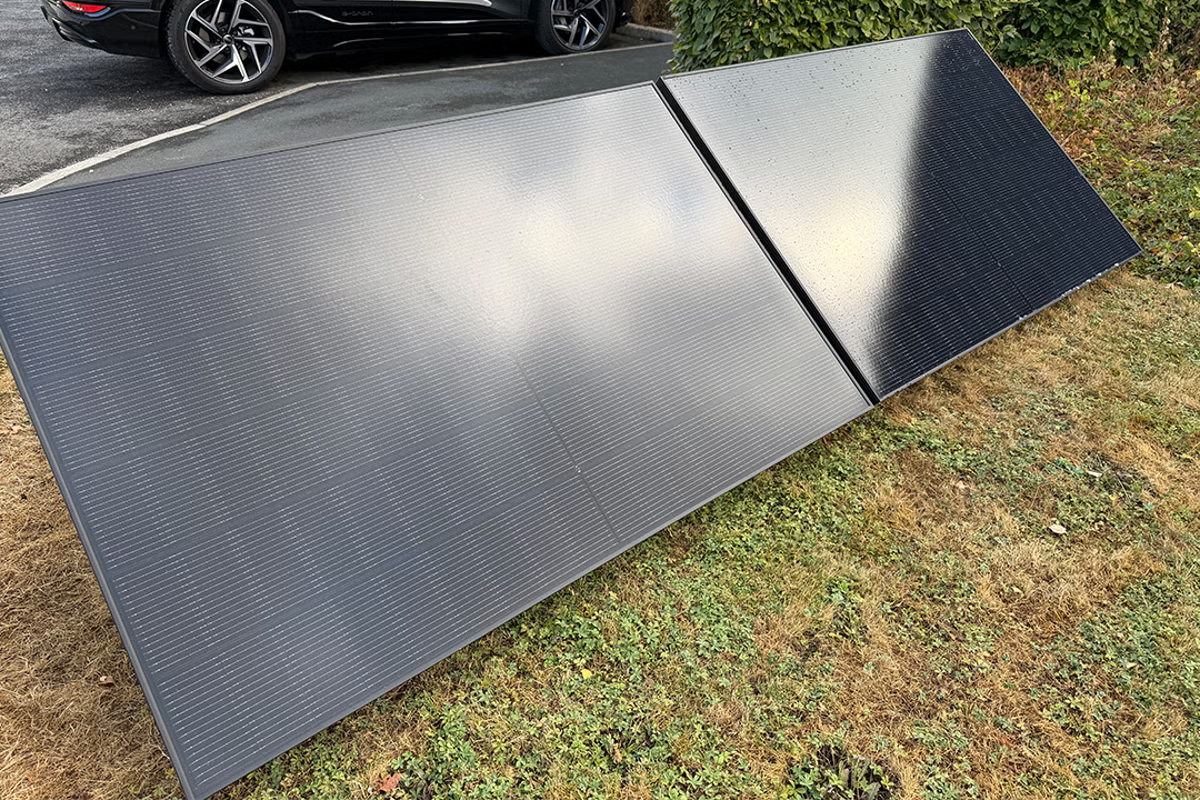
Plug-in solar panels can legally go on sale in Great Britain from 27 August, giving households a new way to generate electricity without paying thousands of pounds for a conventional rooftop solar installation.The rule change allows compliant systems with an AC output of up to 800W to be connected directly to a suitable household socket. Unlike a traditional solar array, these smaller systems can be installed by the homeowner and positioned in a garden or, where the rules allow, on a wall or balcony. However, only products that meet the government’s new plug-in solar device interim product specification qualify under the new rules. And, for the first time, there are now compliant products that you can actually order. UKSOL has secured compliant listings on the Energy Networks Association’s Connect Direct register for its plug-in solar pro range. Retailers such as City Plumbing have begun listing its first ground-mounted systems. Other big-name retailers, including B&Q, Currys, Amazon and Lidl, have been working with the government on the introduction of plug-in solar, although they have yet to announce complete ranges of their own. Here’s where you can buy plug-in solar panels now, and which retailers could follow.Get free solar panel quotesRead more: Best solar panels, explainedThe first compliant plug-in solar systems are beginning to appear online ahead of the rule change on 27 August.British solar manufacturer UKSOL has become the first company to secure “compliant” listings for products in its plug-in solar pro range on the Energy Networks Association’s Connect Direct register. Among them are its compact 460W single-panel ground-mount kit and duo 890W two-panel ground-mount kit. Both have a maximum AC output of 800W, despite the higher combined panel capacity of the duo system. City Plumbing currently lists the UKSOL pro compact 460W ground-mount kit for £670.80, including VAT, while the UKSOL pro duo 890W ground-mount kit is listed for £951.60. The availability varies by location. UKSOL is also selling the systems through its own website. Its direct prices are currently higher at £849 for the compact 460W kit and £1,199 for the duo 890W kit.Other specialist retailers are beginning to list UKSOL systems too. Green2Go, for example, is taking orders for an 890W UKSOL system for £849 and quotes delivery in early September. Before buying, you should check that the exact product and model number appears as compliant on the ENA Connect Direct register. A similar-looking solar panel, microinverter or European balcony solar kit is not automatically covered by the new rules.Anker solix is preparing to launch its solarbank 4 E5000 Pro in the UK. The product itself is a solar battery rather than a solar panel.The 5kWh battery is designed to work with compatible solar panels, storing the electricity they generate so it can be used later in the home. It also includes the inverter and control hardware needed to manage the system and can supply power to the home through a plug-in connection.Anker is promoting the solarbank 4 E5000 pro as a “plug-in-ready solar battery” and says it is coming soon to the UK, with shoppers currently able to sign up for early access and launch offers.However, you will still need compatible solar panels if you want to generate your own electricity. Lidl was one of the first retailers publicly linked to the rollout. In March, the government said Lidl and Iceland were working with ministers, alongside solar equipment manufacturer EcoFlow, to bring plug-in solar products to the UK.The prospect immediately raised the possibility of solar panels appearing in Lidl’s famous middle aisle. Similar balcony solar kits are already available through Lidl in parts of Europe, where the technology is more established.The Independent understands that Lidl is exploring the technology and has not confirmed a launch date. The supermarket has also yet to reveal which product it might stock or how much a system would cost. Early reports suggested that a Lidl system could cost around £400. Read more: Plug-in vs installed solar panels: How they compare B&Q has given one of the clearest indications that it plans to sell the devices.The DIY retailer joined a government roundtable on plug-in solar in June, alongside Amazon, Asda, Currys, Screwfix and Wickes.B&Q chief executive Graham Bell said the retailer was working with the government and suppliers to ensure any products it offered were safe, compliant and straightforward to install.“We look forward to making plug-in solar available to our customers as soon as possible,” he said following the roundtable.B&Q already sells portable solar panels and battery generators. These products can power compatible appliances or charge a portable battery, but they are not the same as plug-in solar panels designed to feed electricity into a home through a mains socket.The retailer has not yet announced a product, price or launch date.Read more: How do plug-in solar panels work and how are they installed?Currys was also named by the government as one of the flagship retailers supporting plans to bring plug-in solar to British homes.The electrical retailer took part in the June discussions, although it has not yet announced which products it might carry or when they could become available.Michelle Gorringe-Smith, director of new categories at Currys, said the company was “delighted to be working with the Department for Energy Security and Net Zero to bring plug-in solar panels to the market.”Currys would be a natural outlet for the technology because it already sells a wide range of domestic electrical products and some portable energy equipment. Nevertheless, its participation in government talks should not be treated as confirmation that a particular kit will be available from 27 August.Read more: Best solar chargers, tested Amazon has publicly welcomed the introduction of self-installed plug-in solar systems.“This is a fantastic opportunity to make renewable energy more accessible to people around the UK,” John Boumphrey, Amazon’s UK and Ireland country manager, said in the government’s announcement following the retailer roundtable.“Enabling households to generate their own power with self-install plug-in solar panels is a practical step that supports household budgets and delivering against net zero goals.”Amazon already lists products described as balcony solar kits, microinverters and portable solar panels. Buyers should be cautious, however, because products designed for other European countries will not automatically comply with the new British rules.A device appearing in Amazon search results does not necessarily mean it is approved for connection to a UK mains socket. Shoppers should look for clear confirmation that the complete product meets the government’s UK plug-in solar specification rather than relying on an adaptor or buying individual components separately.Amazon has not yet announced a dedicated range of compliant products or confirmed when they might become available.What about Iceland, Asda, Screwfix and Wickes?Iceland was named alongside Lidl in the government’s original March announcement. It has not yet confirmed whether plug-in solar panels will be sold in its supermarkets, through its website or through another retail arrangement.Asda, Screwfix and Wickes attended the government’s June roundtable but did not make individual public commitments to stock the products.Screwfix and B&Q are both owned by Kingfisher, although that does not necessarily mean they will sell the same products or introduce them at the same time.For now, these retailers are best described as being involved in discussions rather than confirmed sellers.EcoFlow is a manufacturer rather than a high-street shop, but it could be one of the first recognisable brands to launch a compliant system.The company already sells balcony solar products in Europe and was named by the government in March as one of the manufacturers helping to bring the technology to Britain.EcoFlow’s UK communications representative said at the time that making the systems available in shops would improve access to solar for people living in flats and rented homes.However, consumers should not assume that an existing European EcoFlow product can simply be connected to a British socket. Any system sold for that purpose will need to comply with the technical and electrical requirements introduced for the British market.The legal changes allowing plug-in solar come into force in Great Britain on 27 August 2026, although the first compliant products have already begun appearing online ahead of the rule change. As The Independent previously reported, only products that comply with the government’s interim specification will be covered by the new exemption.Only complete systems that comply with the government’s Interim Product Specification qualify for the new plug-in route. They must have a maximum AC output of 800W and meet specific requirements covering the inverter, plug, cable, electrical protection, labelling and instructions. Battery-integrated plug-in solar systems are not included under the new rules. There is also a limit on how many systems can be connected. Although the government’s product specification allows one plug-in solar device per household electrical circuit, new G98 network rules approved by Ofgem restrict households to one plug-in solar device in total. The G98 amendment takes effect alongside the legislation on 27 August. Households must also notify their Distribution Network Operator (DNO) when a plug-in solar system is connected. The revised G98 rules introduce a simplified route intended to make this possible for consumers without requiring a professional solar installer.The new electrical rules apply in Great Britain – England, Scotland and Wales – but not Northern Ireland, which operates under a separate electricity safety regime.The government’s final impact assessment estimated that a complete plug-in solar system could cost around £400 to £600, using £500 as its central assumption.However, some of the first compliant products to appear on the British market cost more than that. Prices could fall as more manufacturers and major retailers enter the market, so these early listings may not be representative of what plug-in solar panels will cost once the market becomes more established.Government modelling suggests that an 800W system could save a household around £70 to £110 a year. The higher figure assumes panels face south at an angle of around 30 degrees, while vertically mounted east- or west-facing panels are expected to produce smaller savings.These figures, though, are illustrative rather than guaranteed. Actual savings will depend on shading, location, energy prices, panel orientation and, importantly, how much electricity the household uses while the panels are generating.Read more: Are plug-in solar panels worth buying in the UK?The most important thing is to check that the exact plug-in solar system you are buying is approved for the new British plug-in solar route.Manufacturers must have their complete product assessed against the government’s Interim Product Specification and registered through the Energy Networks Association’s Connect Direct system. Shoppers should therefore check the exact manufacturer and model rather than assuming a product is compliant simply because it has a UK three-pin plug or is advertised as “G98 compatible.” This is particularly important when shopping through online marketplaces. Balcony solar systems are already widely available elsewhere in Europe, but a European kit can’t be connected legally to a British household socket. Adding a travel adaptor or UK plug to an imported system does not make it compliant.You should also check where the system can safely be positioned, whether your electrical installation and socket are suitable, and whether you need permission from a landlord, freeholder or managing agent. Extension leads, multi-way adaptors and plug-in RCD adaptors should not be used in place of the manufacturer-supplied connection.The current G98 rules also limit households to one plug-in solar device, even if the property has several separate electrical circuits. Householders must notify their Distribution Network Operator after connecting a compliant system.In England, planning rules are also changing from 27 August 2026 to expressly include plug-in solar within existing permitted development rights for domestic solar panels. This means many systems can be installed without making a full planning application, provided they meet the relevant conditions. However, the rules are not unrestricted. Among the new conditions, plug-in solar cannot be attached to a wooden wall, balcony or other wooden enclosure, or to parts of a building clad in timber. Similar restrictions apply to wooden fences, gates and other boundaries where panels are positioned within a garden. The usual restrictions affecting listed buildings, conservation areas and other protected locations can also apply. Planning rules differ in Scotland and Wales, so people outside England should check the requirements where they live. Renters and leaseholders should also obtain any permission required by their tenancy agreement, lease, landlord or freeholder before installing panels.Read more: Best solar panel installers, compared
Where to buy plug-in solar panels as new rules soon take effect
Plug-in solar panels can legally go on sale in Great Britain from 27 August – and the first compliant systems are now appearing at UK retailers
2,041 words~9 min read