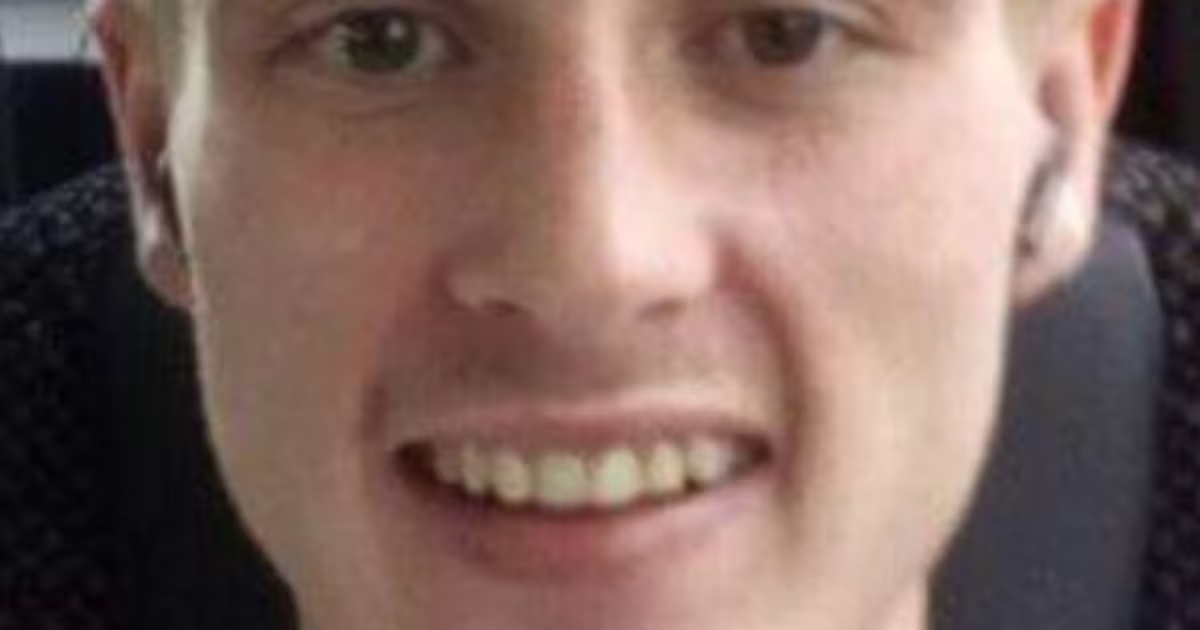
The mother of a young man who died in his cell at Cork Prison from withdrawal seizures has called on prison authorities to fast-track the introduction of a technology that can remotely monitor the vital signs of prisoners.Jamie Crowley was found dead in his cell on the morning of March 14th, 2024. He had been hospitalised for withdrawal seizures the day before his death. However, his condition stabilised in a matter of hours and he was returned to custody and was on medication. Crowley did not receive a physical medical check in his cell from 7pm on March 13th until the alarm was raised by his cellmate at 7.30am the following morning. The 27-year-old was in a vulnerable persons unit, and a prison officer looked through the hatch every 15 minutes as per protocol. As Crowley was lying in his bed, the presumption was that he was sleeping. Representatives of the Irish Prison Service (IPS) at the inquest acknowledged the limitations of hatch checks. Assistant State Pathologist Dr Margaret Bolster carried out a postmortem on the deceased and no illicit drugs were detected in his system. Pinpoint haemorrhages in his brain were “suggestive of seizures”.Bolster said Crowley had a history of withdrawal seizures and tested positive for cocaine, cannabis and benzodiazepines upon his committal to prison on March 8th, 2024. Crowley told a nurse in the committal interview that he had a chaotic lifestyle and a history of drug taking. Bolster said alcohol withdrawal seizures can be life-threatening. “It [alcohol] is so toxic to the brain. Whether he was an epileptic as well, we will never know, as he had no formal diagnosis of it. He had multiple seizures from alcohol withdrawal.”A verdict of misadventure was recorded. The jury recommended that if proposed remote monitoring being trialled by the prison service proves successful, it should be extended to vulnerable prisoners. Assistant governor of Cork Prison, Bryan Clancy, confirmed that technology to monitor vital signs, such as temperature and pulse, is set to be trialled at Cloverhill and Limerick Prisons.National operation nurse manager for the IPS, Enda Kelly, said the remote technology will not be available in every cell and that its roll-out faces “numerous hurdles” such as privacy and human rights compliance. “Other jurisdictions have had huge problems with such issues. It [remote technology] is not a panacea. It is an assistance.” A statement from the deceased’s mother, Deirdre Crowley, was read in to the record in court. She said that her late son was a kind man who had a wonderful smile. She detailed the “permanent void” his death had caused in their family.Speaking outside, she said she was not confident that real changes would occur following the death of her son.“Something like this happened [in Cork Prison] a couple of years ago, and nothing ever changed. [The technology] should have been done years ago,” she said. She added that her son always wanted to be a “top chef” and loved making cakes as a youngster.“I can’t understand why I will never hear his voice,” she said. “I see people on the street that look like him, and of course it’s not him. My son should still be here.”
Calls for remote health monitoring following death of prisoner in his cell
‘My son should still be here’, says mother of man (27) who died from withdrawal seizures in Cork Prison
530 words~2 min read