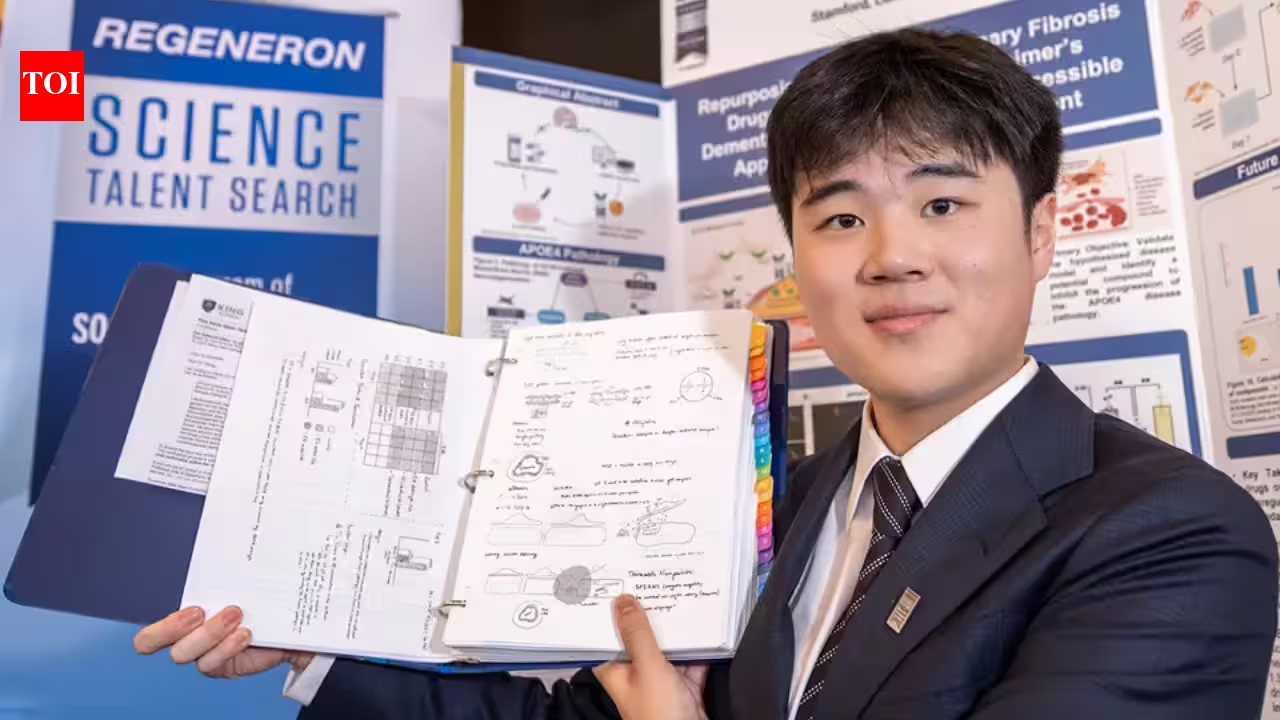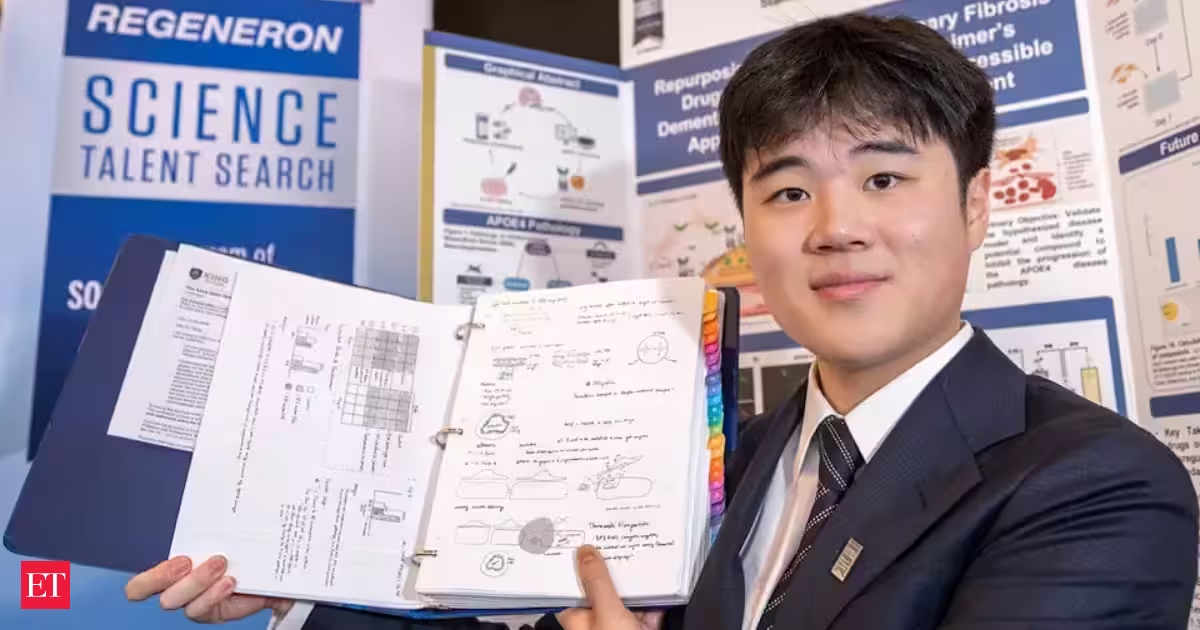
A 17-year-old Connecticut student has identified two FDA-approved drugs that could potentially help reduce Alzheimer’s-related damage in brain cells, after investigating a biological pathway linked to one of the strongest genetic risk factors for the disease.Leon Wang, a student at King School in Stamford, studied whether medicines already approved for other conditions could be repurposed to target cellular changes associated with Alzheimer’s. His research focused on APOE4, a gene variant known to be the strongest genetic risk factor for Alzheimer’s disease.ALSO READ: Where will Prince Harry and Meghan Markle live in the UK?The two drugs he identified are nintedanib and pirfenidone, both already approved for treating lung scarring. In Wang’s laboratory-grown brain-cell model, the drugs reduced signs of damage associated with an overactive cellular signaling pathway.The discovery earned Wang eighth place and a $60,000 award in the 2026 Regeneron Science Talent Search, one of the country's most prestigious science competitions for high school students.What did Leon Wang discover?Wang wanted to understand why APOE4 increases the risk of Alzheimer’s. Using publicly available data, he confirmed earlier research showing that people carrying APOE4 had increased activity in a signaling pathway involving transforming growth factor beta, or TGFβ, in cells lining blood vessels in the brain.ALSO READ: MacKenzie Scott has given away 5 times more than Jeff Bezos despite his $280 billion net worth, 8x greater fortune and 13x more Amazon stockHe then created laboratory models of these brain blood-vessel cells. His experiments showed that excessive TGFβ activity damaged the cells, suggesting that the pathway could be one mechanism connecting APOE4 with harmful changes associated with Alzheimer’s.The surprising part: He looked at existing drugsRather than trying to develop a completely new Alzheimer’s drug, Wang took a different approach. He looked for medicines that could already influence the TGFβ pathway and identified nintedanib and pirfenidone.Both drugs are FDA-approved treatments for lung scarring, including conditions involving pulmonary fibrosis. Wang then tested them in his laboratory-grown cell model.ALSO READ: Putin preparing to attack Europe?The results were striking: both drugs reduced signs of cellular damage caused by excessive TGFβ activity in the model. This approach is known as drug repurposing—investigating whether a medicine developed for one disease might also have applications in another.Why repurposing existing drugs mattersDeveloping a completely new medicine can take years and require extensive research and testing. Existing drugs already have safety and pharmacological information from their approved uses. That does not mean they can automatically be prescribed for another disease, but it can give researchers a starting point for investigating new possibilities.ALSO READ: 'When is my mom coming back home?': Wife of active-duty US Army soldier deported to Honduras after ICE detention in front of daughter following Walmart tripFor Alzheimer’s research, this could be particularly valuable because scientists are still trying to understand the many biological processes involved in the disease.Wang's work suggests that brain blood-vessel cells and the TGFβ pathway may deserve more attention in Alzheimer’s research, particularly in connection with APOE4.Does this mean the drugs can treat Alzheimer’s?Not yet. This is an early-stage laboratory finding, not evidence that nintedanib or pirfenidone can prevent, treat or reverse Alzheimer’s disease in people.Wang tested the drugs using lab-grown cells, rather than patients. Much more research would be required, including additional laboratory studies and clinical trials, before researchers could determine whether either medicine is safe and effective for Alzheimer’s patients.Still, the project demonstrates why drug repurposing can be an intriguing route in medical research.For Wang, the breakthrough was not creating a brand-new medicine. It was asking whether two familiar drugs could have an entirely different purpose—and finding a potential connection worth investigating further.
17-year-old Connecticut student found 2 FDA-approved drugs that could help fight Alzheimer’s: How his surprising discovery works
A 17-year-old Connecticut student, Leon Wang, identified two FDA-approved lung-scarring drugs that reduced Alzheimers-linked cellular damage in lab-grown brain blood-vessel cells. His research offers a promising new clue into how APOE4 and the TGFβ pathway may contribute to Alzheimers disease, while raising the possibility that existing medicines could eventually be repurposed for brain health.
598 words~3 min read