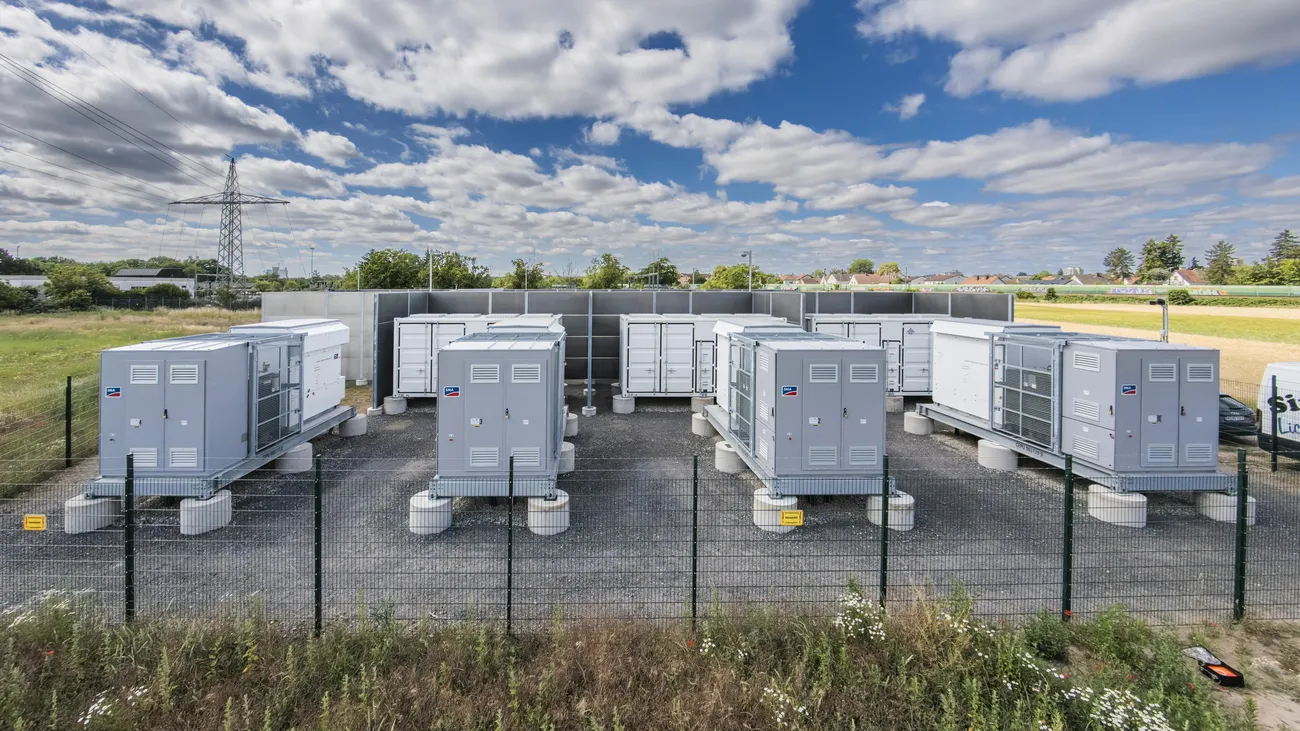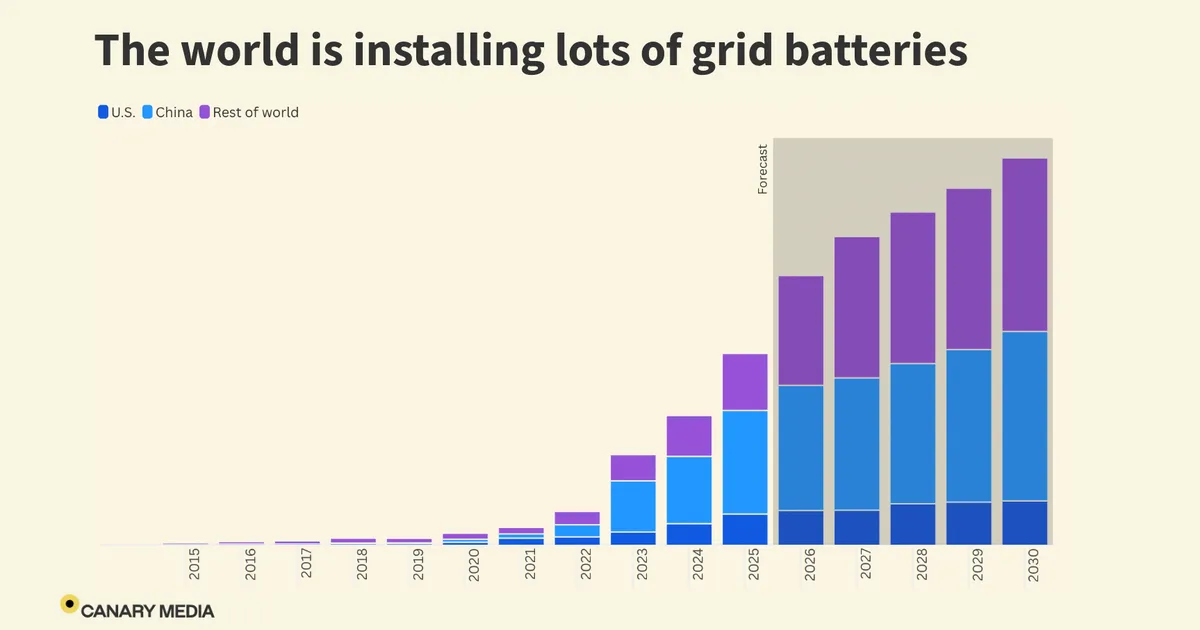
German grid operators cleared more than three times more battery storage capacity for connection to the electricity network in 2025 as they in did the year before, an amount that would roughly match the storage volume of the country’s entire pumped hydro fleet, data from grid agency (BNetzA) showed. The market is in "a dynamic development phase, marked by intensive planning, construction and expansion" the agency said. A comparison with 2024 showed "a massive increase in the number, volume and storage capacity" of grid connection requests.However, he headline numbers likely overstate what will actually be built, BNetzA said. Developers routinely file the same project at several possible locations to improve their chances, it added.Operators issued 1,937 connection agreements last year, covering 54.2 gigawatts (GW) of power – up 119 percent – and 142.4 gigawatt hours (GWh) of storage capacity, a rise of 207 percent. By comparison, Germany's 28 pumped hydro plants, the backbone of its electricity storage for decades, have a combined 6.2 GW and around 147 GWh.At present, only around 1,300 battery projects are connected to Germany’s transmission and distribution grids, with a combined power of 6.2 GW and a capacity of around 6 GWh. “If the projects applied for and approved in 2025 alone were to be implemented, they would multiply the current stock,” BNetzA said.Power is how much electricity a battery can deliver or absorb, comparable to how much water can flow through a pipeline at any given moment. Storage capacity is how much energy it can hold in total, equivalent to the size of the connected water reservoir. A high power rating means a battery can respond fast, while a large capacity means it can keep going for longer. While Germany’s pumped hydro could in theory run for around 24 hours at full output, the batteries approved in 2025 would be empty after less than three hours.Batteries matter to the energy transition because they can cushion the swings in wind and solar output, charging when electricity is plentiful and cheap, and discharging when it is scarce and expensive. That service is becoming more valuable as renewable energy sources expand. Wholesale prices turned negative for 573 hours last year, or 6.5 percent of the time, and batteries able to soak up those surpluses would keep more renewable power in the system instead of curtailing it, the agency said. Momentum has not eased this year. Already by 1 April 2026, transmission grid operators alone had issued 64 agreements for about 24.7 GW and 55.4 GWh – close to their entire 2025 total.
Germany approves large battery storage on a par with its pumped hydro fleet
German grid operators cleared more than three times more battery storage capacity for connection to the electricity network in 2025 as they in did the year before, an amount that would roughly match the storage volume of the country’s entire pumped hydro fleet, data from grid agency (BNetzA) showed. The market is in "a dynamic development phase, marked by intensive planning, construction and expansion" the agency said. A comparison with 2024 showed "a massive increase in the number, volume and storage capacity" of grid connection requests.However, he headline numbers likely overstate what will actually be built, BNetzA said. Developers routinely file the same project at several possible locations to improve their chances, it added.Operators issued 1,937 connection agreements last year, covering 54.2 gigawatts (GW) of power – up 119 percent – and 142.4 gigawatt hours (GWh) of storage capacity, a rise of 207 percent. By comparison, Germany's 28 pumped hydro plants, the backbone of its electricity storage for decades, have a combined 6.2 GW and around 147 GWh.At present, only around 1,300 battery projects are connected to Germany’s transmission and distribution grids, with a combined power of 6.2 GW and a capacity of around 6 GWh. “If the projects applied for and approved in 2025 alone were to be implemented, they would multiply the current stock,” BNetzA said.Power is how much electricity a battery can deliver or absorb, comparable to how much water can flow through a pipeline at any given moment. Storage capacity is how much energy it can hold in total, equivalent to the size of the connected water reservoir. A high power rating means a battery can respond fast, while a large capacity means it can keep going for longer. While Germany’s pumped hydro could in theory run for around 24 hours at full output, the batteries approved in 2025 would be empty after less than three hours.Batteries matter to the energy transition because they can cushion the swings in wind and solar output, charging when electricity is plentiful and cheap, and discharging when it is scarce and expensive. That service is becoming more valuable as renewable energy sources expand. Wholesale prices turned negative for 573 hours last year, or 6.5 percent of the time, and batteries able to soak up those surpluses would keep more renewable power in the system instead of curtailing it, the agency said. Momentum has not eased this year. Already by 1 April 2026, transmission grid operators alone had issued 64 agreements for about 24.7 GW and 55.4 GWh – close to their entire 2025 total.