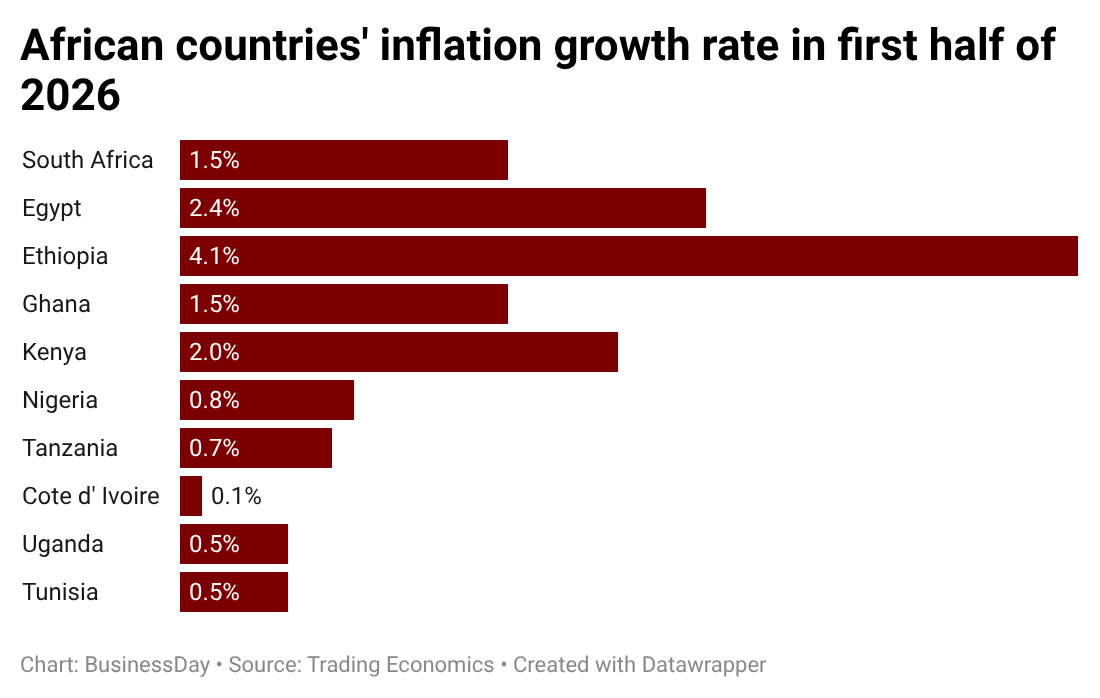
Africa’s inflation battle is becoming increasingly uneven, with half of 16 major economies analysed recording lower annual inflation in July, while almost as many saw price pressures accelerate.
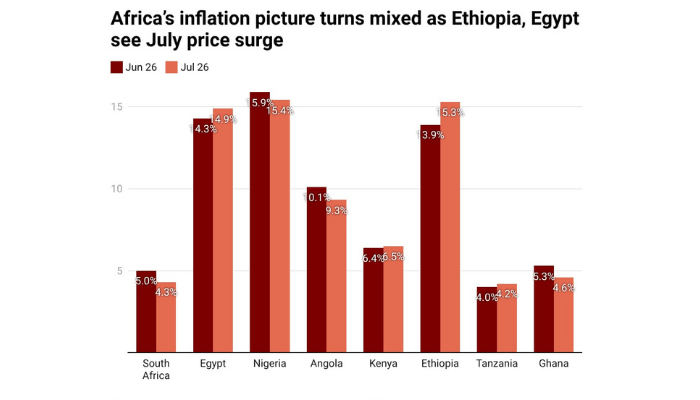
BusinessDay analysis of the data from Trading Economics shows that eight of the 16 economies recorded declines in their headline inflation rates between June and July 2026, while seven reported increases. Inflation was unchanged in Zambia, highlighting a continent where price pressures are increasingly being shaped by country-specific factors rather than moving in the same direction.
The divergence was particularly stark between Ethiopia and Zimbabwe.
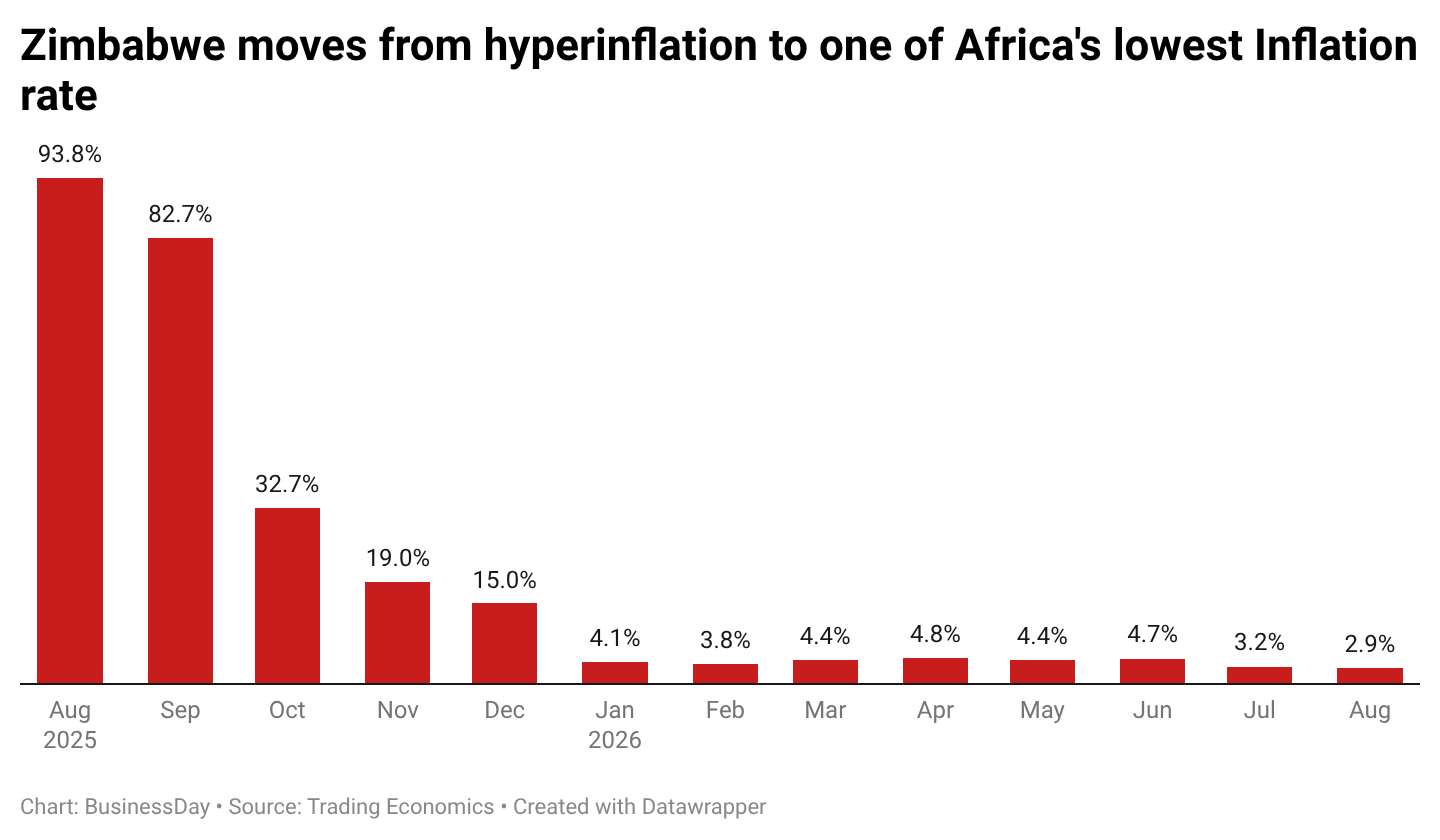
Ethiopia, Africa’s second most populous nation, recorded the largest increase among the economies analysed, with annual inflation jumping 1.4 percentage points to 15.3 percent in July from 13.9 percent in June. Zimbabwe recorded the biggest decline, with inflation falling 1.5 percentage points to 3.2 percent from 4.7 percent.
The contrasting movements underscore how food prices, energy costs, exchange-rate movements and geopolitical shocks are producing increasingly different inflation outcomes across Africa.