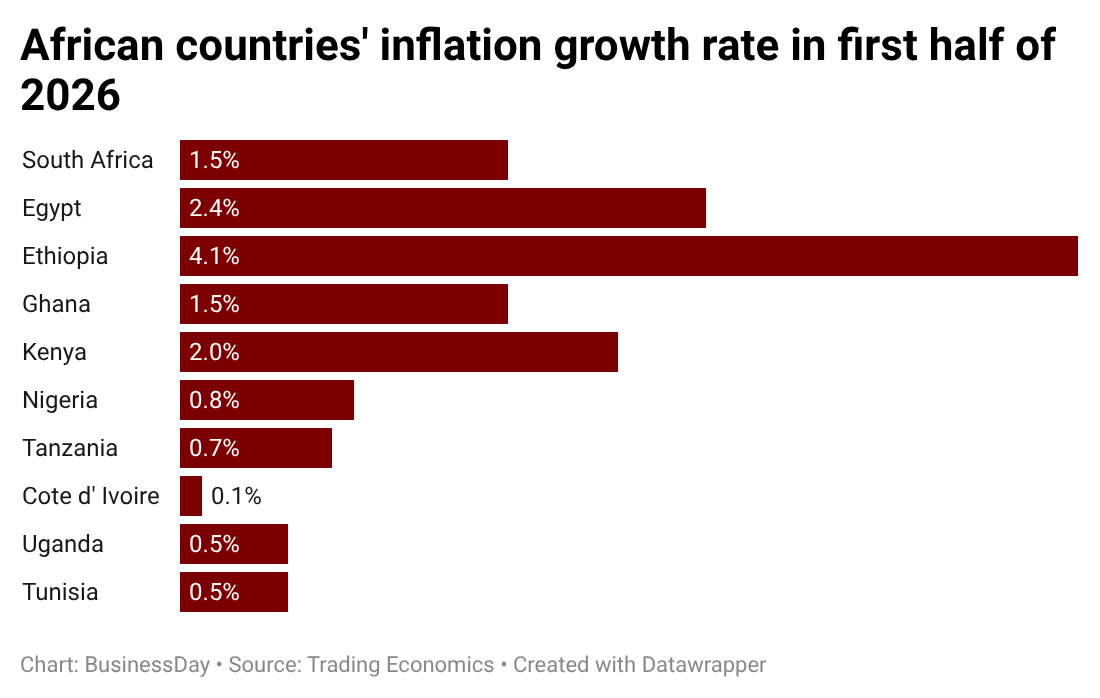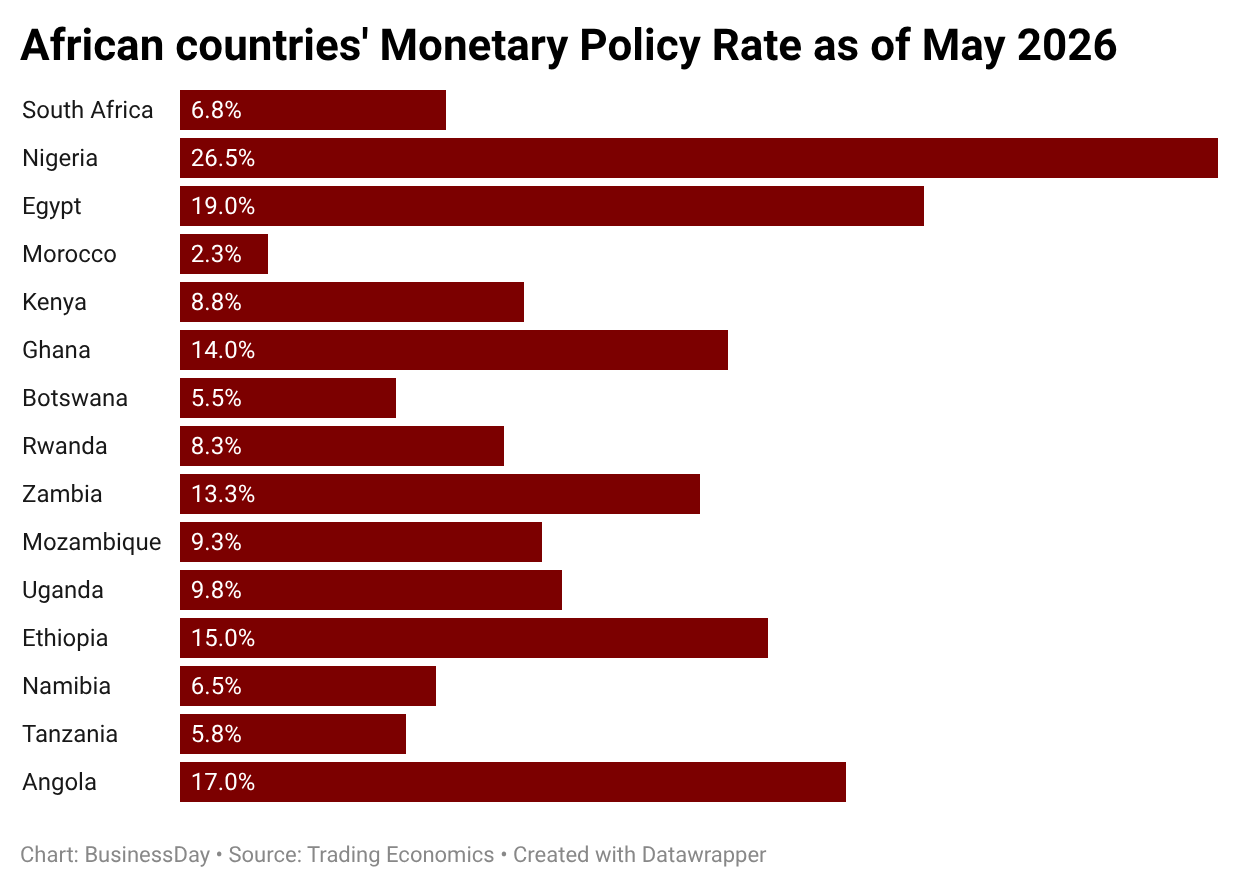
While rising energy prices and supply chain disruptions linked to conflict in the Middle East are reigniting inflationary pressures across much of Africa, Egypt, Angola, and Zambia are emerging as rare bright spots, extending declines in consumer prices even as many of their peers battle higher food, fuel, and transport costs.
The divergence highlights how exchange-rate stability, economic reforms, stronger commodity earnings, and improved food supplies are helping shield some African economies from a renewed surge in inflation triggered by external shocks.
Data from Trading Economics shows Egypt, Angola, and Zambia continuing to record easing price growth despite the impact of higher global energy costs that have weighed on many developing economies.
Egypt’s annual urban inflation slowed for a second consecutive month to 14.6 percent in May from 14.9 percent in April, the lowest level since February. In Angola, annual inflation eased for the 22nd consecutive month to 10.9 percent from 11.6 percent, the lowest reading since May 2023 and bringing Africa’s third-largest oil producer closer to single-digit inflation.
Zambia’s annual inflation rate declined to 6.6 percent from 6.8 percent, the lowest since February 2018 and the fifth consecutive monthly slowdown.