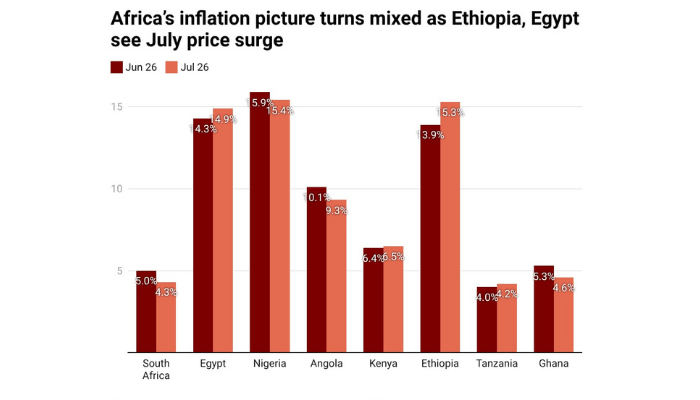
Across Africa this week, the economic picture remained mixed as some countries made progress in taming inflation while others tightened monetary policy to contain rising prices. Tanzania strengthened its sovereign credit outlook, Zimbabwe continued its remarkable inflation turnaround, Kenya’s business leaders regained confidence despite cost pressures, while Rwanda raised interest rates to a near 17-year high. The divergent developments show an African economy navigating different stages of the inflation, growth and investment cycle.
African inflation battle splits as half see July relief
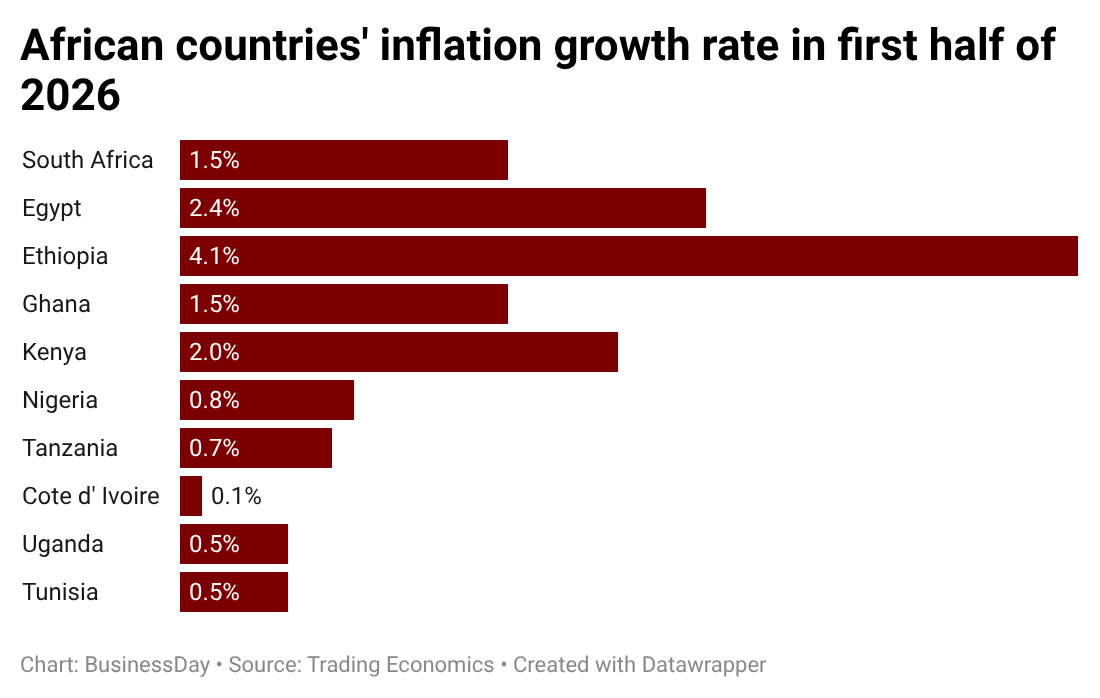
Africa’s inflation picture is becoming increasingly uneven, with eight of 16 major economies recording lower annual inflation in July, while seven saw price pressures increase.
South Africa, Nigeria, Angola, Zimbabwe, Ghana, Tunisia, Mozambique and Botswana recorded declines, while inflation was unchanged in Zambia. Ethiopia recorded the largest increase, rising to 15.3 percent in July from 13.9 percent in June. Zimbabwe recorded the biggest decline, falling to 3.2 percent from 4.7 percent.
In South Africa, inflation eased to 4.3 percent from 5 percent, its first slowdown in five months, supported by lower transport, fuel and food inflation. The contrasting trends highlight how food prices, energy costs, exchange rates and geopolitical shocks are producing different inflation outcomes across African economies.