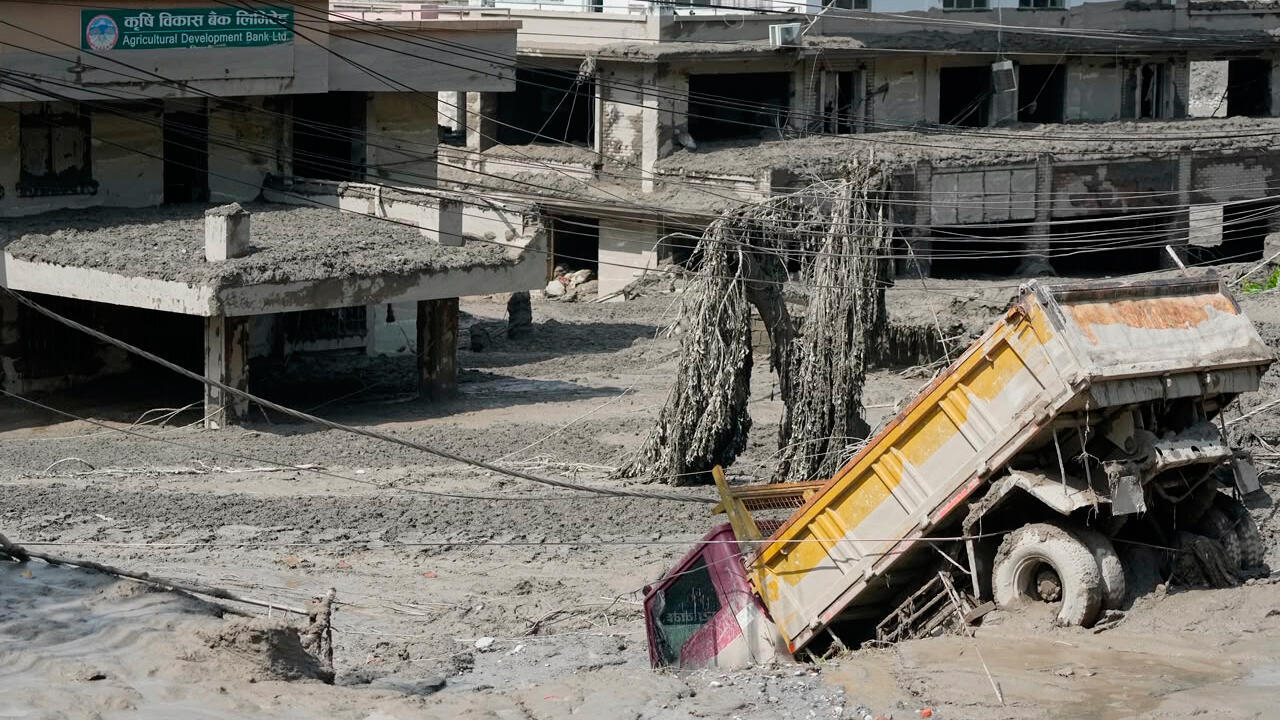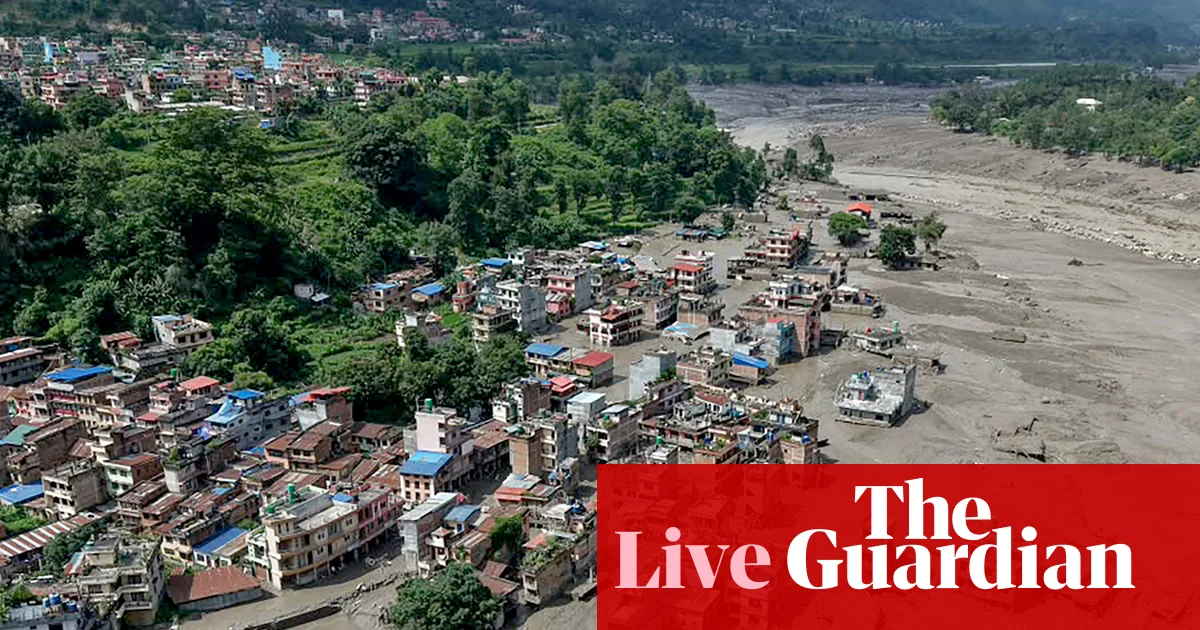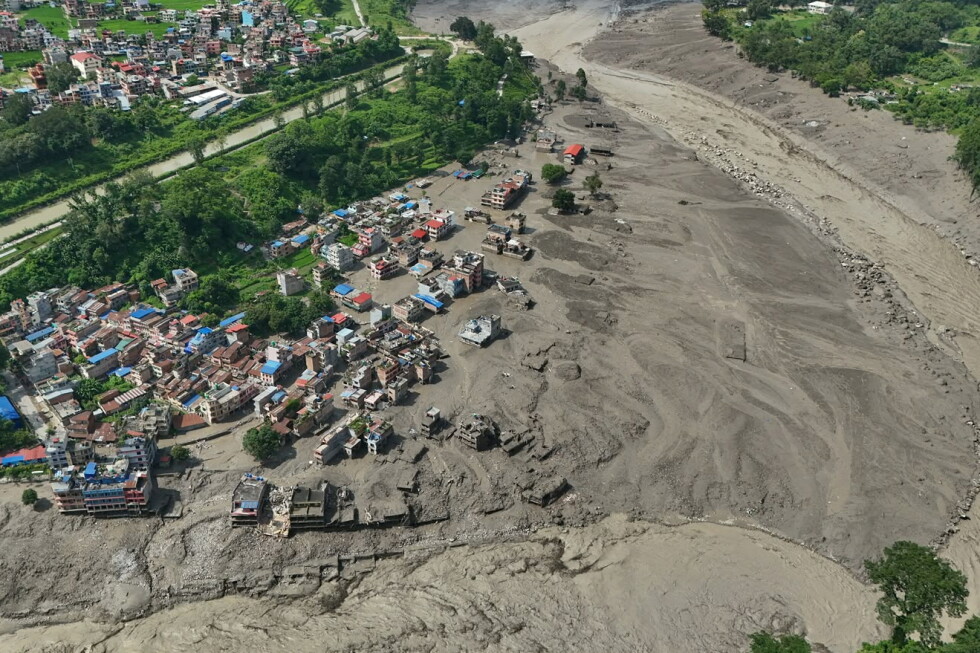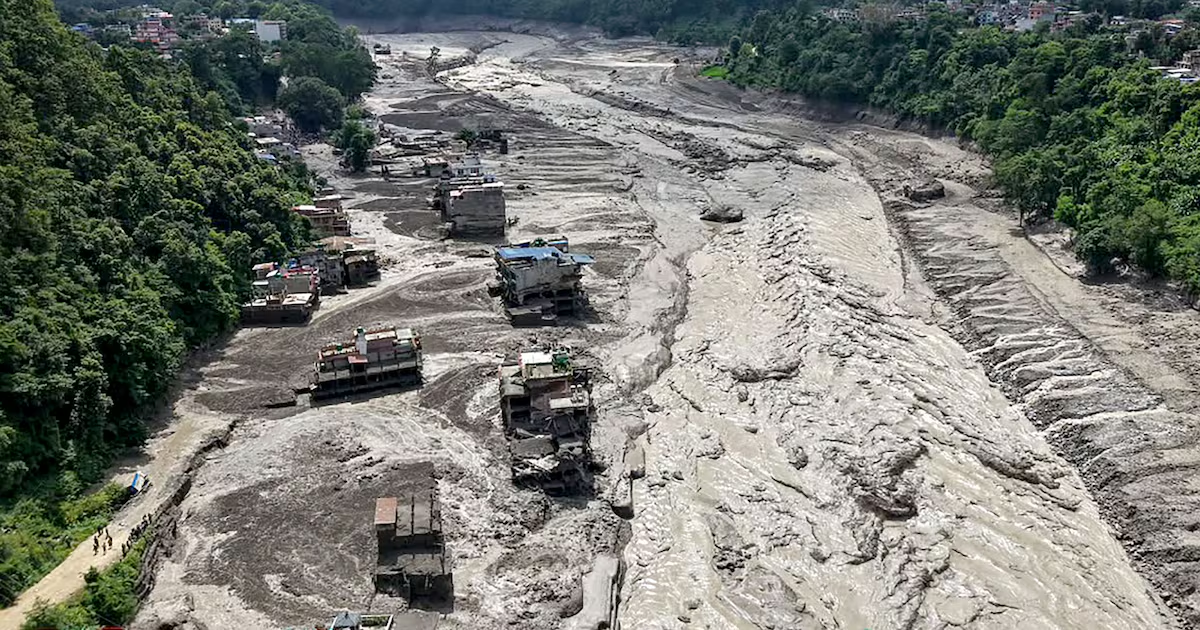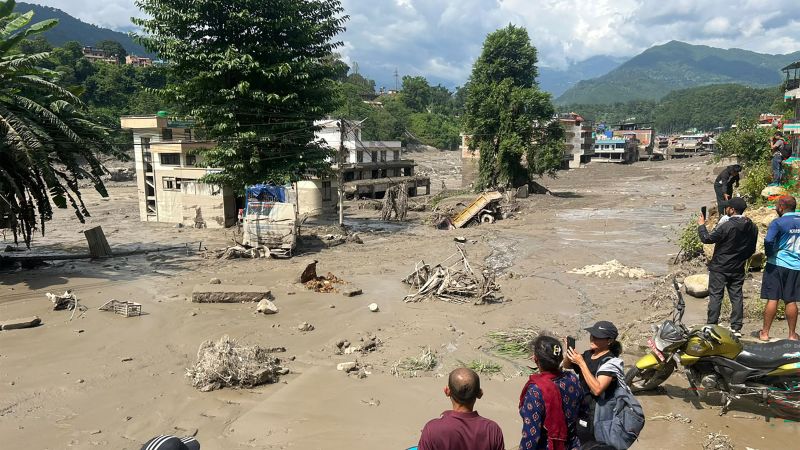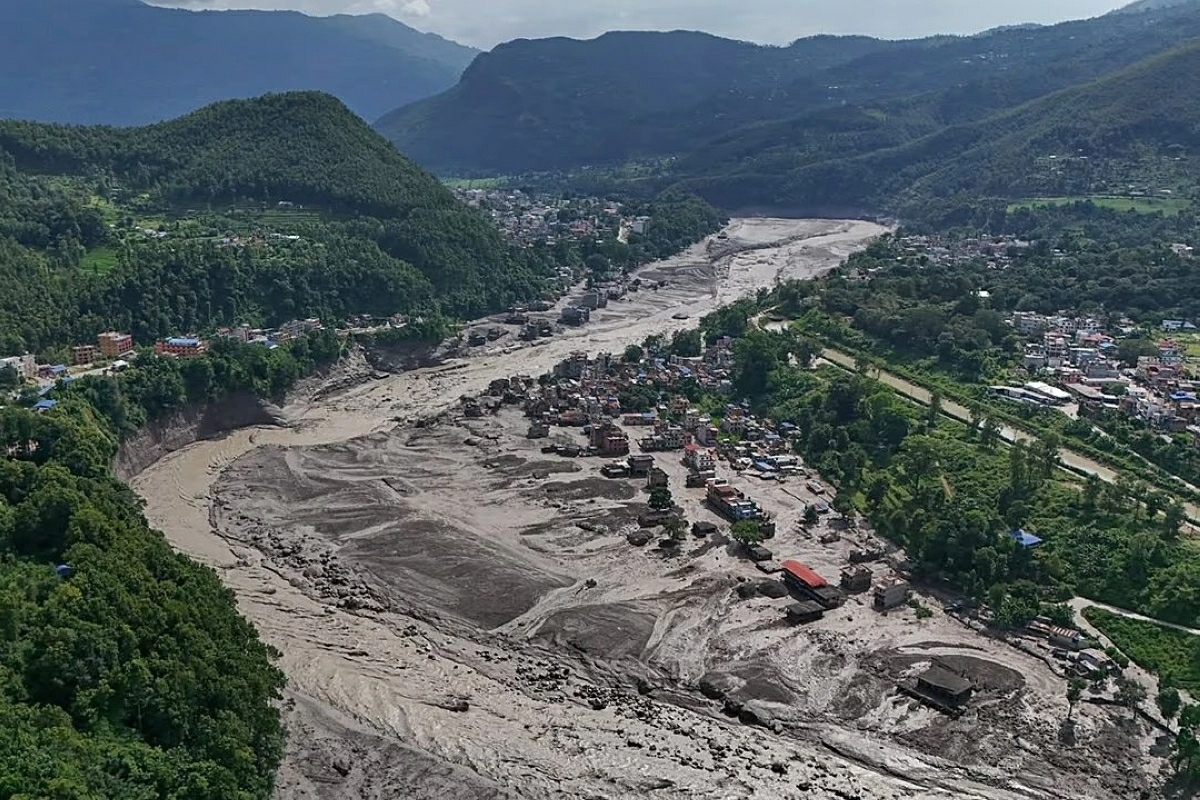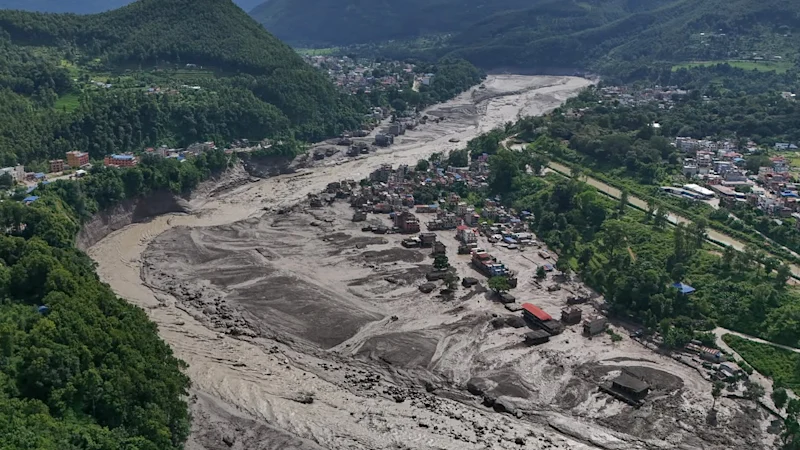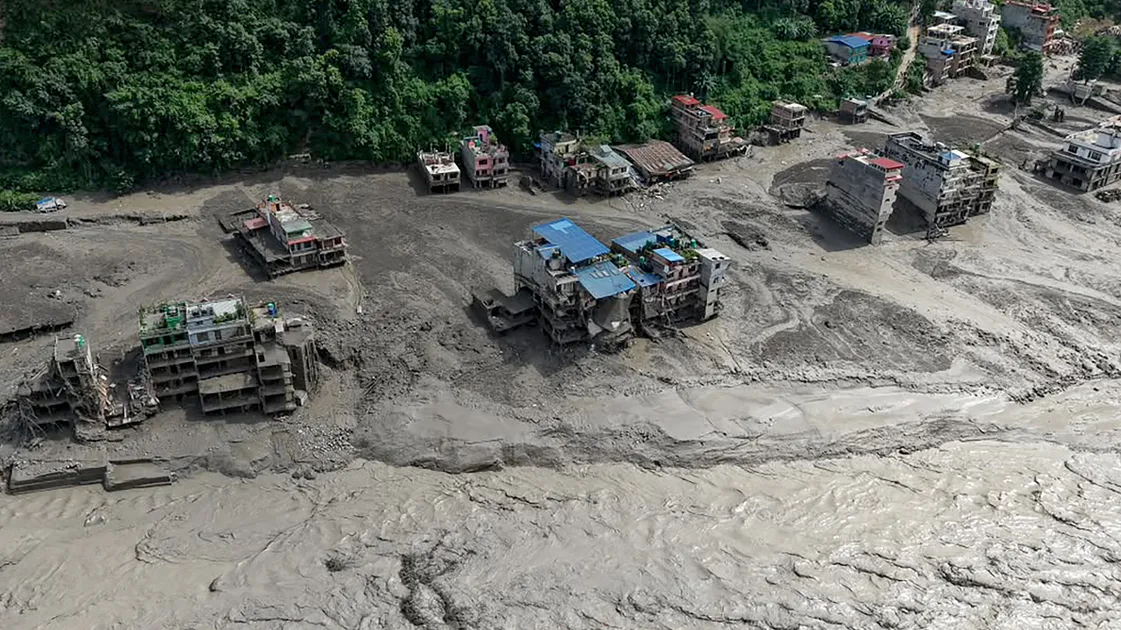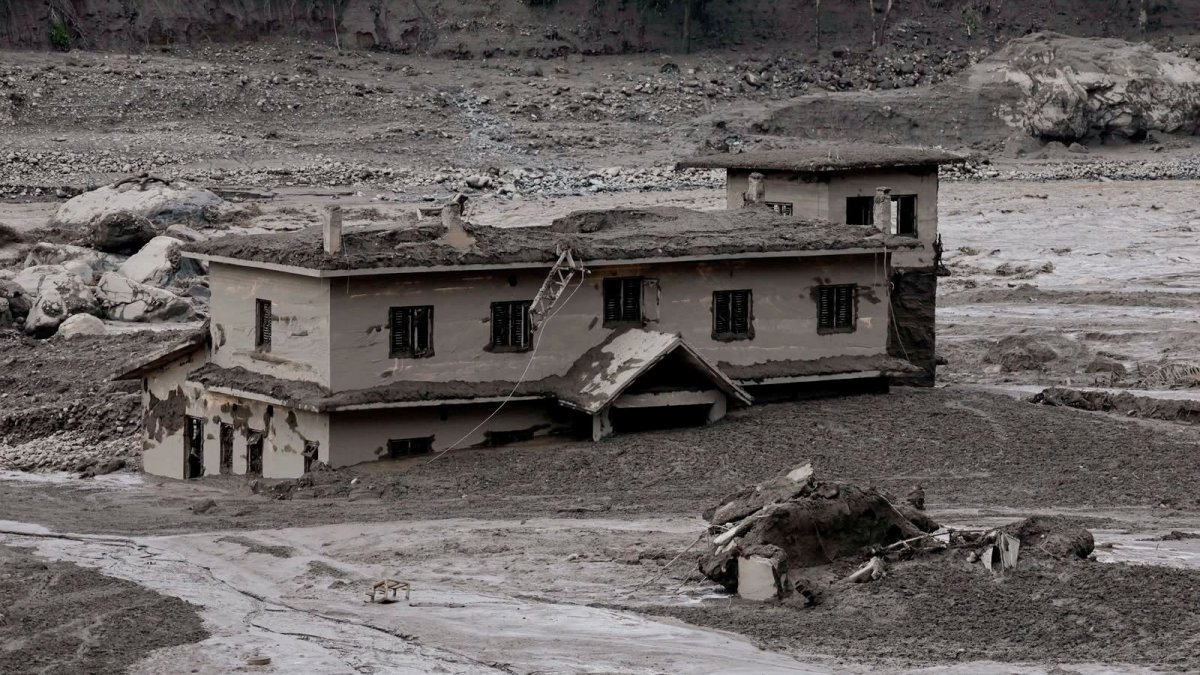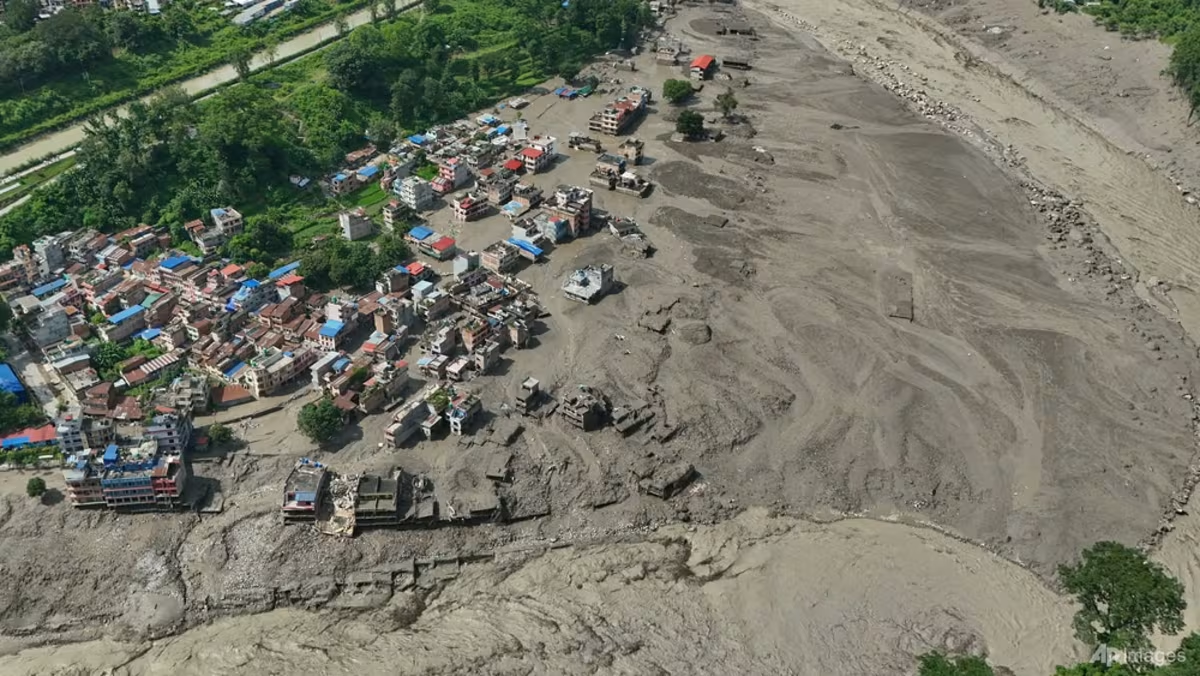
At least 19 people are confirmed dead and 384 travelers are reported missing, including 291 foreigners, after a wall of water devastated villages, roads and hydropower infrastructure near the Tibet borderAssociated Press|Updated:Hundreds of people were reported missing after an avalanche of ice and rock triggered massive flash floods that swept through parts of Nepal on Wednesday, killing at least 19 people and causing widespread damage to villages and infrastructure.Officials said 384 tourists, including 291 from countries including India, the United States, the United Kingdom and Malaysia, were reported missing as a result of the flash flood. No Israeli travelers have been reported among the missing.GalleryHouses lie partially submerged in muddy water along a riverside after flash floods at Trishuli Bazar in Nepal's Nuwakot district (Photo: Prabin Ranabhat/AFP)The Bhotekoshi River flooded around 9 a.m. Wednesday, destroying several villages as well as roads and hydropower projects, officials said. They issued warnings to residents of several of Nepal's districts and asked them to stay away from the banks of Bhotekoshi, Trishuli and Narayani rivers."We have asked both India and China to help us with the rescue efforts," said Sasmit Pokharel, a spokesperson for the Nepali government.Floods in Nepal (Video: Reuters/Stringer)The worst affected area, Rasuwa district, witnessed similar flash floods last year, when a glacial lake in neighboring Tibet overflowed as a result of high temperatures in the mountain region. Nine people lost their lives and critical infrastructure including a bridge connecting the two countries were damaged at the time.Climate experts at the Kathmandu-based International Centre for Integrated Mountain Development say an avalanche from a glacier likely caused Wednesday's flash flood.A flooded road following a flash flood in Galchhi in the Dhading district, Nepal (Photo: Reuters)The Lhende Khola River, a tributary of the Bhotekoshi River, witnessed maximum flooding Wednesday, they said."The Lhende Khola has flooded twice in fourteen months, this time triggered by an ice rock avalanche from a glacier on the Nepal side that blocked the river and released a sudden surge downstream," said Saswata Sanyal, a disaster risk reduction specialist at the climate research group."In a warming Himalaya, early warning is the first line of adaptation," he added.The Himalayan region, which crosses Nepal and several nearby countries including India, is especially vulnerable to heavy rains, floods and landslides because the area is warming up faster than the rest of the world due to human-caused climate change. Research has shown that extreme weather events including heat waves, heavy rains and melting glaciers have become more frequent in the region.Researchers at the Kathmandu research group found earlier this year that glaciers across the Hindu Kush Himalaya region are melting at an accelerating rate, with ice loss rates doubling since 2000 primarily due to rising global temperatures and climate change.First published: 14:20, 08.26.26
Hundreds missing, at least 19 dead after avalanche triggers flash floods in Nepal | Watch
At least 19 people are confirmed dead and 384 travelers are reported missing, including 291 foreigners, after a wall of water devastated villages, roads and hydropower infrastructure near the Tibet border
458 words~2 min read