We spent seventy years building machines that do exactly the same thing every time. It took about three years of AI hype to start describing that property as a limitation.
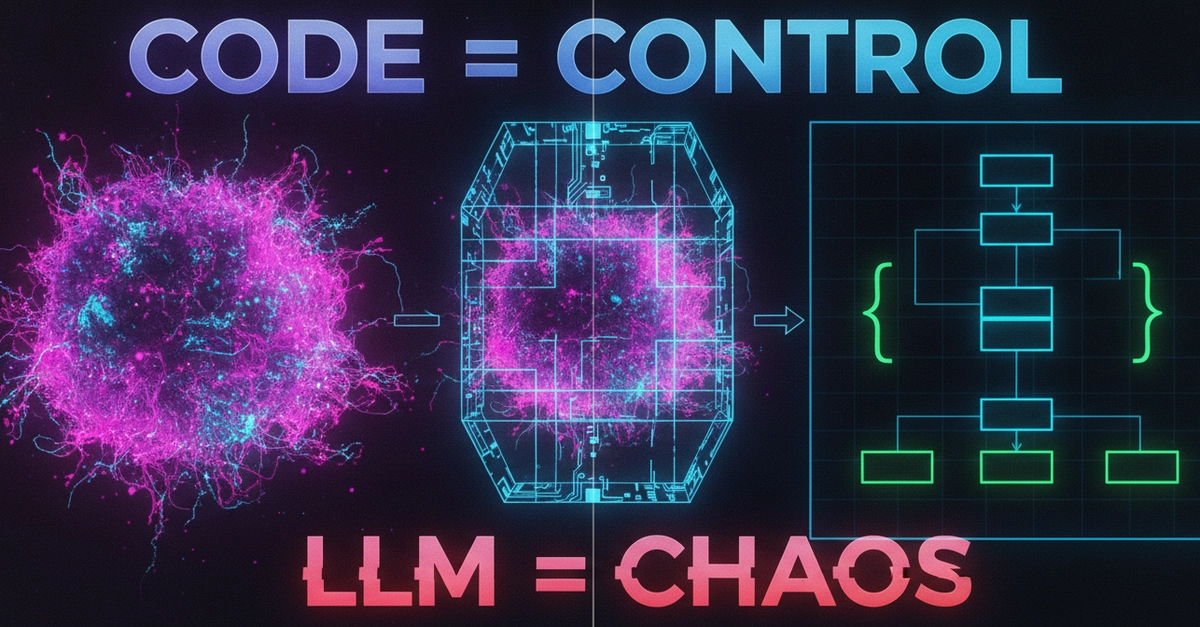
I keep running into the framing in threads, in pitch decks, in hallway conversations: deterministic systems as the old world, rigid, unimaginative, waiting to be disrupted by something that improvises. And every time, I want to push back with the least fashionable opinion I hold: determinism is not the boring baseline that AI liberates us from. It is the single most valuable property a production system can have, and 2026 is the year we are most eagerly trading it away.
Let me be precise about what this post is not. It is not an anti-AI post. I run an engineering team, and we run agents in production: they draft, they call tools, they touch real systems every day. I like this work. The argument here is not "don't use models". The argument is that the more probabilistic components you add, the more load-bearing the deterministic parts around them become, and that almost nobody is hiring, promoting, or celebrating for the second half of that sentence.
What determinism actually buys you
Reproducibility is not an aesthetic preference. It is purchasing power. Walk through what "same input, same output" quietly funds: