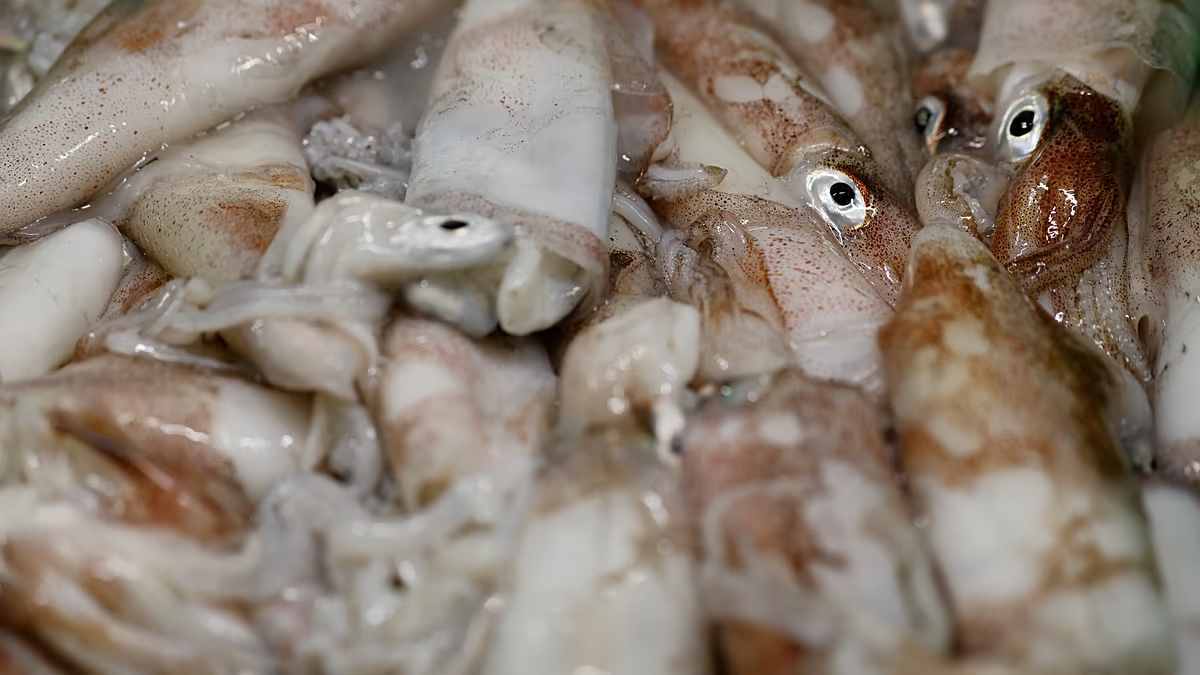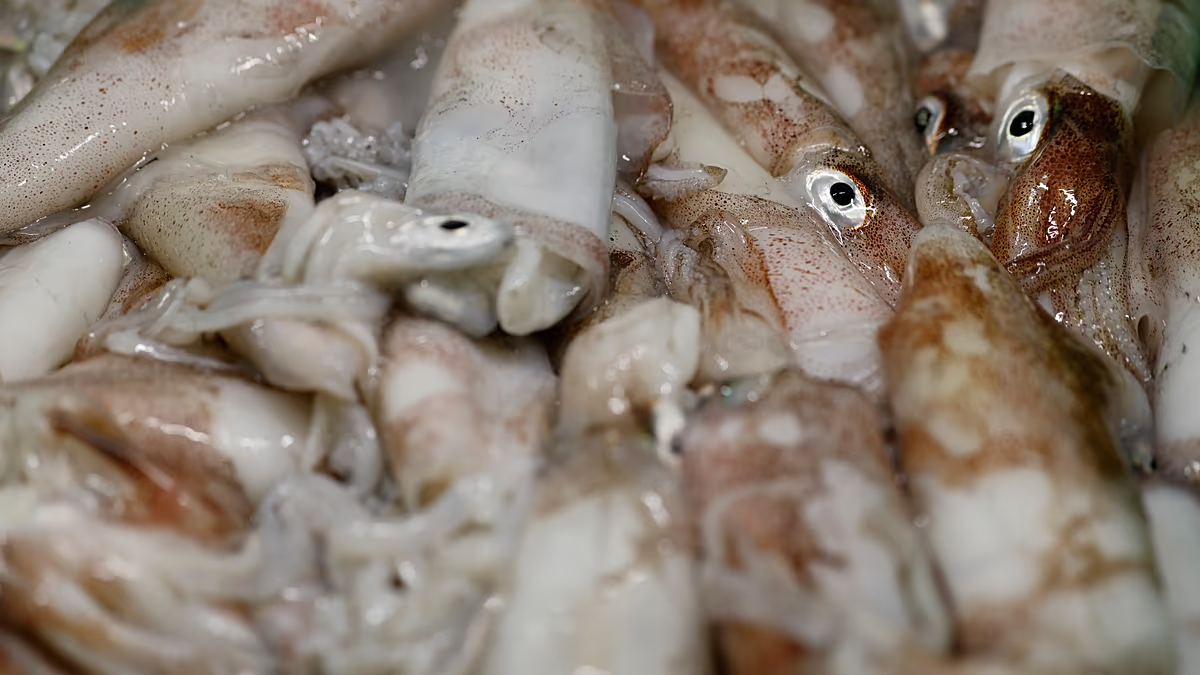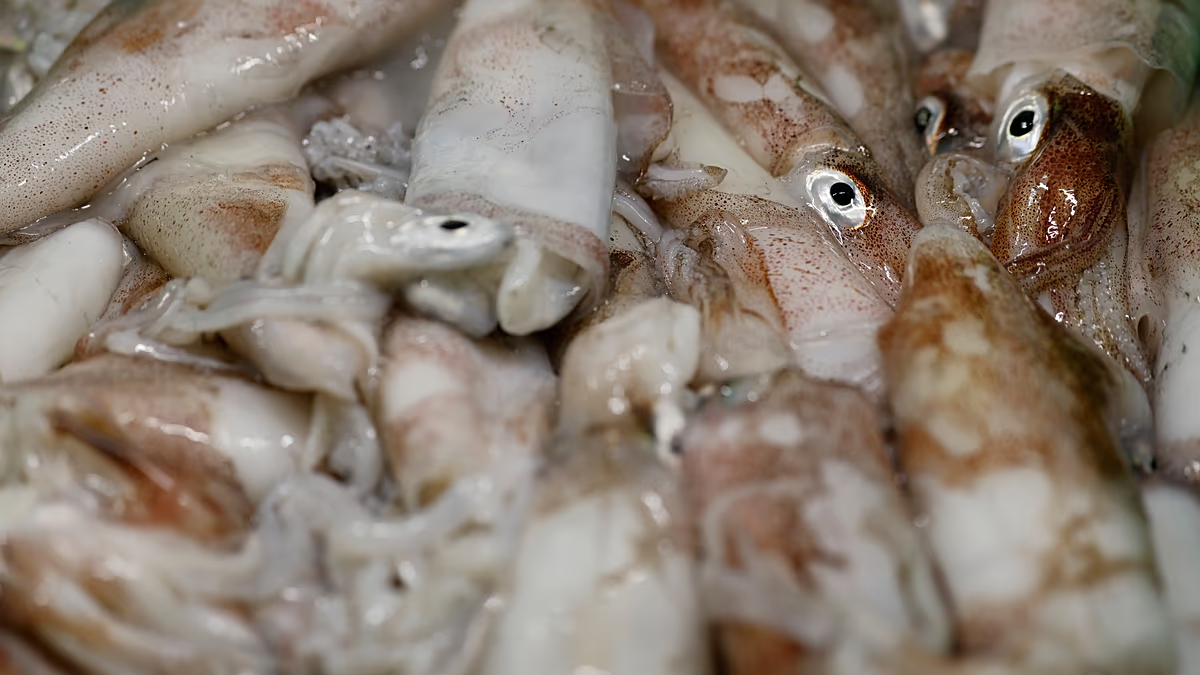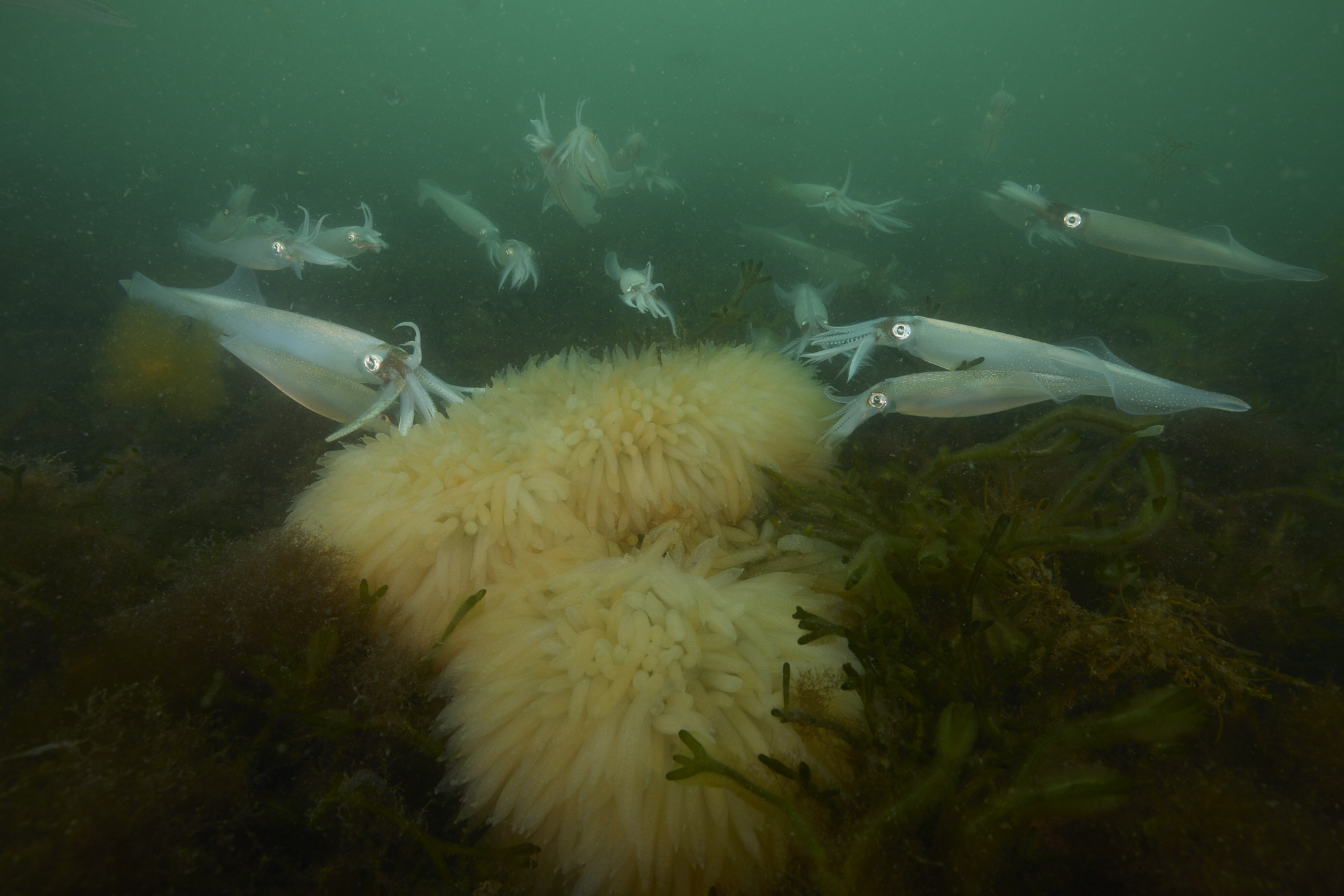
Squid have occupied New England’s maritime imagination for centuries, from fishermen’s tales of strange tentacled creatures to the widely publicized giant squid reports along North Atlantic coastlines in the 1800s. Today, we turn a curious eye toward the longfin inshore squid (Doryteuthis pealeii) — the “Boston squid” — which has long been an important part of regional commercial fisheries. These squid thrive in the emerald green depths off the coast of Massachusetts, where low visibility is characteristic of the turbid, nutrient-rich waters.Keith Ellenbogen, MIT Sea Grant resident artist and acclaimed underwater photographer, knows these waters well. On a good day, he might have 20 feet of visibility beneath the surface. But even with the clearest conditions, these swift squid evaded Ellenbogen’s lens for months. In 2023, over 2.85 million pounds of longfin squid — likely over 6 million individual squid — were landed commercially in Massachusetts, with a value exceeding $2.82 million. Consistently among the top 10 species landed commercially in Massachusetts, the longfin squid shares the ranks with the iconic American lobster, Atlantic surf clam, and sea scallop, underscoring its enduring significance in the state’s seafood industry. In 2024, landings came in under 750,000 pounds, roughly a quarter of the previous year’s catch. Likewise, the spring 2024 trawl survey documented in the Massachusetts Division of Marine Fisheries Annual Report recorded a historic low in longfin squid biomass, following a record high in 2023. But this drop, while significant, doesn’t necessarily spell trouble for the species. Longfin squid often show large fluctuations in abundance from year to year. Their short lifespan of about six to nine months, combined with their sensitivity to shifting ocean conditions, makes their population dynamics inherently unpredictable. Kimberly Hyde, a biological oceanographer with the National Oceanic and Atmospheric Administration (NOAA)’s Northeast Fisheries Science Center (NEFSC), notes that NEFSC research scientists have expanded squid research over the past few years, including a two-year study on longfin squid to better understand their life history and track their maturity and readiness to spawn. Across the Northeast, scientists are also collaborating with the fishing industry through efforts including the Longfin Squid Biological Sampling Program (SQUIBS), Collaborative SQUid Size Monitoring (SQUISM), and the Squid-Squad, a highly interdisciplinary team of scientists, industry members, and managers with a common goal to improve squid science. Still, much of this cephalopod’s story remains hidden from sight. After years of trying to find and photograph a squid spawning aggregation, Ellenbogen chartered a vessel and worked with a network of local fishermen to locate concentrations of squid beneath the surface. In New England’s emerald-green, nutrient-rich coastal waters, visibility was limited, and although he knew he was directly above the spawning grounds, finding a cluster of eggs and squid 30 to 40 feet below the surface was far from easy.“As I descended through the emerald-green waters of Cape Cod, I couldn’t see anything at first,” Ellenbogen recalls. “I knew I was in the right area, but the seafloor seemed empty. Then I noticed a few faint shadows moving in the distance.” As he swam closer, the scene slowly revealed itself.
The secret love life of the longfin squid
Keith Ellenbogen, MIT Sea Grant resident artist and underwater photographer, captured hidden spawning behaviors of longfin squid off Cape Cod. Consistently among the top 10 species landed commercially in Massachusetts, longfin squid are an important part of regional fisheries.
1,590 words~7 min read