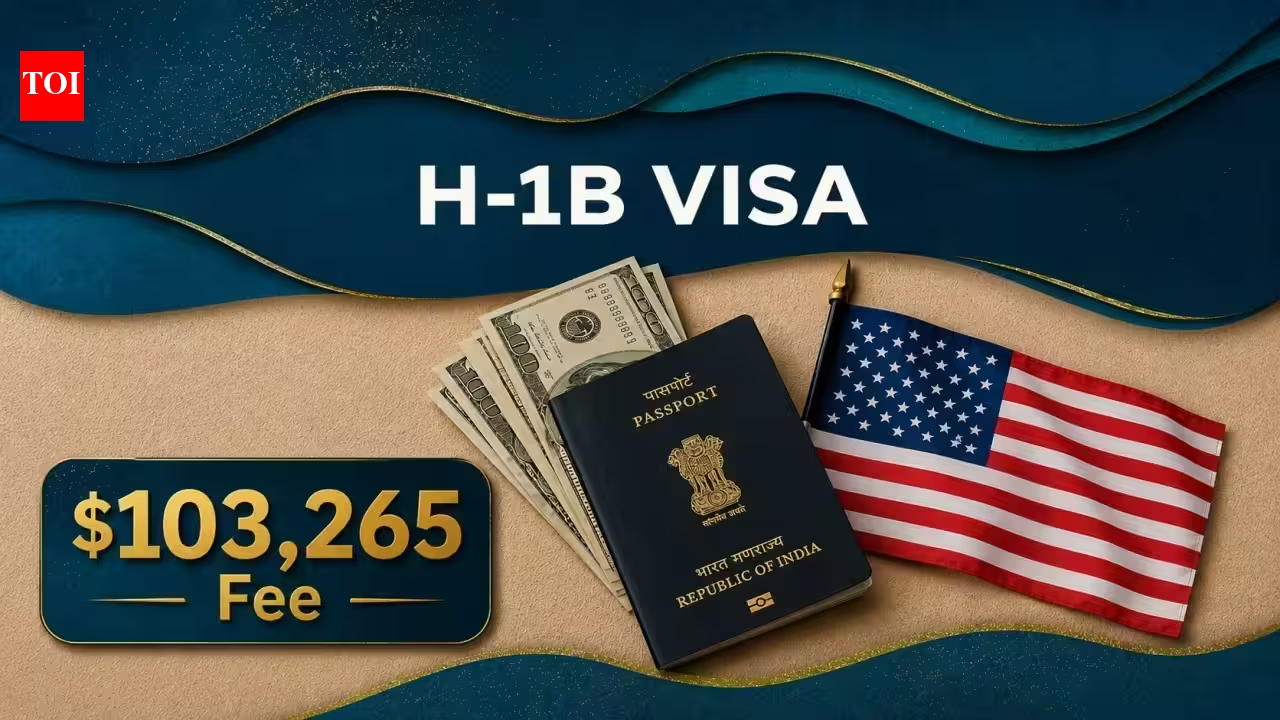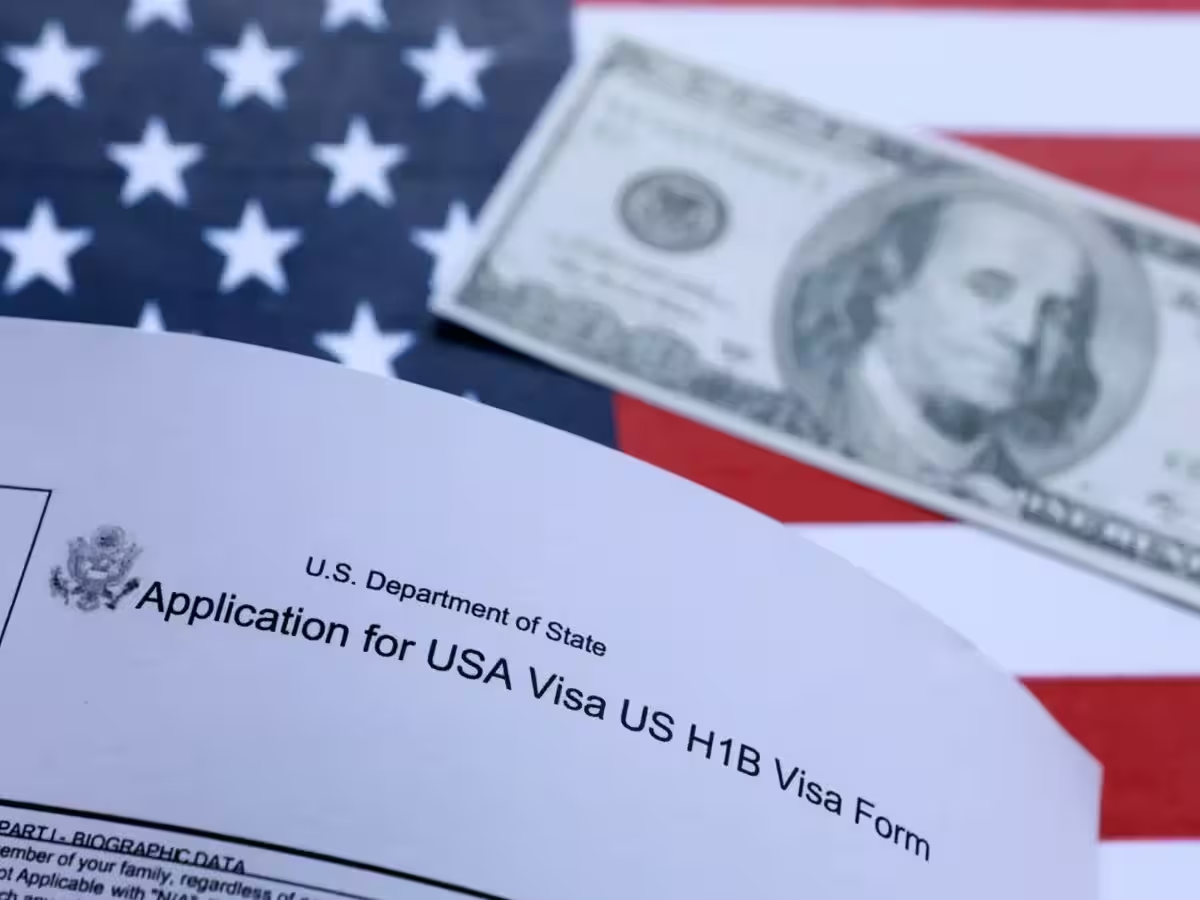
A proposed six-figure H-1B fee could create a major new hurdle for Indian students in the US hoping to move from F-1 student status to employment after graduation, as the Trump administration seeks to make companies pay $103,265 for certain new H-1B petitions.A new H-1B fee could make the post-graduation job path far costlier. (Unsplash)The Department of Homeland Security (DHS) proposed the fee on August 24-25, 2026, covering H-1B petitions subject to the annual cap, including cases eligible for the 20,000-visa advanced-degree exemption. The proposal is not yet in effect.The proposed charge would come on top of other existing H-1B filing costs, potentially making the transition from an international student to an H-1B worker substantially more expensive for employers.Why Indian students could feel the impactFor many international students, the H-1B lottery is an important route from US education to long-term employment in the country.Students graduating from American universities can generally work through Optional Practical Training (OPT), subject to the applicable F-1 rules. Employers can then seek an H-1B for workers whose petitions are selected under the annual cap.That pathway could become more expensive if the proposed fee is finalized.Also read: Trump administration plans another H-1B rule, and this one could change how the visa program works. Details hereThe proposed $103,265 charge would apply when an employer files a cap-subject H-1B petition after selection in the lottery. It would cover petitions for workers eligible for the advanced-degree exemption as well.That means an Indian student earning a US master's degree would not automatically escape the proposed fee simply because the student qualifies for the master's-degree H-1B pool.The important catch: The fee is not in effect yetIndian students and employers do not have to pay the $103,265 charge today.The proposal must go through the federal rulemaking process, including a 30-day public comment period, before DHS can decide whether to issue a final rule.The Federal Register notice describes the measure as a proposed fee for certain H-1B petitions rather than an immediate change to current filing requirements.This distinction is particularly important for students graduating soon: the proposed rule does not mean every current F-1 student will suddenly receive a $103,265 bill.The payment would be the employer's responsibility when filing an affected H-1B petition.How new proposal differs from earlier $100,000 H-1B feeThe proposed fee follows the administration's earlier attempt to impose a $100,000 payment on certain H-1B hires.That earlier measure was based on a presidential proclamation and primarily targeted H-1B workers seeking to enter the US from abroad. A federal judge later vacated the policy, ruling that the administration lacked congressional authority to impose the charge as a tax. The government appealed the decision.The new proposal takes a different legal route.Bloomberg Law reported that the proposed $103,265 fee would extend to cap-subject H-1B petitions filed for workers already in the United States, including people transitioning into H-1B status after studying in the country.That makes the proposal particularly significant for international graduates.What happens to the H-1B lottery?The H-1B program has an annual statutory limit of 85,000 visas, including 20,000 reserved for foreign nationals with qualifying US advanced degrees. Demand has historically exceeded the available supply.Also read: Trump administration pauses US visa interviews worldwide - here’s why applicants may have to wait longerUnder the proposed rule, the employer would pay the $103,265 fee after an H-1B petition is selected and filed.DHS estimates that the fee could generate about $8.8 billion annually, based on approximately 85,000 cap-subject petitions. The agency says the money would support immigration-related operations across several federal agencies.The proposal could also change employers' willingness to sponsor international graduates. DHS itself estimates that the higher cost could reduce the number of cap-subject petitions filed.What Indian students should knowFor Indian students studying in the US, the key point is that the proposed fee is a potential employer cost, not a new payment that students must make themselves.However, a six-figure sponsorship cost could influence whether an employer is willing to sponsor an international graduate for an H-1B.The proposal therefore creates uncertainty around a pathway that many Indian students rely on after completing US degrees.For now, students can continue to follow the existing F-1, OPT and H-1B rules. Any change would depend on the outcome of the DHS rulemaking process.
H-1B visa shock: New six-figure fee could turn post-graduation work route into costly bet for Indian students
A proposed $103,265 fee for H-1B petitions threatens to complicate the employment pathway for Indian students in the US.
701 words~3 min read