August 26, 2026
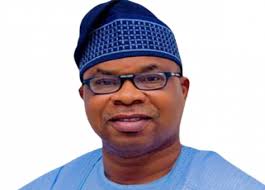
The first part of this article concluded with the observation that while all politics may indeed be local, the economic hardship confronting Nigerians today is anything but local. But before examining how these conditions may shape the 2027 elections, the Osun experience invites us to confront an even more fundamental question: what exactly do our political parties represent? Governor Ademola Adeleke’s victory illustrates the extraordinary portability of political personalities from one platform to another. Accord was hardly the dominant political institution in Osun before he moved into it, yet he appears to have carried a substantial part of his established constituency with him. This raises an uncomfortable question: are Nigerian political parties enduring democratic institutions, or merely temporary platforms animated by powerful individuals?
The question applies particularly to the APC and ADC. What does the APC fundamentally represent today? What does the ADC represent? Whose interests do they aggregate? For what purposes do they exist? Beyond presenting candidates, accommodating defectors and providing platforms for political ambition, what practical relevance do they have to ordinary Nigerians? These are not merely rhetorical questions. They go to the foundations of representative democracy. A political party should represent identifiable values and interests, articulate a coherent philosophy of government, mobilise society around clear objectives and translate citizens’ aspirations into programmes for national development. Above all, it should tell us what kind of country it wants to build.