“You can eat these,” says Vadim Savin, my Kyrgyz guide, pointing to tiny red bulbous berries attached to spear-like stems. He pops one into his mouth. “Go on, try,” he implores. It’s sharp, tart and vaguely sour all at once. “They’re hallucinogenic – ancient shamans used them,” he claims. I gasp and contemplate spitting it out, but he adds, reassuringly, that “you’d have to eat a lot [of the plant] before you could get high”.
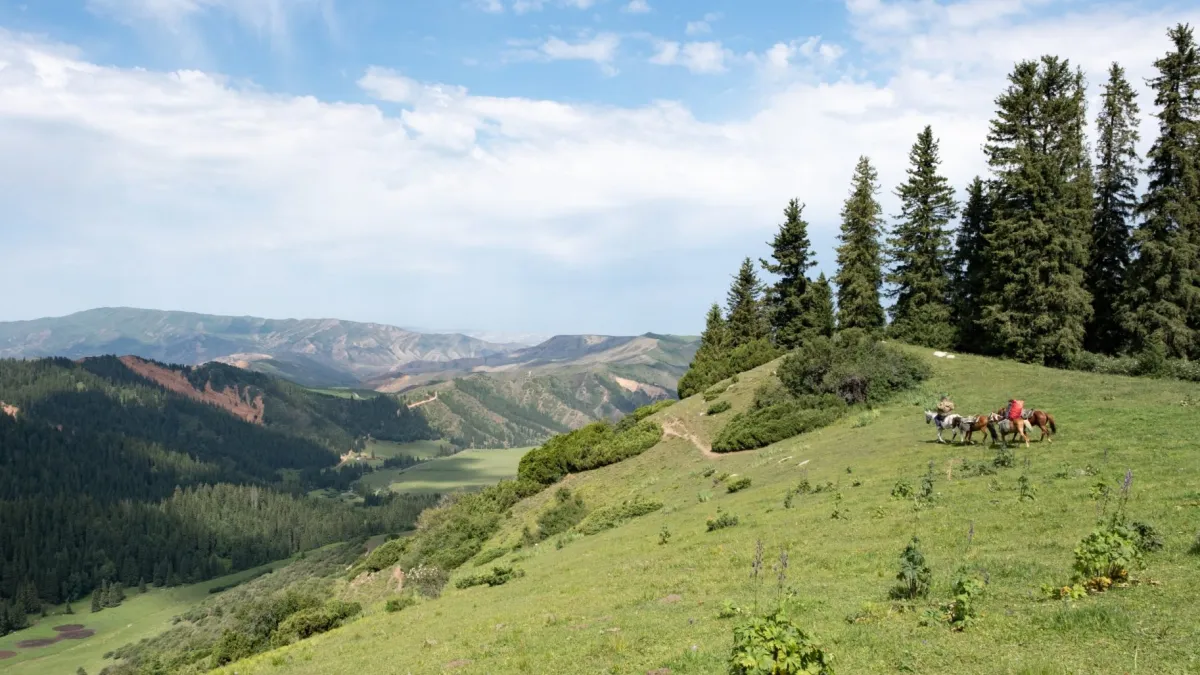
I’m in Konorchek Canyon, an arid, wind-sculpted valley a couple of hours’ drive east of Kyrgyzstan’s capital, Bishkek. I’ve been walking along a dry riverbed, occasionally scrambling up rock faces, and snaking through a rusty landscape of towering, cathedral-like shapes.
It’s more akin to something you’d find in Australia’s Red Centre around Uluru or Kings Canyon than the “Alps of the East” moniker I had heard ascribed to Central Asia’s Tien Shan mountains.
The canyon’s appearance is a result of geological changes millions of years ago when layers of red sandstone and clay-rich sedimentary rock collected deep beneath the sea. When the Indian and Eurasian tectonic plates collided, creating the Tien Shan system, it pushed these softer rocks upwards and sideways and into contact with the wind, sun and rain, which carved them into their art gallery-worthy shapes.