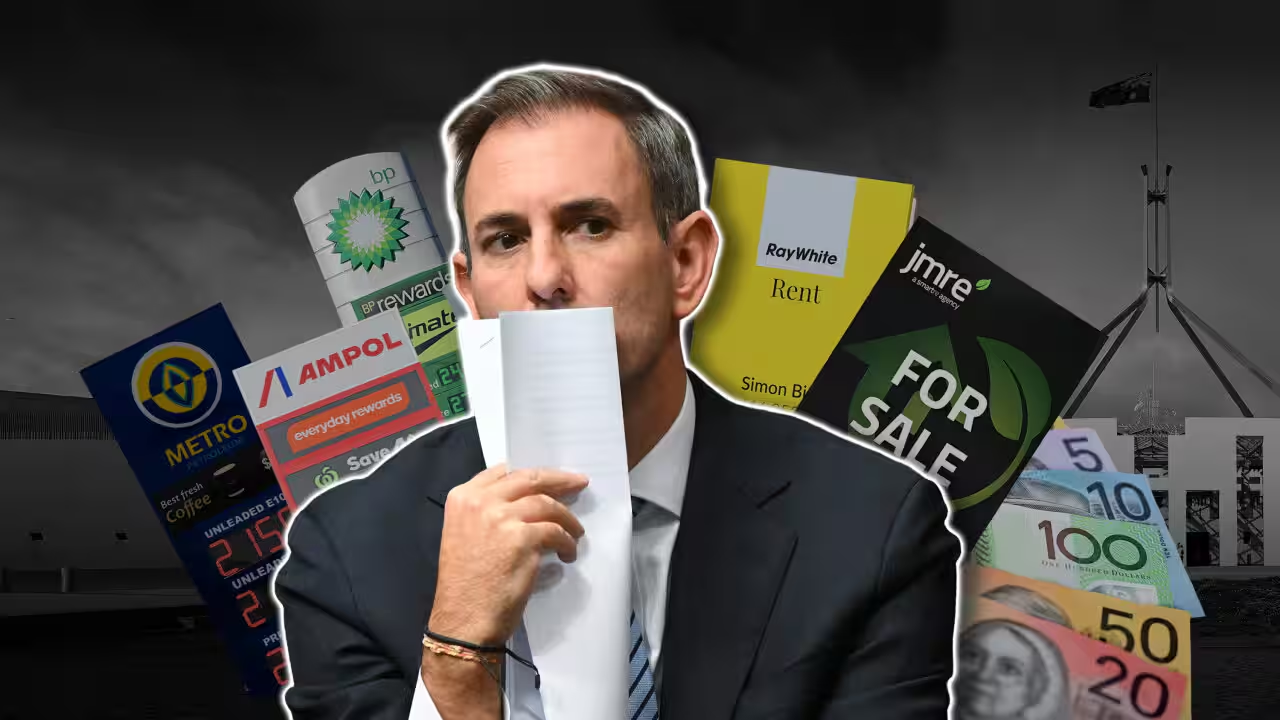
Inflation is continuing to cool with the annual headline rate rising to 3.5 per cent in July, down from 3.8 per cent in the year to June.The figures released by the Australian Bureau of Statistics on Wednesday showed the largest contributor to annual inflation in July was housing, which rose by 5 per cent, followed by food and non-alcoholic beverages, and recreation and culture.Annual inflation for transport also increased 1.6 per cent in July, up from 0.1 per cent in the year to June."On a monthly basis, automotive fuel prices rose 7.5 per cent in July after falling for three months in a row," said the ABS's head of price statistics Rachel McCririck."This was driven by higher world oil prices and the partial unwinding of the federal government's fuel excise relief measures in July."The headline rate of 3.5 per cent in July was slightly higher than the 3.3 per cent figure largely predicted by economists, however the annual rate is now lower than it was before the start of the Iran war in February.The underlying inflation or "trimmed mean" figure preferred by the Reserve Bank of Australia (RBA), which strips out volatile items like fuel, remained unchanged at 3.6 per cent.But the monthly trimmed mean figure increased to 0.5 per cent, leading economists to warn the figures could warrant a further interest rate hike from the RBA."If you annualise that number we get 3.6 [to] 3.8 per cent, so that's just way too far from the RBA's target [between 2.5 to 3 per cent]," said AMP economist My Bui."And even on the annual numbers, it has been 3.6 per cent three months in a row, contrary to people's hope that it been softening somewhat."This inflation seems not to move at all. It is still stuck around that really high range."The federal government's temporary reduction to the fuel excise ended at the start of August. (ABC News: Chris Taylor)Increased risk for rate hikePrior to the release of the July inflation data almost 83 per cent of economists polled by Reuters expected the RBA to keep interest rates on hold at its next meeting in late September.But Ms Bui said it was likely the RBA would be concerned by the figures and would consider lifting rates at a future meeting."I think the RBA would be quite worried. Yesterday we got the minutes from their latest meeting and they actually admitted to us that they think the risk to inflation is on the upside," she said."They should be quite worried … because the ABS said a lot of the drivers of inflation were concentrated in the sticky services area."We do think that there is a very high chance of another rate hike coming for Australia before the end of the year."David Bassanese, the chief economist at Betashares, said the figures meant the RBA's September meeting was "live"."Today's higher than expected underlying inflation result is an unfortunate kick in the guts for an already ailing economy as it increases the risk of yet another Reserve Bank interest rate increase at next month's policy meeting," he said."The only question now is whether today's result is bad enough to force the RBA's hand as early as next month, or whether it would be prepared to wait for the following monthly inflation report on 30 September — which would be one day after its September policy meeting."At this stage I still anticipate the RBA will hold fire. There are still important GDP and employment results to come in the next few weeks."That said, the risk of an RBA rate hike next month is now at least 30 to 40 per cent and mortgage holders are in for a nervous wait."However, not all economists believe the data warrants an increase to the cash rate in the coming months.Callam Pickering, APAC economist at Indeed, said while Australia clearly has an inflation problem he does not think the RBA will raise rates this year."Demand exceeds supply and productivity growth is absolutely dreadful — that's not typically a recipe for low and stable inflation," he said."We no longer anticipate another rate hike this year. However, the RBA still appears to be hawkish."On balance, the next move is still more likely to be up than down, particularly if productivity growth doesn't improve."
'Unfortunate kick in the guts' as inflation data increases RBA rate hike risk
Inflation is continuing to cool with the annual headline rate rising to 3.5 per cent in July, but some economists say it has increased the risk of another interest rate hike by the Reserve Bank of Australia this year.
710 words~3 min read