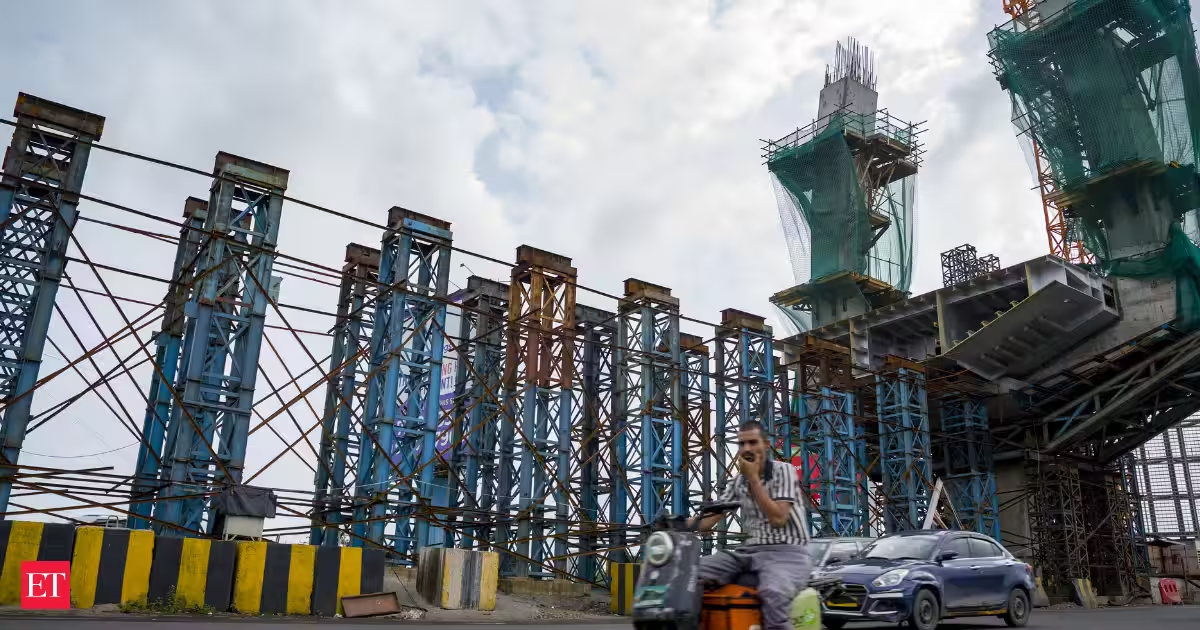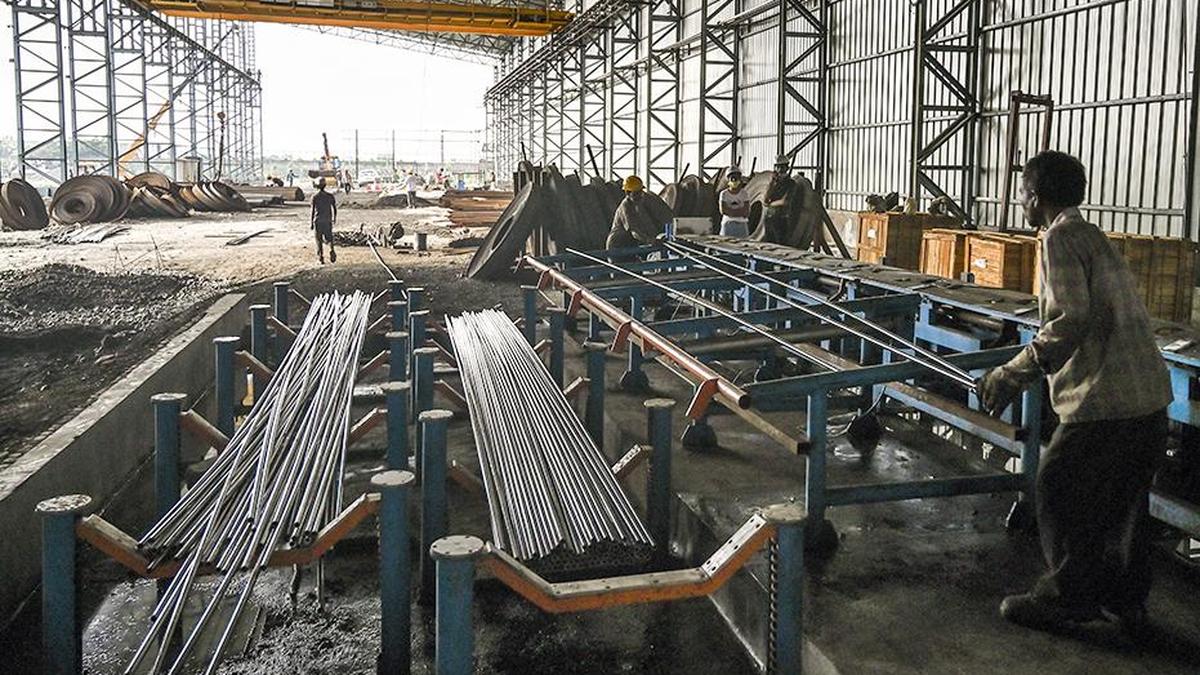
Every major economy is adopting large-scale industrial policy (IP) and state support to navigate rapid technological change. Historically such policies helped late industrialisers catch up with frontier economies. Since the 2010s, though, it is the dominant players, those who already hold technological leadership, who are deploying IP most aggressively, deepening their edge further. Unlike tariffs, which simply let local firms compete better against foreign rivals at home, effective state support and IP helps firms compete globally.The EU, US, Japan and China together account for over 90 per cent of global industrial policy spending; developing countries, India included account for less than 10 per cent. India’s flagship schemes — PLI, the Bhavya Industrial Park scheme, the Electronics Components Manufacturing Scheme, the RDI Scheme — are a fraction of the scale of IP programmes in advanced economies or China.India fiscally cannot match the budgets or scope of industrial policy in the US, China or the large EU states. That raises hard questions about the policy space India needs to build scale and reach the technology frontier. These questions matter because India’s economic rise, and its ability to employ its vast youth population, depends on getting this right.Where India standsUNIDO data show India trailing its G20 peers across most industrial sectors. It doesn’t rank among the top five global producers in upstream industries such as metal fabrication, electronics, or industrial machinery. Even where it does break into the top five: chemicals, basic metals, pharmaceuticals, its share of G20 output stays below 5 per cent, and its global share is smaller still.The data also reveal a conversion problem: India struggles to turn upstream scale into downstream competitiveness. It is the world’s third-largest producer of basic metals by value yet ranks only tenth in fabricated metals. Its strength in textiles doesn’t carry through to apparel.China dominates global industrial output, holding 50 per cent or more of world production across most sectors, followed by the US and EU. Despite talk of American de-industrialisation, the US still ranks among the top three producers in most industries. As these dominant players plan for even greater scale, India’s task as a late industrialiser only gets harder.Most industrial sectors are also undergoing technological transformation, and Indian industry will need to close the gap with the frontier. Talent isn’t the constraint. In high-specification machining and nanoscale materials, two illustrative frontier fields, the Australian Strategic Policy Institute’s Critical Technology Tracker ranks Indian researchers second only to China, producing roughly 10 per cent of published and cited research and training around 10 per cent of the world’s postgraduate talent in these areas.What India lacks is China’s manufacturing ecosystem to absorb that talent into downstream production. Indian talent instead flows to global multinationals or into Global Capability Centres serving those same MNCs. Start-up culture in manufacturing remains nascent, pockets of success aside, with nothing close to China’s programmatic push or the EU’s newly ambitious industrial policy.FTAs cut both waysIndia’s FTA strategy aims to lock in binding, predictable market access across every G20 economy and major region by 2027-28, ensuring a level playing field with competitors. But FTAs will also open India’s domestic market to foreign competition. Manufacturers currently based in China will relocate production to India’s FTA partners, and Chinese firms themselves will do the same, as their exports face tariff and non-tariff barriers elsewhere. Indian industry needs to be competition-ready on scale, quality and technology.Investment sits at the centre of this strategy. Policymakers hope that FTA enabled duty-free import of intermediates and duty-free export of finished goods, combined with India’s domestic market and demographic advantage, will form the “trifecta” for attracting global investment.But that bet rests on one assumption: that India’s cost and ease of doing business won’t outweigh these advantages. If it fails that test, firms will use FTAs to serve the Indian market from elsewhere rather than invest here.Three urgent prioritiesSmarter industrial policy: Small and mid-sized firms require fiscally sustainable support. Focus should be on patient, low-cost capital for R&D, tooling, quality upgrades, and technology adoption. Instead of generic schemes, India needs targeted missions in core areas of niche manufacturing such as advanced ceramics, nanomaterials, and precision machining.These should back designated champion firms and be monitored independently by a joint government-industry body housed outside Ministries running such schemes, such as NITI Aayog.Coordinated ease of doing business: Every investment, foreign and domestic, above ₹500 crore should get a dedicated central case officer from DPIIT plus two State-level officers to support time-bound execution. These officers and their department heads would be accountable to screening committees of non-bureaucrat professionals, with real consequences for career progression for non-performance.Treat major manufacturers as nation-builders: Manufacturers with over ₹200 crore turnover should receive Authorized Economic Operator (AEO) equivalent status, granting green channel customs clearance and GST priority processing. Unresolved issues pending over two weeks will escalate to independent expert-led tribunals.Though daunting in India’s current context, these decisive reforms would signal true seriousness. The window to build scale and competitiveness is narrowing. By 2030, India’s goal should be 10,000 global champions delivering $2 trillion in merchandise exports and 25 million manufacturing jobs.The writer was formerly Head, Centre for WTO Studies, IIFTPublished on August 26, 2026
India’s task as a late industrialiser
India needs to step up its industrial policy to compete with developed nations and create jobs for its youth
856 words~4 min read