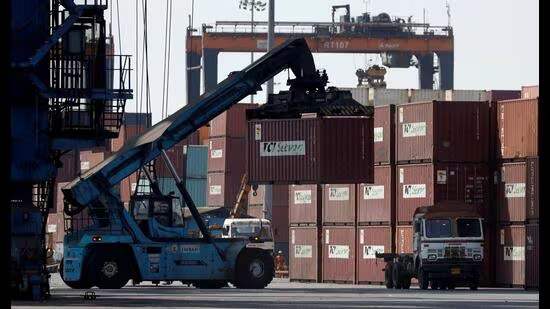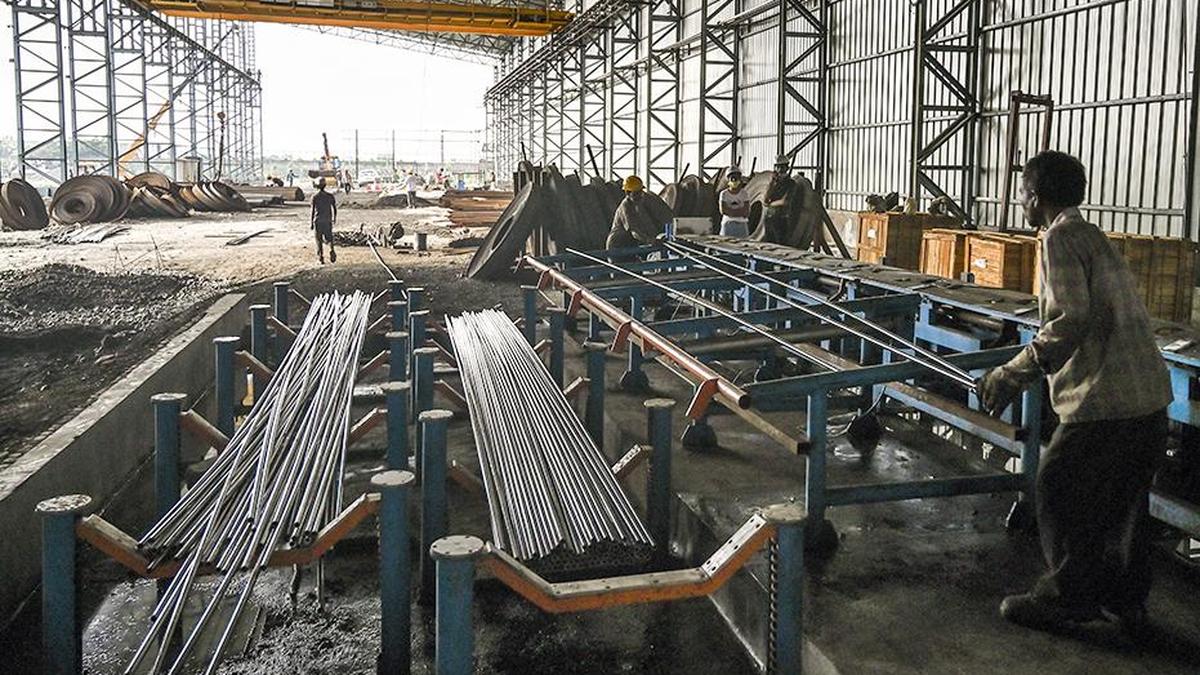
For three decades, economic development followed a relatively predictable script: integrate into globalisation, industrialise through exports, attract foreign capital and move steadily up the value chain. That script is now breaking down. The age of frictionless globalisation is ending, and with it the developmental assumptions that shaped much of the late 20th century.The dominant developmental models of the late 20th century emerged under highly specific historical conditions. The US rose during an era of industrial expansion, abundant natural resources, and geopolitical primacy. China industrialised during the peak decades of hyper-globalisation, when Western capital, technology, and markets were widely accessible. The Gulf monarchies modernised through hydrocarbon wealth accumulated during a prolonged period of expanding global energy demand.India confronts none of these favourable conditions today. It is attempting to rise in a world shaped increasingly by artificial intelligence (AI), fractured supply chains, geopolitical rivalry, slowing globalisation, and mounting debt burdens. It lacks reserve-currency privilege, large-scale hydrocarbon reserves, and the centralised political structure that enabled East Asia’s export-led industrialisation. India is home to the world’s largest population, boasts one of the youngest labour forces and features one of the most complex democratic systems.Much of the global economy today is suspended between extraordinary technological optimism and growing systemic instability. Investors increasingly believe that AI could generate productivity gains comparable to those associated with electricity or the internet. At the same time, the underlying architecture of globalisation is weakening. Global debt has crossed $300 trillion, more than three times world GDP (gross domestic product). Trade as a share of global output has broadly plateaued after decades of expansion. Strategic chokepoints, such as the Strait of Hormuz and the Red Sea, continue to expose the vulnerability of global energy and shipping systems. Semiconductors, cloud infrastructure, and rare-earth supply chains are increasingly treated as instruments of geopolitical leverage rather than neutral commercial assets.India does not possess any significant comparable advantages to the global powers. It imports roughly 85% of its crude oil requirements. It lacks significant per capita natural resource abundance. It cannot sustain large debt-financed consumption without macroeconomic vulnerability. More importantly, the labour economics of the AI age differ sharply from those of earlier industrial eras. In previous industrial revolutions, technology created new forms of mass employment faster than it destroyed old ones. It remains unclear whether AI will follow the same pattern.Developmental models are not universally transferable systems. They emerge from specific combinations of geography, institutions, demography, political culture, and historical timing. India’s constraints may ultimately force a more adaptive developmental architecture than those available to earlier powers. India’s rise could emerge primarily from the productive organisation of human capability. This may require what could be described as “a labour-abundant, technology-enabled, democratic developmental state”. Such a framework would rely less on concentrated resource advantages and more on expanding productivity across a large population through digital infrastructure, distributed entrepreneurship, and strategic state coordination in critical sectors.India has already demonstrated elements of this alternative approach. Systems such as Unified Payments Interface (UPI) and the broader India Stack architecture have enabled population-scale digital participation at remarkably low cost. India also achieved one of the world’s largest digital identity systems through Aadhaar at a population scale and at a fraction of Western administrative costs. These systems suggest a developmental model in which the state creates interoperable public infrastructure while markets compete and innovate upon it.India’s challenge is that it must attempt this transformation while simultaneously building state capacity, industrial depth, and institutional coherence. The next phase of development should depend more upon maximising capability diffusion—capability of the population and the state. AI, for example, could dramatically expand access to education, healthcare, language translation, agricultural advisory systems and legal services. AI may also prove essential in addressing one of India’s central developmental constraints: limited state capacity relative to the scale of its population. Administrative systems across healthcare, education, municipal governance, judicial processing, and welfare delivery already face immense pressure. Properly deployed, AI could help governments improve coordination, targeting and service delivery without requiring proportional increases in bureaucratic expansion.This challenge of development in today’s times extends well beyond India. Much of the Global South now confronts similar structural conditions: young populations, rising debt burdens, incomplete industrialisation, technological dependence, and geopolitical uncertainty. The developmental assumptions of the globalisation era no longer appear sufficient. India needs to show a way.We are not arriving late to the old order. The old order itself is changing. The 20th century’s developmental models were built in an age of industrial expansion and geopolitical stability. India may become the first major power forced to design one for an age defined by automation, fragmentation and constraint.Suresh Prabhu is a former union minister and parliamentarian. Shobhit Mathur is the co-founder and vice-chancellor of Rishihood University. Views are personal(Disclaimer: The opinions expressed in this column are that of the writer. The facts and opinions expressed here do not reflect the views of www.economictimes.com.)
India and the new economics of constraint
India is attempting to rise in a world shaped increasingly by AI, fractured supply chains, geopolitical rivalry, slowing globalisation, and mounting debt burdens.
812 words~4 min read