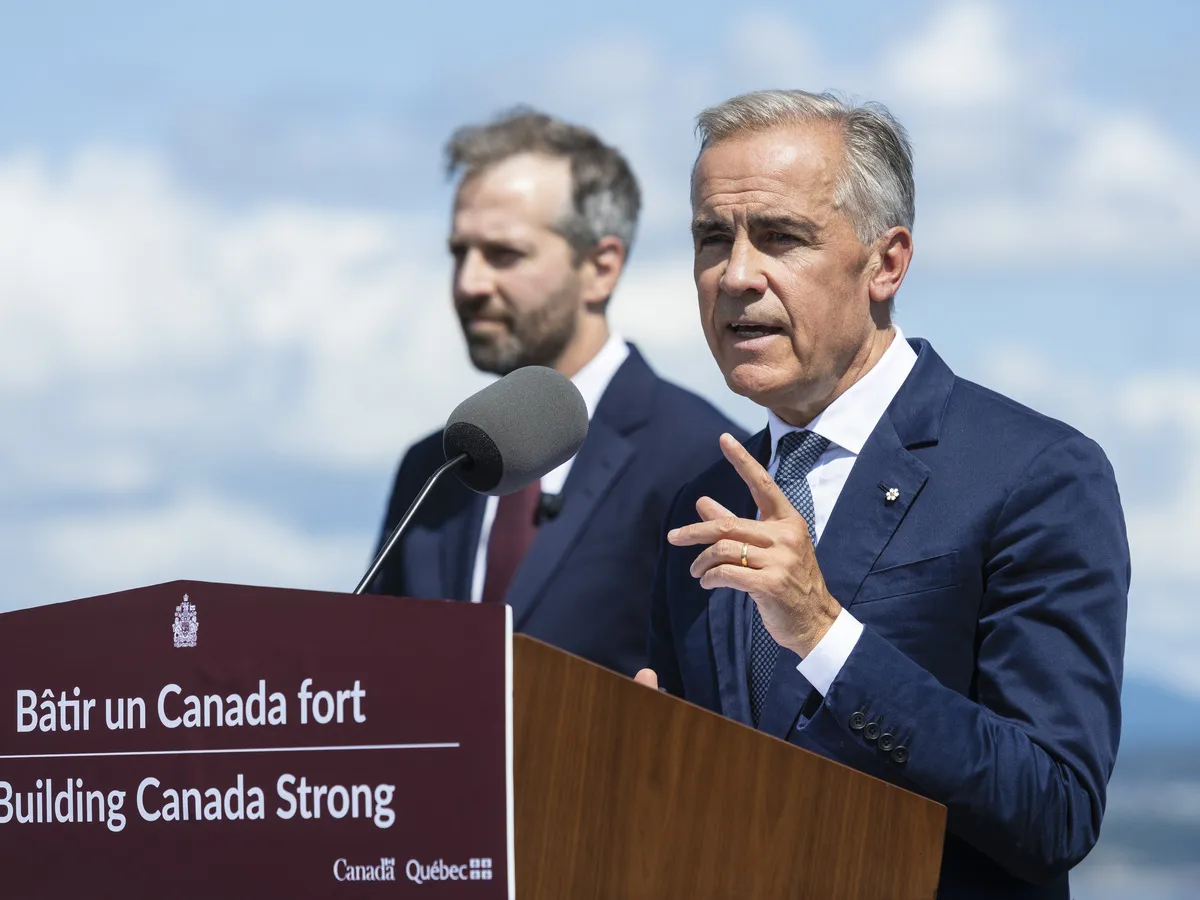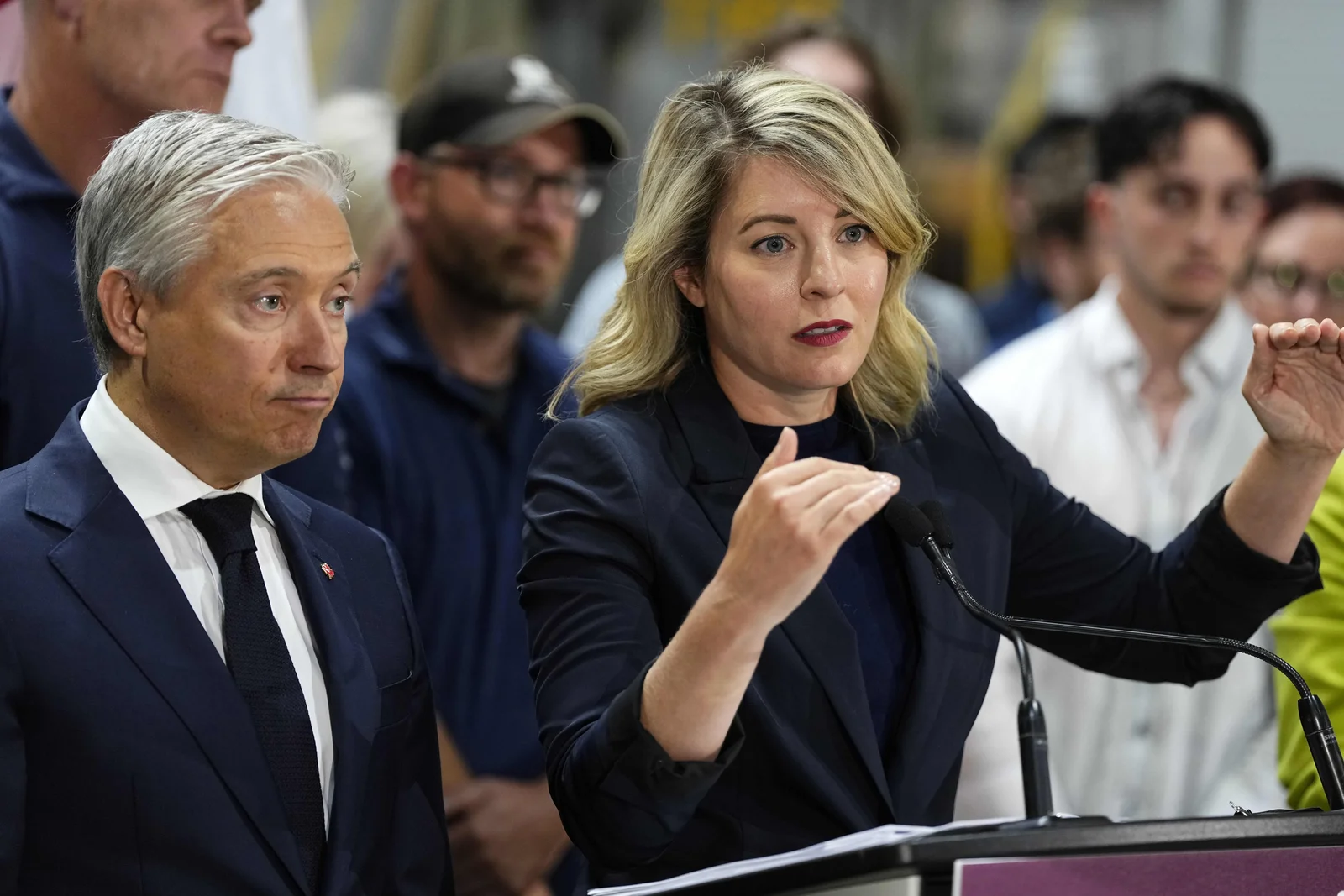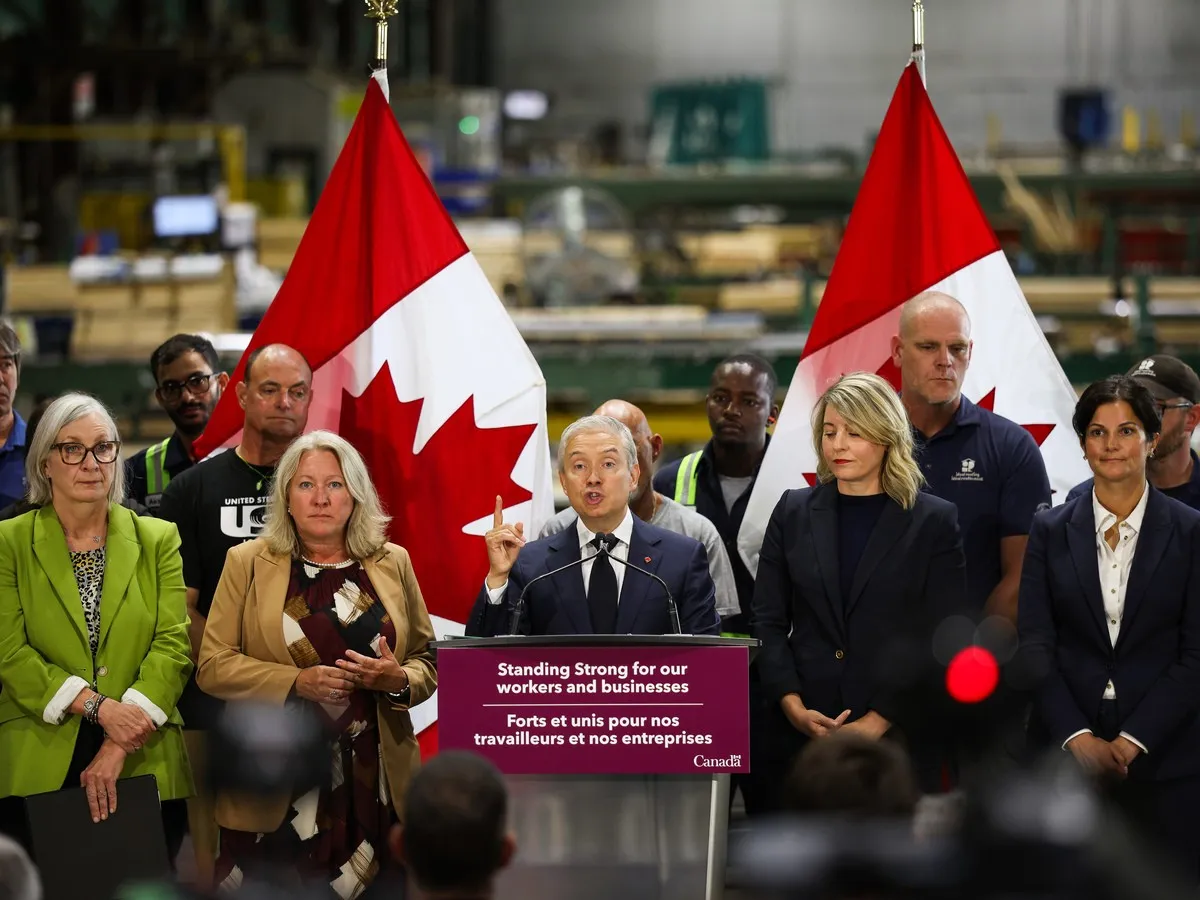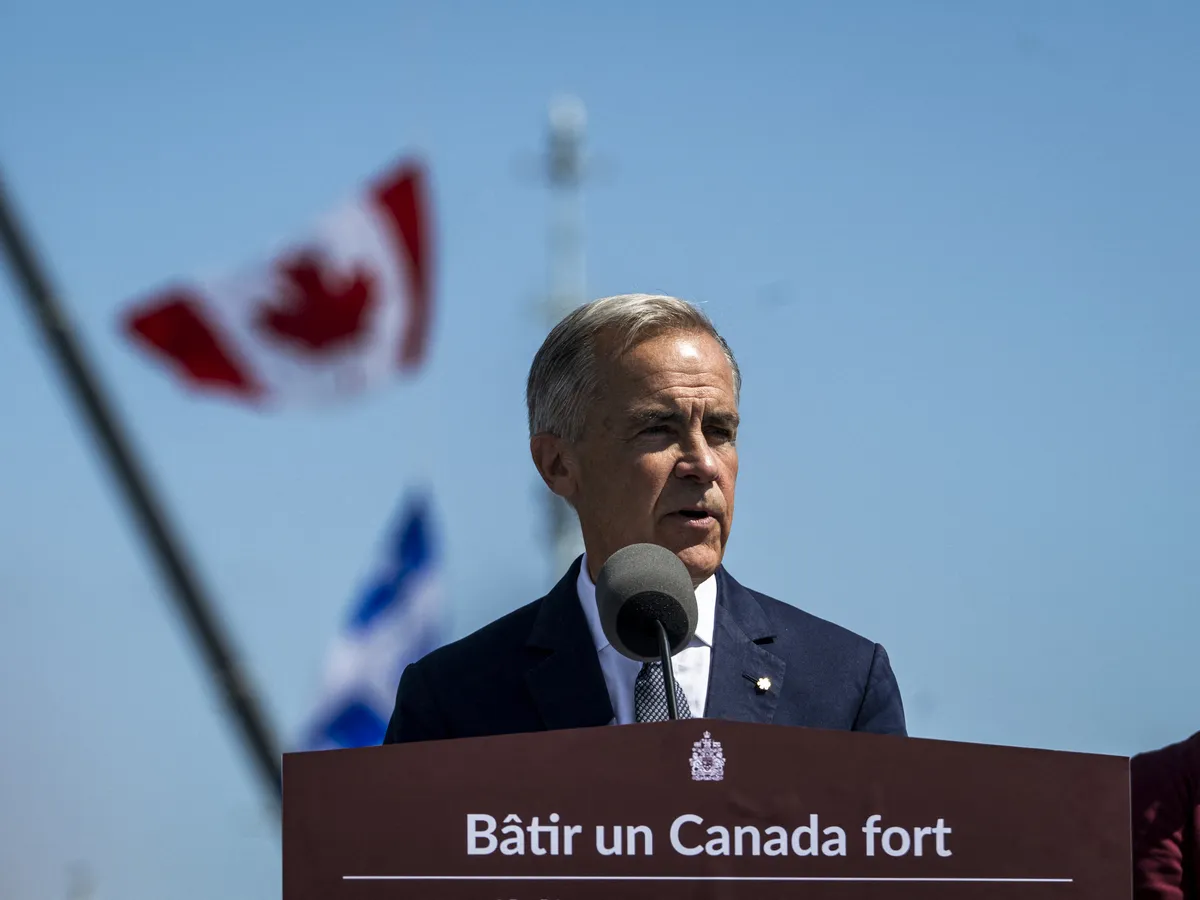
Skip to Content News Archives Economy Energy Oil & Gas Renewables Electric Vehicles Mining Commodities Agriculture Real Estate Mortgages Mortgage Rates Finance Banking Insurance Fintech Cryptocurrency Work Wealth Smart Money Wealth Management Investor Personal Finance Family Finance Retirement Taxes High Net Worth FP Comment Executive Women Puzzmo Newsletters Financial Times Business Essentials More Innovation Information Technology FP500 Podcasts Small Business Lives Told Tails Told Shopping Financial Post Store Obituaries Place a Notice Advertising Advertising With Us Advertising Solutions Postmedia Ad Manager Sponsorship Requests Classifieds Place a Classifieds ad Working Profile Settings My Subscriptions My Offers Newsletters Customer Service FAQ News Economy Energy Mining Real Estate Finance Work Wealth Investor FP Comment Executive Women Puzzmo Newsletters Financial Times Business Essentials HomeNewsEconomyCanada's counterpunch: What's inside the government's tariff and stimulus packages?Ottawa pledged $7.5 billion in funding to support Canadian businesses and workers affected by the new tariffsLast updated 17 minutes ago Prime Minister Mark Carney speaks about the trade dispute with the United States at the Davie Shipyard in Levis, Que., on Aug. 24, 2026. Photo by ANDREJ IVANOV/AFP via Getty Images filesThe Canadian government announced Tuesday that it will impose $27.6-billion worth of counter-tariffs starting Sept. 8 — a dollar-for-dollar response to U.S. President Donald Trump‘s punishing Section 338 tariffs, which came into effect Aug. 22.Subscribe now to read the latest news in your city and across Canada.Exclusive articles from Barbara Shecter, Joe O'Connor, Gabriel Friedman, and others.Daily content from Financial Times, the world's leading global business publication.Unlimited online access to read articles from Financial Post, National Post and 15 news sites across Canada with one account.National Post ePaper, an electronic replica of the print edition to view on any device, share and comment on.Daily puzzles, including the New York Times Crossword.Subscribe now to read the latest news in your city and across Canada.Exclusive articles from Barbara Shecter, Joe O'Connor, Gabriel Friedman and others.Daily content from Financial Times, the world's leading global business publication.Unlimited online access to read articles from Financial Post, National Post and 15 news sites across Canada with one account.National Post ePaper, an electronic replica of the print edition to view on any device, share and comment on.Daily puzzles, including the New York Times Crossword.Create an account or sign in to continue with your reading experience.Access articles from across Canada with one account.Share your thoughts and join the conversation in the comments.Enjoy additional articles per month.Get email updates from your favourite authors.Create an account or sign in to continue with your reading experience.Access articles from across Canada with one accountShare your thoughts and join the conversation in the commentsEnjoy additional articles per monthGet email updates from your favourite authorsSign In or Create an AccountorAt a press conference announcing the measures, federal ministers also pledged $7.5 billion to support Canadian businesses and workers affected by the new levies. Here’s a closer look at what’s inside Ottawa’s tariff and stimulus packages.SUBSCRIBER EXCLUSIVE: FP West: Energy Insider brings you behind the oilpatch’s closed doors with exclusive insights from insiders every Wednesday morning.By signing up you consent to receive the above newsletter from Postmedia Network Inc.A welcome email is on its way. If you don't see it, please check your junk folder.The next issue of FP West: Energy Insider will soon be in your inbox.We encountered an issue signing you up. Please try againOttawa has introduced 15 per cent, 25 per cent and 50 per cent counter-tariffs on more than 700 items drawn from the list of Canadian goods tariffed under U.S. Section 232 and Section 338.Most of the items on Canada’s list, which is over 100 pages long, will face tariffs of 25 per cent or 50 per cent. Only a small number of items will be taxed at 15 per cent.American imports hit with 50 per cent counter-tariffs include steel and aluminum products, which were previously subject to 25 per cent counter-tariffs imposed by former Prime Minister Justin Trudeau’s government. Furniture, clothing and apparel are also on the list.Among the items hit with 25 per cent counter-tariffs are appliances, dairy products — including cheese — fish and seafood, and certain steel and aluminum derivative products (chains, nails, tacks, prefabricated structures, etc.).Other pre-existing counter-tariffs will remain in effect, including a 25 per cent tax on vehicles imported from the U.S. that do not comply with the Canada–U.S.–Mexico Agreement (CUSMA).While Prime Minister Mark Carney said at a separate news conference in Quebec on Monday that everything was on the table, notably missing from the list are export levies on potash and Canadian crude oil or electricity, of which the U.S. is a major consumer.Federal Industry Minister Melanie Joly said the counter-tariffs needed to be strategic, proportionate and serve Canada’s best interests.“This is, we think for now, the most strategic approach,” she said at Tuesday’s news conference. “When we’re looking at the counter-tariffs, we’re looking first at the businesses that are affected … We are also targeting products that will target states in the U.S. So we are being wise and strategic to put political pressure (on the U.S. administration).”The $7.5 billion in government funding introduced Tuesday includes measures to help Canadian workers and businesses (particularly small and medium-sized ones) in sectors most affected by the new Section 338 tariffs.The funding includes a $1.5-billion top-up to the pre-existing Regional Tariff Response Initiative (RTRI), to be administered by seven regional development agencies across Canada. The RTRI will provide up to $3.45 billion over four years to eligible businesses impacted by tariffs.The stimulus package also includes a $500-million liquidity stream delivered through the Business Development Bank of Canada (BDC), which will provide working capital to businesses facing cash-flow shortfalls as a result of U.S. tariffs. Companies eligible for the program — annual revenue requirements for applicants will be set at $1 million — will receive $250,000 to $5 million in loans with interest-only repayment over 36 months.The government also introduced $3.5 billion in new funding for another pre-existing program — Rapid Response Supports for Workers and Employers. Workers who were laid off as a result of the U.S. tariffs will be able to receive Employment Insurance (EI) benefits without having to wait a week and allowed to access their EI without using up their severance payments.The RRSWE program will cover administrative and training costs for eligible employers to help them retain their workers.The stimulus package also includes funding for the Large Enterprise Tariff Loan facility, which provides liquidity to large businesses struggling as a result of the tariffs. And a new Canada Strong Diversification Fund will support tariff-affected companies with shovel-ready projects by providing ongoing capital maintenance.President Trump said in a social media post on Monday that he will implement 50 per cent tariffs on Canadian steel, aluminum and autos in January 2027. These sectors were already hit with 25 per cent tariffs under Section 232.It is unclear if the U.S. is planning further retaliation. If it does, Minister Joly said the Liberal government is ready to respond.Both countries, along with Mexico, are supposed to take part in rolling, annual trade reviews after CUSMA was not renewed.Carney said Monday that Canada will not go back to the negotiating table until the U.S. changes its attitude.U.S. Trade Representative Jamieson Greer blamed Canada for the failed trade talks and said Carney’s decision to walk away didn’t make economic sense.If negotiations don’t resume, Canada’s new counter-tariff regime will come into effect the day after Labour Day. Join the Conversation This website uses cookies to personalize your content (including ads), and allows us to analyze our traffic. Read more about cookies here. By continuing to use our site, you agree to our Terms of Use and Privacy Policy.
Canada's counterpunch: What's inside the government's tariff and stimulus packages?
Ottawa pledged $7.5 billion in funding to support Canadian businesses and workers affected by the new tariffs. Find out more.
1,269 words~6 min read