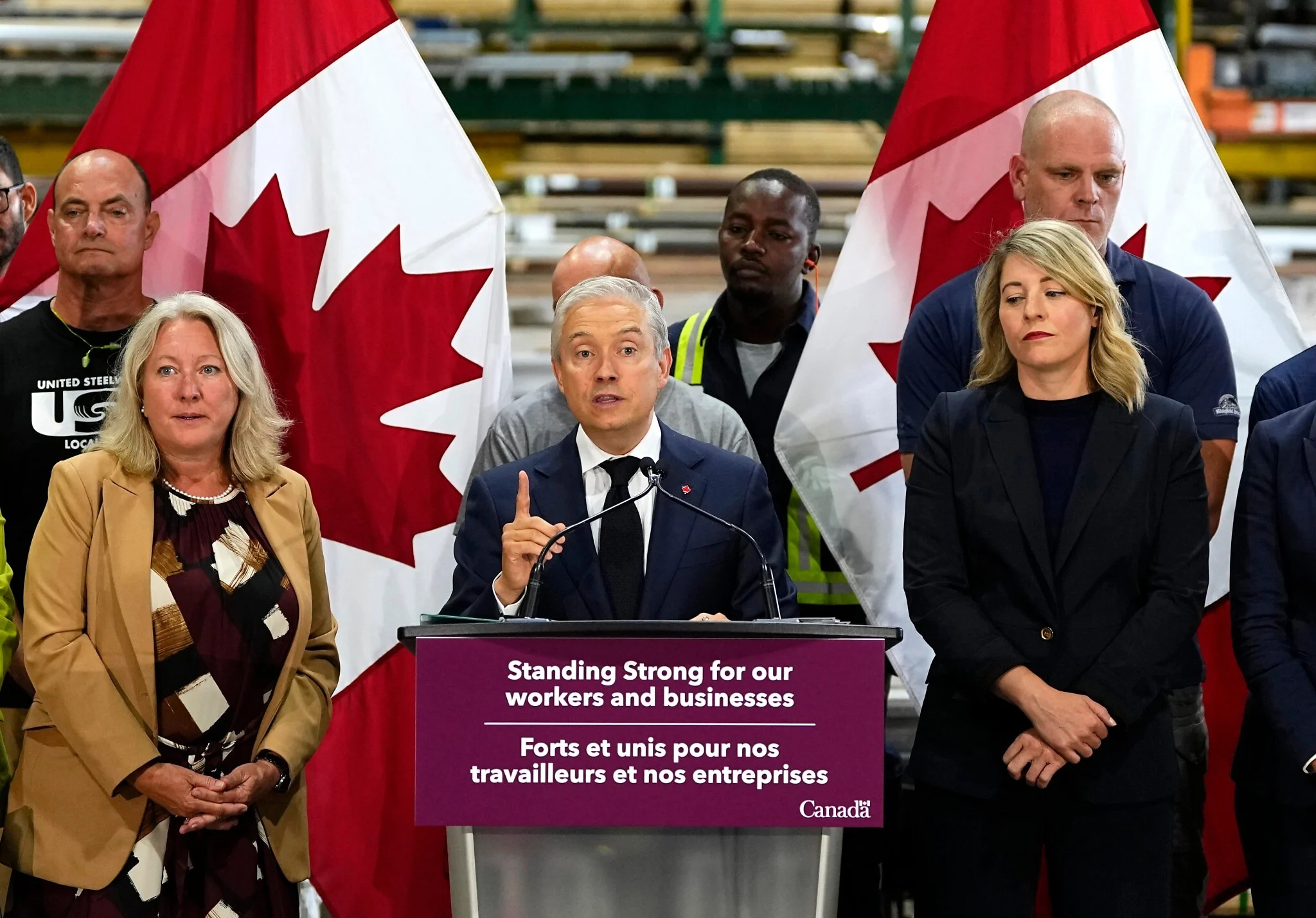
'Canada must respond': Ministers outline counter-tariffs on U.S., new supports LIVEStarted 3 hours agoFederal ministers are announcing Canada's response to U.S. tariffs after trade talks between Ottawa and Washington collapsed. Get the latest developments as officials outline a plan to hit back with counter-tariffs and billions in support for impacted workers and businesses.
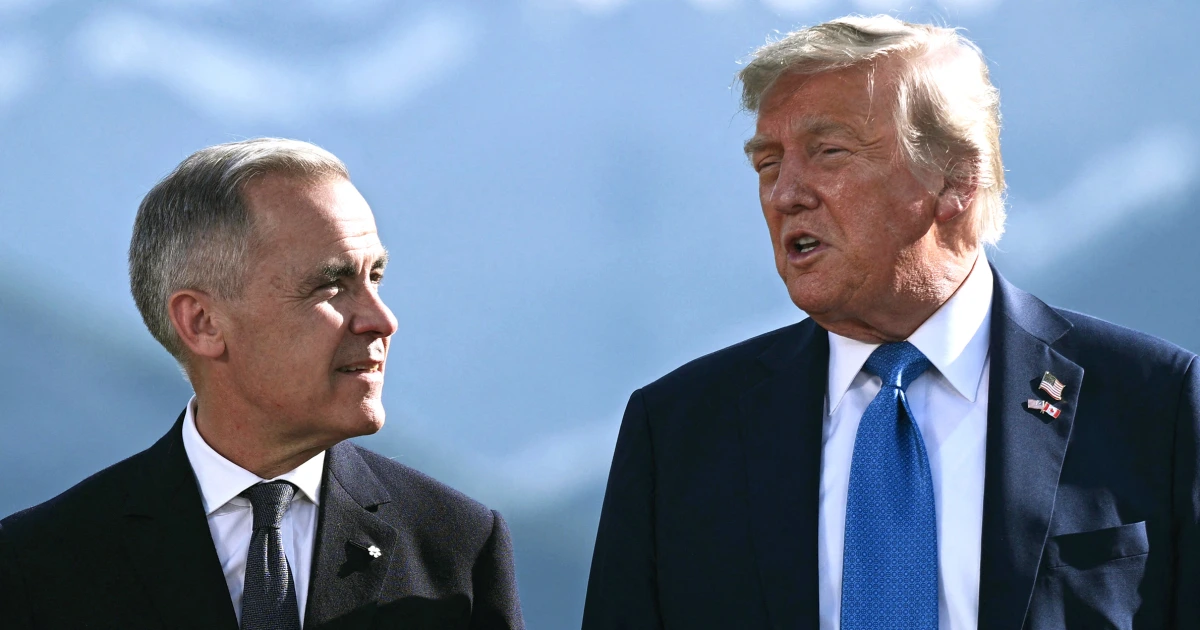
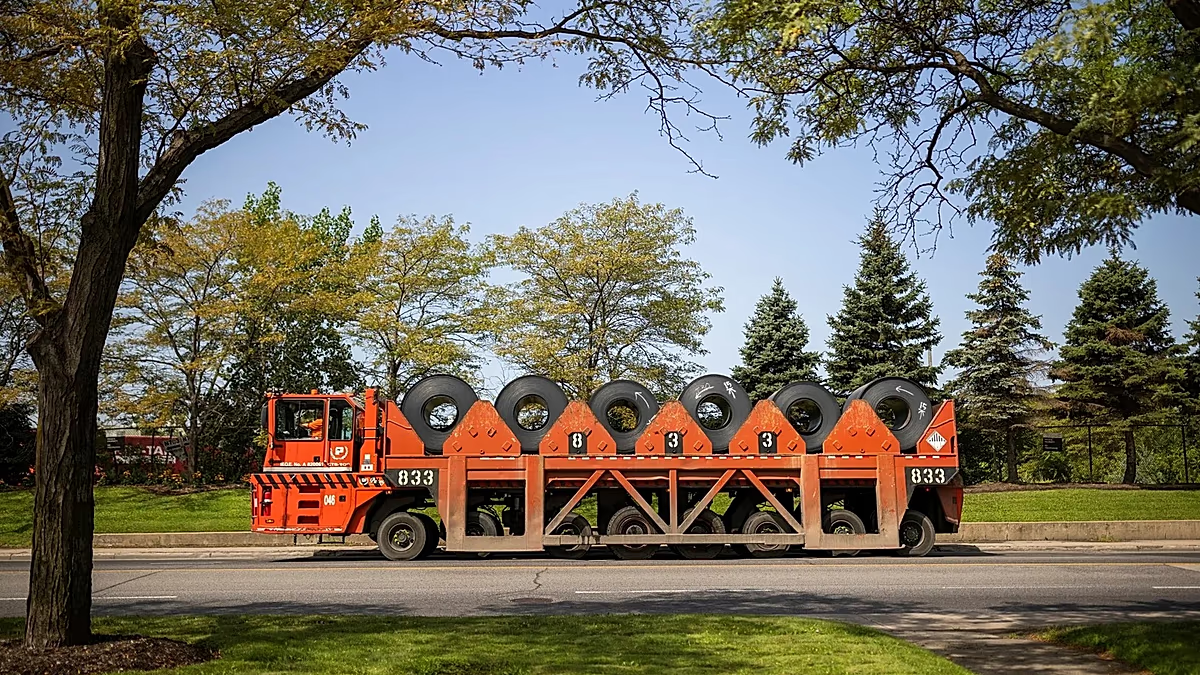
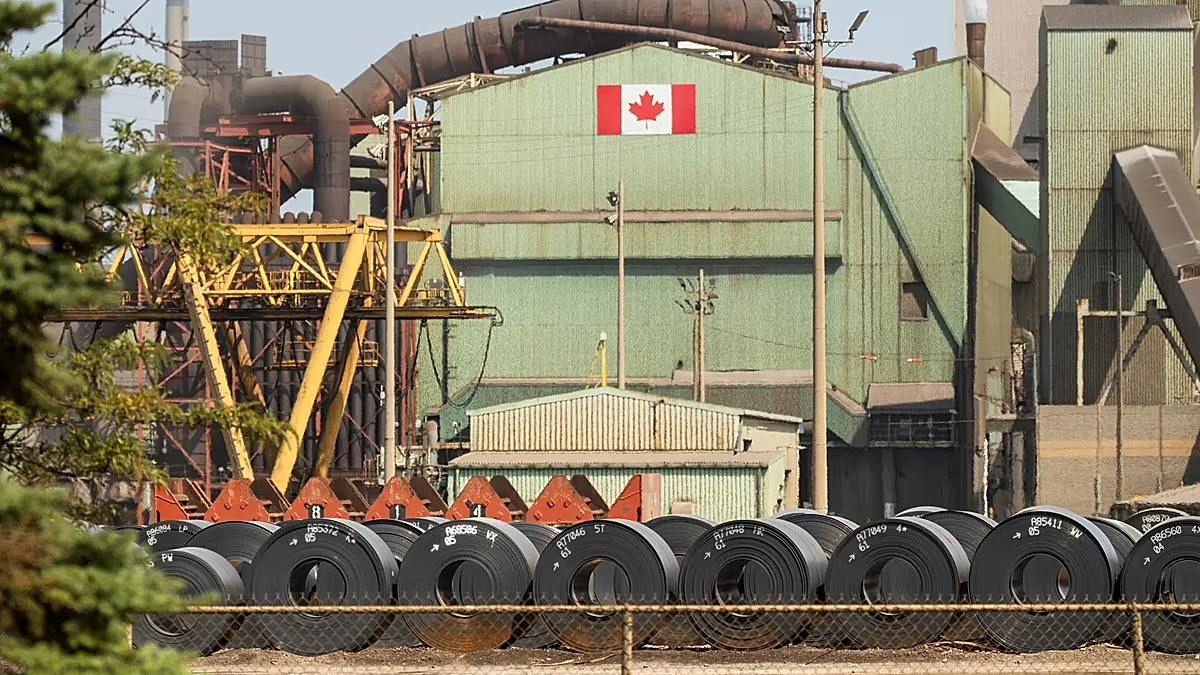
The LatestOttawa has announced dollar-for-dollar counter-tariffs on $27.6 billion worth of U.S. goods, which will go into effect Sept. 8. It also unveiled $7.5 billion in support for workers and businesses.The counter-tariffs target U.S. steel, aluminium, appliances, clothing, seafood and dairy products. The supports give impacted businesses access to loans and financing programs and allow workers more flexibility to apply for employment insurance.U.S. President Donald Trump said today the U.S. may change the name of Lake Ontario to "Lake America." He also accused Prime Minister Mark Carney of lying "to gain political support."Conservative Leader Pierre Poilievre reiterated that Canada should lower taxes during the trade war by removing federal gas taxes, industrial carbon pricing and the sales tax on Canadian-made cars. He did not speak directly about the government’s tariffs or supports.Ontario Premier Doug Ford said yesterday that actions like an electricity surcharge and cutting off the province's critical minerals to the U.S. are all "on the table,” but Alberta Premier Danielle Smith was clear in ruling out disruption to oil and gas as a countermeasure.Pinned3 hours ago'Our job … is to fight for Canada': ministersDarren MajorCanada announces counter-tariffs on $27.6B of U.S. goods3 hours ago|Duration 1:43Finance Minister François-Philippe Champagne announced ‘dollar-for-dollar’ counter-tariffs on a swath of U.S. goods — with a sliding scale of 15, 25 and 50 per cent. The new levies will hit about $27.6 billion worth of U.S. goods, Ottawa said, including seafood, certain paper products, furniture, apparel, tools and motorcycles.Finance Minister Champagne said today's announcement is about fighting for Canadian jobs and businesses, offering a "bridge" until trade uncertainty subsides."Our job here this morning is to fight for Canada, to fight for workers, to fight for industry," he told reporters in Ottawa."That is what Canadians are expecting from us. They're expecting each of us, and the prime minister, to stand up for Canada."The government has announced new dollar-for-dollar counter tariffs on U.S. goods and support for workers and businesses.The new counter-tariffs will have a sliding scale of 15, 25 and 50 per cent. The levies go into place on Sept. 8 and include U.S. goods like dairy products, cosmetics, furniture, clothing, steel and aluminum.Of the $7.5-billion support funding, $3.5 billion is going toward workers, including topping up funds for expanded EI. Impacted businesses will also get access to loans and financing programs.August 2510 minutes agoU.S. 'completely unpredictable' partner: Parti Québécois leaderJillian Kestler-D'AmoursPaul St-Pierre Plamondon speaks during a news conference in Quebec City in June. (Jacques Boissinot/The Canadian Press)Paul St-Pierre Plamondon, head of the Parti Québécois, is pitching his party as the most equipped to help Quebec navigate the economic uncertainty brought on by Trump's latest tariffs. "We’ll be there for our companies," he told reporters in French. Quebecers are heading to the polls in early October for a provincial election. St-Pierre Plamondon said the crucial question for voters is which party will be best able to manage the public purse. "It’s a critical choice in a context where the United States is a completely unpredictable commercial partner, and we need an adequate, calm and stable response," he said.St-Pierre Plamondon said he was opposed to the counter-tariffs unveiled by the federal government earlier today."Dollar-for-dollar counter-tariffs are a bad strategy" for Quebec's small- and medium-sized businesses, he said, urging the Canadian government to instead take a "targeted and surgical" response."Our role is to protect Quebec businesses, at all times and as our only mission," he added.32 minutes agoCounter-tariffs could be bigger threat than U.S. levies, business owners sayAbby HughesSome Canadian business owners say the counter-tariffs pose a bigger threat than the U.S. levies.PhiBer Manufacturing makes agriculture equipment in Manitoba like dash trailers, used by large-scale farmers to tend to crops. CEO Derek Friesen says the company has so far been spared from U.S. tariffs. But the frames used in the trailers are imported from Iowa — and they now face a 25 per cent tariff from the Canadian government.Friesen said these machines aren't cheap, and taxing such a large input would significantly increase their sticker price: "Farms can't absorb another big increase like that," he said.And with the trailers making up about 70 per cent of PhiBer's business, the hit could be huge.Rather than support programs, like what Ottawa announced today, Friesen said the only thing that will really give his company any sense of stability is an end to the trade war."We just need this to be resolved. This is getting ridiculous."50 minutes agoBlanchet says he asked Carney to reinstate conceded streamer taxDavid CummingsBloc Québécois Leader Yves-François Blanchet in Ottawa on June 8. (Adrian Wyld/The Canadian Press)Speaking in Chicoutimi, Que., Bloc Québécois Leader Yves-François Blanchet said he asked Prime Minister Mark Carney to re-establish the Canadian Radio-television and Telecommunications Commission's (CRTC) base contribution from major streamers, after Ottawa rolled back on the trade irritant.Carney held meetings with Blanchet and other federal opposition leaders following the U.S. trade deal fallout.The CRTC hiked its base contribution fee from large online streaming providers like Disney+, Netflix and Prime Video to 15 per cent in May within the government's Online Streaming Act.Carney later called on the CRTC to review that decision, citing affordability as the government's motivation to pull back the fee.Acknowledging the tax had been dropped, U.S. Trade Representative Jamieson Greer later said Canada doesn't "get credit" for rolling back on its trade irritants with the U.S.Noting in French that the concession didn't provide the government its expected result, Blanchet said he asked Carney: "'You're going to re-establish this, right?'"1 hour agoSaskatchewan supports retaliatory measuresSara JabakhanjiSaskatchewan Premier Scott Moe in Charlottetown on July 23. (Darren Calabrese/The Canadian Press)Reaction is slowly trickling in from provincial leaders after Ottawa announced its counter-tariffs and latest support for workers.Saskatchewan Premier Scott Moe applauded the moves, noting that the new counter-tariffs cover about $1.5 billion, or roughly 11.3 per cent of the province's annual imports from the U.S. "We are analyzing the counter-tariff list closely and working with affected industries to determine its potential impact … while also reviewing the federal government’s support measures to ensure they work for Saskatchewan businesses and workers," Moe said in a statement.The premier said that while he believes the Canadian response is appropriate, he hopes that both countries can get back to the table to negotiate a fair deal.2 hours agoCFIB says small business owners being served 'alphabet soup'Natalie StechysonCanada’s new tariff relief measures — which include $7.5 billion in support for workers and businesses and access to loans and financing programs — will be challenging for small businesses to figure out, let alone use, said Dan Kelly, president of the Canadian Federation of Independent Business (CFIB). "While we appreciate that the government is trying to move quickly, at first glance it looks like small business owners are being served the usual alphabet soup of complicated programs," Kelly said in a news release.To date, he noted, the federal regional tariff response initiative, which is delivered by regional development agencies, has excluded most small businesses from applying. Some require a minimum of $2 million in sales, others a minimum of 10 employees, Kelly said."Today’s announcement doesn’t appear to have changed these thresholds," he said. The government should have made "one simple program" that removes as much of the burden as possible, Kelly said."Instead, we have a patchwork of agencies and programs that no small business has ever heard of before, largely delivering loans to businesses that will have no ability to pay them back."2 hours agoFord takes more subdued approach with American audienceSara JabakhanjiOntario Premier Doug Ford in Hamilton on Monday. (Nick Iwanyshyn/The Canadian Press)After a heated, indirect row with Trump yesterday, Ontario Premier Ford took a more subdued approach while speaking on air with CNN today, emphasizing the need to get back to the table for a fair deal."Things got a little heated," Ford told CNN's Wolf Blitzer. "It got a little personal yesterday between the president and myself."But I want to make a deal — a good deal for the American people, a good deal for Canadians."The two leaders exchanged blows yesterday after the Ontario premier said in an interview and then in a news conference that Trump could "kiss my ass," prompting Trump to refer to him in an online post as "Flunky Ford" and the "less charismatic, intelligent" version of his late brother Rob Ford. Ford, who has suggested that Canada could use electricity and critical-mineral exports as leverage, then called Trump a "loser" and a "dictator."Trump took aim at Ontario this morning with another provocative post saying the U.S. was considering renaming Lake Ontario to "Lake America," which Ford dismissed as "a lot of rhetoric." "When President Trump wants to attack our sovereignty … I can't roll over. My job is to protect Ontario and Canada," Ford told CNN.You can read here about Ontario's role in the U.S.-Canada trade war and the leverage Ford is threatening to use.3 hours agoN.B. premier says Maine tourists 'embarrassed' by Trump adminPadraig MoranN.B. Premier Susan Holt says the Trump administration has been bad for Maine. (Mikael Mayer / CBC)New Brunswick Premier Susan Holt is rejecting U.S. Vice-President JD Vance's claims that Canada is “taking advantage of the people of Maine.”“New Brunswick and Maine have been the very best neighbours for generations,” Holt told CBC Radio’s The Current, pointing out their shared peaceful border and integrated economies.“We are family. And we really support each other. When we were experiencing wildfires last year, Maine sent help. When Maine has challenges, New Brunswick sends help.”Speaking in Maine on Monday, Vance said that the U.S. needed to send a message to Carney: “Stop taking advantage of the people of Maine. Stop taking the advantage of America. It's over. We expect fairness in our trade policy."Vance also referred to Canada as a state, but then corrected himself, jokingly calling it a Freudian slip.Holt agreed that Canada wants a fair deal with the U.S., but argued that Maine has been "caught with a president that doesn't have any interest in their success.”“What this president has done to things like lumber prices and others has hurt Maine,” she said.The Mainers visiting her province this summer have been “embarrassed," she said, "and [they] apologize to us for the way their country has been treating Canada and New Brunswick."“They, like us, want to get back to the good relations that we have across the border.”3 hours agoAn economist's quick take on Canada's counter-tariffsPeter ArmstrongAs the counter-tariffs roll out, we are getting fresh analysis of what they could mean for the Canadian economy.Bradley Saunders, North America economist with Capital Economics, said Ottawa's approach is meant to strike back at the U.S. without causing too much pain at home.That reflects "a response which is politically popular but economically insignificant — and, importantly, does not raise the stakes in the trade war further (pending a potential U.S. response)," wrote Saunders in a note to clients.He said he expects the new tariffs will only lead to a small climb in inflation. Meanwhile, relief measures will offset around half of the potential drag on growth, making near-term interest rate hikes less likely.3 hours agoJoly says French-language disagreement about sovereigntySara JabakhanjiIn response to Trump's remarks earlier accusing Carney of lying about parts of the proposed U.S. tariff deal, Joly said Canada is protecting its sovereignty by not accepting the terms in the draft text.Trump had said online earlier this morning that disagreement over Canada's French-language requirements did not contribute to the collapse, alleging that Carney lied about the issue "in an attempt to gain political support.""I love French Canadians!" the U.S. president wrote in his post.In response, Joly said, "We all love French Canadians."She added, "The question's not about love. The question is about sovereignty and what we stand for in this country."Carney had said in a news conference over the weekend that the trade deal faltered in part after U.S. negotiators proposed changes that put Canada's French-language rules at risk. The U.S. has demanded that Canada roll back legal requirements for streaming services providers to prioritize French language content for Quebec. In its 2026 National Trade Estimate report, the U.S. trade representative listed the requirements as a trade barrier.3 hours ago'Our job … is to fight for Canada': ministersDarren MajorCanada announces counter-tariffs on $27.6B of U.S. goods3 hours ago|Duration 1:43Finance Minister François-Philippe Champagne announced ‘dollar-for-dollar’ counter-tariffs on a swath of U.S. goods — with a sliding scale of 15, 25 and 50 per cent. The new levies will hit about $27.6 billion worth of U.S. goods, Ottawa said, including seafood, certain paper products, furniture, apparel, tools and motorcycles.Finance Minister Champagne said today's announcement is about fighting for Canadian jobs and businesses, offering a "bridge" until trade uncertainty subsides."Our job here this morning is to fight for Canada, to fight for workers, to fight for industry," he told reporters in Ottawa."That is what Canadians are expecting from us. They're expecting each of us, and the prime minister, to stand up for Canada."The government has announced new dollar-for-dollar counter tariffs on U.S. goods and support for workers and businesses.The new counter-tariffs will have a sliding scale of 15, 25 and 50 per cent. The levies go into place on Sept. 8 and include U.S. goods like dairy products, cosmetics, furniture, clothing, steel and aluminum.Of the $7.5-billion support funding, $3.5 billion is going toward workers, including topping up funds for expanded EI. Impacted businesses will also get access to loans and financing programs.