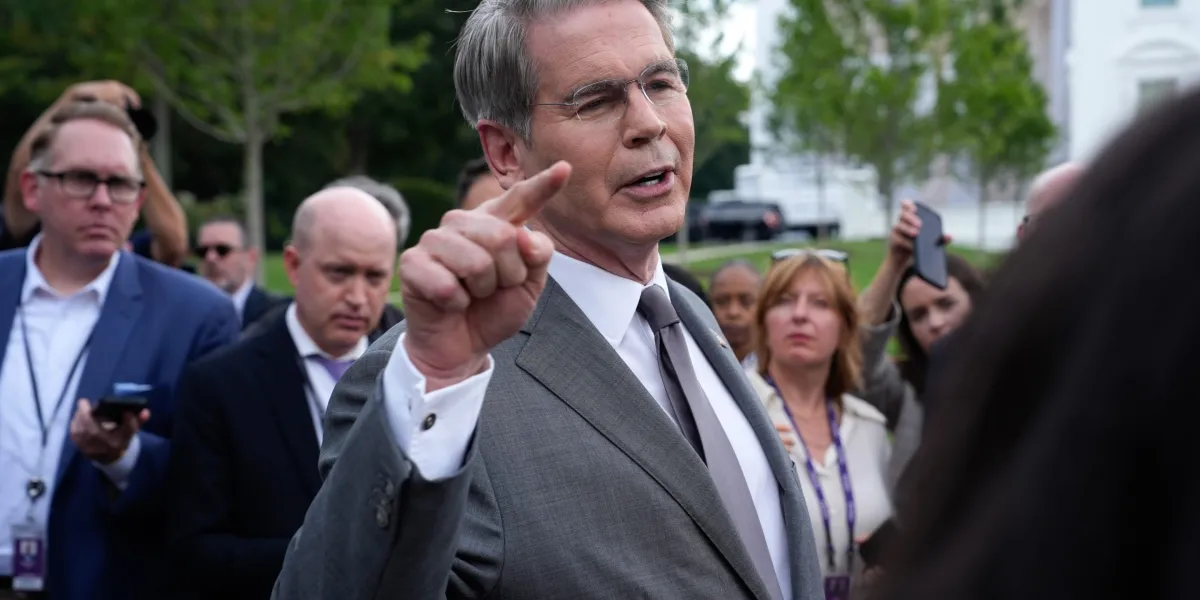
A Shakespearean saga is playing out between the White House, Treasury Department, the Federal Reserve and Wall Street—and Scott Bessent, to paraphrase Shakespeare, is being hoist on his own hedge-fund petard.
As Hamlet told his mother Gertrude in Act 3, Scene 4, having just stabbed an eavesdropping Polonius, “’tis the sport to have the engineer/ Hoist with his own petard.” Now Bessent’s former mentor, Stanley Druckenmiller, is the one pulling the trigger—using the same playbook they wrote together over 30 years ago.
In the early 1990s, hedge funds were evolving, and Bessent and Druckenmiller were there at the inception. Their boss, George Soros, pioneered a “global macro” approach that discovered sovereign balance sheets could be read the same way a company’s could: an investing opportunity for the gap between what a government claimed it could sustain and what the market would allow.
The defining proof came in 1992, when Britain was maintaining the pound inside Europe’s exchange-rate mechanism at a level that German interest rates had made untenable. Soros Fund Management built a short position of roughly $10 billion against sterling; Druckenmiller ran the trade and a young Scott Bessent was part of the team. When the pound broke on September 16, the fund made roughly $1 billion in a single day.