Trey Parker, chief investment officer of Sycamore Tree Capital Partners, went on Bloomberg Television to deliver a message that most of Wall Street would rather not hear: the AI infrastructure boom carries the kind of credit risk that has a historical habit of ending badly.
Parker’s core argument is straightforward. Building out AI requires trillions of dollars in capital, and the debt markets absorbing that demand are showing stress fractures that experienced credit investors have seen before. Specifically, he pointed to what he calls “rating-designation risk” in private credit markets, where the sheer appetite from insurance companies for AI data-center debt could force credit rating revisions rather than reflect actual creditworthiness.
The telecom echo
Parker drew an explicit comparison to the telecom infrastructure boom of the late 1990s. That era saw massive debt-fueled buildouts of fiber optic networks and switching infrastructure, underwritten by rosy demand projections that never materialized at the scale investors expected. Companies like WorldCom and Global Crossing became cautionary tales, their collapses wiping out billions in bondholder value.
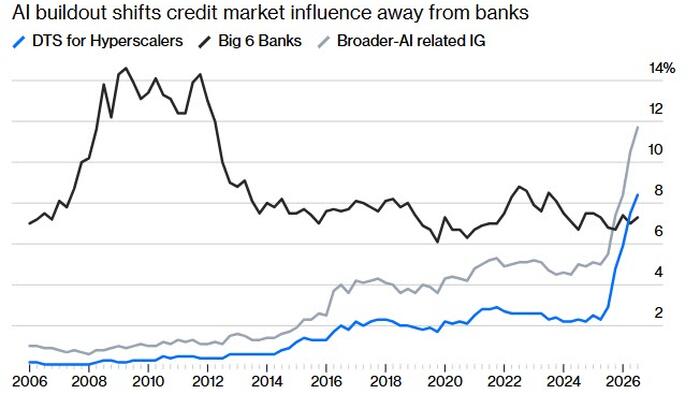
The scale of the current buildout makes the comparison worth taking seriously. AI-related debt issuance is projected to reach $570 billion in 2026 alone. That is not a rounding error. It represents one of the largest single-sector debt waves in recent memory, and it’s being absorbed by a market that may not be pricing risk accurately.