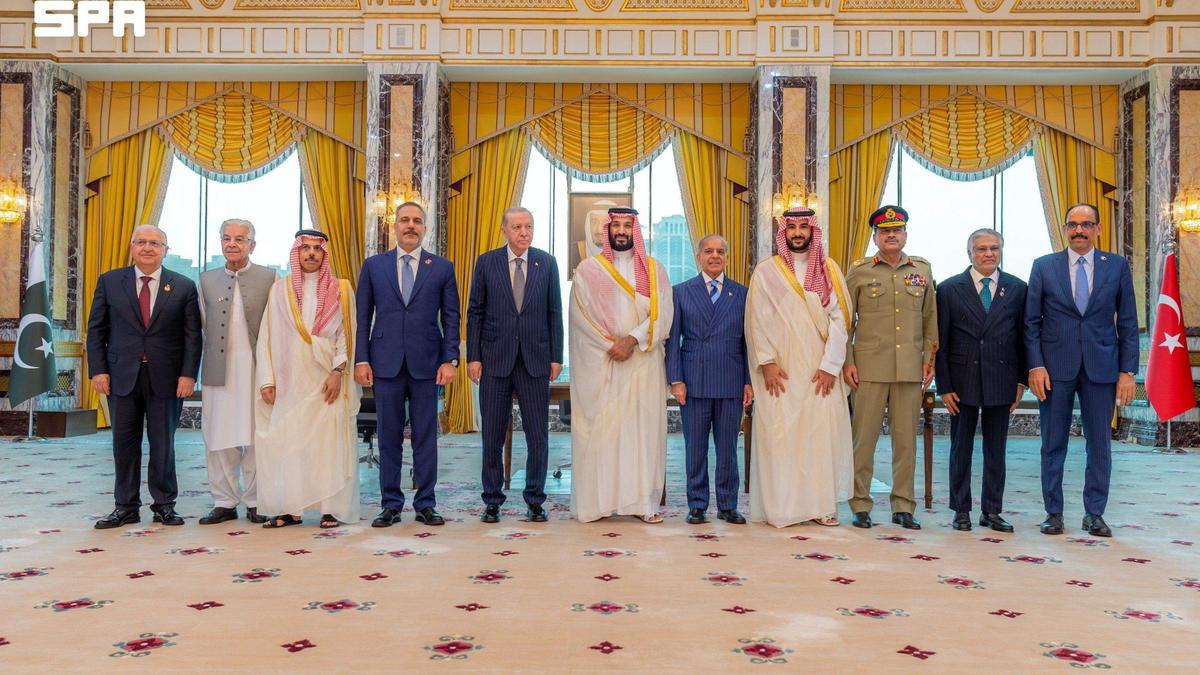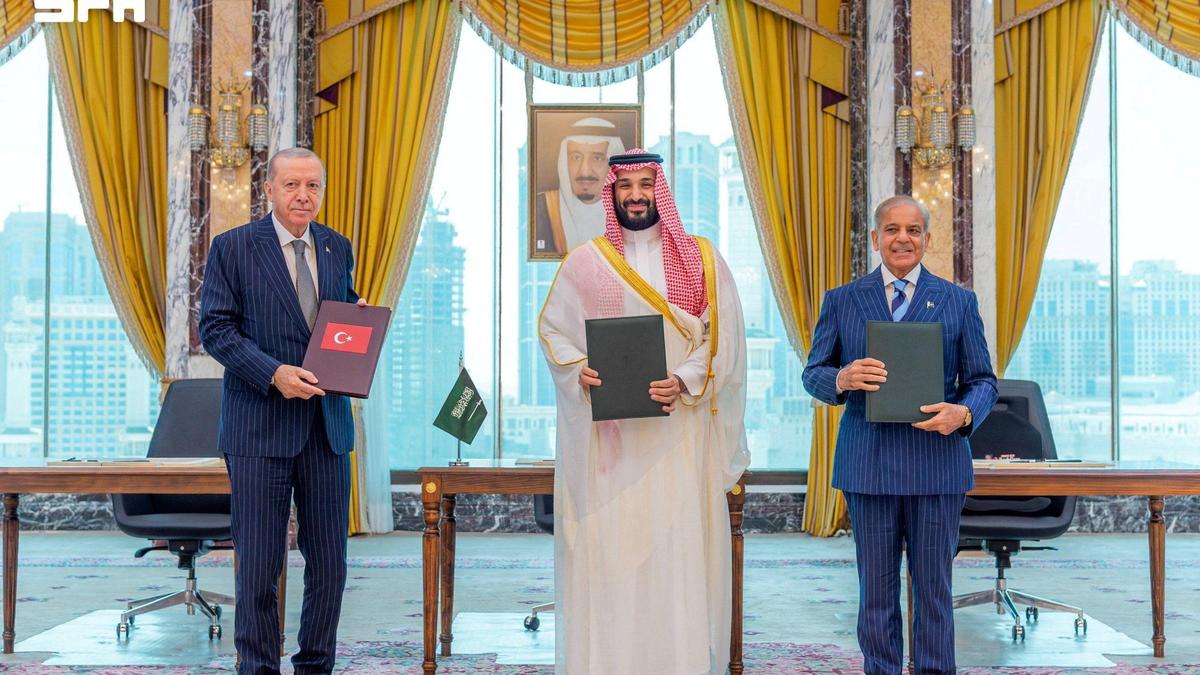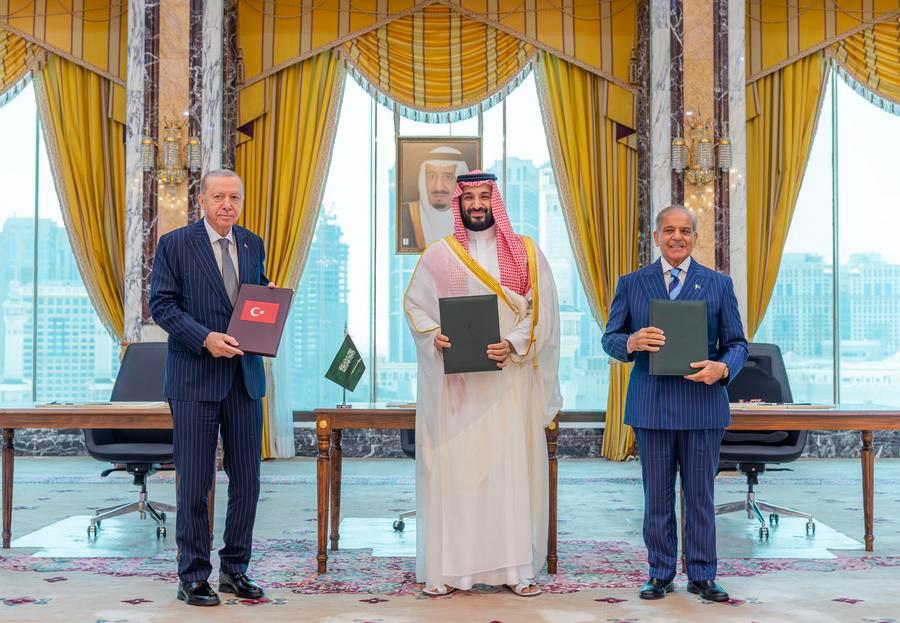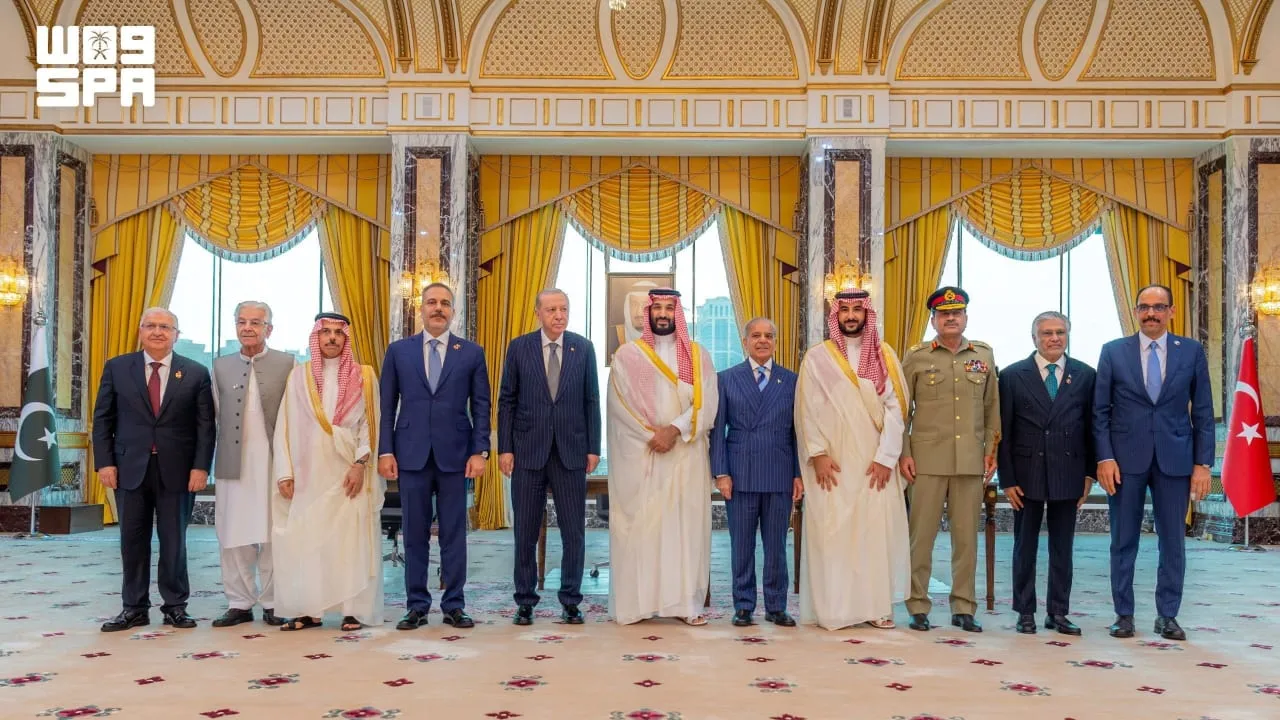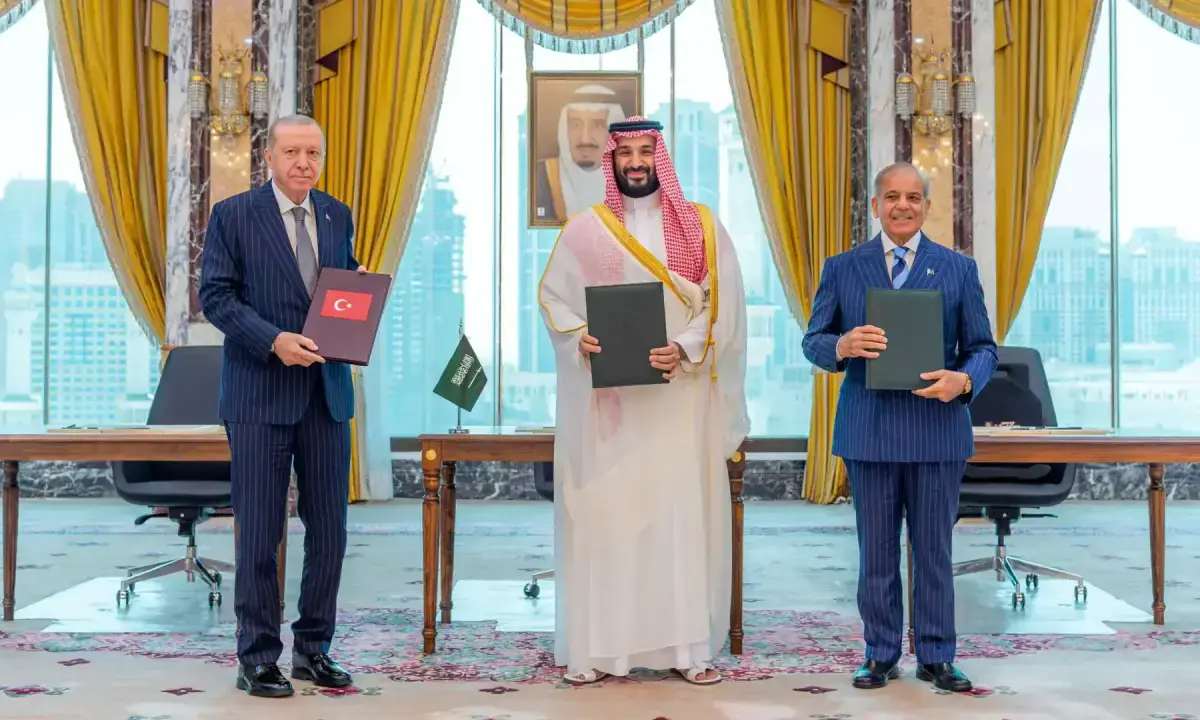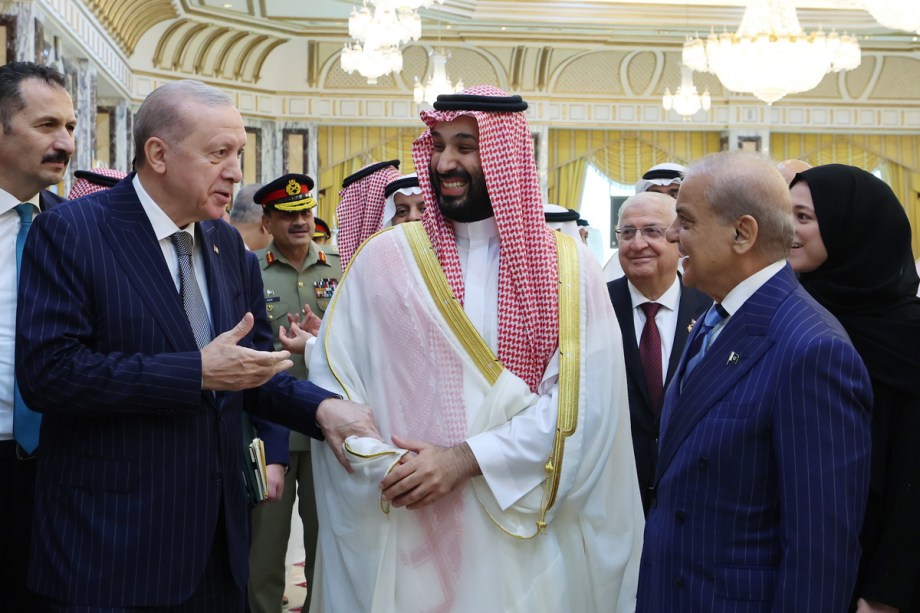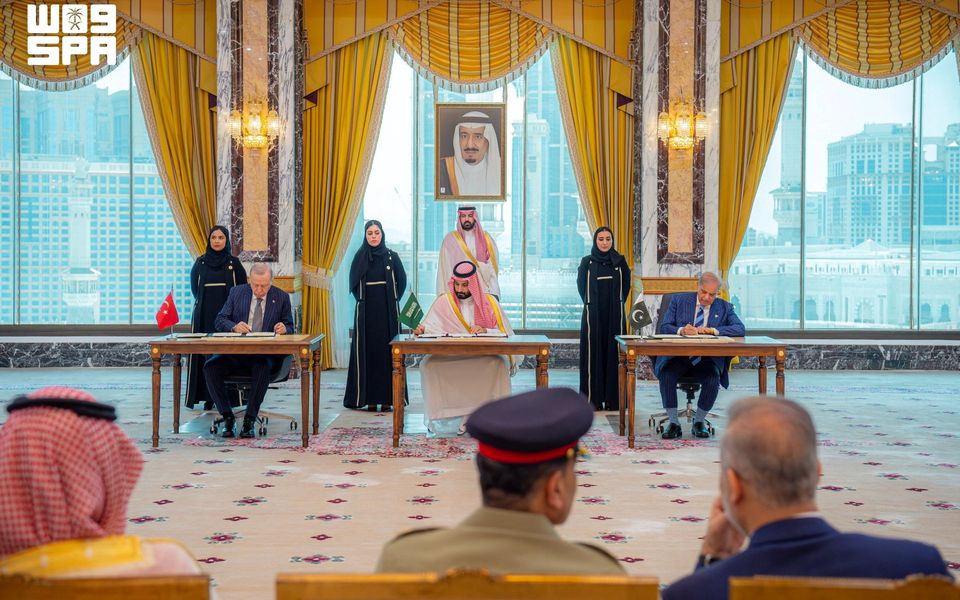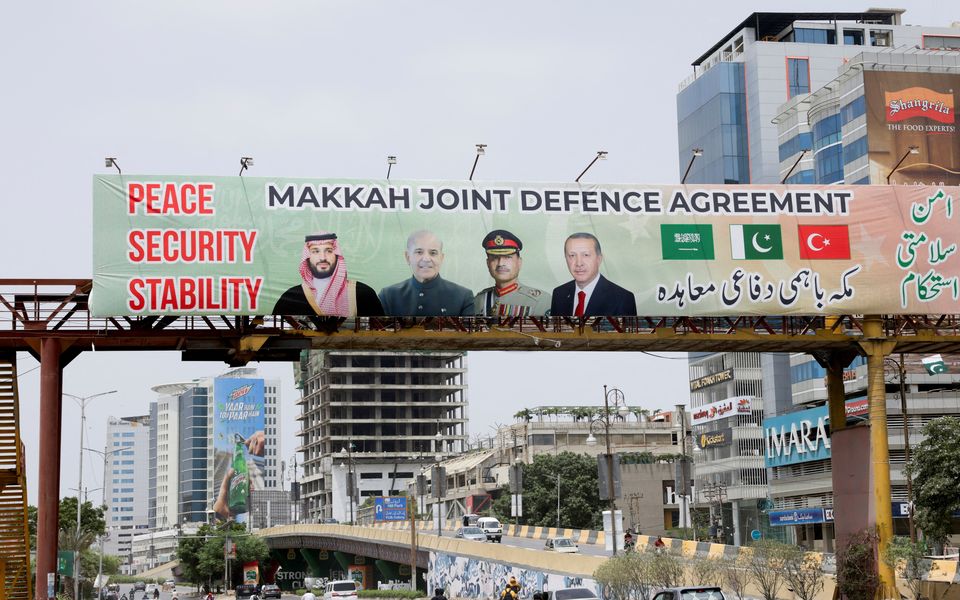
A billboard displays portraits of Saudi Crown Prince and Prime Minister Mohammed bin Salman, Pakistan's Prime Minister Muhammad Shehbaz Sharif, Pakistan's Chief of Defence Forces (CDF) and Chief of Army Staff, Field Marshal Asim Munir, and Turkish President Recep Tayyip Erdogan, following the signing of the Makkah Joint Defence Agreement, in Karachi, Pakistan, on August 9, 2026. [Akhtar Soomro/Reuters]
Our region is changing rapidly and it is likely that Greece could find itself at the center of developments. The chronic difficulties in Greek-Turkish relations, in conjunction with the rising tension between Turkey and Israel, are leading to closer ties with Israel at a time when new alliances are tangled up with old ones in a shifting geopolitical landscape.
Turkey has entered a military pact with Saudi Arabia and Pakistan, while Israel works closely with the United Arab Emirates and India. Israel and Turkey are vying for influence in Syria, with Tel Aviv sending Ankara a clear and sharp message – bombing a Syrian airbase, claiming that Turkey was preparing to deploy forces there. Greece’s diplomacy in the Gulf places it closer to the UAE than to Saudi Arabia, tying it even closer to Israel’s initiatives. However, both Israel and Turkey have the United States as their principal ally, Greece and Turkey are allies in NATO, and, since 2021, Greece has contributed to Saudi Arabia’s defense with a Patriot missile battery. The US-Israeli war on Iran set off this readjustment of forces and alliances, and is triggering greater tensions with unpredictable consequences.