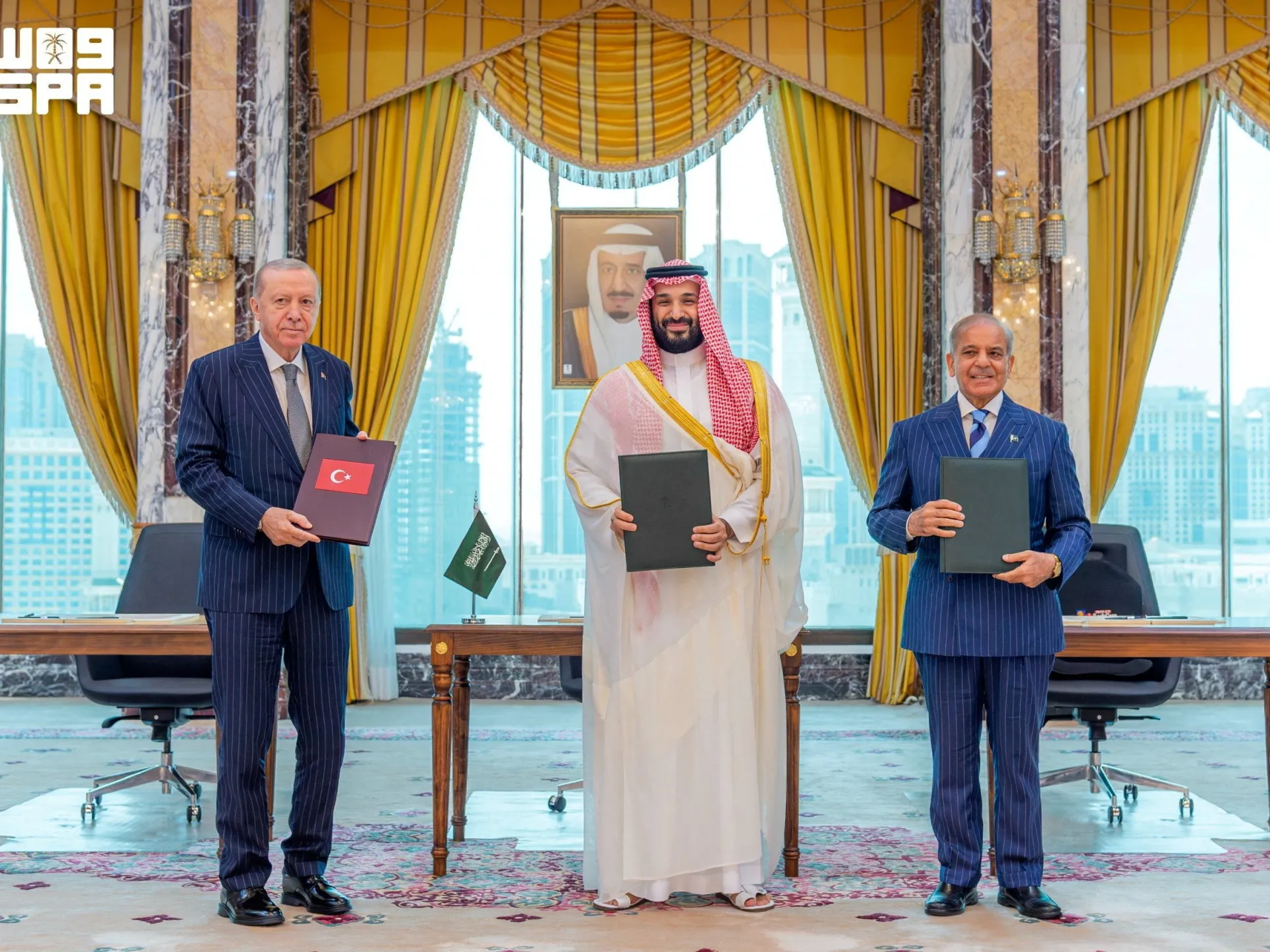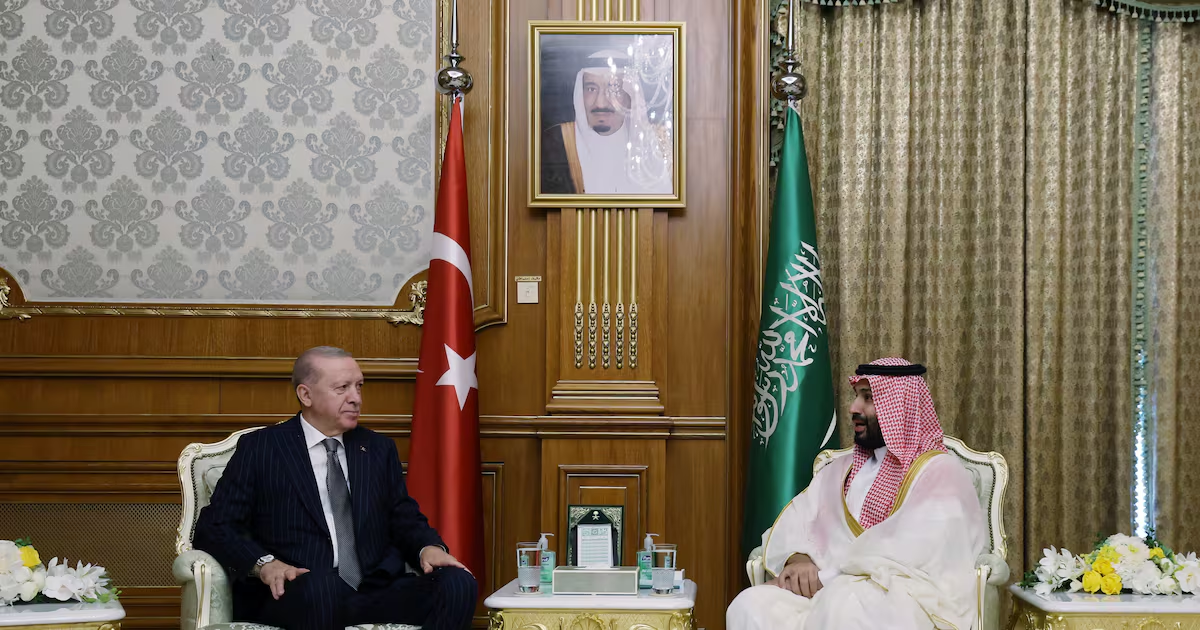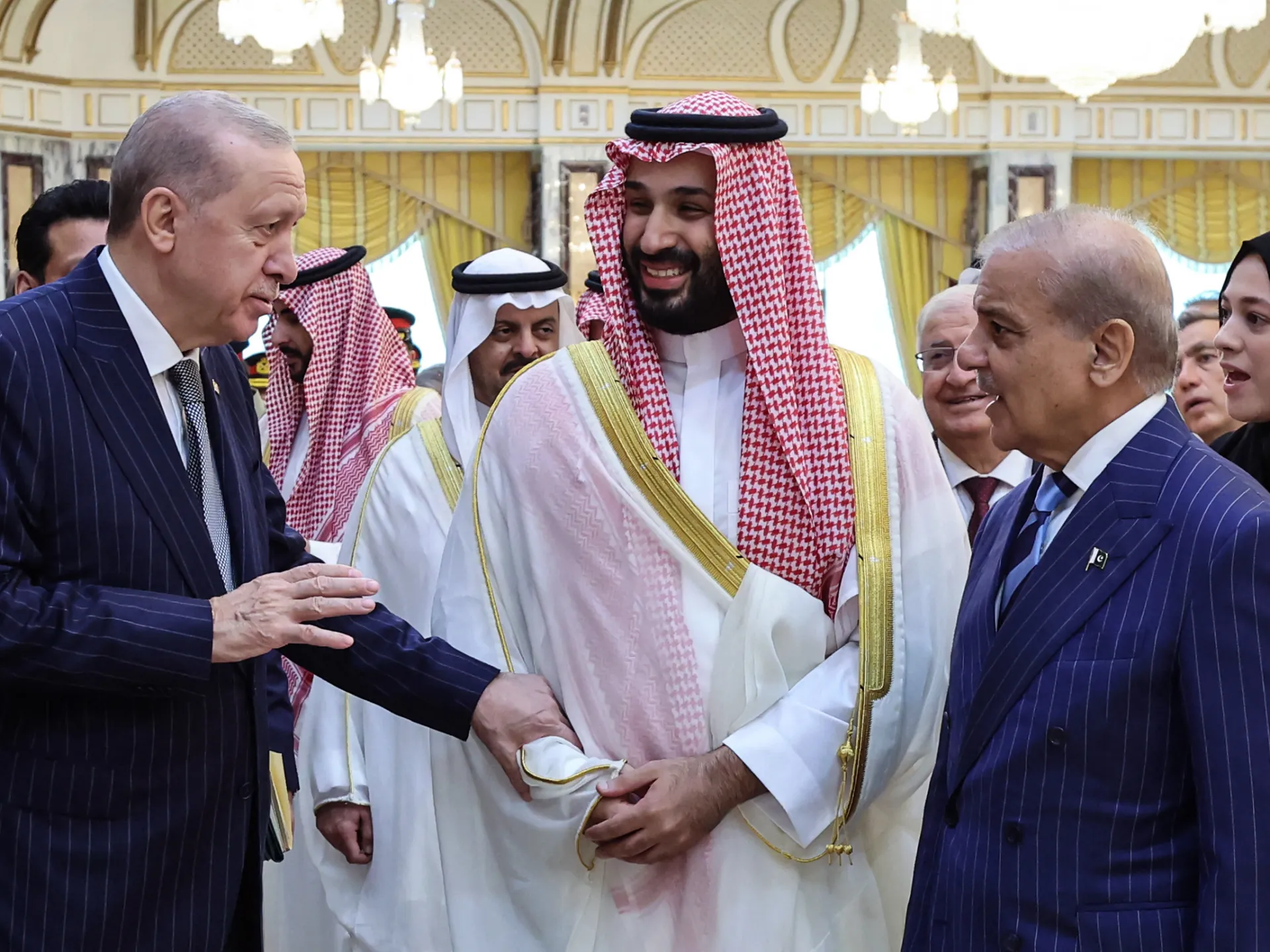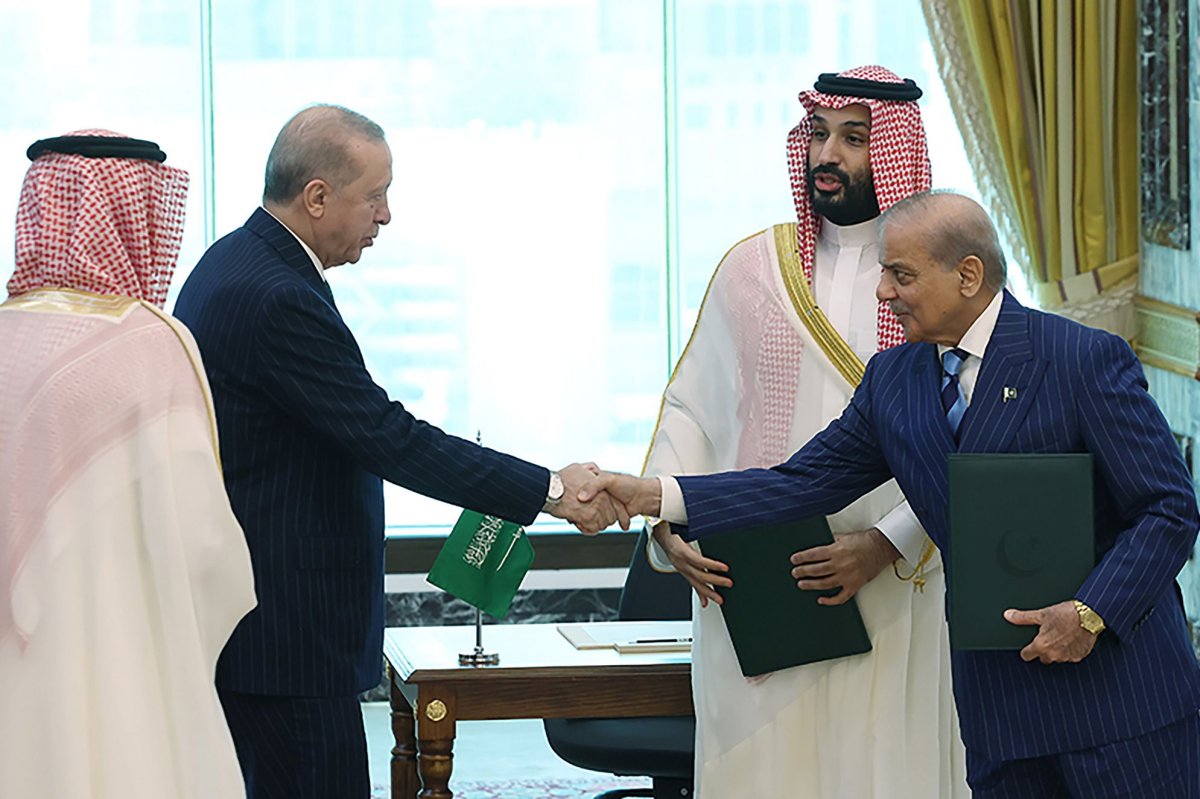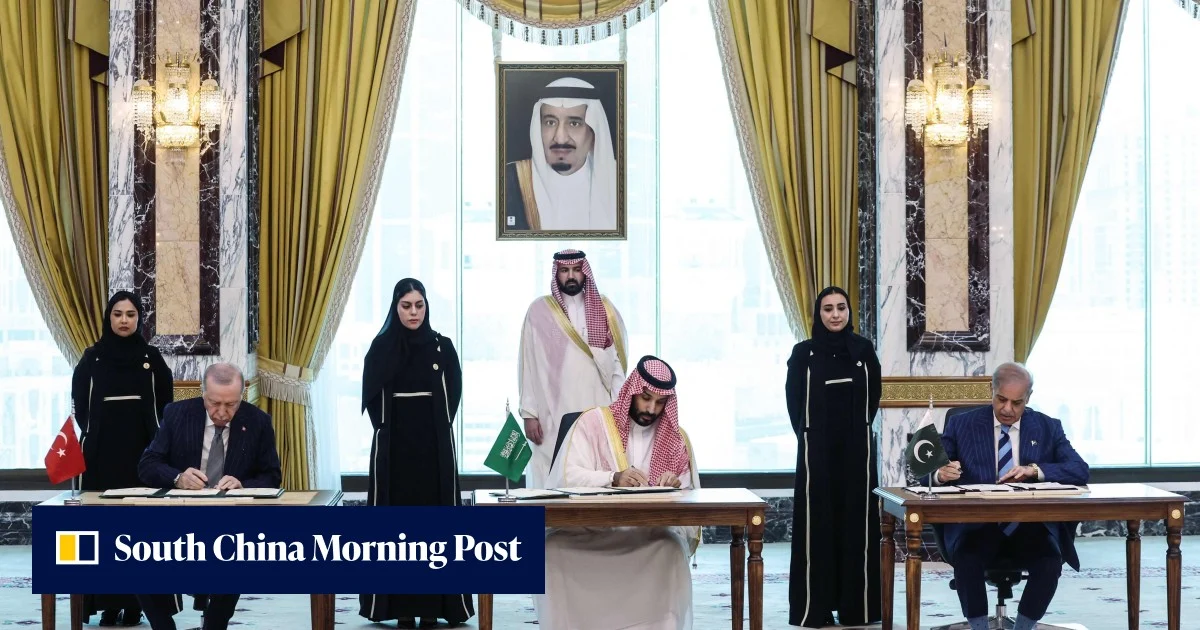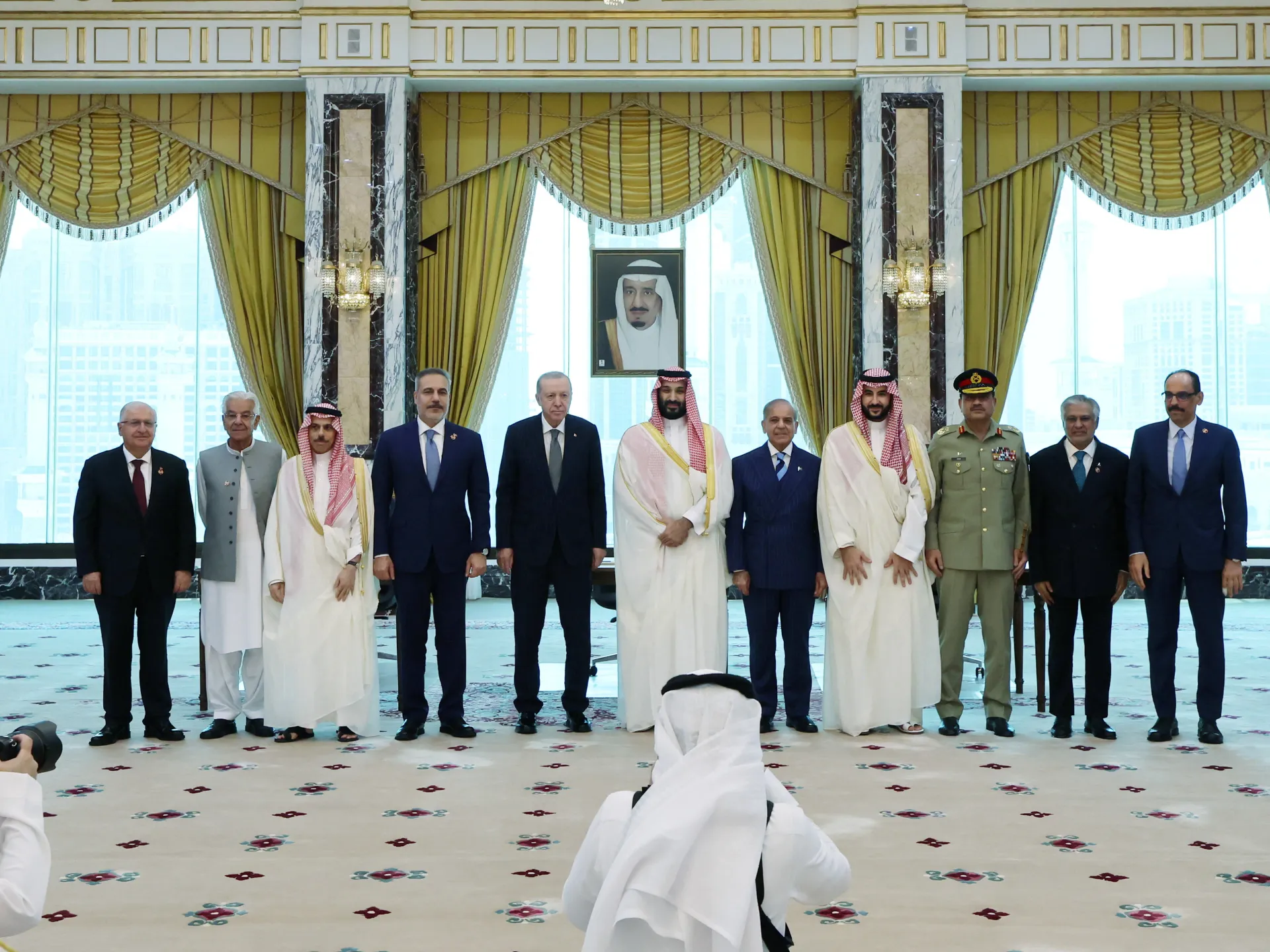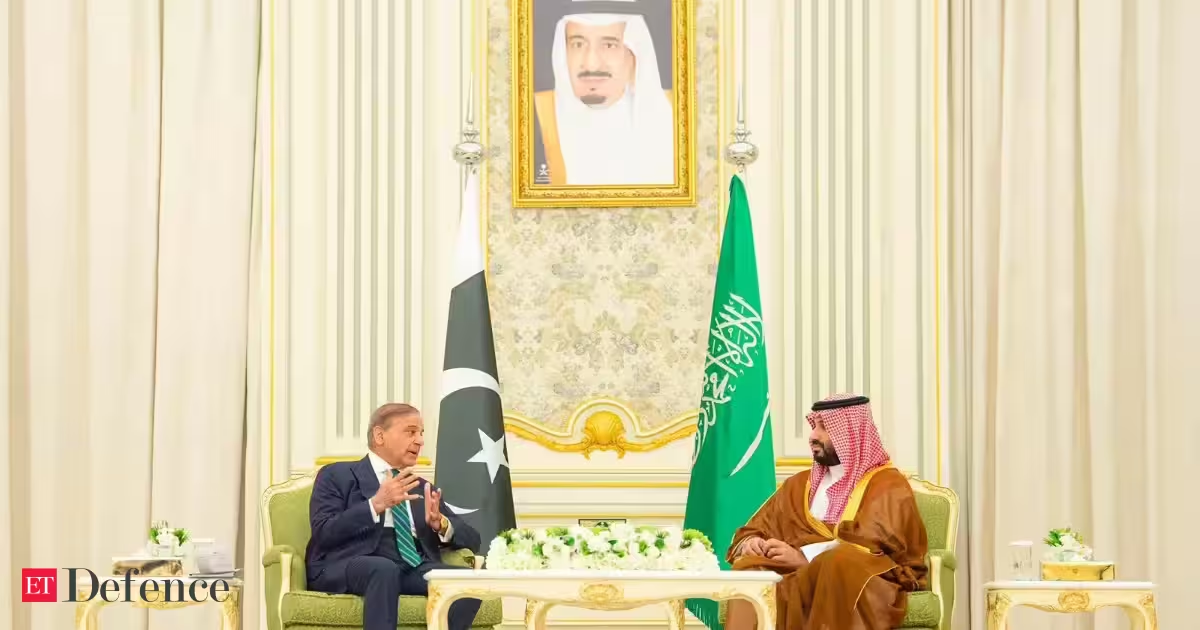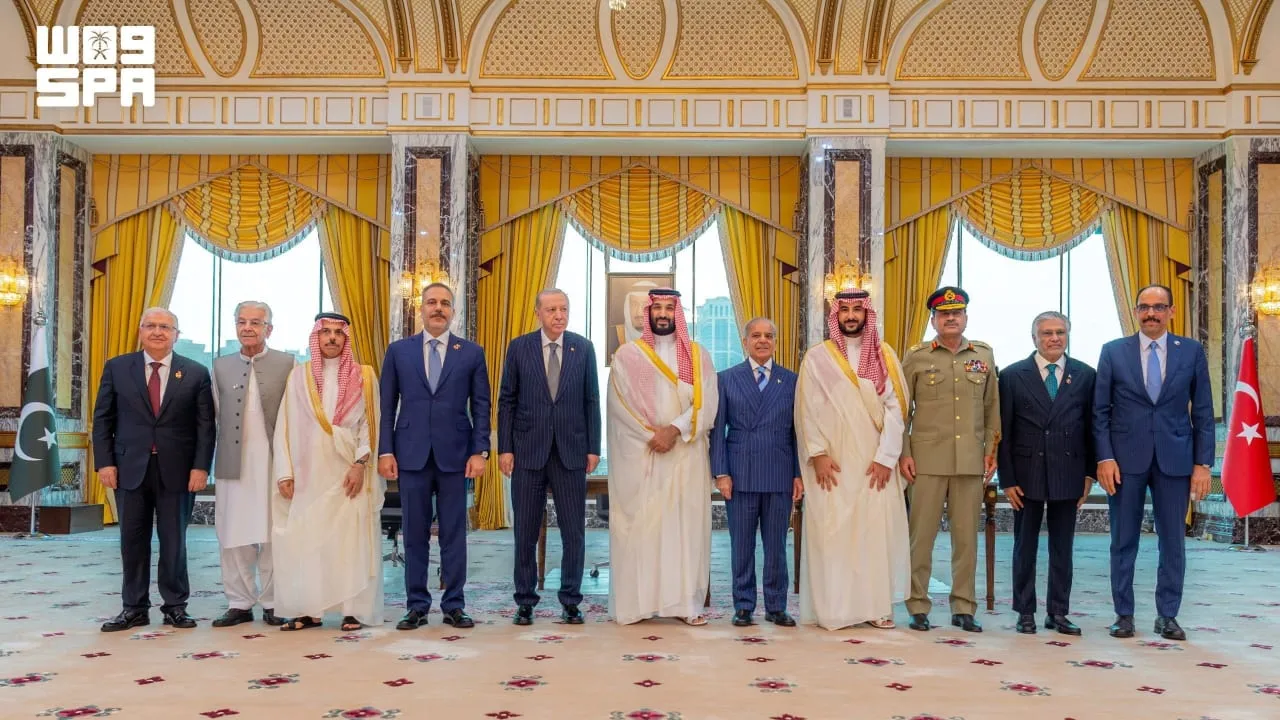
Riyadh must decide whether its new alliances will strengthen regional stability or give greater influence to governments seeking to turn Israel into the common enemy.Follow us on GoogleTurkish President Tayyip Erdogan, Saudi Crown Prince Mohammed bin Salman, and Pakistan's Prime Minister Shehbaz Sharif, accompanied by their ministers of Foreign Affairs and Defence, pose after signing a joint defence agreement in Mecca, Saudi Arabia, August 7, 2026.(photo credit: Saudi Press Agency/Handout via REUTERS)ByJPOST EDITORIALAUGUST 10, 2026 05:56Saudi Arabia, Turkey, and Pakistan signed a joint defense agreement in Mecca on Friday that could alter the strategic balance of the Middle East.Under the agreement, an armed attack on any one of the three countries will be considered an attack on all three.Turkish Foreign Minister Hakan Fidan went further, saying on Saturday the arrangement was technically equivalent to NATO’s Article 5 collective-defense commitment.As Reuters and Jerusalem Post Staff reported Saturday, with Eli Leon contributing, Fidan said the alliance would establish a ministerial committee and a general secretariat based in Saudi Arabia. Egypt could eventually join.Turkish President Recep Tayyip Erdogan said the agreement was based on “the principle of collective deterrence” and would expand security, defense, and counterterrorism cooperation.Turkish President Tayyip Erdogan, Saudi Crown Prince Mohammed bin Salman and Pakistan's Prime Minister Shehbaz Sharif pose after signing a joint defense agreement in Mecca, Saudi Arabia, August 7, 2026. (credit: Murat Cetinmuhurdar/Turkish Presidential Press Office/Handout via REUTERS)Then came a statement Israel cannot ignore.Pakistani defense minister calls for ‘united military front’ against IsraelA day after the agreement was announced, Pakistani Defense Minister Khawaja Asif called for “a united military front” against Israel, describing it as a “threat to the entire Muslim world.”The Post’s Danielle Greyman-Kennard reported Sunday that Asif tied his call to the unresolved Palestinian issue and urged the Islamic world to stand together against Israel.Dr. Yoel Guzansky, head of the Gulf Research Program at the Institute for National Security Studies, told Greyman-Kennard that the pact “doesn’t shut the door completely on normalization” between Israel and Saudi Arabia.“Countries need stability. Saudis need stability,” Guzansky said, describing Riyadh’s approach succinctly: “This is hedging.”Former national security council head Jacob Nagel offered a similar explanation in an interview with 103FM reported by the Post on Friday.Nagel called the agreement “more of a diplomatic maneuver intended to put pressure on the American administration,” arguing that Riyadh is looking for alternatives as it feels increasingly exposed.That vulnerability has been building for years. Saudi Arabia has watched Iran and its proxies demonstrate their ability to strike across the region.The 2019 attack on the kingdom’s Abqaiq and Khurais oil facilities exposed the limits of its defenses and raised questions in Riyadh about outside support in a crisis.Israel should, therefore, take this Saudi hedge seriously.Riyadh is searching for security, leverage, and strategic independence. The question for Israel and the United States is where that search eventually leads.Turkey, under Erdogan, has adopted an increasingly hostile posture toward Israel. Pakistan has no diplomatic relations with Israel, and its defense minister is already invoking Muslim military unity against the Jewish state.Saudi Arabia should understand the problem this creates. A defense partnership with countries whose senior leaders portray Israel as a regional enemy will inevitably cast a shadow over normalization.Israeli leaders cannot treat the alliance as merely technical if one of its members is already speaking about organizing the Muslim world militarily against Israel.Saudi-Israel normalization offers greater opportunities than current defense pactNevertheless, Jerusalem should keep the door to Riyadh wide open.Israel’s interest is to accelerate efforts to bring Saudi Arabia into an American-led regional security architecture that includes Israel and moderate Arab states.The strategic promise of Saudi-Israel normalization extends beyond embassies, tourism, and trade.It offers a durable regional alignment capable of confronting Iran, improving missile and air defense cooperation, protecting trade routes, and connecting Israel more deeply to the Arab world.The Abraham Accords showed that relations with Israel can serve Arab states’ economic and strategic interests. Saudi Arabia would bring significant political and economic weight to that regional framework.That strategic objective has become even more urgent.Washington should pay close attention to what happened in Mecca. A long-time US partner has sought additional security insurance from Ankara and nuclear-armed Islamabad. That is a warning about declining confidence in American guarantees.The US should ask why one of its most important Arab partners feels it needs an alternative security structure, and how to prevent that structure from developing an explicitly anti-Israel character.Israel should speak clearly to Riyadh while continuing to pursue normalization.Saudi Arabia can play a central role in building a more stable Middle East. Israel has every reason to bring it closer.Riyadh must decide whether its new alliances will strengthen regional stability or give greater influence to governments seeking to turn Israel into the common enemy.The Mecca agreement has made that choice much harder to avoid.Follow us on Google
Saudi Arabia-Turkey-Pakistan pact a dangerous hedge for region | The Jerusalem Post
Riyadh must decide whether its new alliances will strengthen regional stability or give greater influence to governments seeking to turn Israel into the common enemy.
799 words~4 min read