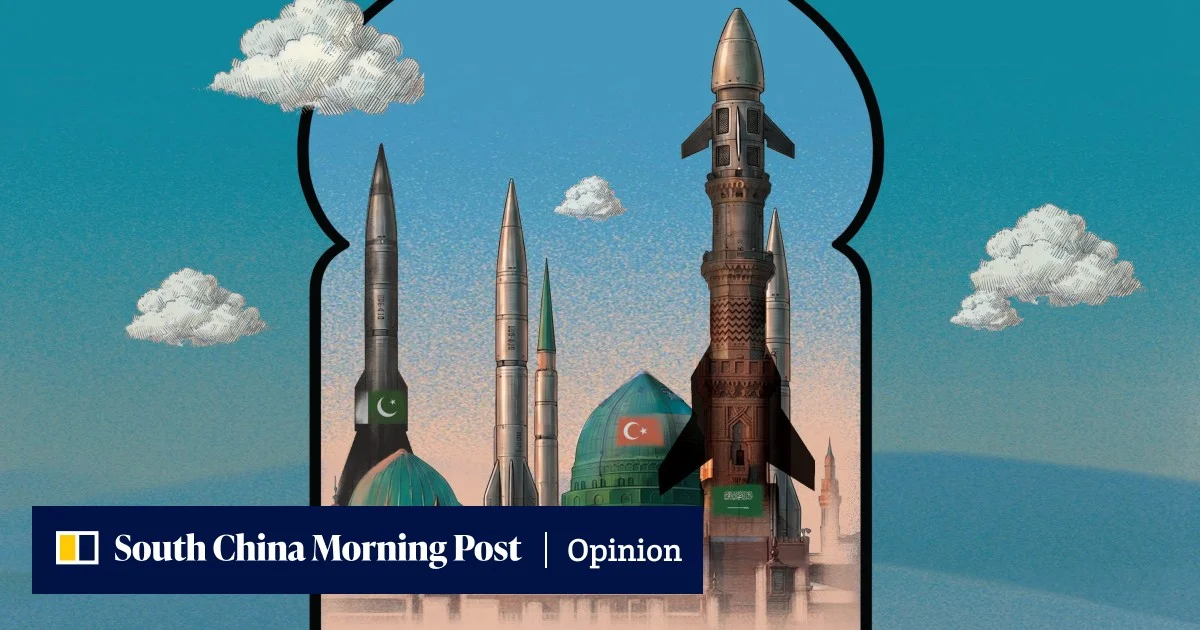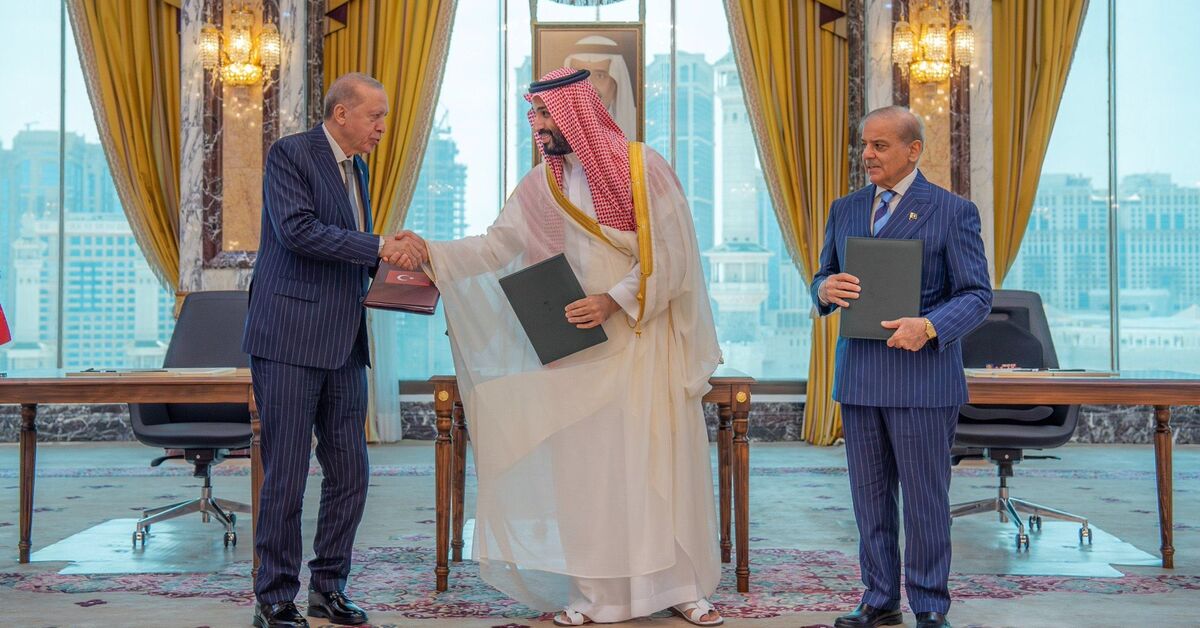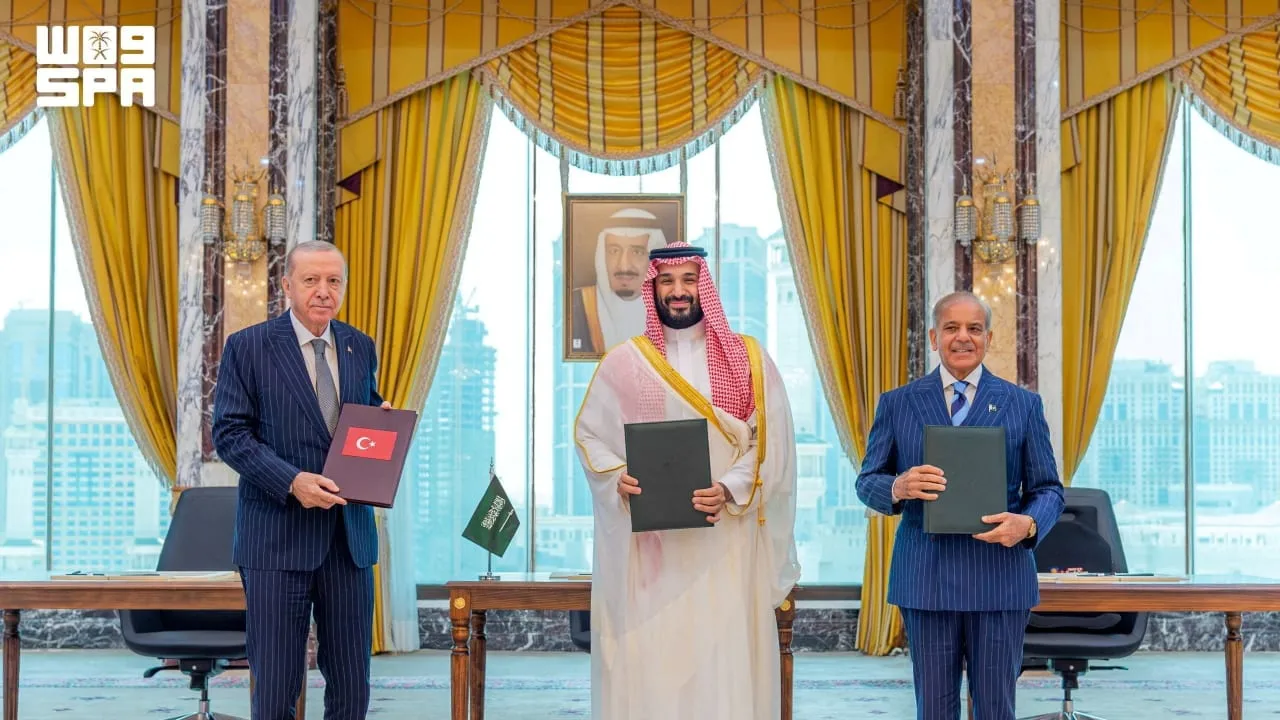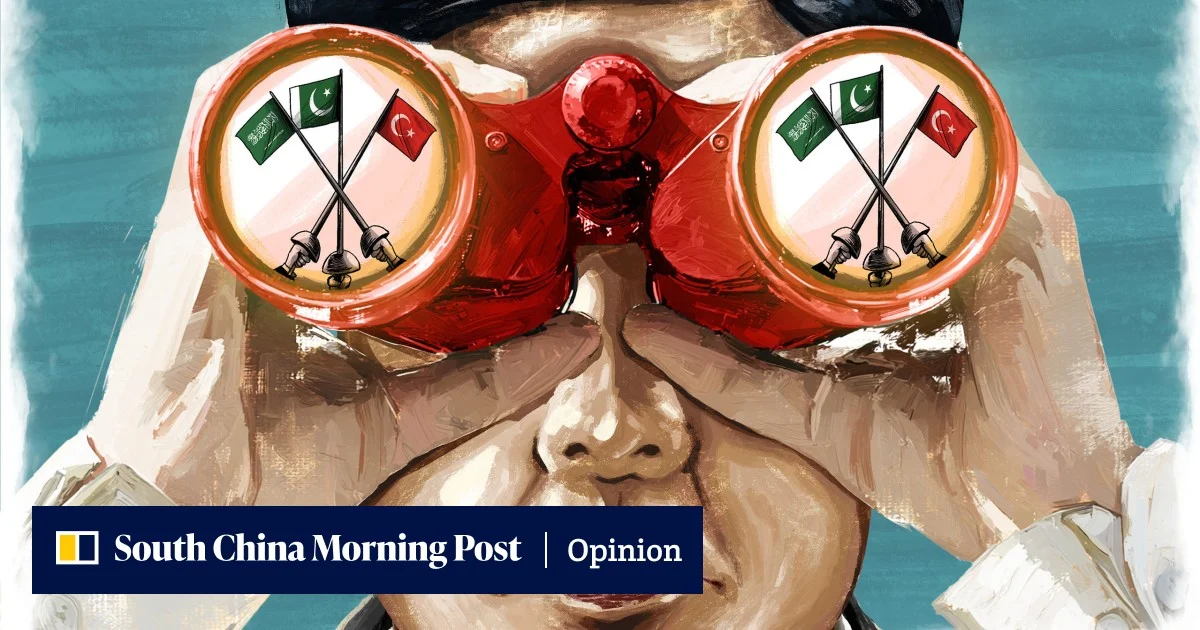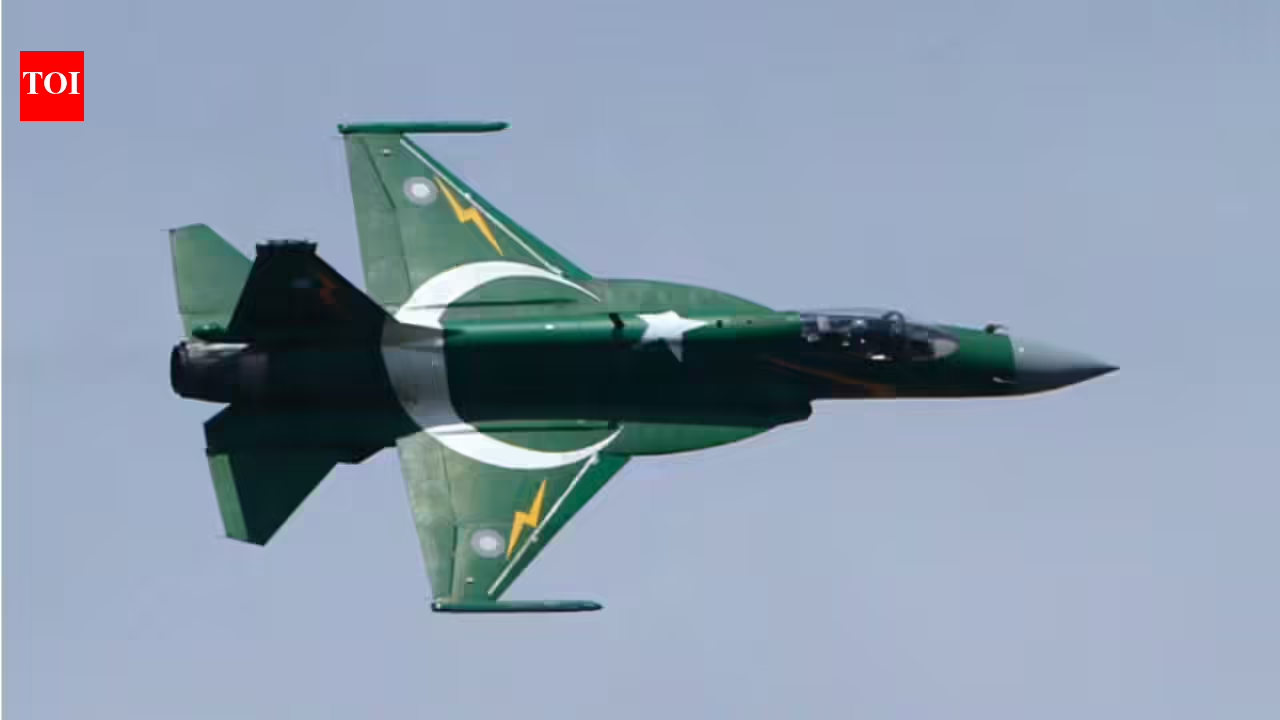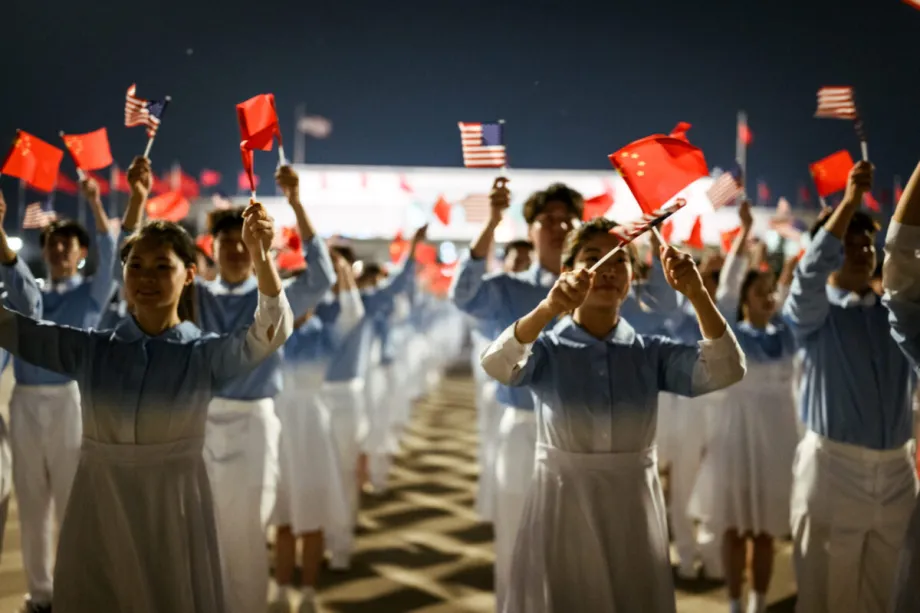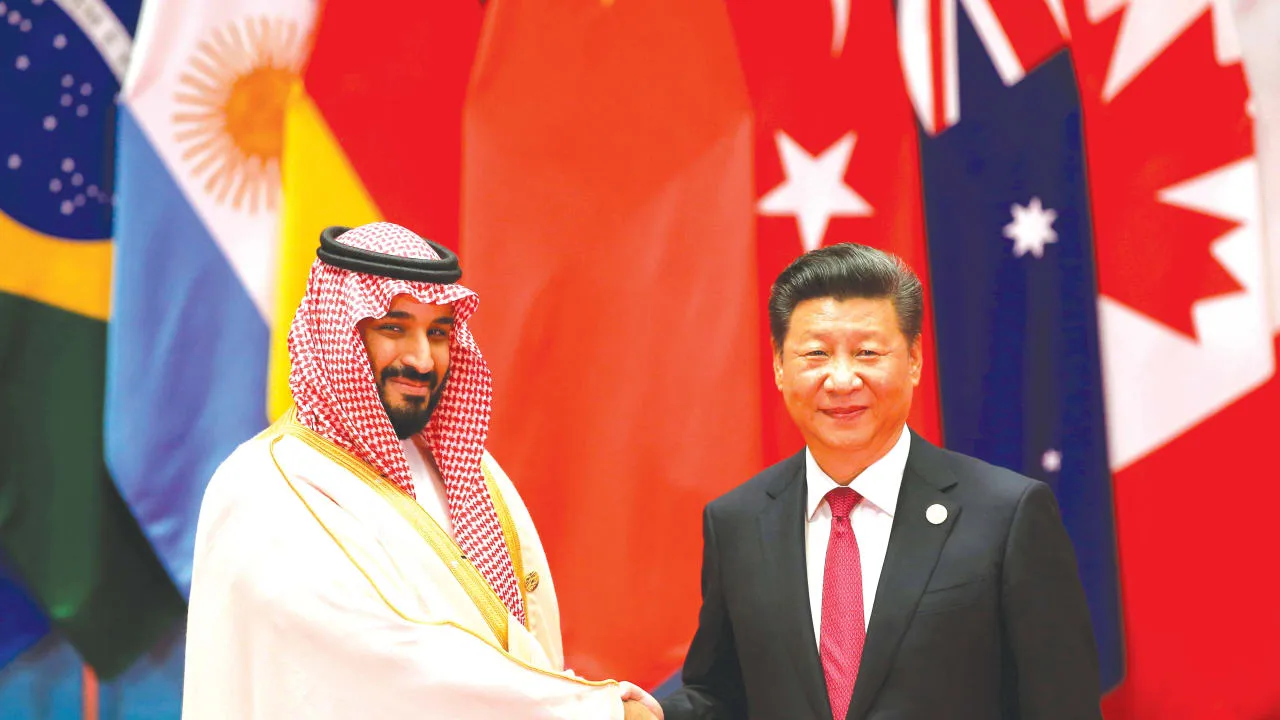
ByODED AILAMAUGUST 25, 2026 19:00Nearly six months into the war with Iran, the Middle East is rediscovering an old truth: when a great power becomes entangled in a prolonged conflict, small and medium-sized states begin looking for insurance.China does not need to become the region’s security provider. It is enough for Beijing to sell the cameras, drones, missiles, ports, and factories.When American power appears overwhelming, Riyadh moves closer to Washington. When Israel demonstrates military superiority, rapprochement with Israel becomes possible. When Iran proves capable of inflicting pain, Saudi Arabia seeks accommodation with Tehran. And when Turkey and Pakistan offer an additional security umbrella, Riyadh joins them.That is what makes the “Mecca Alliance,” the new defense agreement among Saudi Arabia, Turkey, and Pakistan, important far beyond its three signatories. Saudi Arabia wanted protection, Turkey wanted a foothold, and Pakistan wanted money. China gained all three.The alliance was signed in Saudi Arabia, but the man who may benefit most did not even travel to Mecca: Xi Jinping.TURKISH PRESIDENT Recep Tayyip Erdogan, Saudi Crown Prince Mohammed bin Salman, and Pakistan’s Prime Minister, Shehbaz Sharif, pose after signing a joint defense agreement in Mecca last Friday. (credit: Murat Cetinmuhurdar/Turkish Presidential Press Office/Handout via REUTERS)Iran is not necessarily the country that should be most concerned. Beijing appears interested in reassuring Tehran that this alliance need not become a Sunni front preparing for war against it. Saudi Arabia gains another layer of protection, Pakistan receives money and status, Turkey expands its influence, and Iran gains a reason not to interpret every Sunni initiative as a declaration of war.The agreement states that an attack on one member will be considered an attack on all, although it remains unclear what each country would actually do in a real crisis. This is not yet a Muslim NATO, but it sends a clear signal: regional states are no longer prepared to place all their security eggs in the American basket.The greatest beneficiary may therefore be the country that did not sign the agreement: China.Ancient Chinese military strategist Sun Tzu wrote that a skilled commander subdues the enemy without fighting. Beijing does not need to replace the US Fifth Fleet, establish dozens of bases in the Gulf, or promise to die for Riyadh. The Chinese model works better when the Americans pay the security bill, and China collects the commercial revenue.The new Middle East is no longer divided simply between Iran’s friends and enemies. It is divided between those that generate power and those deciding which source of power is safest to stand beside.A Sunni alliance that does not want to be anti-IranianAt first glance, three major Sunni countries are establishing a security alliance while Iran is confronting the United States and Israel. Tehran could easily interpret this as the formation of a Sunni front against it.Yet Ankara and Islamabad publicly insist that the alliance is not directed at Iran or at any particular country. Beijing also has an interest in encouraging Tehran to view it as a defensive arrangement rather than a mechanism for joining a war against Iran.That interpretation offers Iran some reassurance. Even if the Houthis continue to threaten Saudi Arabia, Turkey and Pakistan may not rush to bomb Sanaa. It is easy to sign an “all for one” clause in Mecca; it is considerably harder to explain to the Turkish public why Turkish soldiers should fight in Yemen.Saudi Arabia, meanwhile, is not necessarily seeking war with Iran. It is seeking insurance against it.The alliance may also serve as a counterweight to another regional network – one involving Israel, the United Arab Emirates, Bahrain, and Kuwait, together with their security ties to Washington.For Beijing, this is an almost ideal balance. China does not want a victorious Iran, because an excessively powerful Iran could destabilize the Gulf and endanger energy routes. Nor does it want a defeated and disintegrating Iran, which remains an energy supplier, a diplomatic partner, and a counterweight to American power. China wants Iran strong enough to survive, but weak enough to need Beijing.Pakistan is China’s gateway to the GulfThis is where Pakistan enters the picture.The security relationship between Beijing and Islamabad is exceptionally deep. A significant share of Pakistan’s military capabilities relies on Chinese technology; the JF-17 fighter aircraft, for example, is a product of Chinese-Pakistani cooperation.If Pakistan becomes a central pillar of the Gulf’s emerging security architecture, China gains a key to the building without having to sign its own lease.Weapons systems require maintenance, replacement parts, software, training, communications infrastructure, and upgrades. A country that supplies a military platform is therefore selling more than hardware; it is creating a relationship that can last 20 years.If Saudi Arabia, Pakistan, and Turkey eventually develop joint capabilities in drones, air defense, intelligence, or communications, China will already possess a built-in advantage through Pakistan.The biggest prize lies beyond the battlefieldIt would be a mistake, however, to view this development solely through a military lens. China’s greatest prize is economic.The Gulf is both a critical source of energy for China and an enormous market for infrastructure, technology, electric vehicles, telecommunications, artificial intelligence, ports, and military equipment. As Gulf states seek to reduce their dependence on the United States, they are looking for additional suppliers.China offers a difficult proposition to resist: it does not tell governments how to run their countries or demand ideological alignment. It is willing to build the port, the telecommunications network, and the drone factory.According to figures published in Israel, China’s trade with Saudi Arabia and the United Arab Emirates reached approximately $108 billion with each country in 2025. From Beijing’s perspective, the Gulf is not a geopolitical sideshow; it is a business worth hundreds of billions of dollars.Selling a drone produces revenue once. Building the factory, supplying its components, training its engineers, updating its software, and providing spare parts can secure a customer for an entire generation.Then there is TaiwanThe more complicated the Gulf becomes, and the more Washington must devote resources to protecting bases, allies, and shipping lanes, the more strategic breathing room Beijing gains in East Asia.China can continue its assertive activity around Taiwan and throughout the Indo-Pacific while global attention remains divided among several competing crises.What does this mean for Israel?Israel may find itself in a Middle East that can no longer be divided neatly between an “Iranian camp” and a “pro-American camp.”Several overlapping power circles are emerging instead: Israel and its Abraham Accords partners; Iran and its proxies; the Turkish-Saudi-Pakistani alliance; and, above them all, China, which speaks with everyone while committing itself to almost no one.Israel’s opportunity lies in Abu DhabiIsrael does have a potential countermove, but it does not run through Riyadh. It runs through Abu Dhabi.The United Arab Emirates has good reason to examine the Mecca Alliance carefully. A power center composed of Saudi Arabia, Turkey, and Pakistan would not merely be a mechanism for deterring Iran. If it became a permanent political and military framework, it could also transform the balance of power within the Sunni world.For the UAE, this is a strategic question. Abu Dhabi has spent years developing an independent foreign policy, an advanced military, regional centers of influence, and an economy unwilling to live in Riyadh’s shadow. Bahrain and Kuwait may face related concerns.Saudi Arabia is now attempting to build a security club in which Riyadh holds the keys, Turkey provides the muscle, and Pakistan brings the bomb. The Emiratis have little reason to welcome such an arrangement enthusiastically.That is precisely where Israel’s opportunity lies.Rather than offering Saudi Arabia another layer of protection, Israel can deepen its partnership with the UAE around a shared interest: preventing the emergence of any new regional hegemony, whether Iranian, Turkish, or Saudi.Such cooperation need not begin with tanks and missiles. It can be built through technology, cybersecurity, energy, trade routes, investment, ports, ties with India, and the creation of an economic corridor connecting the Mediterranean to the Gulf and the Indian Ocean.Viewed this way, the Abraham Accords are more than peace agreements. They could become the foundation of an alliance among states unwilling to let others decide what the Middle East will look like.The Mecca Alliance points to a deeper reality.Saudi Arabia is looking for someone to protect it.Pakistan is looking for someone to finance it.Turkey is looking for countries over which it can exert influence.Iran is looking for a way to survive.Israel must look for states that share its interests.And China?China is not looking. It is waiting.America fights. Iran fires. Saudi Arabia hesitates. Turkey advances. Israel recalculates.A Chinese proverb says: “When the winds of change blow, some build walls, while others build windmills.”Israel builds defense systems. Iran builds missiles. Saudi Arabia builds alliances. The United States tries to preserve the old order.And China?China sells everyone the windmills.The writer is a senior researcher at the Jerusalem Center for Security and Foreign Affairs (JCFA).Follow us on Google
China’s growing influence in the Middle East | The Jerusalem Post
The new Saudi-Turkey-Pakistan alliance signals a shifting Middle East – and China may be the biggest winner as regional powers seek new security partners.
1,468 words~7 min read