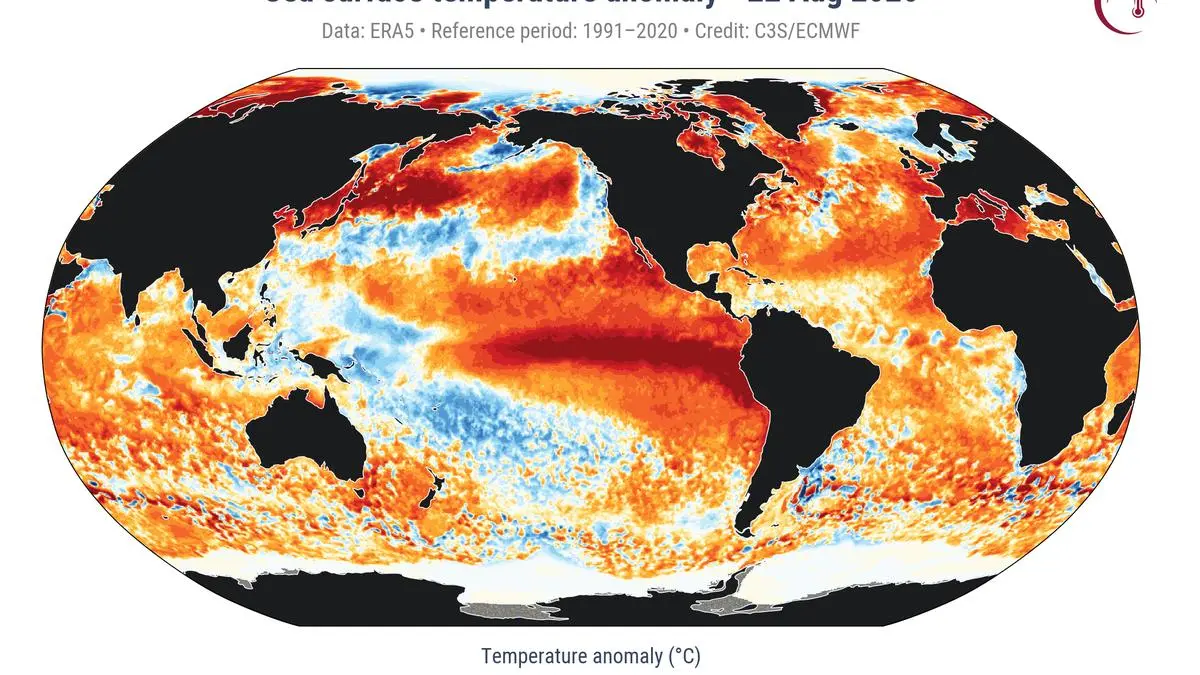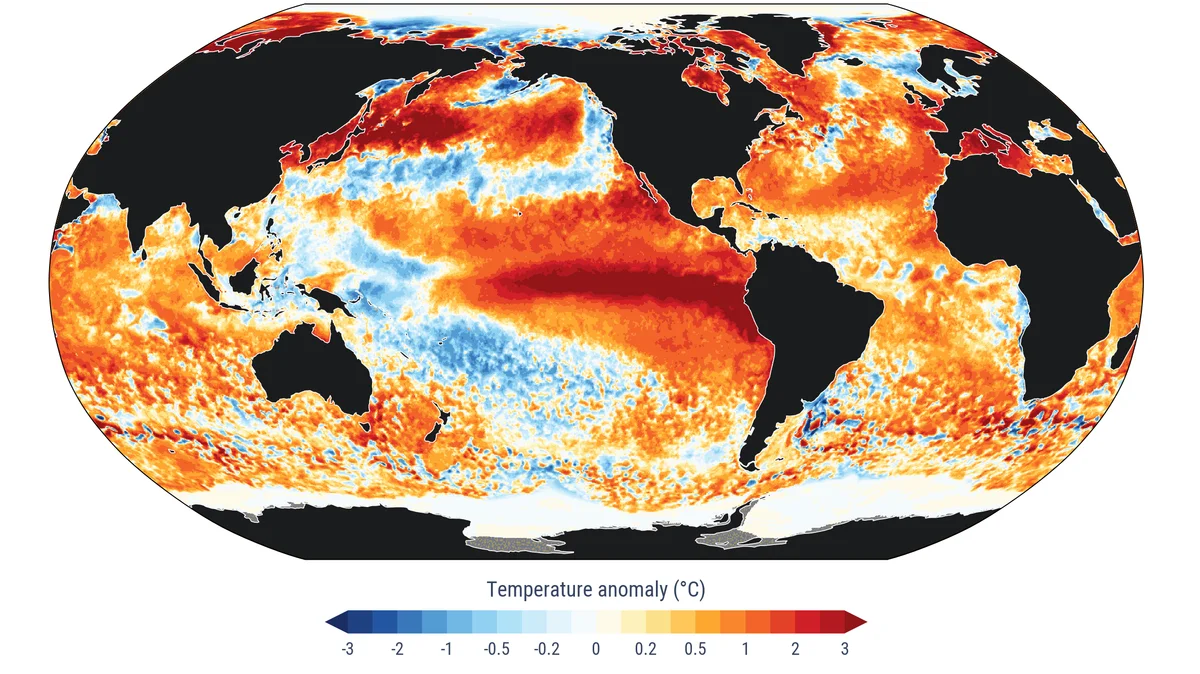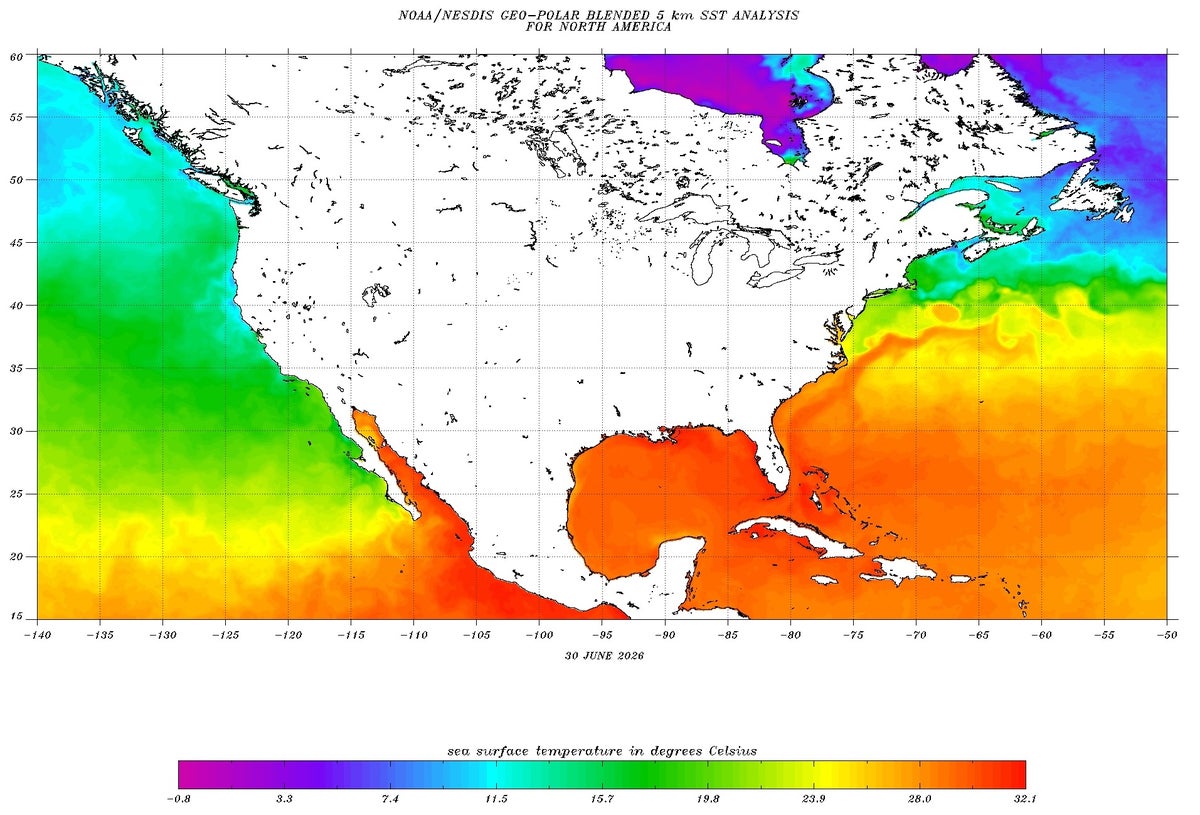
SAN DIEGO, CALIFORNIA - JANUARY 31: People gather to watch the sunset at La Jolla's Windansea Beach during a winter heat wave on January 31, 2026 in San Diego, California. (Photo by Kevin Carter/Getty Images)Getty ImagesThe record for the average sea surface temperature for the oceans around the world for the month of August was broken on Saturday (22 August).Figures released by the Copernicus Climate Change Service (C3S) confirm the average sea surface temperature outside polar regions reached 21.1 degrees Celsius on 22 August, exceeding the previous record of 21.09 degrees Celsius. It follows a succession of monthly sea surface temperature records and near-records observed throughout 2026.According to C3S, this milestone is consistent with the continued long-term warming of the global ocean and the emergence of an extreme El Niño event in the tropical Pacific ocean. A strong El Niño is now developing in the tropical Pacific, adding further warmth to an ocean that has already been warming over many decades as a result of human-driven climate change. The World Meteorological Organization (WMO) has warned El Niño is expected to strengthen during the coming months, while the C3S seasonal forecasting system suggests the event could reach levels not seen for several decades.Warmer ocean could also contribute to rising sea levels and damage key ecosystems, such as coral reefs and seagrass meadows, which in turn disrupt marine food webs and industries such as fisheries and aquaculture.Oceana’s senior marine scientist Dr. David Costalago said record-breaking ocean temperatures are another unmistakable warning that the climate crisis is here and affecting us all, in a statement. MORE FOR YOUDr. Costalago added the current Super El Niño is adding extra heat to the system, but the underlying cause is decades of human-caused greenhouse gas pollution. “The ocean has quietly absorbed the vast majority of the excess heat in our atmosphere, effectively shielding us from even faster warming on land. “But that protection comes at a steep cost,” he added. “These extraordinary temperatures may also be an early warning that we are approaching dangerous tipping points in the ocean and the climate system, with unpredictable consequences for the planet.”Dr. Gabby Ahmadia, vice president of the seascapes and science, oceans program at WWF-US, said ever-hotter oceans are pushing coral reefs to their limits and making it harder for them to survive and recover, in a statement. Dr. Ahmadia added leaders across the public and private sectors must act to cut the emissions driving ocean warming and protect the reefs with the strongest prospects for resilience. “Every fraction of a degree matters. Every year of delay matters,” she added. Sophie Benbow, marine director at conservation charity Fauna & Flora, said there is no healthy planet without a healthy ocean, and the ocean has been “acting as our security blanket for too long”. Benbow added as the ocean warms, its ability to absorb carbon dioxide diminishes, marine wildlife will be decimated.“The message has never been more urgent: we must halt human-induced climate change, and we must protect important blue carbon ecosystems, like seagrass, mangroves and kelp,” she said.Ocean Conservancy’s vice president for climate, Fatima Candace Vahlsing, said breaking one heat record after another does not have to be the new normal, but it does require a change from business as usual.She added investing in clean ocean energy, like offshore wind, will help meet growing energy demands while ensuring children and children’s children still have fish to catch and safe waters to swim in.And the executive director of the global advocacy initiative Campaign for Nature, Brian O’Donnell said warmer waters are pushing fish away from their traditional areas, leaving fishermen with smaller or less predictable catches, in a statement. O’Donnell added two key actions are needed to address record ocean warming. Firstly, he said fossil fuel emissions need to be rapidly reduced and secondly, it is essential that countries protect marine and coastal ecosystems.O’Donnell said kelp beds, mangroves and marshes absorb carbon, and coral reefs protect against storms and provide habitat."More than 190 governments have committed to protect and conserve at least 30 percent of the planet by 2030, and now is the time to turn that commitment into effective, durable conservation on the ground,” he said. “That will require significantly greater investment in nature, including support for indigenous peoples and local communities who play an essential role in protecting many of the world’s most important ecosystems.”
Record-Breaking Ocean Temperatures Recorded For Month Of August
The record for the average sea surface temperature for the oceans around the world for the month of August was broken on Saturday (22 August).
727 words~3 min read