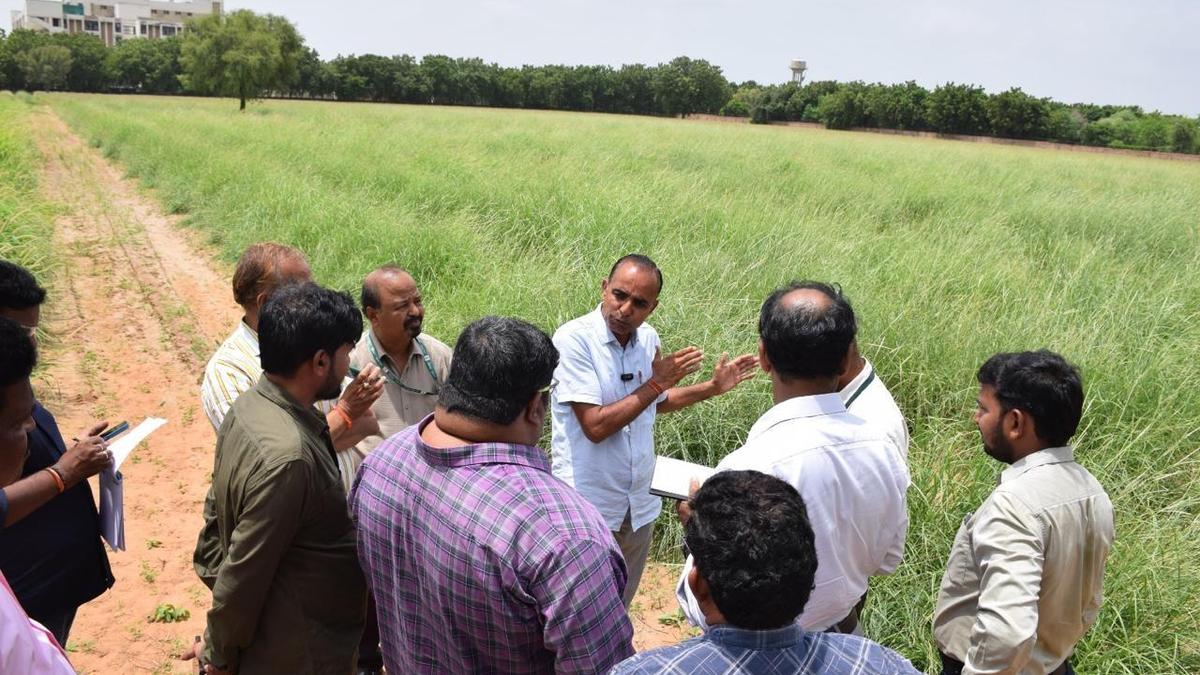
A scientist explaining the agricultural methods in fodder cultivation, the lifeline of Rajasthan, at Central Arid Zone Research Institute in Jodhpur.
| Photo Credit: BY ARRANGEMENT
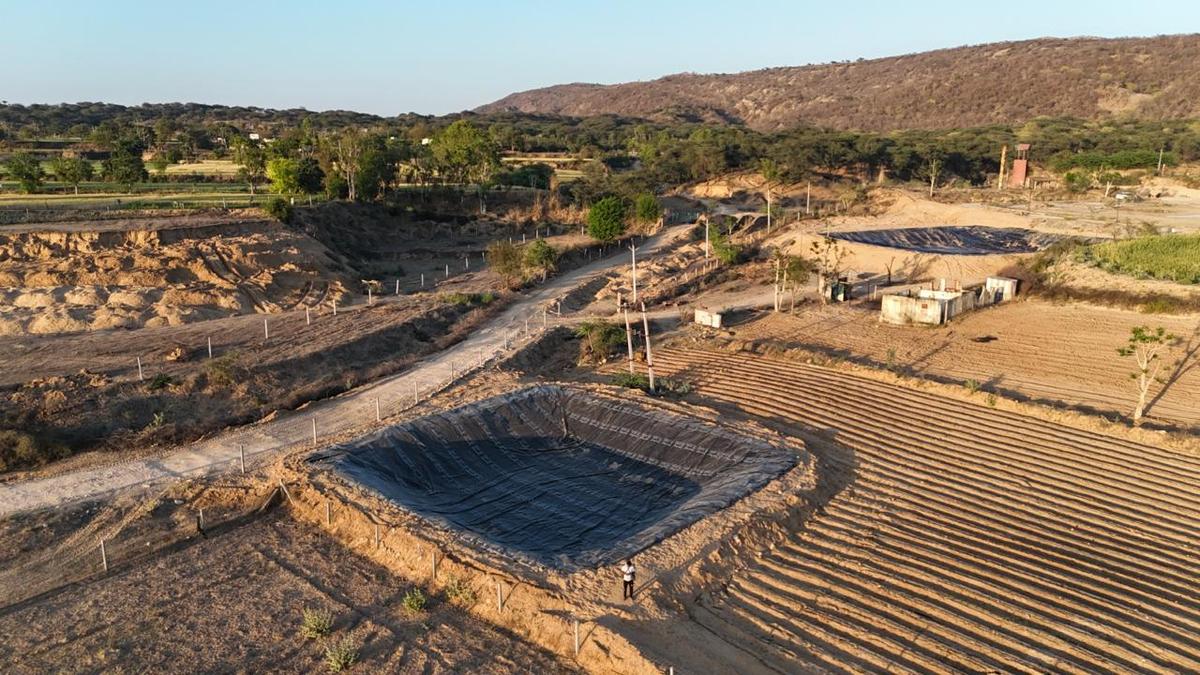
Central Arid Zone Research Institute (CAZRI) director Dr. Suresh Pal Singh Tanwar said that the institute’s research had contributed to expanding irrigated agriculture and strengthening allied sectors, improving the livelihoods of farming communities. He was interacting with a team of journalists from Andhra Pradesh who visited the institute, in Rajasthan, as part of a media tour.The CAZRI, established in its present form in 1959, has helped farmers adapt agriculture and livestock rearing to the country’s harshest climatic conditions. The institute is now focusing on technologies that can improve farm incomes while conserving water and resources.“CAZRI works on crop and grass seed production, nurseries, post-harvest technologies and sustainable farming systems. Its research has also covered roof-water harvesting, alternative fodder resources and agri-voltaic systems, aimed at enabling farmers to generate power while continuing agricultural activities,” Mr. Tanwar said.Agroforestry species, including ber, amla, and khejri, have emerged as useful options for farmers. Mr. Tanwar said the institute earns around ₹40 lakh annually from sapling sales, reflecting growing demand for such plantations.The institute’s work on arid legumes has had a wider economic impact. Varieties of moth bean, moong, and clusterbean have supported cultivation in dry regions and supplied raw material to food-processing industries. Mr. Tanwar said moth bean developed through CAZRI research had become an important ingredient in the country’s snack industry.To sustain Rajasthan’s livestock-based rural economy, researchers have promoted alternative fodder crops such as Napier bajra, spineless cactus, and moringa. Some are finding premium markets, with cactus and moringa products fetching high prices.The CAZRI’s research spans climate-resilient farming, desertification control, livestock productivity, and resource conservation. The institute has also developed technologies for stabilising sand dunes and improving arid-land productivity.Project Monitoring and Evaluation head Dr. P.C. Maharana and scientists Dr. R.N. Kumawat, Dr. R.K. Kakani, Dr. Hansraj, Dr. Kushwant, Dr. Sourabh Swami and Dr. P. Santra were present during the media visit. Published - August 25, 2026 06:56 pm IST