Can restoring land create jobs? These young entrepreneurs are proving it
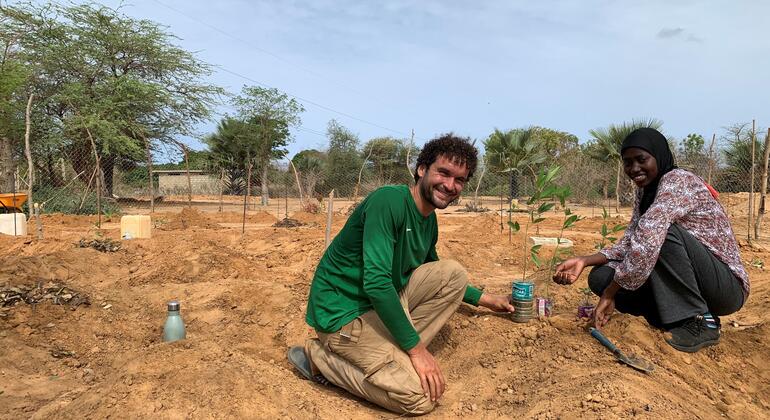
In Senegal, Daniel Halman is working with a simple idea: if a farmer can produce more on less land, part of that land can be freed up for restoration.His company, Féro, combines high-productivity greenhouses with agroforestry systems. Crops grown inside the greenhouses can be sold relatively quickly, while fruit trees and native species are planted elsewhere on the farm. By balancing production with restoration, the model aims to reduce the amount of land needed for cultivation while making restoration economically viable.Mr. Halman discovered the potential of restoration as a student, after taking part in a small project planting trees and restoring soil.“You can, of course, choose to do this as an NGO, but I specifically chose to continue as a company,” he said during an event in Ulaanbaatar, Mongolia, host city of COP17 of the UN Convention to Combat Desertification (UNCCD).Time was the biggest obstacle. While trees can take years to generate an economic return, businesses need income far sooner. Féro's answer is to combine restoration with greenhouse crops that can be harvested and sold more quickly.“In Senegal, people love onions, so we thought this is an excellent opportunity,” Mr. Halman said, explaining that identifying an environmental problem is only part of the equation. For a business to succeed, it must also respond to market demand.