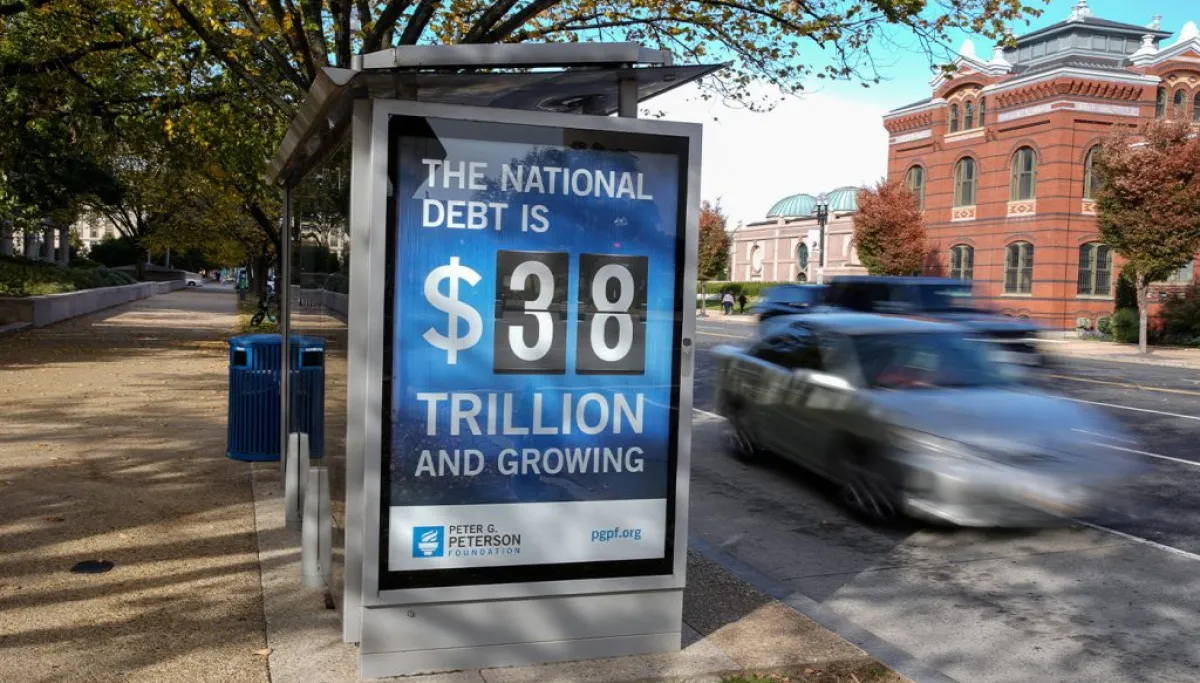
Economists would be inclined to agree with Bessent: The value of the debt, while an extraordinary milestone, doesn’t hold much relative weight. What economists (and more importantly, the bond market) is watching is the debt-to-GDP ratio: This demonstrates the level of borrowing by a country against its economic capacity to repay and service it.
Currently, the U.S. ratio stands at 122%. To bring it back into a lower balance, an economy could cut its borrowing or—as Bessent suggests—increase its growth.
When the alternative is cutting borrowing and, as a result, government spending, the growth plan is a more optimistic and politically palatable route.
It’s also the latest in a series of solutions proposed by the White House: Originally, President Trump had suggested that tariffs would pay down the national debt (the plan was quickly nixed by a Supreme Court ruling ordering the administration to repay approximately $100 billion in revenues that the justices deemed illegal).
Trump later suggested a “golden visa” strategy—selling rich immigrants visas at $5 million each—could pay down the national debt. The policies were novel, but economists broadly welcomed action by the Trump Administration on the fiscal picture.