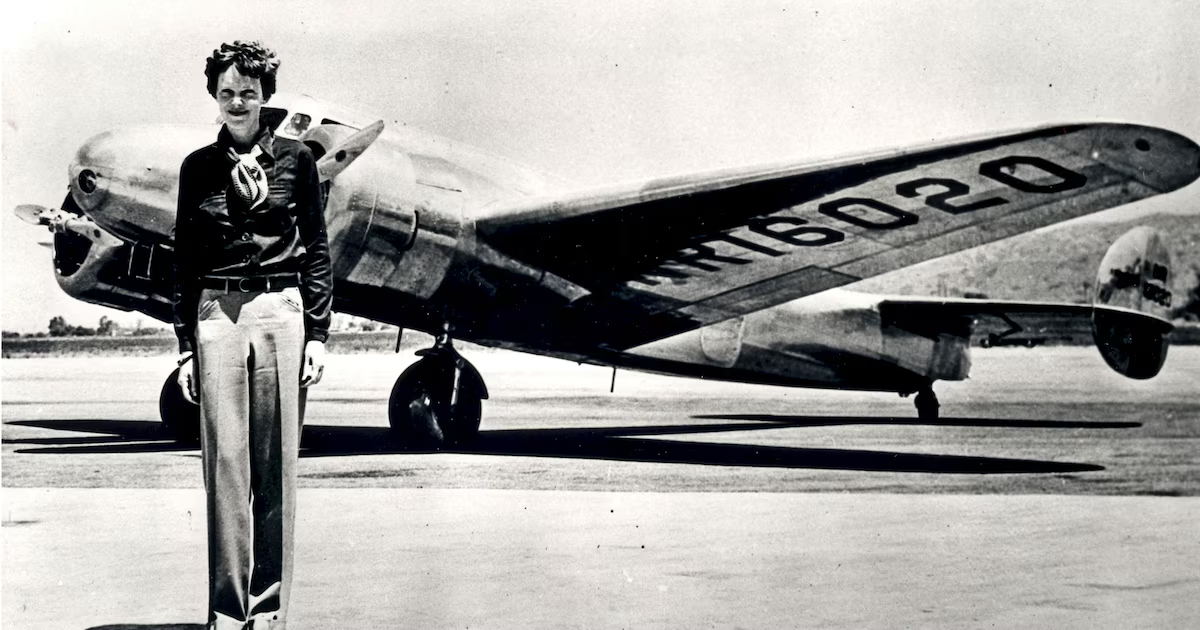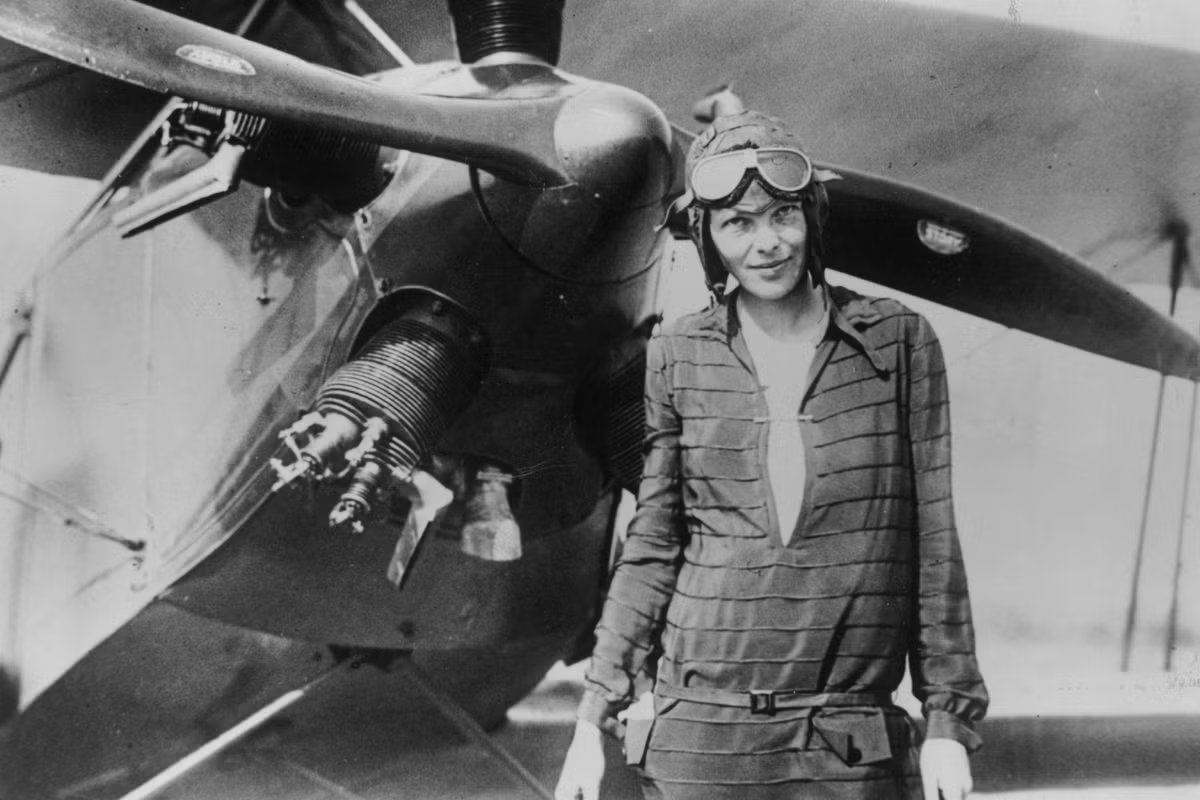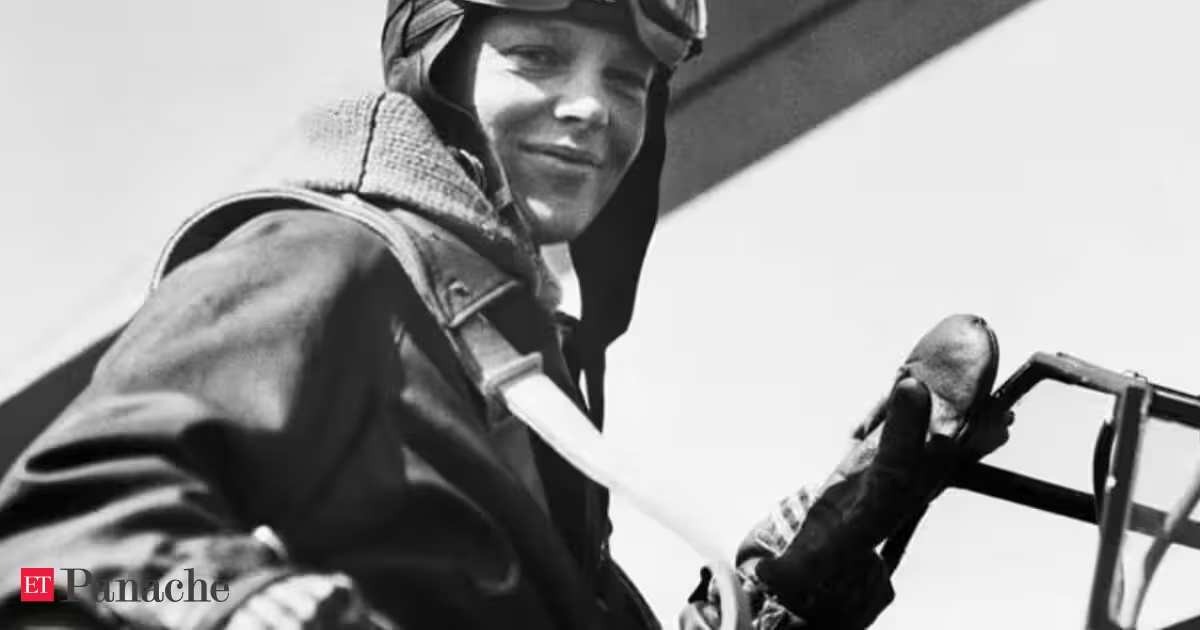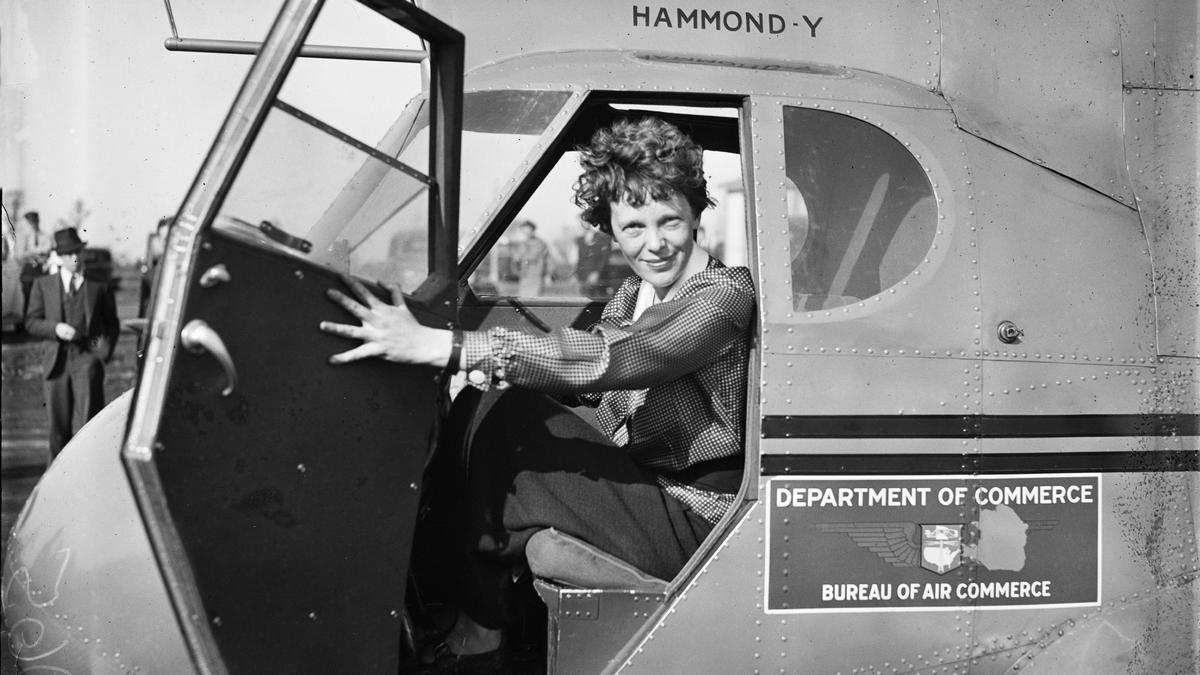
On July 24, 1897, in Kansas, a young girl was born to Edwin Stanton Earhart and Amy Otis Earhart. Little did they know she was destined to literally soar the skies with success. This is the story of Amelia Earhart — one of the most iconic aviators of the 20th Century.Childhood in a nutshellBorn into a middle-class family in the United States of America, still recovering from financial depression, Amelia Mary Earhart grew up in a pretty unstable household. Her father’s job often demanded that they move from one place to another. She and her sister, Grace Muriel Earhart, were brought up quite unconventionally by their mother compared to the then-societal stereotypes of American society. Quite often, Amelia was described as a ‘tom-boy’ as a child with an adventurous interest in exploring the neighbourhood, climbing trees, and even sledging downhill.
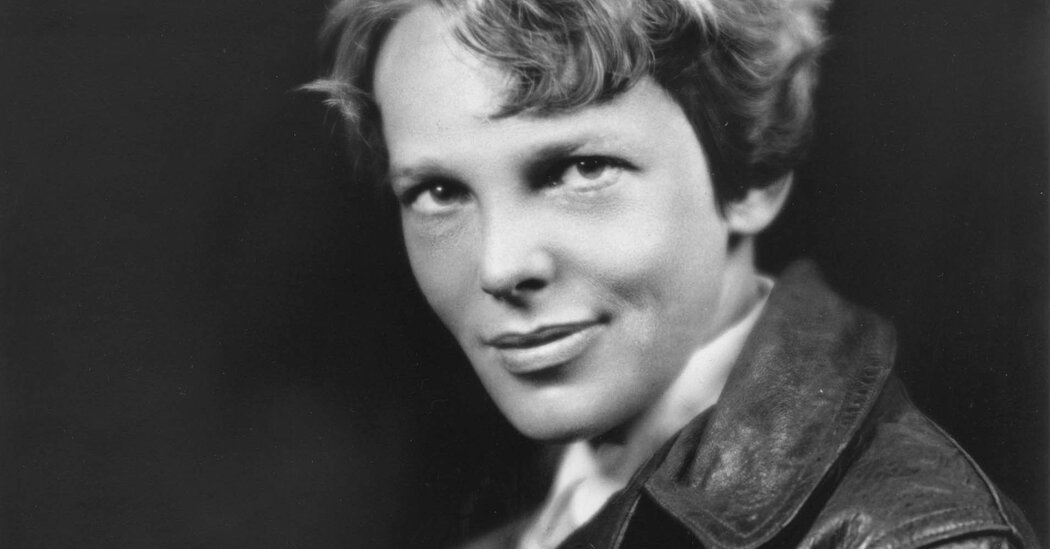
Amelia Earhart
| Photo Credit:
Wikimedia Commons
Amelia is said to have not given much attention to aeroplanes when she first saw them as a child and never showed much fascination with the metallic birds.Soaring into adult lifeHer first strong exposure to aviation came unexpectedly. During World War I, she volunteered as a nurse’s aide in Toronto, Canada, helping to care for wounded soldiers returning from the European battlefields. Near the hospital where she worked were makeshift airfields where pilots practised, and watching these flights stirred a fascination in her about aeroplanes. By 1920, when she finally took her first aeroplane ride, she knew she wanted to become a pilot herself. Paying for flying lessons was not a cakewalk, and after a series of odd jobs, she obtained her pilot’s license from the Fédération Aéronautique Internationale after studying under pilot Anita “Neta” Snook. In 1923, she became one of around 16 women in the world to hold an international pilot’s license, making her a pioneer in the heavily male‑dominated field. Since the start, Amelia started breaking records in the field of aviation. By 1922, she had reached an altitude of 4,300 feet, setting a women’s altitude record for aviation. These early achievements helped establish her reputation as a daring and skilled pilot, even though most people still regarded flying in itself as dangerous and impractical. The breakthroughIn 1928, Amelia was invited to join a transatlantic flight (crossing between places on both sides of the Atlantic Ocean) as a passenger, not as the main pilot. The flight was intended to be the first woman‑crewed transatlantic crossing and made her famous overnight, even though she had not actually piloted the plane for most of the trip. Newspapers in the United States celebrated her as “the first woman to cross the Atlantic by air,” and she became a media sensation. Amelia later emphasised how the media overstated her role, while recognising the importance that fame played in helping her advance women’s participation in aviation. Proving your skills in a male-dominant field is a difficult task even now, let alone in the 1920s and 30s. Determined to prove her own flying skills, Earhart worked hard to fund and plan her solo transatlantic flight.