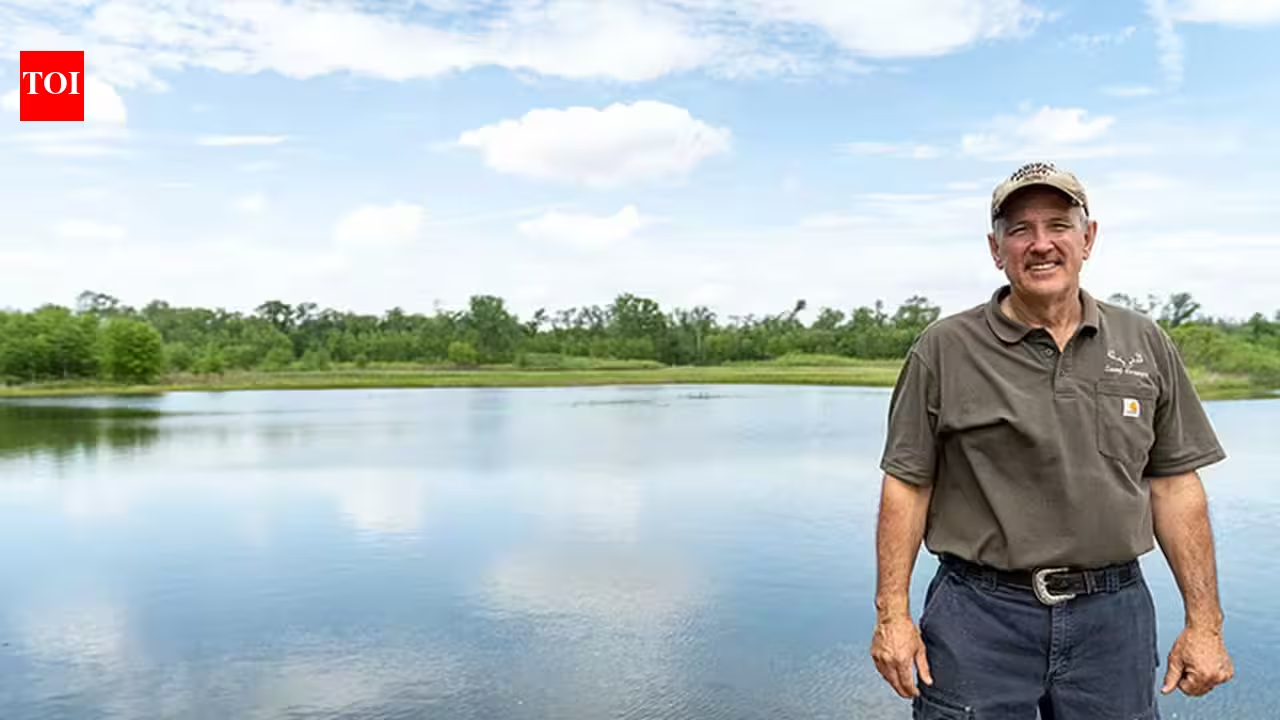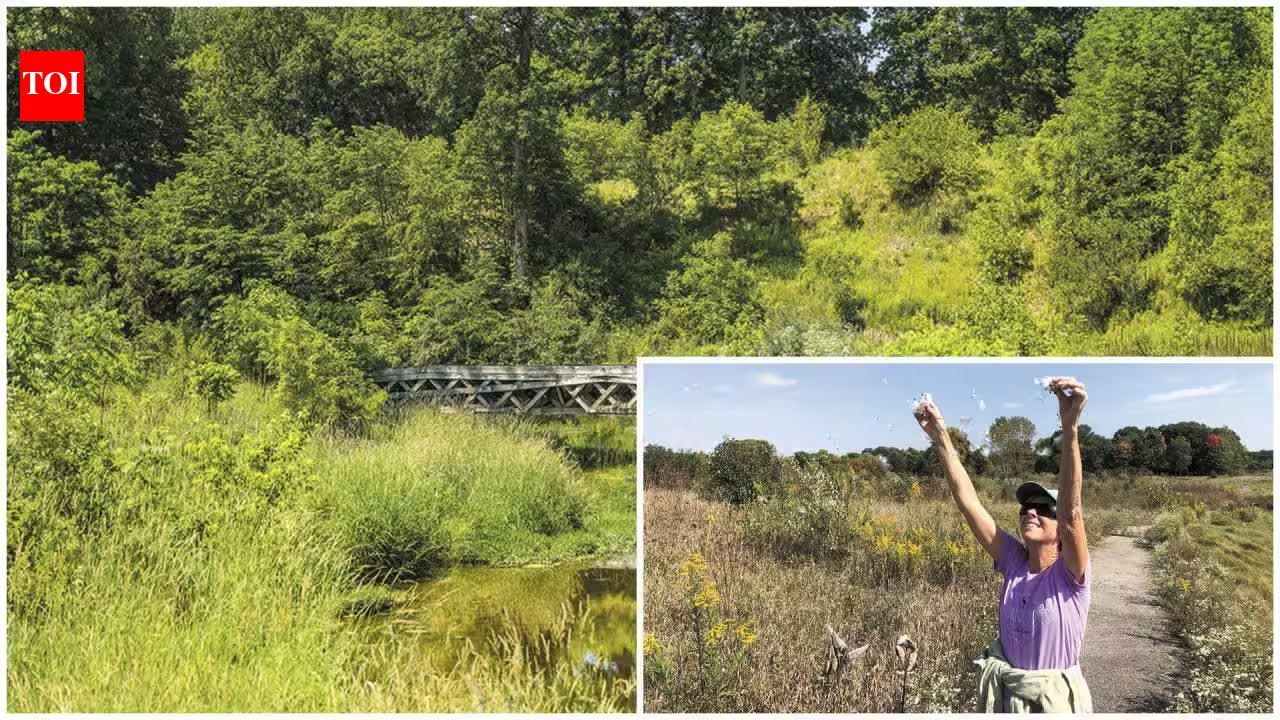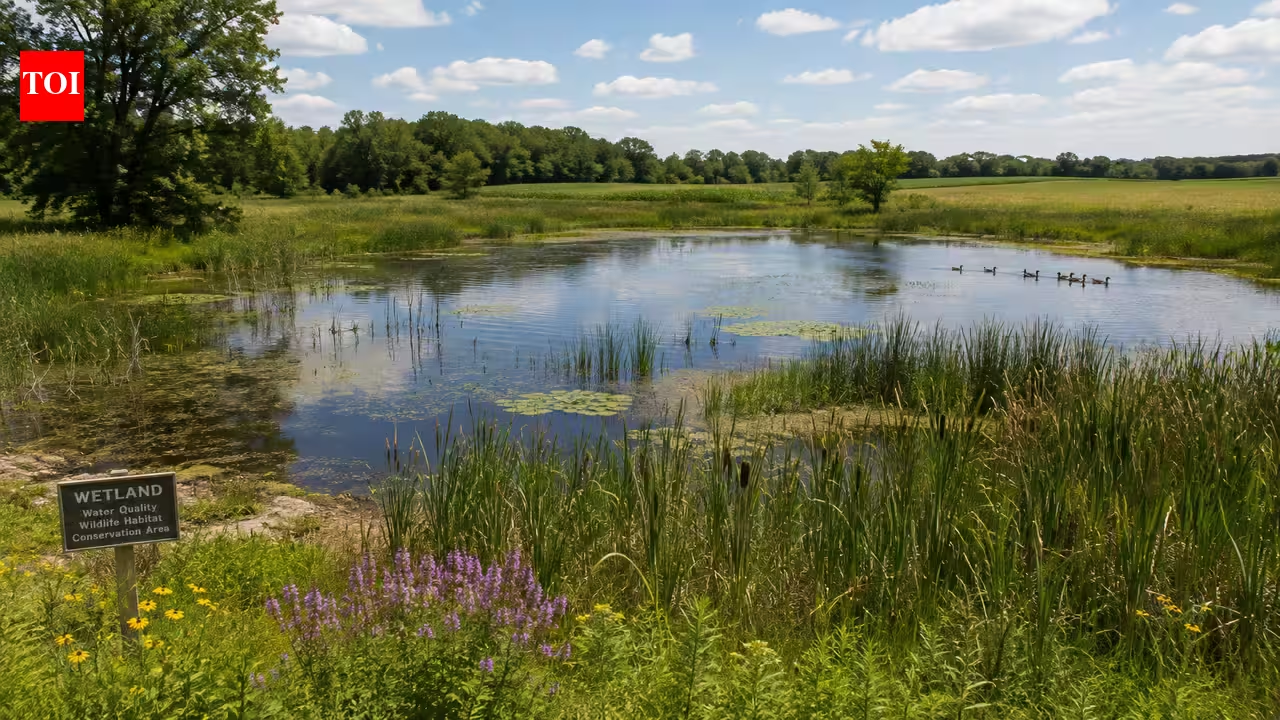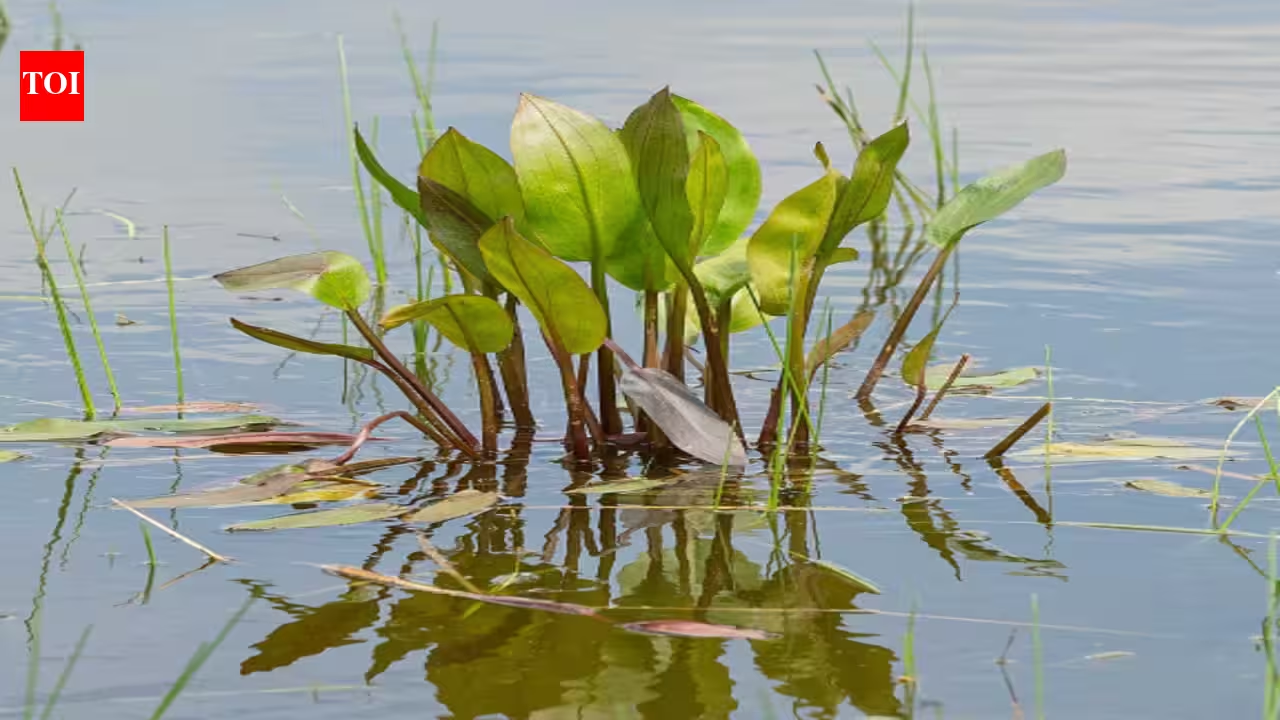
Indiana Wetland Reserve Easement. Image credits: Wikimedia CommonsWhen John Bellman bought 104 acres just outside Bremen, Indiana, in 2008, much of the land was productive farmland and part of it was forested. He was not a farmer; he was drawn to the land because it was near the town where he grew up and offered a chance to build a homestead, lease the tillable ground and use the wooded area for recreation. At first, Bellman leased the farmland to a farmer, but after two years he began to imagine a different use for the property.The result, documented in Indiana Landowner Utilizes CRP, WRE to Restore Cropland into Native Wetland, published by the U.S. Department of Agriculture's Natural Resources Conservation Service, is a property that now supports close to 80 acres of restored prairie and a wetland pond just over eight acres in size, along with a four-acre seasonal wetland area beside it. The paper notes that Bellman first enrolled 19.5 acres in the Conservation Reserve Program (CRP) in 2011, then shifted to a Wetland Reserve Easement (WRE) after meeting the program’s ownership requirement, ultimately dividing the property between 40 acres under WRE and 40 acres under CRP. Restoration began in 2016 and was completed in stages by 2019, involving native-grass seeding, weed control, tree and shrub plantings, and expansion.A 2011 conservation reserve program contract started the transformationBellman first learned about federal land conservation options through Pheasants Forever, a nonprofit focused on upland wildlife habitat. His initial step was enrolling 19.5 acres into a 2011 Conservation Reserve Program contract, a Farm Bill program that pairs annual rental payments from the Farm Service Agency with technical planning support from NRCS. The contract turned the acreage into field borders planted with native species to create travel corridors for deer and turkeys. Once the borders were established, Bellman began planning a larger project: converting the rest of the land into habitat and fixing a drainage problem in an existing wetland.NRCS accepted Bellman's Wetland Easement Application in 2015To address both issues, Bellman filed a Wetland Reserve Easement application through NRCS under the Agricultural Conservation Easement Program. The easement preserves and restores wetlands while allowing the landowner to retain ownership subject to the easement's conditions and NRCS can provide technical and where applicable, financial assistance for eligible restoration work. Because the program required seven years of prior ownership, Bellman could not apply before 2014, and NRCS accepted the application in 2015.Before the application was processed, Bellman again used the Conservation Reserve Program, planting trees on six acres for bats and setting aside 42 acres for pheasant habitat. Once the easement was approved, his 19.5 acres and some of the pheasant habitat were removed from the Conservation Reserve Program and placed under the easement. This left him with 40 acres under a permanent wetland easement and 40 acres in the Conservation Reserve Program.Construction added an eight-acre pond between 2016 and 2019Physical restoration included planting native prairie grasses and other native vegetation, removing invasive reed canary grass, planting trees and shrubs and constructing the wetland pond. Instead of digging a new pond, he expanded an existing wetland in his former crop field into an eight-acre pond. Next to it is another four acres with varying elevations that hold water in different seasons depending on the water table. Restoration work began in 2016. Wetland construction took place in 2018 and weed removal was completed in 2019, ten years after Bellman bought the land. As per Bellman, the native grass took off very quickly on the restored lands. Within two years, the native grasses were producing seed heads. He said the growth was much faster than in many similar projects. Tree seedlings planted at two or three feet tall grew to 10 or 15 feet in less than five years.In 2022, the property had become an active wildlife sanctuaryAbout four years after the wetland installation was completed, NRCS staff visiting in June 2022 noted deer tracks on the muddy pond banks, minnows in the shallow water and toads in the grass during the day. Bellman said the property now attracts songbirds and butterflies as well as deer and turkeys, making it feel more like a wildlife sanctuary than farmland. The property requires active management. Bellman uses prescribed burns to control weeds and manage plant growth, while also maintaining native grasses, pollinator plants, and trees on the property.
In 2008, Indiana landowner John Bellman bought 104 acres near Bremen; 14 years later, an 8-acre wetland pond and prairie had turned it into a wildlife haven
When John Bellman bought 104 acres just outside Bremen, Indiana, in 2008, much of the land was productive farmland and part of it was forested. He was not a farmer; he was drawn to the land because it was near the town where he grew up and offered a chance to build a homestead, lease the tillable ground and use the wooded area for recreation.
727 words~3 min read