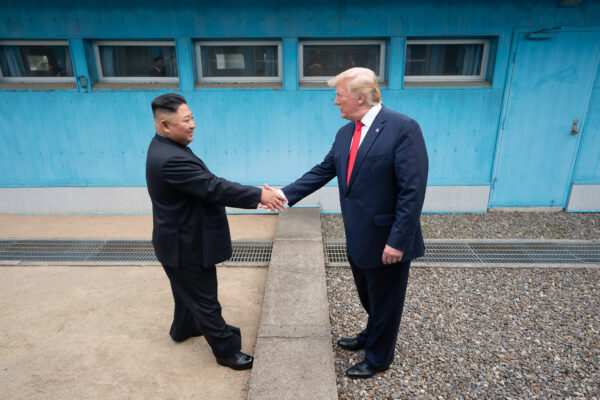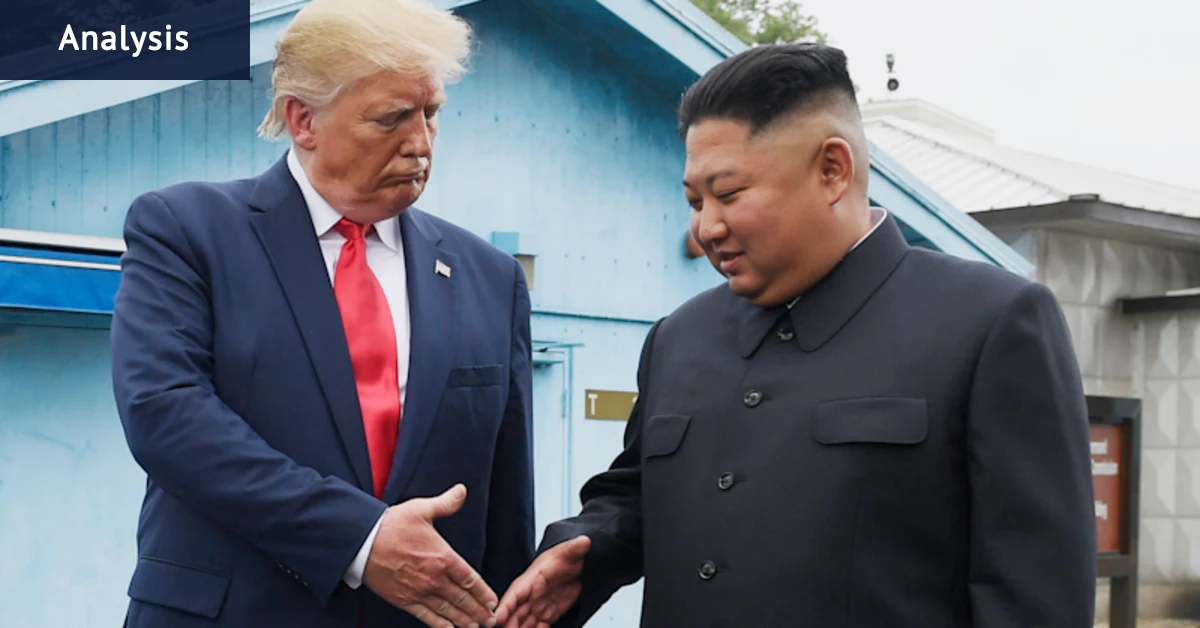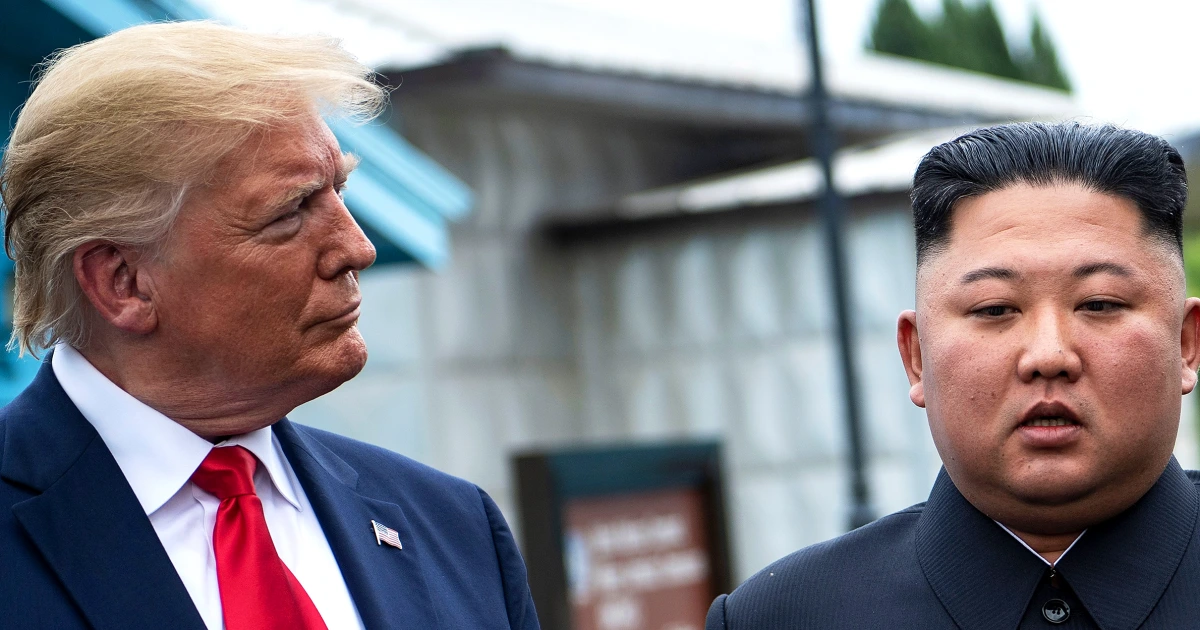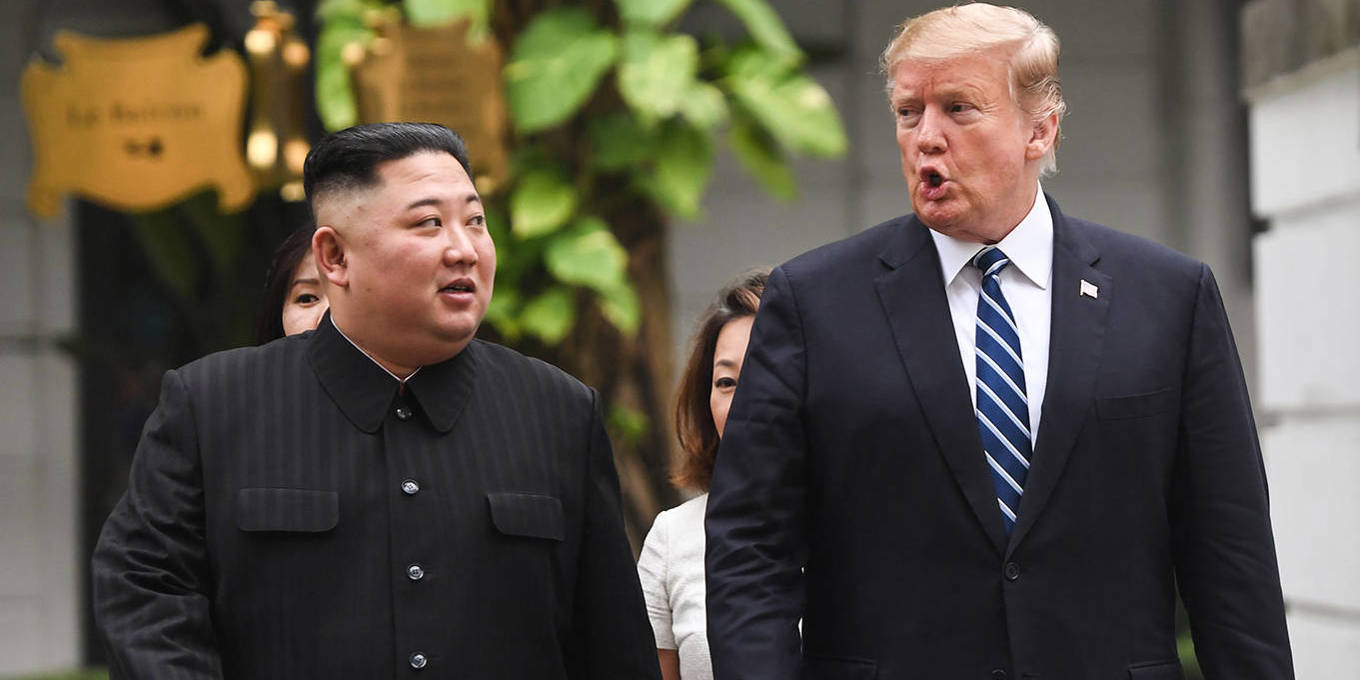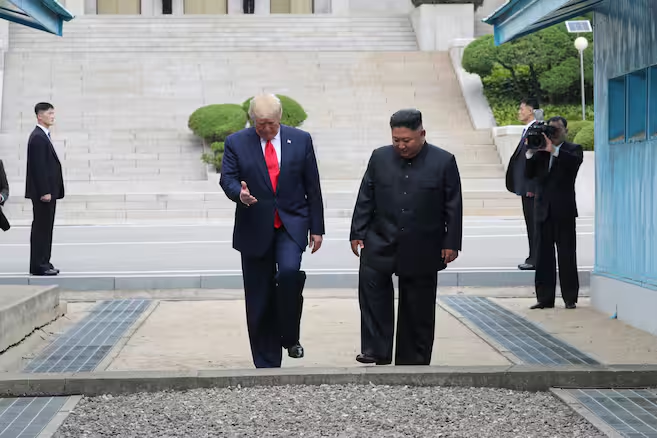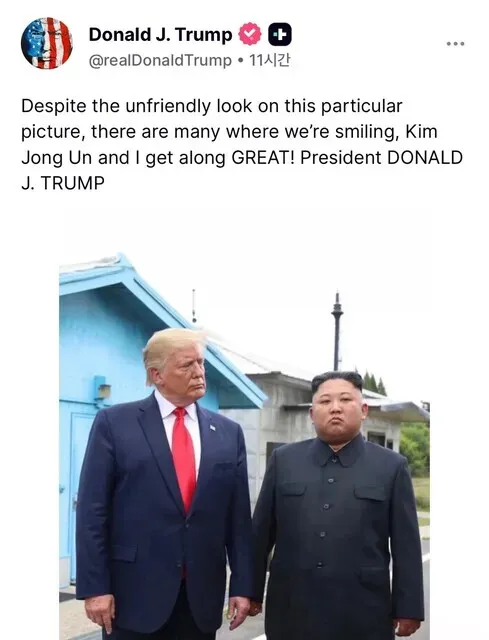
US President Donald Trump posted a photo of himself with North Korean leader Kim Jong-un on Aug. 15, 2026, on Truth Social. (via Truth Social)
By Choi Hyun-june, international affairs editorWhen US President Donald Trump boarded Air Force One at Ankara Esenboga Airport in Turkey on July 8, the first thing he did was disembark and hop onto a catering truck waiting on the opposite side. Trump and a handful of aides were transported by container to a US military C-32A aircraft nearby. Trump then flew to the UK, returning home from there.This historic operation to bring the US president home aboard a container went undisclosed for over a month but was eventually scooped by The Washington Post in early August. The newspaper attributed the operation to concerns that Iran might try to assassinate Trump.Since beginning his war against Iran in late February, Trump has declared victory multiple times, and in mid-June, the two sides even agreed to peace talks. But the war hasn’t ended, as evidenced by the fact that Trump doesn’t feel comfortable flying on his own plane.When Trump indulges in his preferred hobby of golf, he’s trailed by a vehicle equipped with a portable air defense system — a vivid symbol of the tensions persisting due to Trump’s failure to find an off-ramp.Among various explanations of how the war went wrong, the main one is that it was initiated through an off-the-cuff decision without adequate planning. Trump reached that decision back in February, even as nuclear talks with Iran were underway, based on his judgment that military action, combined with ongoing protests against the government, could topple the Iranian regime and resolve the nuclear conundrum in one fell swoop.Media reports suggest that a long-running persuasion campaign by Israeli Prime Minister Benjamin Netanyahu was a big part of Trump’s decision. Experienced advisers in the White House and the military counseled against the war, but Trump apparently didn’t listen to them.In short, Trump started a war without appreciating either Iran’s long imperial history or the geopolitical significance of Middle East oil production, with terrible consequences.With its air defenses punctured, the US has backed off on military attacks on Iran and shifted toward toughening economic sanctions. In effect, Trump is returning to the sanctions policy the US has maintained for more than four decades now, ever since the Islamic Revolution in 1979.Having endured months of bombing, the Iranians are brimming with pride over having beaten the Americans. They’re also licking their chops at the prospect of securing control of the Strait of Hormuz, the conduit for 20% of the world’s crude oil shipments.Bogged down in his war against Iran, Trump has abruptly turned his attention to the Korean Peninsula. Amid the stalemate in the Middle East, the president is rushing to arrange dialogue with North Korea, sensing the potential for a quick diplomatic win that could compensate for his mistakes. We can call that an unexpected consequence of the war against Iran, which looks increasingly like a failure.But Trump’s Korean gambit got off to a bad start. The day that South Korea and the US began their joint military exercise, called Ulchi Freedom Shield, Trump logged onto Truth Social to praise North Korean leader Kim Jong-un and order that the exercise be scaled back — which was news not only to Seoul, but also to the US military.In subsequent days, Trump has had nothing but compliments for Kim and criticism for Seoul while hinting at his desire to meet Kim this coming November. This looks like a repeat of Trump’s unplanned and impromptu decision-making that was the primary reason for the US’ descent into the quagmire of its war with Iran.Despite being blindsided by the joint exercise’s reduction, Seoul welcomed Trump’s determination to make progress with the implacable North Koreans and promised to act as Trump’s “pacemaker.” But officials in Seoul must recognize the difficulty of keeping “pace” with a politician like Trump who informs an allied country of a military exercise being downgraded while it’s already underway.Kim, who sought to reach a deal with Trump in 2018 and 2019, must be pleased as punch. According to Trump’s own remarks, Kim’s regime has assembled 57 nuclear devices, not to mention the trusty cooperative relationships it has forged with Russia and China.In 15 years since coming to power, Kim, aged 42, has gained experience and strengthened his hand for a potential showdown with Trump, who is saddled with an unwinnable war and the November midterm elections breathing down his neck.Despite his impulsive back-and-forth in the Iran war, one principle Trump has maintained is his rejection of any solution that might compromise American interests.The US has stood by and watched as the war wreaked havoc on American allies in the Middle East such as Saudi Arabia, the United Arab Emirates and Kuwait. That’s why Koreans should moderate their expectations about Trump’s sudden shift to the Korean Peninsula.Please direct questions or comments to [english@hani.co.kr]