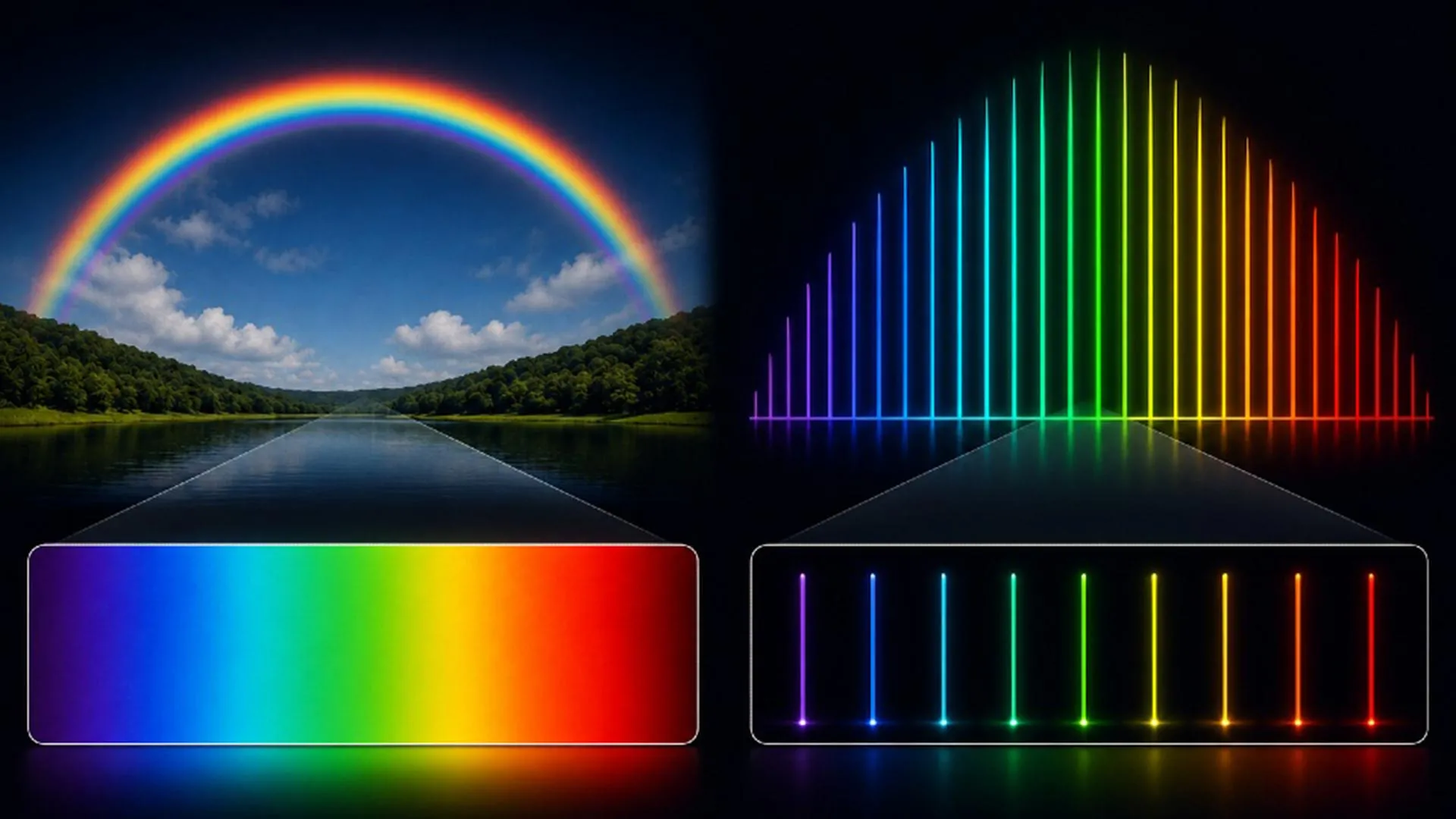
Researchers from Loughborough University in the UK developed a chip capable of producing a “rainbow” spectrum of light that could unlock faster 6G communications and precision timing for quantum technologies.
The chip is about the size of a grain of rice and contains a microresonator producing precisely organized frequencies of light to form a microcomb. Where previous studies into these miniature chips have focused on generating a single, precise millimeter-wave frequency, the researchers sought to use a single microcomb capable of producing multiple frequencies at once.
Loughborough University's ‘rainbow’ microcomb chip. €1 coin for reference – Loughborough University
The research team included experts from the University of Sussex, City University of Hong Kong, and photonics vendor QXP Technologies. They were able to use the microcomb’s “rainbow” to produce variable strength frequencies that showcased precision and stability across millimeter-wave signals from a device smaller than a one-euro coin.
Millimeter waves offer far more bandwidth than lower-frequency radio bands and standard microwave frequencies, which makes them ideal for next-generation high-capacity technologies like 6G.