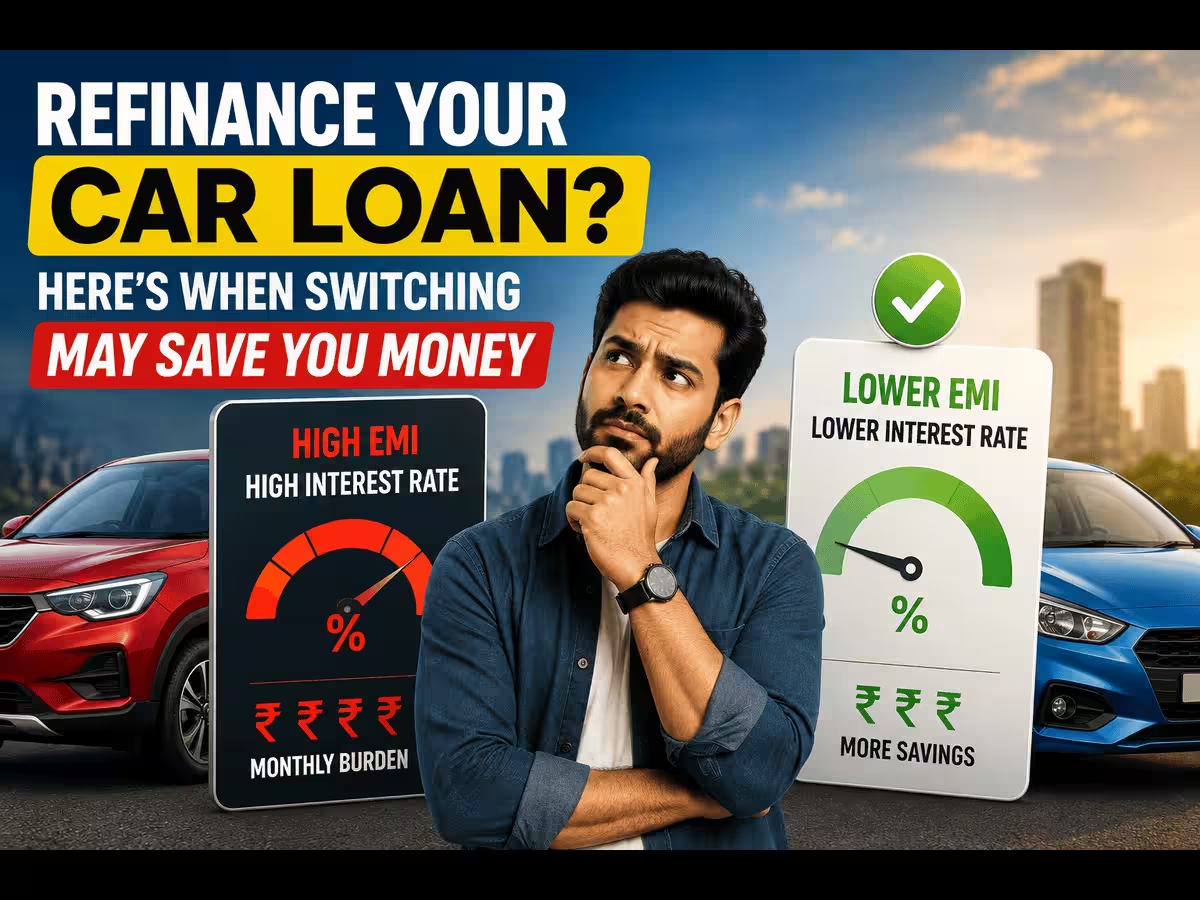
For a borrower struggling with a high car-loan EMI, refinancing can look like an easy solution. Get a new loan at a lower interest rate, use it to repay the existing loan and reduce the monthly burden.But keep in mind that a lower EMI does not necessarily mean a cheaper loan.Refinancing involves its own costs, and extending the loan tenure can increase the total interest you pay even if the new interest rate is lower. So, before switching lenders, the key question is not “How much will my EMI fall?” but “How much will I actually save after all costs?”When does refinancing a car loan make financial sense?The starting point should be the interest you still have to pay on your existing loan.Borrowers should compare the remaining interest on their existing loan with the interest payable on the refinanced loan and then deduct all the costs involved in switching, says Sameer Mathur, MD & Founder, Roinet Solution.Consider a borrower with ₹5 lakh outstanding and 36 months remaining at 10% interest. New interest rate Interest saving Switching cost Net saving / (loss) 9.5% (0.5% reduction) ₹ 4,216 ₹ 10,000 ₹ -5,784 9% (1% reduction) ₹ 8,414 ₹ 10,000 ₹ -1,586 8% (2% reduction) ₹ 16,755 ₹ 10,000 ₹ 6,755 Source: Roinet SolutionIf the new lender offers 9.5%, the interest saving over the remaining tenure would be only around ₹4,216. A reduction to 9% would increase the saving to about ₹8,414, while a reduction to 8% would save around ₹16,755.“If we assume ₹10,000 in total switching costs, the 0.5% reduction would actually result in a ₹5,784 loss, while a 1% reduction would still leave the borrower ₹1,586 worse off. Only a 2% reduction would generate a meaningful net saving of around ₹6,755,” says Mathur.With two to three years remaining on the loan, I would generally look for a 1.5–2 percentage-point reduction, unless the refinancing comes with very low switching costs. A 0.5% reduction is rarely sufficient, he says.This is why refinancing becomes less attractive when the loan is already close to maturity. With less principal outstanding and fewer months left, there may simply not be enough future interest to save.Don't let a lower EMI fool youThe other trap is extending the repayment period.Kundan Shahi, Founder, Zavo, gives the example of a ₹5 lakh car loan at 10% for three years. The EMI is around ₹16,134 and the total interest works out to approximately ₹81,000. Particulars Existing loan Refinanced loan Loan amount ₹5 lakh ₹5 lakh Interest rate 10% 9% Tenure 3 years 5 years Monthly EMI ₹ 16,134 ₹ 10,379 Total interest ~₹81,000 ~₹1.23 lakh Difference in interest — ~₹42,000 more Source: ZavoNow imagine the borrower refinances at a lower rate of 9% but extends the tenure to five years. The EMI falls to around ₹10,379, making the monthly payment much easier.But the total interest rises to approximately ₹1.23 lakh.In other words, the borrower gets both a lower interest rate and a lower EMI yet ends up paying around ₹42,000 more in interest because the loan runs for a longer period.“Before refinancing or extending your tenure, compare the total interest payable, not just the monthly instalment,” says Shahi.This is why a refinance offer should ideally be compared with the existing loan over the same remaining tenure. If you have three years left on your current loan, compare what you will pay over those three years rather than accepting a five-year refinance simply because the EMI looks more affordable.What costs should you factor in before switching your car loan?The interest rate is only one part of the calculation.ET Online
Should you refinance your car loan? Here's when switching may save you money - The Economic Times
Considering refinancing your car loan? It could result in lower monthly payments and more favorable interest rates. Yet, it's essential to meticulously review any associated costs involved in switching. Extending the loan term may largely increase your total interest expenses down the line. Before making a move, ensure that any financial benefits are significant. Remember to compare the complete interest obligations, not just the monthly installments.
859 words~4 min read