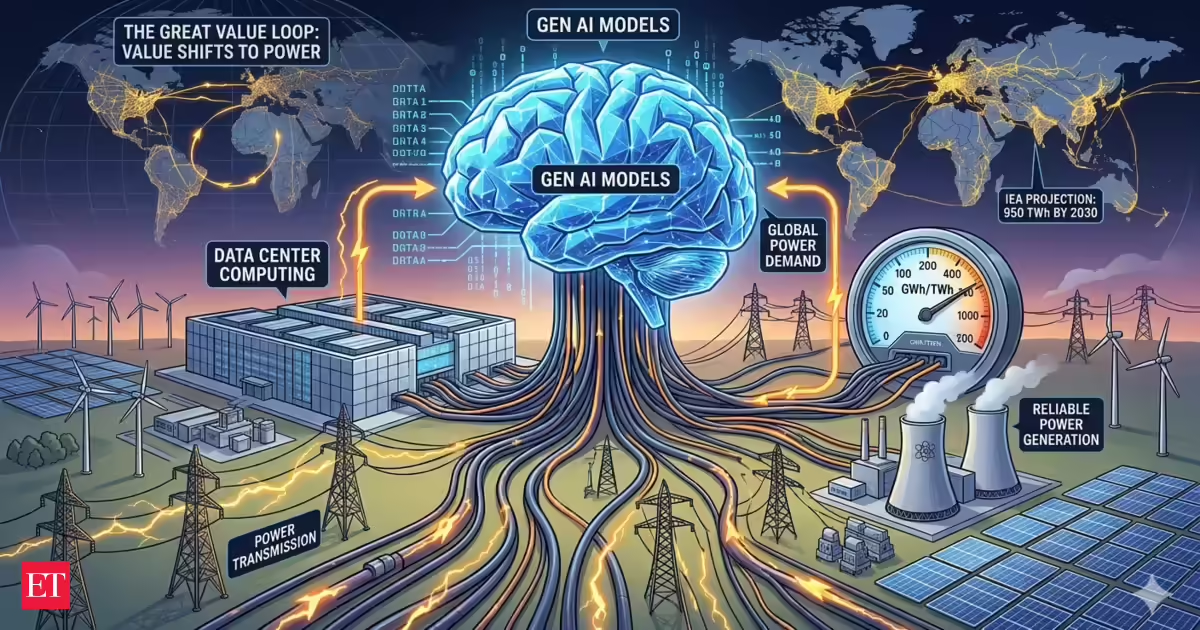
Artificial intelligence is advancing at extraordinary speed, but its physical limits are increasingly being tested by how much power can be generated, transmitted, and delivered where compute is needed.
In this context, imagine a country with abundant renewable energy, water, cool mountain air, and plenty of room to build. It sounds like an obvious place to invest.
It is not.
The AI infrastructure boom is being organized around scarcity. Power is constrained. Transmission is slow. Suitable land is contested. Cooling and water are becoming harder to secure. In that environment, a country that can offer these inputs can quickly appear to have found its opening.
But scarcity can be misleading. It makes an asset valuable; it does not make the country that possesses it strategically indispensable. The harder question is whether those physical advantages can be converted into a durable proposition, one with the capital, connectivity, institutional confidence and access to demand that investors need over decades, not merely during the current rush.